Can Tahoe be saved? Wildfire, climate change endanger the future of a California jewel
READ MORE
California Wildfires
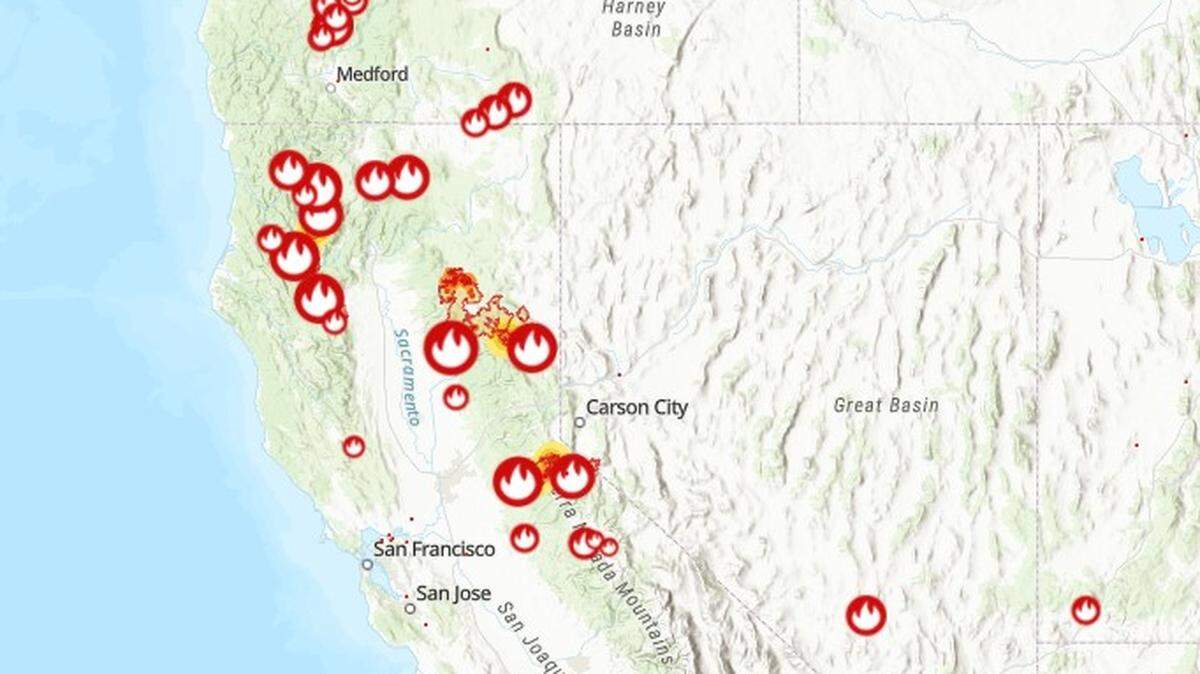
The latest on the wildfires burning in California. Get updates on the Caldor Fire, Dixie Fire and others, including size, containment, evacuation orders and more.
Expand All
The world-class playground in Sacramento’s backyard is on fire.
Will it ever be the same?
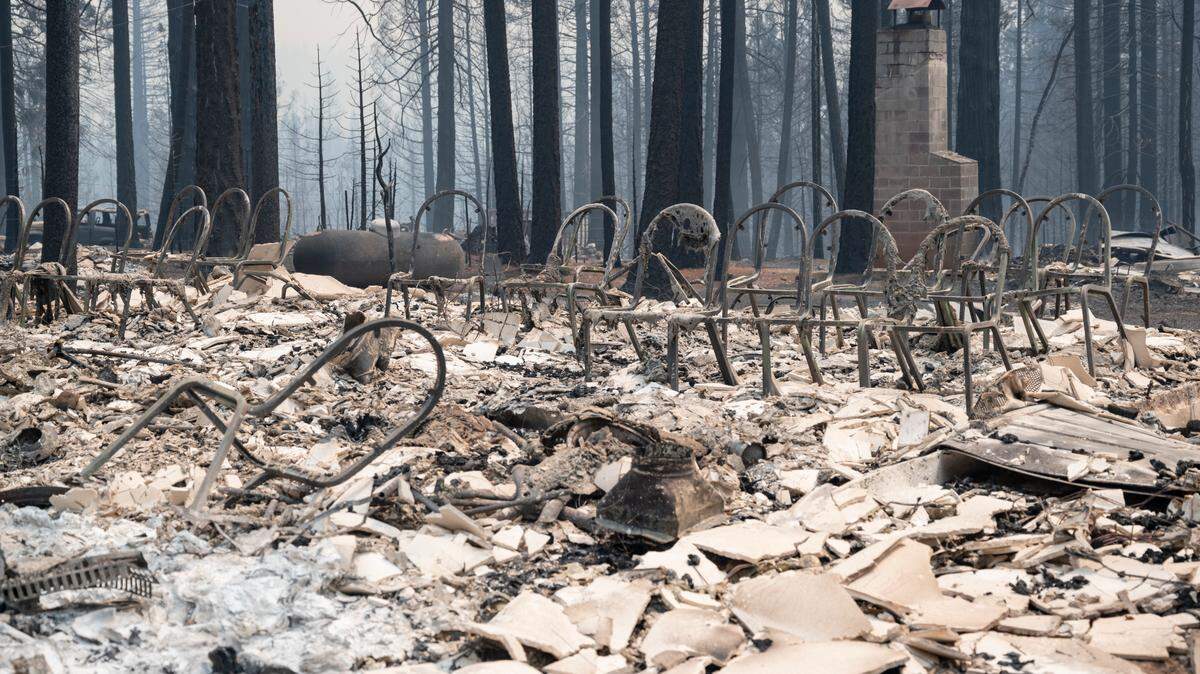
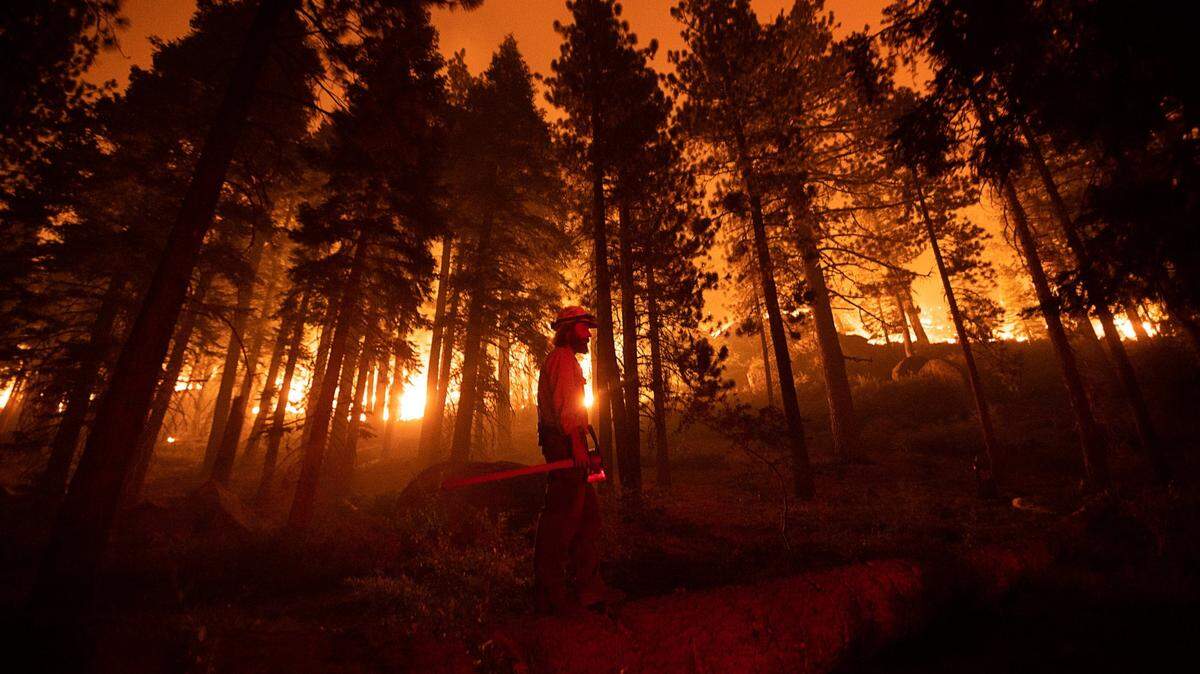
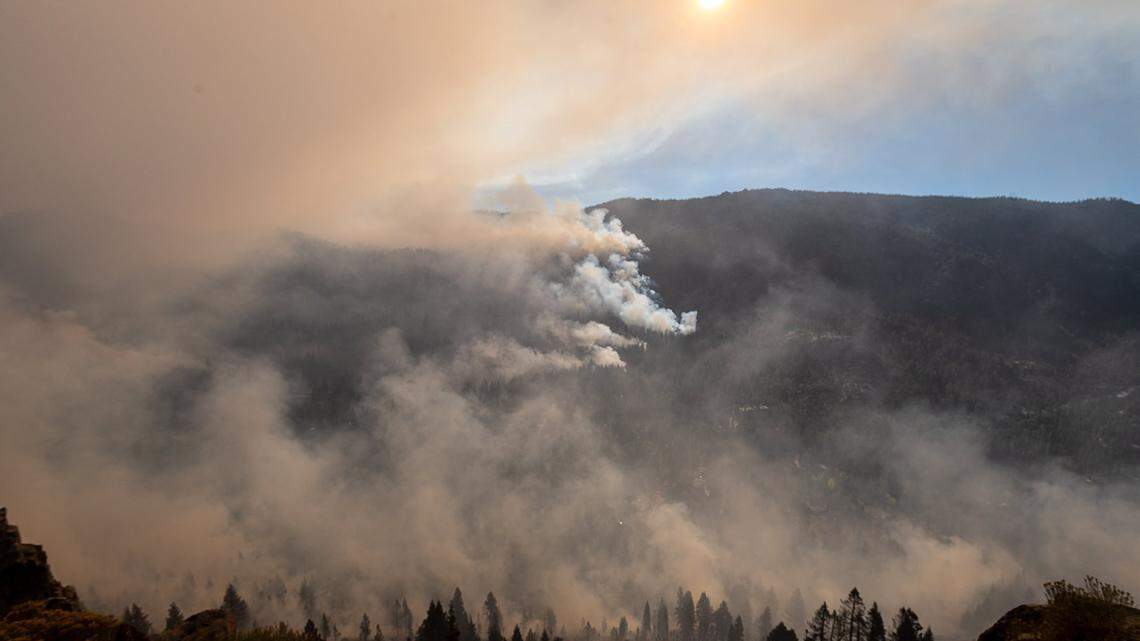
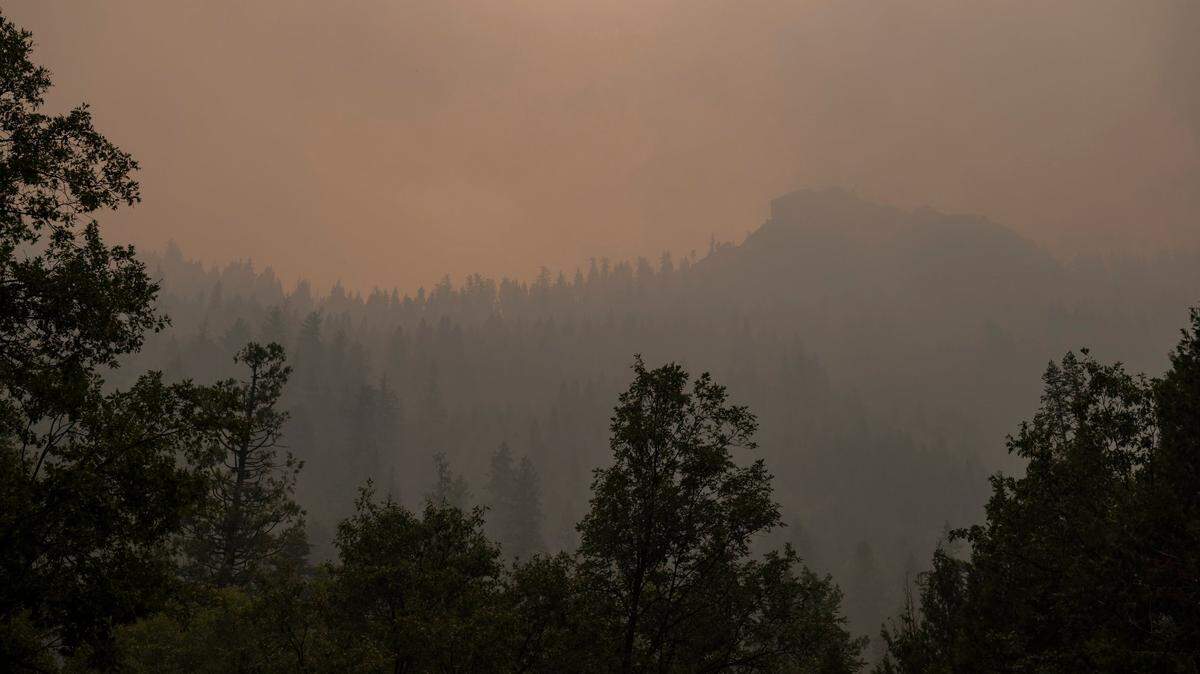
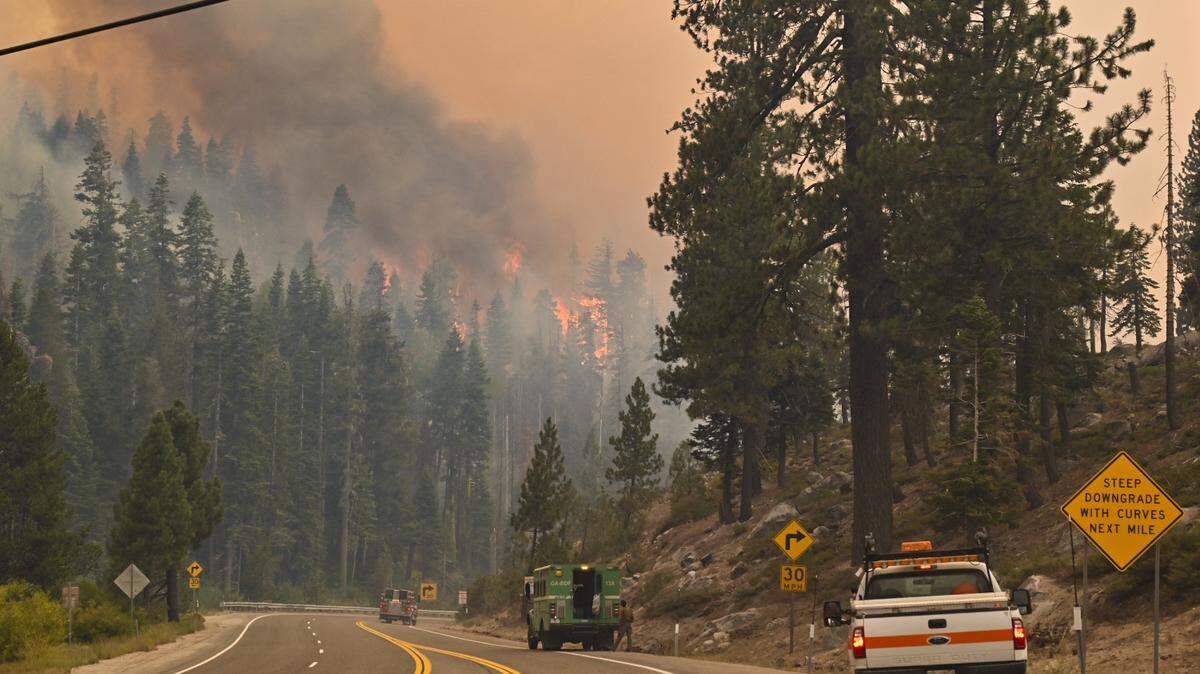
The Caldor Fire poses an existential threat to the Lake Tahoe basin — to the woodsy hiking trails and ski slopes, the beachfront mansions and rustic cabins. Even the pristine waters are in peril as ash floats down from the sky, possibly compromising the blue lake’s fabled clarity.
The fire, which has burned for more than two weeks, could be extinguished before the property damage reaches catastrophic levels, but the consequences will surely last for years. Tourism will suffer, and possibly the real estate market, at least for the foreseeable future.
The ferocity of the Caldor Fire, which emptied out the city of South Lake Tahoe Monday, has reinforced awareness of climate change and wildfire risk as ever-present realities. That could damage the very idea of Tahoe — as a place to go camping or boating, or as a place to live in retirement — for years to come.
“We knew we’d survive COVID closures as long as we were able to reopen. We knew our community was going to be there and support us and be there for us when we came back,” said Gianna Aveni, co-owner of Blue Granite Climbing Gym in South Lake Tahoe. “With this fire, there’s so much more uncertainty. If tons of homes get destroyed, if the landscape gets completely destroyed, it’s hard to say what the community in South Lake Tahoe is going to look like.”
It’s hard to overstate the importance of Lake Tahoe in the minds of many Californians. When people in Sacramento say they’re “going up the hill” for the weekend, it’s obvious they’re talking about Tahoe.
Even if much of the south shore stays intact, a place that relies heavily on its good looks and alpine air is going to be not nearly as scenic for the foreseeable future. Especially in summer, when the fire damage is more obvious and the dead trees and blackened dirt make camping and hiking a lot less desirable.
“It’ll be a black eye for the summer business,” said Patrick Tierney, a San Francisco State University tourism professor who has studied the Tahoe region. “Will it still be as popular as ever? Not for a while. We know the scenery’s going to be marred.
“The lake is still going to be beautiful. But it’s going to be different. People tend not to go back to burned areas.”
Does that mean Tahoe is dead as a place to visit or live? Don’t even dare suggest that to the community’s government officials.
“This community is so incredibly resilient,” said Lindsey Baker, the city of South Lake Tahoe’s public information officer. “Tourism is not going to end here in South Lake Tahoe and in the basin. It never will ... Life ebbs and flow, and we are no different here in Tahoe. But we will bounce back.”
Tahoe’s importance to the region
The basin is “a natural wonder of the world,” Chris Anthony, a Cal Fire assistant deputy director based in South Lake Tahoe, said at a press conference a few miles from the flames Monday night. “Whether you live here full time, own a second home here, visit the basin during family vacations ... there are literally hundreds of thousands of people who hold Tahoe dear to their heart.”
Anthony tried to boost evacuees’ confidence, saying: “These are trying times but we will get through them together.”
Yet Anthony also acknowledged the enormity of the problem facing the Tahoe region — this week and in the future.
He said words such as “unprecedented” and “extreme” are no longer appropriate to describe a threat like the Caldor Fire, “given the clear trends associated with drought, a changing climate and unresilient forest stands.”
In other words, if this fire doesn’t wreck Tahoe, what about the next one? Environmentalists are reacting with utter fear to what’s happened already.
“The aggressive surge of the fire in recent days – accelerated by low humidity and drought-stricken vegetation – is a horrifying illustration of how climate change can impact our communities, our safety and the wild places we treasure. Just months ago, it was widely considered unimaginable that wildfire could crest the Sierra Nevada,” the League to Save Lake Tahoe said Tuesday.
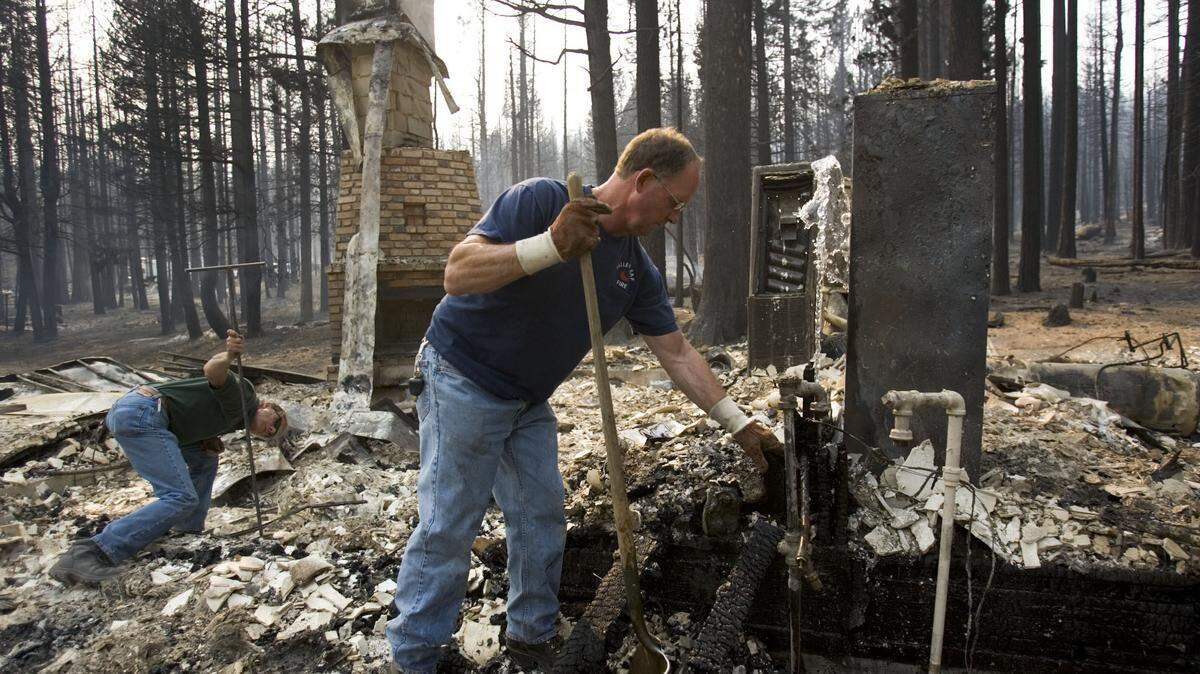
The irony is that experts say Tahoe has done about all it can to stay safe. After the 2007 Angora Fire burned 3,100 acres and 254 homes near the south shore, the region amped up its fire safety efforts.
Anthony said the Tahoe region had invested millions of dollars in the past 15 years to make it less prone to major fire — undertaking “prescribed fire” and forest thinning projects to eliminate flammable vegetation. He said the area has pushed hard on “hardening” to make roofs and eaves sturdier, and landscape inspections to make sure residents are maintaining adequate “defensible space.”
It’s been an admirable effort, the experts agree. The woods of the Tahoe basin are “more thinned out for a forest than any other place I’ve seen,” said Susie Kocher, a forestry specialist at UC Cooperative Extension. “A lot of the south shore looks pretty good.”
Kocher had plenty of time to discuss Tahoe’s fire safety Monday afternoon. She was stuck in traffic for hours on Lake Tahoe Boulevard, along with a freaked-out cat, as she and 22,000 other people evacuated the basin.
A resident of Meyers, a few miles south of South Lake Tahoe, she was particularly worried that sparks or embers, powered by the wind, could ignite spot fires “that could go block to block” in residential areas. What if her neighbor’s home catches fire?
“If their house goes, our house goes,” she said.
Fire season weighs on tourists
The immediate threat from the Caldor Fire extends beyond flames. The smoke that’s periodically settled into the basin during this latest hellacious California fire season has taken a considerable toll on Tahoe residents.
“Since July 4 we’ve had smoke nearly every day,” said Carl Ribaudo, a tourism consultant who lives in South Lake Tahoe.
He said the tourism industry and Tahoe — and the rest of California — could be facing a reckoning over the increasing presence of mega-fires.
“The regularity of these fires is creating a perception of, ‘Gee, do I book a trip to California?’” Ribaudo said. “Some people may say, ‘It’s fire season, let’s not go there.’”
The fact is, adapting to new realities is a way of life for Tahoe’s motel owners, ski resort operators and others who depend on visitors.
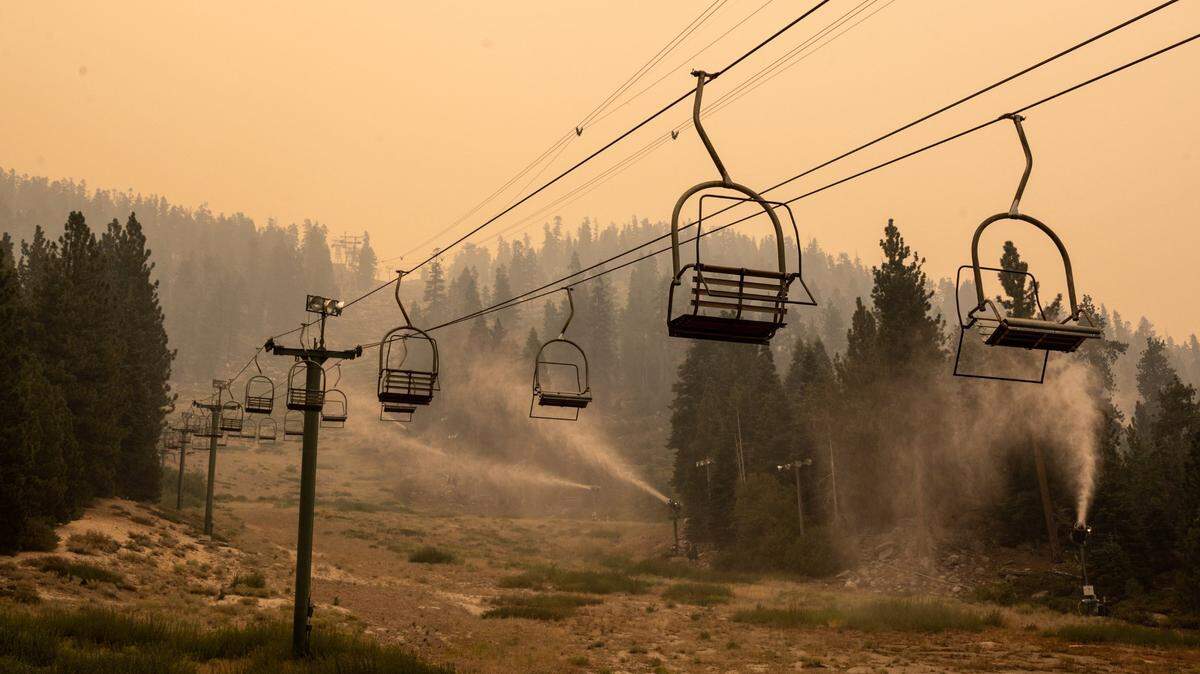
As climate change has clobbered the reliability of snowfall on the Sierra Nevada, the resorts have invested tens of millions of dollars in artificial snow-making equipment to keep ski season live. It was telling, perhaps, that Sierra-at-Tahoe deployed a snow machine Sunday night to hose down the area around its main lodge and keep it from burning down.
Tierney said Tahoe’s reputation as a hub for skiing and snowboarding will remain intact, even if some of the slopes feature blackened trees. “The skiers are still going to come out,” the San Francisco State professor said.
The resorts aren’t just banking on winter, though. The depletion of a dependable snowpack has had many of them scrambling in recent years to reinvent themselves as year-round destinations.
Heavenly built zip lines, rope courses and a “summer tubing” run that lets guests speed down an artificial surface slope in an inner tube. Boreal installed trampolines, a skateboard park and a BMX biking trail, and began hosting summer camps.
Squaw Valley, which brought fame to Tahoe when it hosted the 1960 Winter Olympics, is as much a summer destination as a winter resort. Among the summer offerings: Tuesday night blues, Wednesday night yoga classes and a late-summer rock band competition. (All have been canceled because of the Caldor Fire).
With Tahoe facing more wildfire threats, will the resorts keep investing? It doesn’t hurt that many of them are owned by deep-pocketed corporations. For instance, Heavenly, Northstar and Kirkwood — the last of which is being threatened by the Caldor Fire — are owned by international hospitality company Vail Resorts.
Tierney said he believes the big resorts will continue investing to draw larger pools of visitors, summer and winter. In an emailed statement, Vail senior vice president Doug Pierini said, “We are as committed as ever to the Lake Tahoe community, employees, guests and our resorts.”
Tahoe’s casinos were already struggling
In his 47 years in the region, Duane Wallace, chief executive of the South Tahoe Chamber of Commerce, thought he’d seen all Mother Nature could throw at the area: eight-foot snowstorms, blackouts, mudslides that closed the roads for months. The Angora Fire in 2007.
Now comes the Caldor Fire, a year after the COVID-19 pandemic shut most of the basin down for months.
“If it weren’t for bad luck, we’d have no luck at all,” he said by phone from Truckee, where he evacuated with his wife, Tamara Wallace, the mayor of South Lake Tahoe.
But he’s optimistic. Even if the city burns, it will rebuild and people will move back. It’s too pretty up there for them not to.
“The fishing. The hiking,” he said. “The beautiful air that doesn’t even seem like it’s there. The crisp snowy mornings. Those are the reasons we live there.”
It sure isn’t for the gambling.
Years ago, Tahoe’s casinos were a huge part of the region’s economy. Harrah’s used to run buses from Sacramento to bring customers to the south shore, said Ken Adams, a gambling consultant in Reno.
“Tahoe was a really good investment,” he said. “In the ‘80s, they were hanging slot machines from the ceilings. There is none of that now.”
The big four on the south shore — Harrah’s, MontBleu, Harveys and the Hard Rock — don’t dominate the landscape as in the old days.
The Caldor Fire surely won’t help. The casinos’ efforts to reinvent themselves as entertainment centers have been smoked out, for the time being. Country musicians Eric Church and Dierks Bentley postponed concerts scheduled for the big outdoor theater at Harveys Casino in Stateline, Nev. The rock band Phish moved a pair of shows from Harveys to the Shoreline Amphitheatre in Mountain View.
The casino business at Tahoe “is a diminishing market,” Adams said. “It gets smaller and smaller all the time.”
Will the rich keep buying Tahoe trophy properties?
In some ways, Tahoe has become the trophy destination for the wealthy. Tech tycoon Larry Ellison once sold a $20 million mansion on the lake; then he spent $36 million buying the old Cal Neva Casino on the north shore. The Cal Neva, of course, was once owned by Frank Sinatra.
Real estate agents insist that wildfires won’t stop the stampede of wealthy buyers to the region.
“It’s not like we haven’t had fires in the past,” said Sue Lowe, a broker based in Tahoe with Chase International Real Estate. The Angora Fire, as bad as it was, “didn’t give us a blip in the real estate market.”
Besides, where else are people going to buy? “You’ve got hurricanes on the East Coast, tornadoes (in the Midwest),” said Kerry Donovan of the Donovan Group, a Chase affiliate in Incline Village.
“People still want to be here,” she said. “The majority of the time, this is one of the cleanest, safest places.”
But others who know Tahoe real estate aren’t quite as confident.
Randy Lane, who’s been a Tahoe developer and consultant for 45 years, said fires won’t scare off the true locals. “They gut it out,” he said. “They live here.”
The out-of-towners looking for a second home? That could be a different story, even if the Caldor Fire doesn’t end up devouring the community.
“Even if the fire stops tomorrow, people are going to take a deep breath and say, ‘Is this where I really want to have a place?’” Lane said. “It’ll definitely have an impact.”
This story was originally published September 1, 2021 at 5:00 AM with the headline "Can Tahoe be saved? Wildfire, climate change endanger the future of a California jewel."
.JPG)