Tax cuts and no COVID mandates. How Republican recall candidates would govern California
By Lara Korte
READ MORE
California Recall Election
Get the latest news and opinion on the recall election of California Gov. Gavin Newsom.
Expand All
A radio talk show host who promoted COVID-19 conspiracy theories.
A former mayor who trained under former California Republican Gov. Pete Wilson.
A lawmaker who sued Gavin Newsom over the governor’s efforts to make voting accessible during the 2020 election.
A developer who has campaigned with a live bear and a giant ball of trash.
The leading Republican candidates to replace the Democratic governor all promise to bring sweeping changes to California’s 40 million residents. They support policies that favor business over labor and lower levels of taxation. They say the state should follow Florida’s lead on COVID-19, avoiding any mask and vaccine mandates.
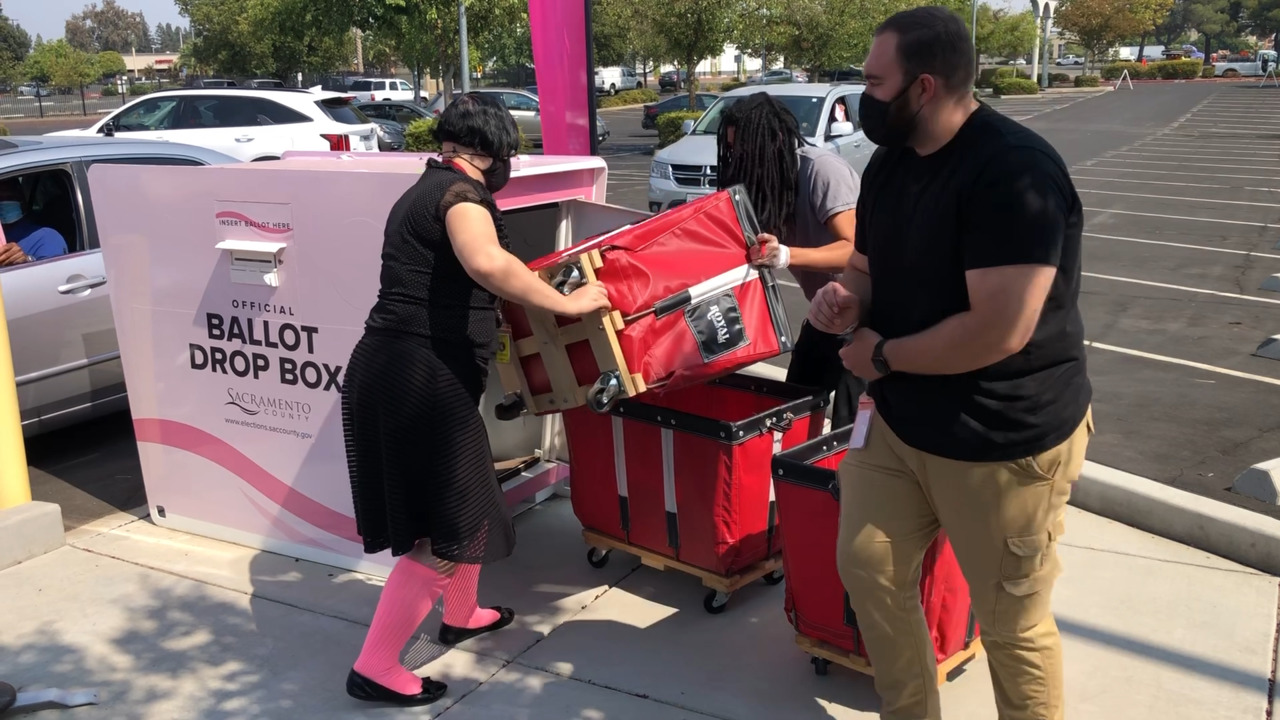
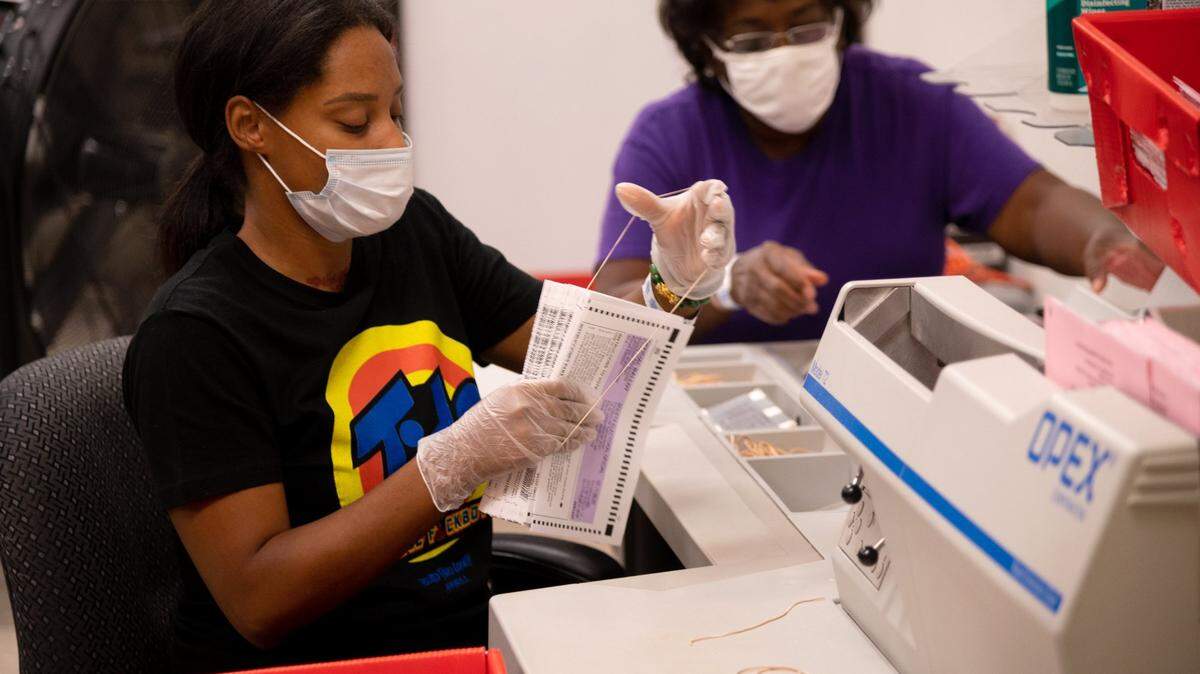
In less than a month, Californians will decide whether they agree. All voters should receive ballots for the Sept. 14 election in their mailbox by this week.
California, dominated by Democratic politics, has long led the nation in chasing liberal aspirations.
The state was the first in the country to pass an assault weapons ban. It spent four years challenging the immigration policies of the Trump administration. When the global pandemic bore down, California took swift and forceful action to keep people home to slow the spread of the virus.
A Republican governor seeking to move in a new direction would be hamstrung by several factors, including a Democratic supermajority in the Legislature. Powerful unions would seek to block his agenda. Because Newsom’s term expires in early 2023, Republicans would have little more than a year to implement their agenda before another election.
“Because it’s a short period of time and because the Democrats have a supermajority, I think (a Republican governor) is not likely to change a huge number of lives,” said Jessica Levinson, a professor of law and director of Loyola Law School’s Public Service Institute.
“But there will be real changes for real people.”
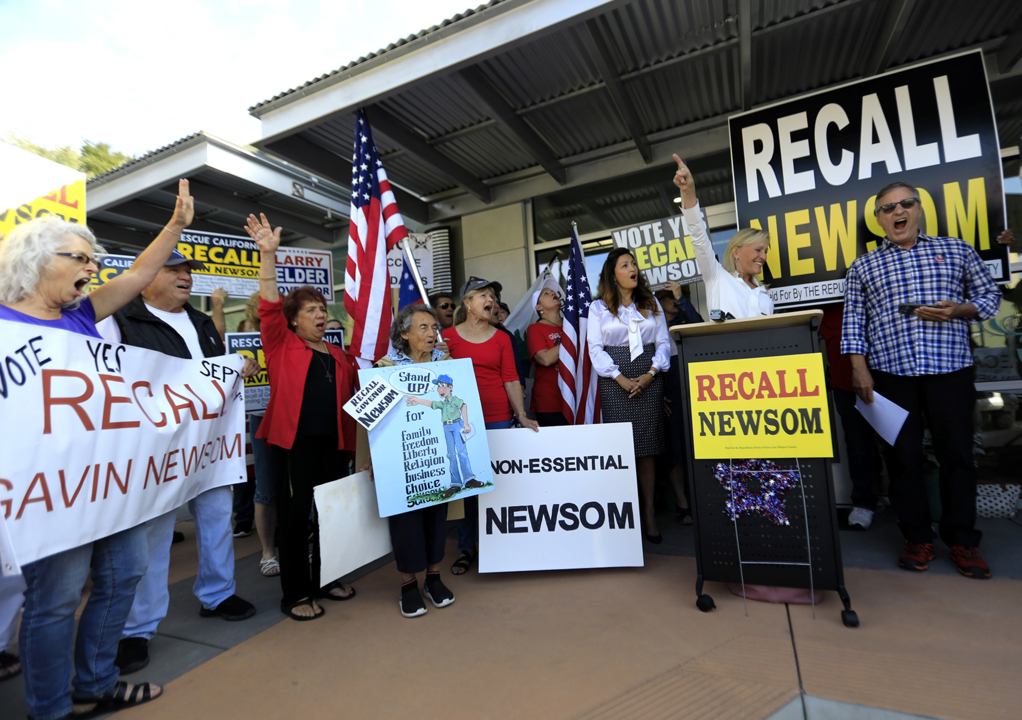
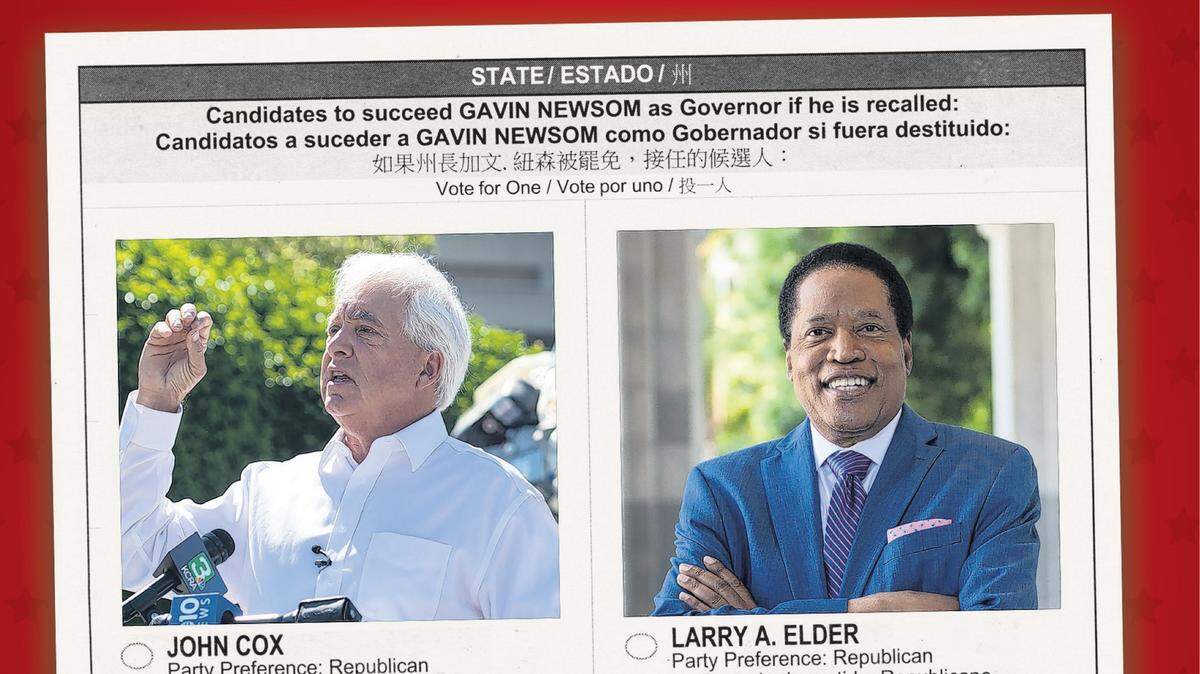
The recall election, a two-part ballot, will first ask voters whether Newsom should be recalled. Then voters can choose their preference from a list of 46 candidates to replace him if the recall is successful.
That means a candidate could technically win with little more than 2% of the total votes. With recent polls showing a nearly even split on the recall question, Democrats worry about the real possibility of losing control.
“If this was a successful recall, I think it would have profound consequences nationwide, and go to not just politics, but to policy and policymaking,” the governor said during an interview with McClatchy’s California editorial boards last month.
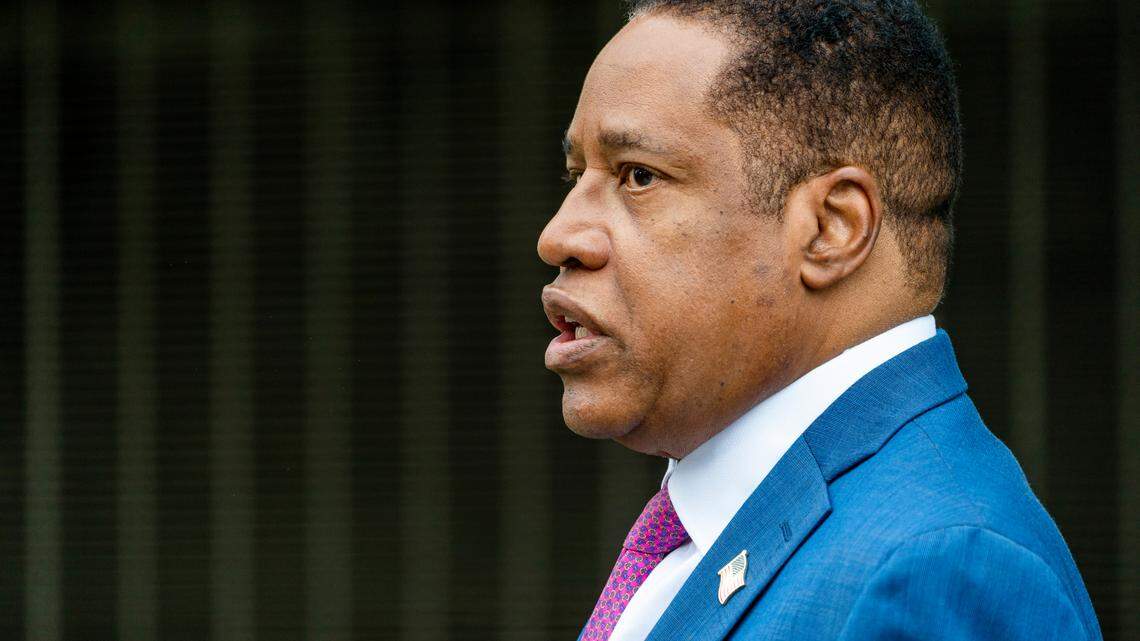
Last month, in the days after Larry Elder declared his candidacy, the longtime radio talk show host met a Sacramento Bee reporter for an interview.
Standing on the grounds of the Capitol, Elder fussed over his pocket square before giving the OK for cameras to roll. He spoke easily about homelessness, education and race, rattling off a litany of articles, scholars and studies in the confident style he has honed on his show.
Radio might be his medium, but several passersby recognized him immediately. He had to stop to take selfies.
“I think I have a way of explaining things that Joe and Joan Sixpack can understand,” he said.
Elder, 69, has spent decades cultivating a following of conservative listeners and readers. The self-described “Sage from South Central” hosts a radio show airing his libertarian views on everything from “Medicare for All” to the Black Lives Matter movement — two concepts he vehemently opposes.
He was one of the last candidates to enter the recall race before the July deadline. Despite a late entry, he quickly shot up in the polls, outpacing other Republicans who had been campaigning for months.
Elder calls his ideas “common sense.” The reason so many Californians are registered Democrats, he said, is because the mainstream media has silenced conservative viewpoints like his.
He told members of McClatchy’s California editorial boards that if elected, his first actions would include facilitating the construction of cheap housing by waiving the landmark legislation known as CEQA, the California Environmental Quality Act, which Gov. Ronald Reagan passed as a means of reducing environmental impact during construction.
Newsom’s administration has waived portions of CEQA three times throughout the pandemic to facilitate the construction of homeless shelters and housing, according to Jason Elliott, senior counselor for the governor. The California Department of Transportation, or Caltrans, is currently authorized to clear homeless encampments on its land, which Newsom supports.
Like other Republicans, Elder said he would punish criminals, clear the forest floors and fix all the problems Newsom has been unable to repair. But Elder has also promoted dubious theories about the COVID-19 vaccine, climate change and systemic racism.
In a July 7 radio segment, Elder invited testimony from a Texas gynecologist who falsely claimed the COVID-19 vaccine is dangerous and, for that reason, targeting minorities. She also claimed, without evidence, that Microsoft founder Bill Gates is “behind things like this,” because he wants population control, a conspiracy theory often touted by the alt-right.
“I’ve heard a lot of doctors say the shot might even be dangerous for kids who are younger than the age of 12,” Elder told listeners.
The Centers for Disease Control and Prevention says the vaccine is safe and effective at preventing COVID-19. The Food and Drug Administration, the federal authority overseeing vaccine safety, has not yet approved the jab for children younger than 12, though authorization is expected this winter.
In a 2008 editorial slamming then-Democratic candidate Barack Obama, Elder suggested that global warming is a “total crock of s---.” More recently, he said he believes in climate change, but is not an “alarmist” like some Democrats.
Elder also blames rising crime on recent protests against police brutality.
“This business about the police engaging in systemic racism is false. It’s a lie,” he said in a recent interview. “Police, because of this false accusation, are engaging in what’s called passive policing as opposed to proactive policing.”
Since Elder entered the recall scene, Democrats have been using him as an example of extremism on the ballot.
“Elder is the closest thing we have to Trump in California,” said Juan Rodriguez, leader of the Stop the Republican Recall committee.
Newsom’s team often trots out Elder as a warning about what’s to come if the recall succeeds, noting, for example, that he thinks the minimum wage should be zero.
“The fight would be for 15 cents with Larry Elder,” Newsom said at a recent campaign event.
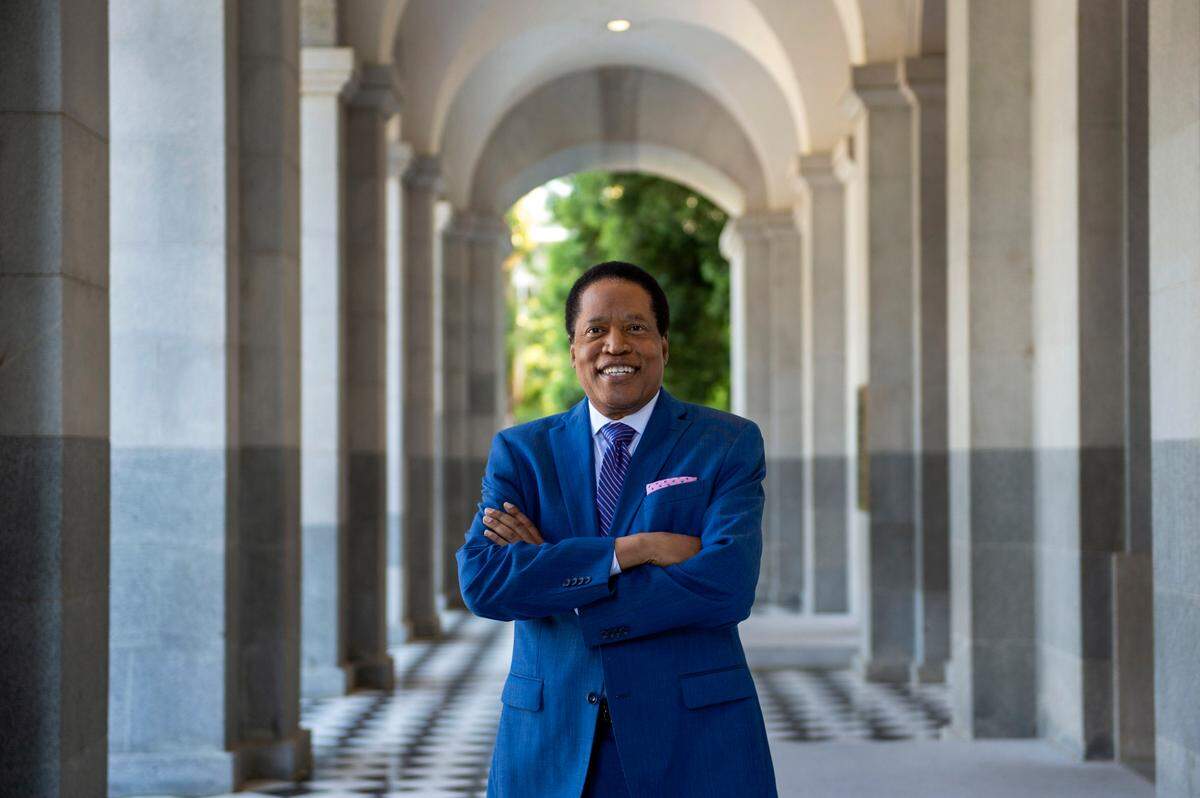
Nationally syndicated radio talk show host Larry Elder joins the list of Republican candidates seeking to replace Gov. Gavin Newsom in the Sept. 14 recall election. He is photographed at the Capitol in Sacramento on Thursday, July 15, 2021. Lezlie Sterling lsterling@sacbee.com
Florida as the COVID model
John Cox has Newsom in his sights for the second time in three years.
In 2018, he was the party’s nominee for governor, focusing his campaign on California’s cost of living and earning the endorsement of then-President Donald Trump. Newsom defeated Cox by a margin of more than 20 points.
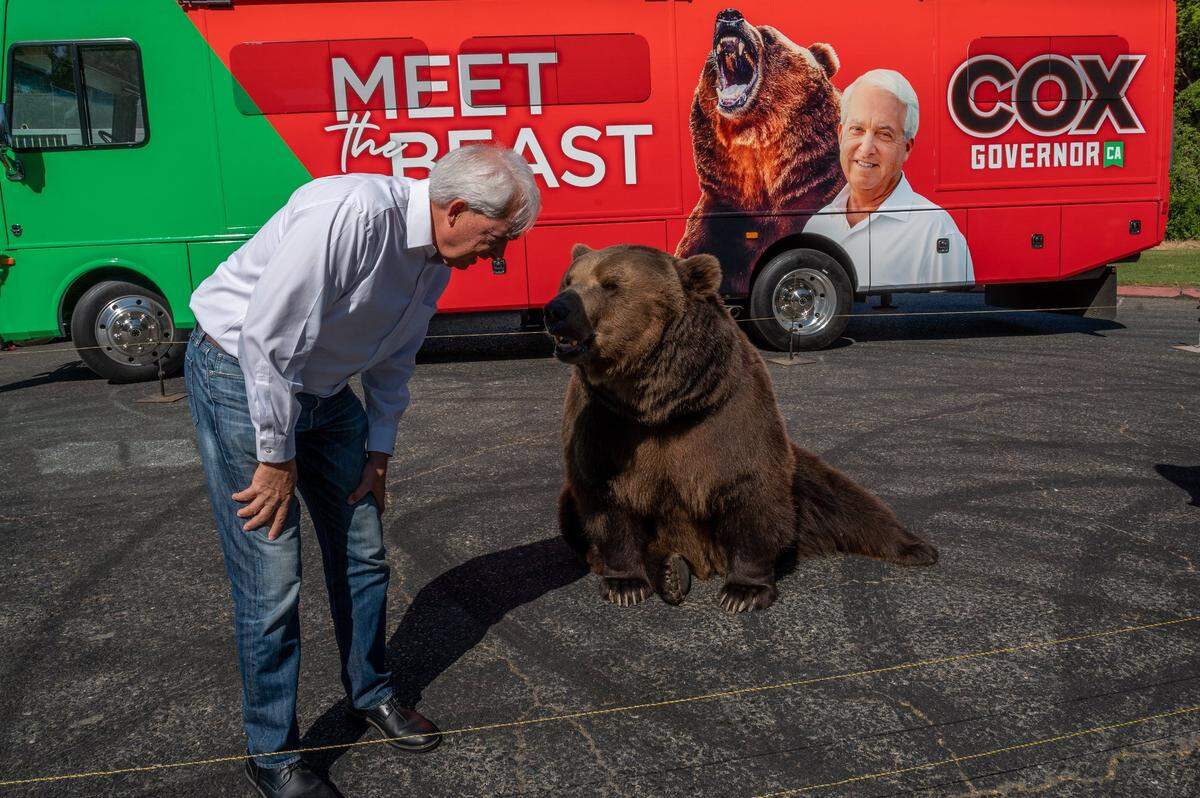
He altered his approach for this campaign, branding himself as the “beastly” candidate who can take on “pretty boy” Newsom. He scarcely mentions the former president, and has added props: a live bear, a giant monopoly board and a ball of trash.
A longtime developer and accountant, Cox, 66, spent most of the last 15 years unsuccessfully running for public office in Illinois and California. He leans heavily on his private-sector acumen, telling voters he’s an outsider who will run the state like a business.
As governor, Cox says, he would repeal regulations that make it more expensive and more time-consuming to build in California. He often criticizes the state for red tape he says makes housing too expensive. That’s why he says he builds homes in the Midwest, not the Golden State.
When it comes to COVID-19, Cox points to Florida as an example of how to maintain economic excellence in a pandemic.
The Sunshine State, under GOP Gov. Ron DeSantis, reopened businesses and schools early on and maintained a lower unemployment rate than California. The death rate was higher in Florida, however, and the state is now the epicenter of a national spike fueled by the delta variant. According to the Washington Post, Florida now accounts for a fifth of all new U.S. infections and current hospitalizations.
John Cox, Republican recall candidate for California governor, begins his statewide “Meet the Beast” bus tour on Tuesday, May 4, 2021 with Tag, a Kodiak brown bear, at Miller Regional Park in Sacramento. Renée C. Byer rbyer@sacbee.com
Cox said in a debate earlier this month that he believes people who already contracted COVID-19 have antibodies and don’t need the vaccine. His opinion runs contrary to CDC guidance, which recommends the vaccine even if someone was previously infected.
Cox caught COVID-19 in the early stages of the pandemic and later got the vaccine.
“This disease is an awful one. I had it very early on, and it’s, it’s not something you want to have, but it’s 99.9% survivable by people who are in decent health who aren’t elderly,” he said.
Both Cox and former San Diego Mayor Kevin Faulconer have proposed hefty tax cuts they say will benefit California’s middle class.
Faulconer’s plan would reduce the marginal tax rate to zero for the first $50,000 earned by individuals, and the first $100,000 earned by families, for those earning less than $1 million per year.
Cox wants to slash taxes 25% across the board, which would lower rates for both the middle class and the state’s ultra-wealthy. California has a progressive tax structure, with people earning more than $1 million paying a state income tax rate of 13.3%.
The tax cuts would undoubtedly lower state revenue. Of the $175 billion California expects to collect in taxes and fees during the next year, about $123 billion will come from personal income tax. Cox argues he’d make up for it by reducing state spending by $30 billion in his first year.
He wants to scuttle the state’s high-speed rail project and cut down the film tax program, which gives financial incentives to companies that shoot in California. He also plans to cut costs by slashing state prison renovations and health care for undocumented immigrants.
Cleaning up homeless camps
Kevin Faulconer has worked to position himself as the pragmatic choice for recall voters —distancing himself from Trump and emphasizing his record as the former mayor of San Diego.
“A lot of folks have said ‘Kev, your campaign is so serious, you don’t want to come off as too vanilla,’” he said in a recent Twitter video celebrating National Vanilla Ice Cream Day. “You don’t have a bear, you don’t have a big ball of trash, and you don’t have Hollywood fame.
“I don’t think I need any of that. What I do have is a plan to cut taxes. I do have a plan to fix our unemployment system, and I have a plan to reduce homelessness, just like I did as mayor of San Diego.”
Faulconer, 54, who got his start working on campaigns for Republican Gov. Pete Wilson, spent six years as San Diego mayor, with a record the San Diego Union-Tribune described as “remarkably checkered.” The newspaper credited him, however, for reducing the city’s homeless population by 12% between 2019 and 2020.
Visiting a homeless encampment along Highway 160 in North Sacramento earlier this summer, Faulconer stood in front of a pile of trash as residents milled around. He had a plan, he said, to take people off the streets and clear the debris.
The candidate touched on his mayoral experience, saying he would tackle homelessness statewide in the same way he did in San Diego. He says he would ensure enough beds at shelters, and compel the homeless to use them.
“I feel very, very strongly that we have to change what we are doing as a state,” he said, standing in the shade of the overpass, surrounded by a foul-smelling compilation of discarded clothes, boxes and other random litter.
He would also direct state agencies to clear out encampments on state property, such as parks and under interstate overpasses. One key aspect of his approach is ensuring public access to public spaces — requiring state and local agencies to keep sidewalks, parks and beaches free of homeless encampments and debris.
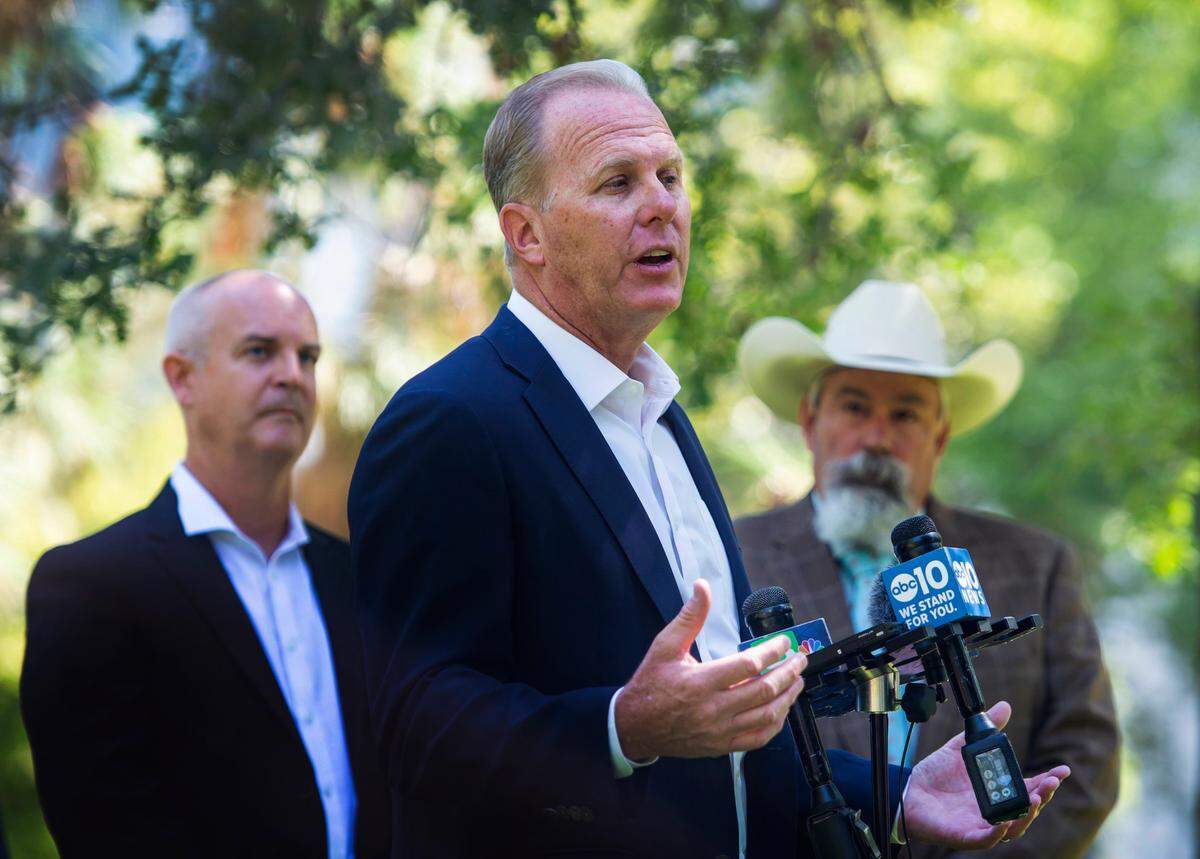
Former San Diego Mayor and California recall candidate for governor, Kevin Faulconer, speaks about his plan to prevent wildfires during a press conference at Capitol Park in Sacramento on Tuesday, July 13, 2021. “I am going to treat this like the emergency that it is,” Faulconer said. “And as governor I will declare a statewide emergency to allow for fuel reduction for all the projects on the list that haven’t been able to go through.” Sara Nevis snevis@sacbee.com
“I fundamentally believe that every human being in California has a right to shelter,” Faulconer said in June. “I also believe that when we provide it, they have an obligation to use it.”
Faulconer launched his campaign in February, basing it on the need to take control of the state and reopen schools. He said it was a travesty that public schools were stuck in remote learning while private school students attended class in-person.
The state’s vaccination status remains incomplete, with just under 64% of residents vaccinated as cases and hospitalizations continue to rise. Faulconer prefers an educational approach.
“I think we’ve got to continue to redouble our efforts to educate California, particularly those who have been hesitant about the benefits of the vaccine, vaccine safety, and how, ultimately, vaccines are how we’re going to get out of this,” he said in a recent interview.
Ending the emergency order
Last year, while Newsom issued one executive order after another as the coronavirus hit California, Assemblyman Kevin Kiley devoted his energy to fighting what he considered gubernatorial overreach.
As governor, Kiley says he would rescind the emergency order California has been under since March 2020. Newsom argues the order is still necessary in order to draw down federal resources.
Under an emergency order last year, Newsom issued multiple executive orders to free up resources and, among other things, allow California to conduct the 2020 election almost entirely by mail.
Kiley, who represents the Rocklin area in the Legislature, characterized the orders as Newsom inflicting his own “one-man rule” on California.
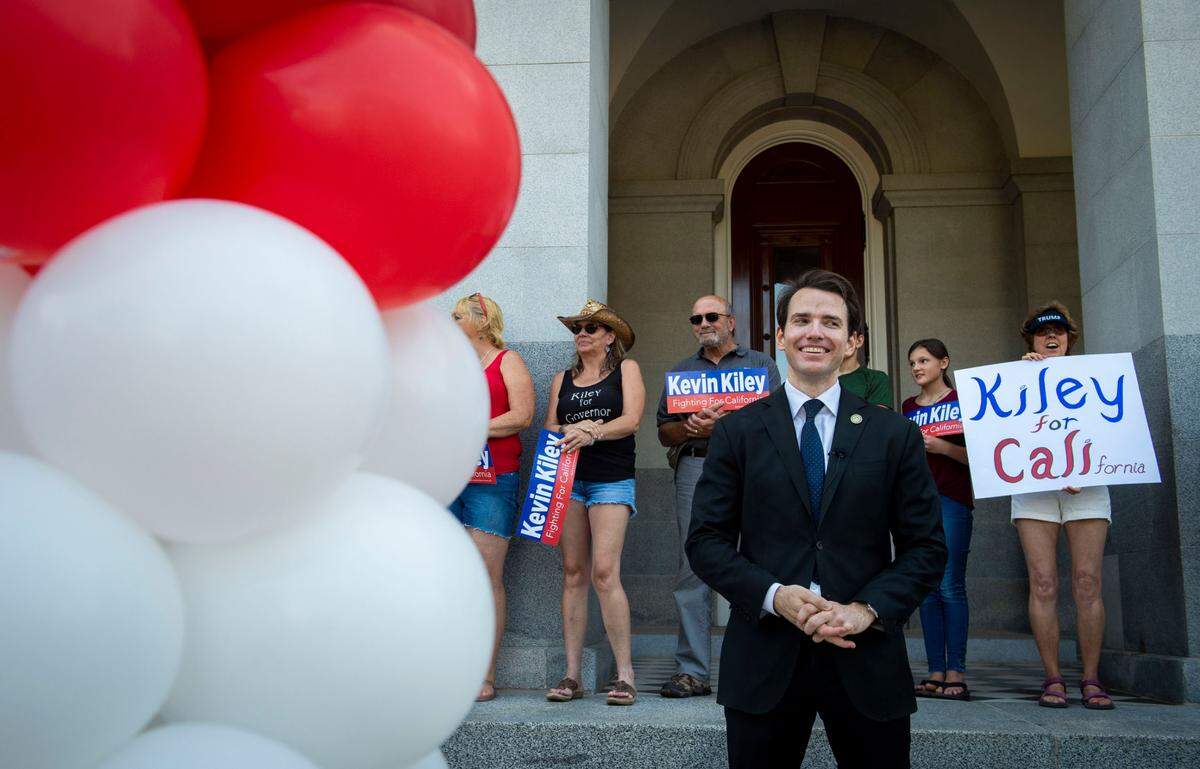
Assemblyman Kevin Kiley, R-Rocklin, stands with supporters on the west steps of the Capitol on Saturday, July 10, 2021, to officially kick off his campaign to replace Gov. Gavin Newsom in the recall election. Lezlie Sterling lsterling@sacbee.com
He and Assemblyman James Gallagher, R-Yuba City, sued the Democratic governor, arguing that Newsom was unilaterally changing the law, a function of the Legislature, and therefore violating the separation of powers between branches of government. A Superior Court judge initially sided with the Republican lawmakers, but an appeals court overturned the ruling. Kiley and Gallagher appealed the ruling to the state Supreme Court, which declined to hear it last week.
For months, Kiley has campaigned alongside recall proponents, calling for Newsom’s removal on the grounds that he is America’s “most corrupt governor.” (That’s also the title of his self-published book, which you can buy for $10 on Amazon).
He has the support of original recall proponents Orrin Heatlie and Mike Netter. If elected, Kiley would be the youngest governor in the nation at 36.
In the Legislature, he has been a vocal critic of the state’s teachers unions, which he says put their own interests ahead of children and parents during COVID-19. Throughout the pandemic, he has fought for businesses to have the opportunity to open if they want, and has called for California to open schools for months in spite of dangerous COVID-19 levels. The idea that opening schools during the pandemic was unsafe is a “big lie,” according to Kiley
A key aspect of his platform is leaving COVID-19 decisions up to individuals.
“I’m 100% against a mask mandate at the state level,” Kiley said during the debate.
A Democratic Legislature could do a lot to override or inhibit a Republican governor, said Levinson, the Loyola law professor. For many voters, the person at the helm of state government doesn’t have a direct impact on their lives. It’s unlikely to change when they go to work, what they make their kids for dinner, or what house they live in.
But during times of emergency or disaster, the person making executive orders could drastically change a state’s trajectory.
After Sept. 14, it could be the guy with the bear. Or the radio host. Or any one of the other 44 candidates who say they know better than Newsom what’s best for California.
Newsom, in a recent voter turnout event, urged his supporters not to be complacent. Child care, women’s rights, immigrant rights, climate change,and the future of the national Democratic party,are on the ballot, he said.
“So much of what we take for granted as Californians,” Newsom said. “That will now be put to a vote.”
For more on the recall candidates, see our Voter Guide.