The recall lost. Will these candidates take on Gavin Newsom again next year?
READ MORE
California Recall Election
Get the latest news and opinion on the recall election of California Gov. Gavin Newsom.
Expand All
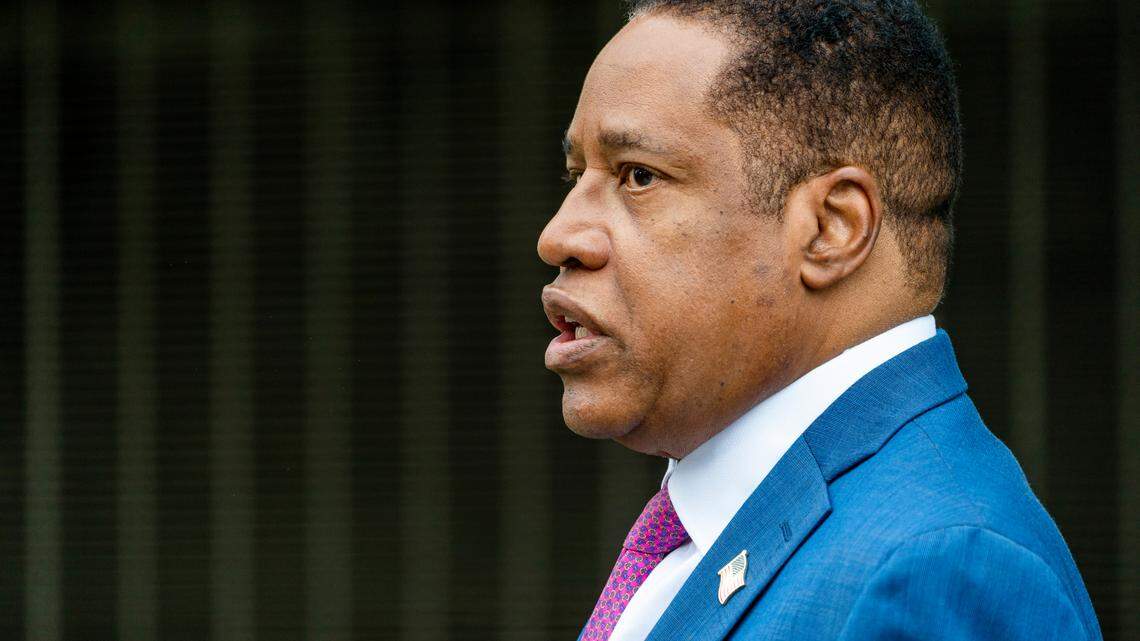
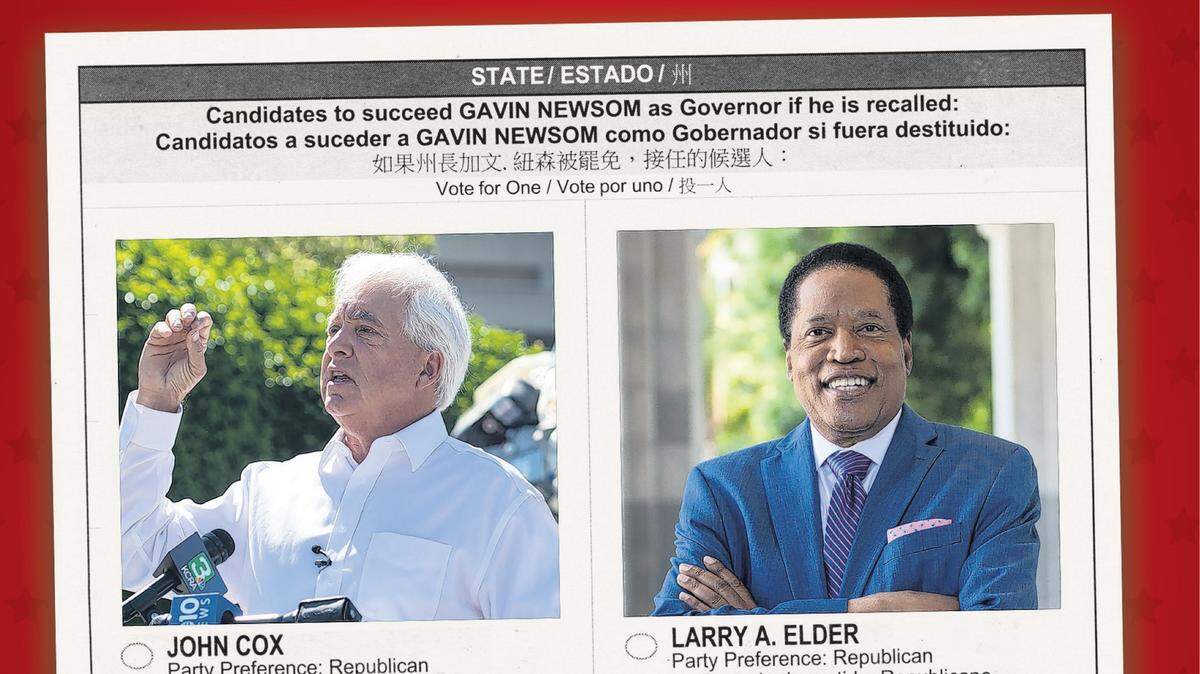
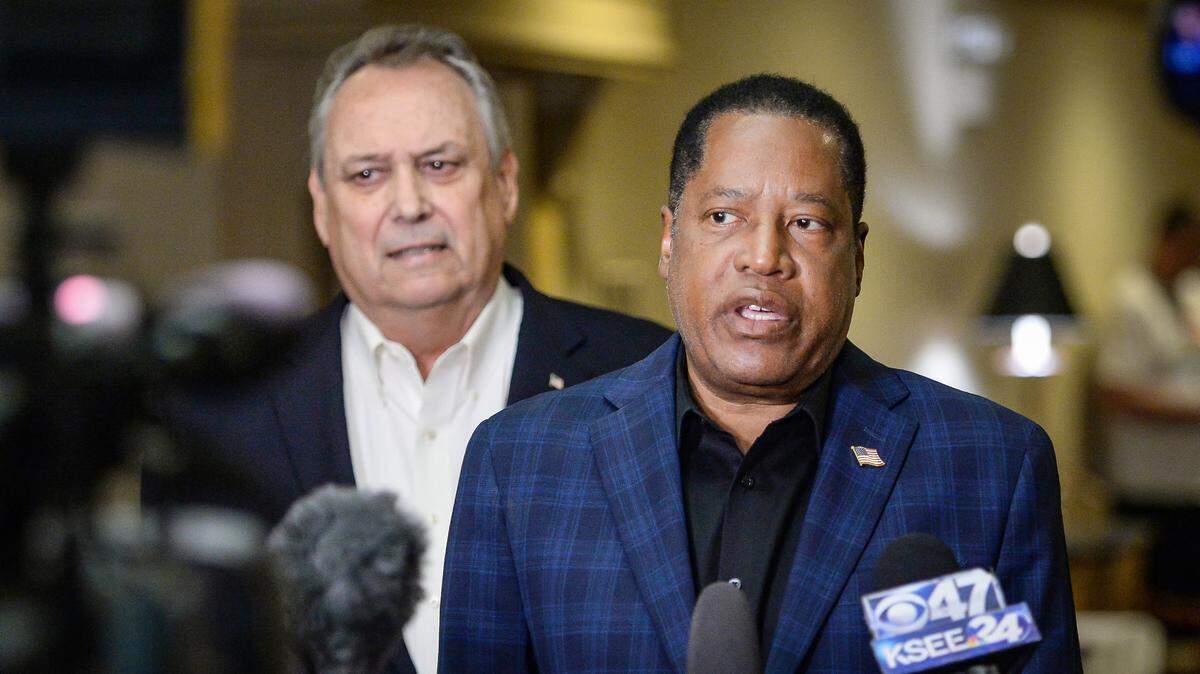
Larry Elder was leading the pack of 46 replacement candidates Tuesday evening as initial results from the effort to recall Gov. Gavin Newsom rolled in.
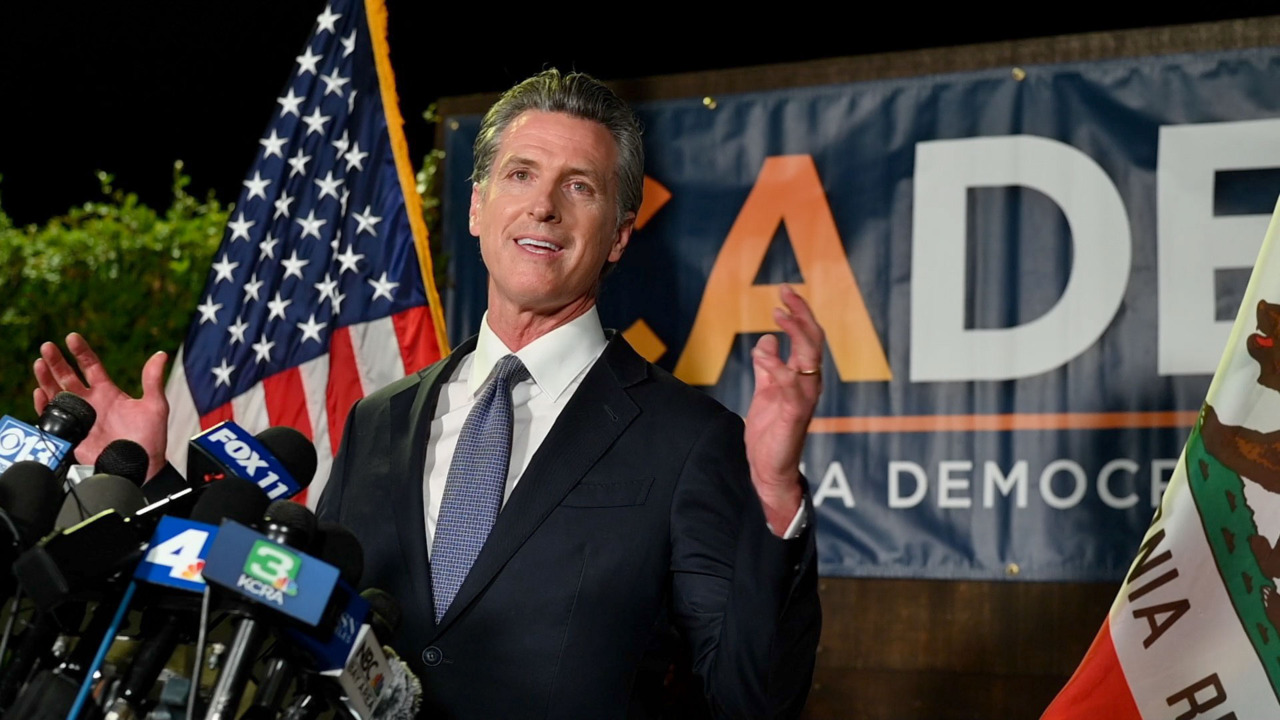
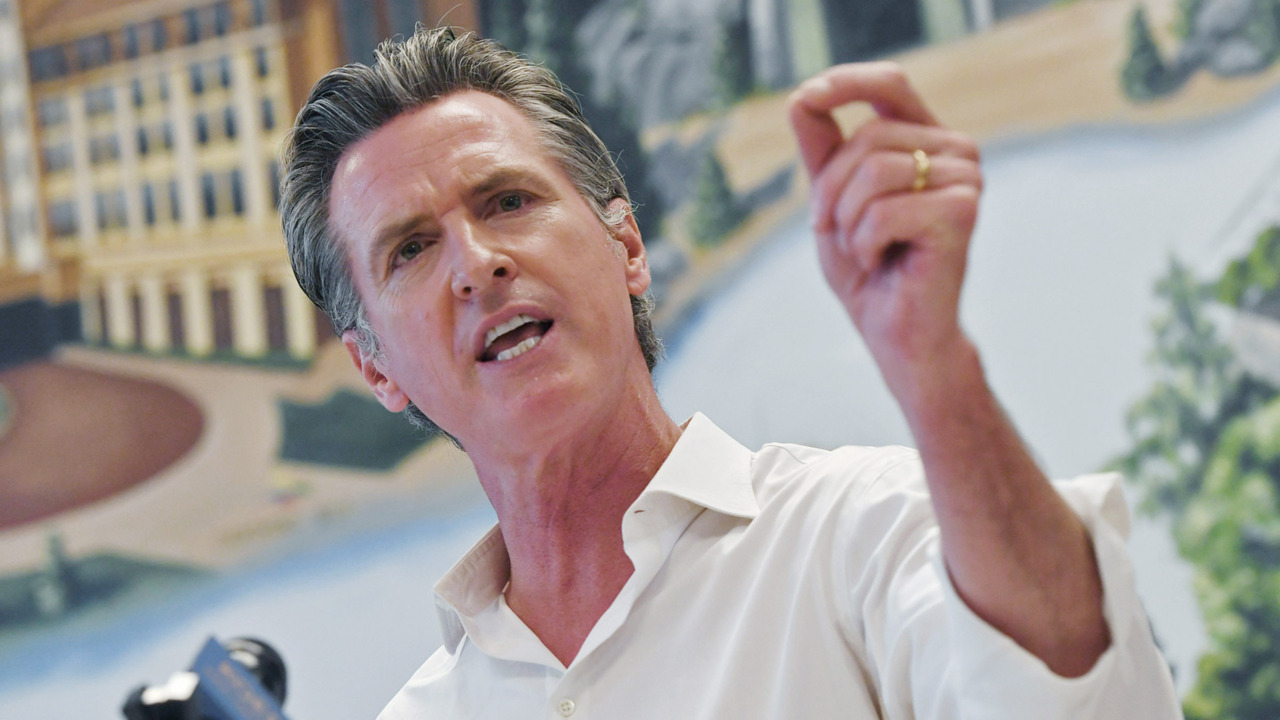
At 8:46 p.m., the Associated Press called the election in favor of Newsom. Since the recall effort failed to earn a majority of votes on question one, the second question, which allows voters to pick a replacement candidate, is moot.
It is unclear whether any of the replacement candidates will run again against Newsom in the regularly scheduled June 2022 primary election. Those hoping to challenge Newsom have until March 11 to declare their candidacy.
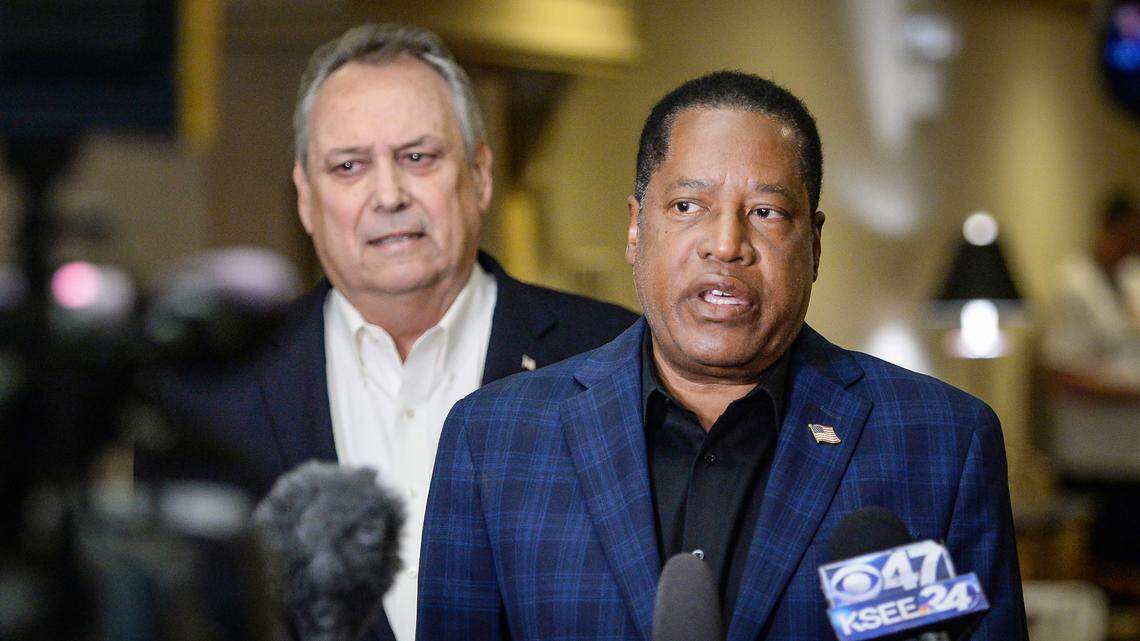
Elder, on Tuesday, told radio station KMJ Now that he has become a “political force” in California, and he doesn’t intend to “leave the stage” if he loses the recall.
Elder, a Republican, led with 42.6%of the vote on question two, followed by YouTuber Kevin “Meet Kevin” Paffrath, a Democrat, at 11% and former San Diego mayor Kevin Faulconer at 9.8%.
Faulconer delivered remarks around 9:30 p.m., after the race was called for Newsom, and said “no matter what happens next, there is another election in 14 months, and this recall showed when the race is actually about Newsom his failures, he can be beat.”
As far as running for governor next year, Faulconer said he’s going to take the time to talk with his family and supporters before making a decision.
A significant number of voters seemed to bypass the candidate option altogether. Question two had about half the votes as question one early in the night.
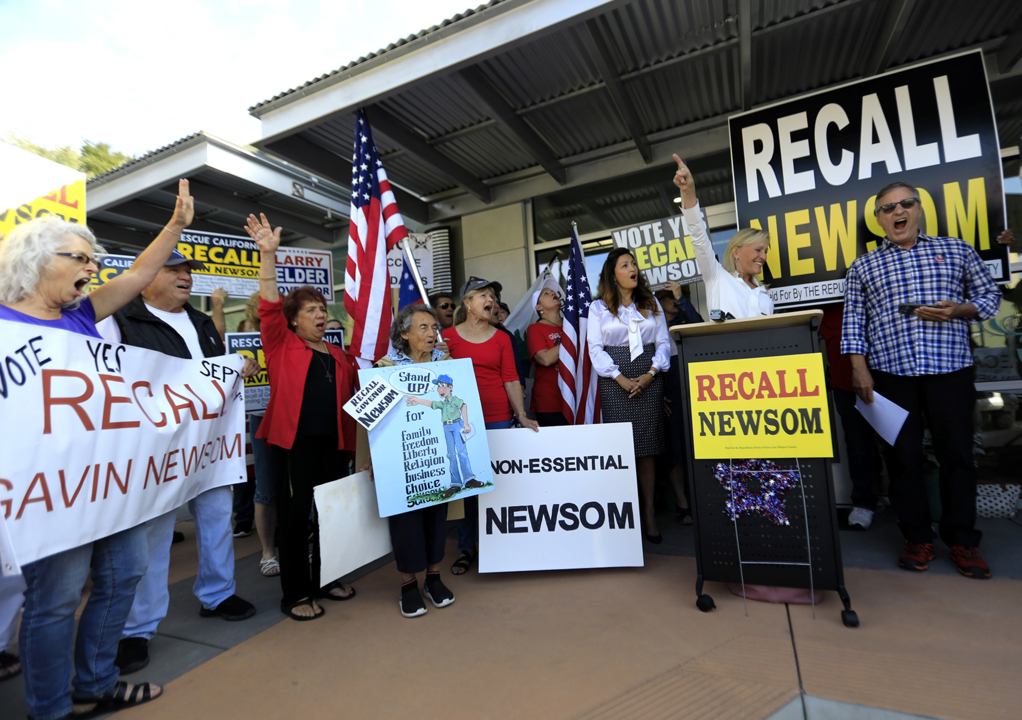
The effort to remove the first-term governor has been more than a year in the making. A petition first filed in February 2020 by a retired Yolo County sheriff’s sergeant who was distraught over Newsom’s support of sanctuary cities garnered nearly 2 million signatures over the course of seven months, fueled, in large part, by discontent over Newsom’s efforts to slow the spread of the coronavirus.
Leading Republicans promised to fix the decades-old problems that Newsom has been unable to solve, including homelessness, housing costs and the state’s cumbersome unemployment benefits system. They also promised to roll back the state’s mask mandates and COVID-19 vaccine requirements for school employees and health care workers, which they argued are unnecessary and, in some cases, a violation of individual liberties.
Such an election has happened only once before in the state’s history, when Democratic Gov. Gray Davis was removed in 2003 and replaced by Republican Arnold Schwarzenegger.
For California Republicans, it was a chance to crack the Democratic control that has dominated the state for more than a decade.
Larry Elder leads on question two
Elder, who spent decades growing an audience of like-minded conservatives via radio, television and print, was a latecomer to the race, but quickly outpaced his Republican competitors and became the target of Newsom’s defense.
Democrats used his candidacy to argue that the recall was driven by right-wing radicals, and warned voters that an Elder administration would inflict the policies of former President Donald Trump on the blue state.
A native of Southern California, Elder got his start as a lawyer before entering the realm of talk radio. On “The Larry Elder Show,” he shares his libertarian views on the economy, social issues, women’s rights and race that earned him the nickname “the Sage of South Central.” He writes a nationally syndicated column and has published 14 books bashing liberals, feminism and the idea that Black people are disadvantaged in life.
In 2020, he produced and starred in a documentary about Black conservatives titled “Uncle Tom,” a nod to the derogatory term sometimes used to describe a Black person who is seen as subservient to white people. The film is based on the argument that most Black people are brainwashed by liberals and the media into believing they are oppressed.
A first-time candidate, Elder’s campaign was plagued by headlines reporting his views on women, race, and his past relationship with Alexandra Datig, who claimed he once brandished a gun at her while under the influence of marijuana. Elder denied that allegation from Datig, who once worked in the network of Hollywood madam Heidi Fleiss and says the two were engaged until 2015.
Other Republican candidates spent the weeks leading up to the election crisscrossing the state in behemoth campaign buses: meeting voters and attending debates with members of the press. Elder, however, largely stayed away from mainstream media, opting instead to attend fundraising events with friendly crowds and appear on conservative talk shows.
In the days preceding the election, Elder told reporters he was prepared to file lawsuits should any “shenanigans” occur in the vote-counting process. A website linked on Elder’s campaign page suggested he was preparing to challenge a Newsom victory without offering any evidence of problems and before a winner had been determined.
The page invited voters to sign a petition to investigate the “twisted” results of the recall. The site also claimed that “statistical analyses” used to detect fraud in other countries have “detected fraud in California resulting in Governor Gavin Newsom being reinstated as governor.”
For much of the campaign, Republican candidates refrained from going after one another. That changed when Elder entered the race.
Former San Diego mayor aimed for center
Faulconer was the first to take a hard swing at Elder during a debate hosted by the Sacramento Press Club in August. Elder has suggested that employers ought to be able to ask women about their plans for having children and discriminate against mothers if pregnancy or child rearing impacts their work performance.
Faulconer called Elder’s statements about women in the workplace “bulls---.” Days later, when Politico published allegations from Elder’s former fiance, Faulconer called on Elder to drop out of the race.
The former mayor was one of the first to enter the recall contest, months before it was even clear there would be an election. He launched his campaign in February outside a closed public elementary school, vowing to reopen the California classrooms that had been emptied by Newsom’s COVID-19 restrictions.
In the months since, Faulconer has embraced the label of the “vanilla candidate.”
He says he didn’t need celebrity, like Caitlyn Jenner, or flashy campaign props like John Cox. Faulconer was different from others, he argued, because he had serious plans for taxes, unemployment, and homelessness. He also argued he could bring together Republicans, Democrats and independents to solve California’s homeless, wildfire and affordability problems.
By the tail end of the campaign, some Democratic strategists were urging voters to choose Faulconer as a backup on the recall ballot because, as an anonymous consultant told the San Francisco Chronicle, “he’s not insane.”
The one with the bear
Cox entered the race as a familiar face in California politics. The longtime businessman, originally from Illinois, ran in the 2018 gubernatorial election, losing to Newsom by a margin of nearly 20 points. Cox in 2018 earned the endorsement of former President Donald Trump.
This time around, Cox struggled to break out from the field of Republicans despite attention-grabbing campaign props that included a an eight-foot tall ball of trash, meant to represent the homelessness problem, and a 1,000-pound live Kodiak bear named Tag to brand himself as the “beastly” candidate.
A tough race for Caitlyn Jenner
Jenner’s entrance into the race in April gave the recall a national boost.
Jenner, a gold-winning Olympic decathlete and member of the famous Kardashian family, is arguably one of the most well-known transgender people in the world. Upon entering the race in April, pundits and politicos pondered whether Jenner could be the 2021 equivalent of Arnold Schwarzenegger, another celebrity who entered a California gubernatorial recall race in 2003 and won.
After a few appearances on national media, however, including “Hannity” and “The View,” Jenner fell behind in polls. Some questioned her commitment to the race when she paused over the summer to travel to Australia and film a reality TV show.
Kiley backed by the grassroots
Assemblyman Kevin Kiley, R-Rocklin, backed the recall long before entering as a candidate himself. The five-year legislator latched onto the movement last year and wrote a book supporting the effort. His argument for change centered mostly on what he said was Newsom’s overreach in issuing COVID-19 rules and what Kiley considers a lack of integrity in the California government.
His supporters included many of the volunteers and proponents who got the recall effort across the finish line, including leader Orrin Heatlie, the retired Yolo County law enforcement officer who filed the petition in February 2020.
Democrat ‘Meet Kevin’ Paffrath
Newsom and allies worked hard in the early months of the campaign to discourage any other prominent Democrats from entering the race. Such a candidate would confuse voters, Newsom loyalists argued, and dilute the message that this was a “Republican power grab.”
But that didn’t stop everyone. Of the 46 candidates, 10 were Democrats.
Perhaps most well-known among them is Kevin “Meet Kevin” Paffrath, the real estate mogul and YouTube star with more than one million subscribers on his channel, where he offers financial and entrepreneurial advice. Though Paffrath’s candidacy was largely ignored by the Democratic Party, he worked to position himself as the leading Democratic replacement candidate.
This story was originally published September 14, 2021 at 8:20 PM with the headline "The recall lost. Will these candidates take on Gavin Newsom again next year?."