
Will my child be held back? How Fresno schools will address Fs and learning loss
As students in the Fresno area continue to earn more failing grades during the pandemic, parents worry about learning loss and how those grades will impact their children.
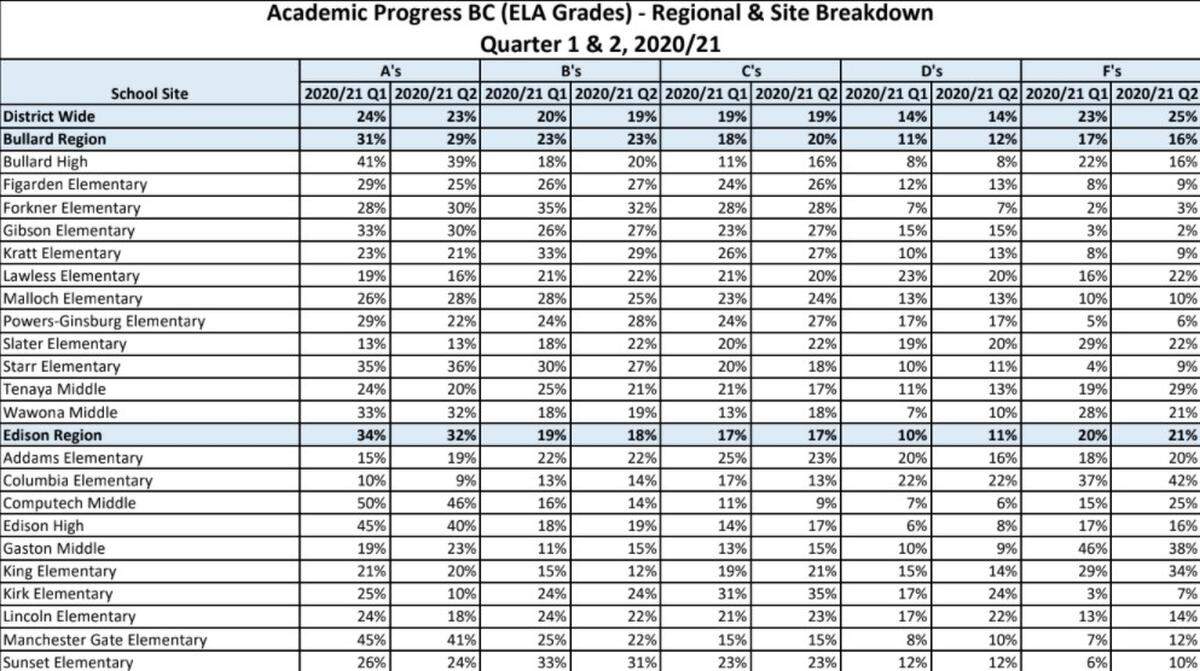
In the second quarter of the school year, which ended in December 2020, 25% of Fresno Unified students in 3-12 grades had an F in English, compared with 11% the year prior, according to district data. In math, 27% had a failing grade, compared with 15% in the same period before the pandemic.
Among the most likely to have a failing grade were Black, Latino and Native American students, along with foster youth and those with disabilities. Pacific Islander students were more likely to be failing English, but more likely to be passing math, data show.
Clovis Unified reported about a 5% increase in failing grades in 7-12 grades, according to spokesperson Kelly Avants.
Central Unified did not provide data, but spokesperson Sonja Dosti said the district is seeing more Ds and Fs, “similar to the national trends.”
Although Clovis Unified has brought back about half its student population to campuses in the last few months, Fresno and Central are waiting until after Spring Break to return students for a hybrid schedule a few days a week.
Avants said now that many students are back, “We have had anecdotal teacher reports that students who were struggling online have shown an increase in engagement, work completion and academic progress upon returning onsite, but we also have students who are academically successful online.”
Will my child be held back?
Fresno and Central Unified officials are not considering retention, or holding students back a grade, due to learning loss during the pandemic.
“Students will not be held back as a result of grades earned while in distance learning,” Dosti said. “Instead, they will be provided varied supports during the next school year to address gaps in standards and skills and to accelerate their learning so that they can reach greater success next school year.”
Clovis Unified is not encouraging the use of retention either, according to Avants.
“Research shows that retention is not positively correlated with increasing student achievement, so we need to take a look at the whole child when making a determination about whether or not retention is appropriate,” she told The Bee. “Every student is unique in their needs and the promotion and retention criteria is discussed with parents both during the fall and in spring as the end of the school year approaches.”
Still, avoiding Ds and Fs is especially important for high school students, as teens must earn enough credits to graduate.
“If a student fails a class, he/she must make up the credits they failed to earn in that class,” Avants said. “This is not typically done through retention, instead we provide credit recovery opportunities for students during the school year as well as through summer school.”
Dosti said summer school is one way to make up for credits.
“Many students failing a course from the fall semester are already enrolled in the course recovery class this spring and are also registering for summer school,” she said.
Central Unified is offering in-person sessions that include literacy camps for kindergarten through eighth graders, and chances to make up original credits and earn college credits for high schoolers.
Avants said summer school at Clovis Unified will be used the same way it is every year: to support students in need of additional academic intervention.
“Students not meeting the promotion criteria are eligible for summer school, as they also are in non-pandemic years,” she said.
Officials said for now, teachers are modifying and structuring grading in their own ways to accommodate distance learning.
“I know that our teachers are balancing rigor and grace as they navigate learning during the pandemic,” Avants said.
The Education Lab is a local journalism initiative that highlights education issues critical to the advancement of the San Joaquin Valley. It is funded by donors. Read more from The Bee’s Education Lab on our website.