
A California police chief remarried and left his sons. His dead wife’s family wants answers
READ MORE
Instant Suspicion
Seven years after her death, police are questioning whether this California woman was murdered by her husband. Click the arrow below to read more about the death of Sara Easton and the investigation of her case.
Expand All
What follows is the final piece in a four-part series that examines the circumstances around the death of Sara Easton. This account is based on interviews with family members, friends, law enforcement officials and forensics experts, as well as newly released investigatory records. Click here to read Part 1, here to read Part 2 and here to read Part 3.
Johnny and Aaron Matthews started badgering the police just a few months after their sister, Sara Easton, died.
Once a week, the brothers took turns calling the Yuba City police. They would plead for an update on the investigation into her death.
At first, detectives took their calls, explaining why they couldn’t tell them anything about the status of the case — one in which investigators were trying to determine whether Sara had shot herself or been killed by her husband.
Aaron Easton, though, was more than just her husband; he was also the police chief of neighboring Marysville. He was the one who had found her body in their bedroom. He was the one who called 911. He was the one who told them it was suicide.
“They would start giving us the legalities of, ‘Well, police reports are only public record if a crime’s been committed; suicide is not a crime,’” Johnny said.
When the brothers pointed out that her death was never ruled a suicide, “They would rephrase it to, ‘Well, there’s no charges being pressed, so at this time, there’s no crime present.’ Why can’t we have the records, then, if there’s no crime present? They would always shut you down.”
Each time it was the same runaround. They would call the non-emergency line. The dispatcher would transfer them to an investigator. The investigator would give them non-answers. Inevitably, Johnny said, “After about six weeks of doing it once a week, the dispatcher would just go, ‘Oh, the investigator’s not available. You can leave them a voicemail.’”
It always ended the same way, too: With “the silent treatment.” Once the dispatcher started sending them to voicemail, “They would just never return the voicemails.”
Police silence was standard after Sara’s death.
That silence bred distrust.
Over the past seven years, nearly all the investigators closest to the case have changed departments or left law enforcement entirely.
More than a dozen investigators declined to comment for this story. Among them were Chad Cornwell, the first officer to arrive at the Eastons’ house; Nick Morawcznski, the former lead detective who is now the undersheriff in neighboring Yuba County; Brian Baker, another lead investigator who is now the police chief in Yuba City; Kirsten Wallace and Anna Brewer, the criminalists the California Department of Justice assigned to the case; and Robert Landon, the since-retired Yuba City police chief.
This series also does not include any response from Aaron Easton. He did not return multiple voice messages left by The Sacramento Bee over the past four months. A reporter sent an email to an account he had used. Easton did not answer text messages delivered to his iPhone. One message contained an image of a letter outlining the contents of The Bee’s investigation. After reporters mailed Easton a registered letter, he never retrieved it from the local post office.
In a final attempt to reach Easton, a reporter called his mother, Sharon Easton. She said she had no comment and wouldn’t relay a message: “My son’s been through enough hell.”
When investigators spoke to The Bee, they often did so vaguely. They said there was never enough evidence to prove one way or another whether it was suicide or homicide. And so the case has been in limbo.
“I’m sure for the family it has been hard,” said Robert Brokenbrough, a former top investigator for the Sutter County Sheriff’s Office, “and I truly hope they can find peace and get some closure at some point.”
Sutter County Sheriff J. Paul Parker, who had authority over the autopsy and retired from the office with Sara’s manner of death unresolved, said in an interview that this case was problematic from the start.
The gunshot wound was inconsistent with many of the suicides Parker had investigated. “It’s from my 35 years of experience on seeing things like this,” he said. “I’ve seen a lot of people shoot themselves. I know what it takes. I know how it usually happens. I know the mechanics involved in a person doing that.”
With Sara’s death, “There were just some things that I just wasn’t satisfied with. And I don’t know if I can ever be made satisfied.”
He declined to go into details. But forensics experts said one factor was particularly suspicious: The shot that killed Sara was to her left temple. She was right-handed.
That said, Parker indicated that he had seen something found at the scene, possibly in a journal or drawing, that suggested Sara had been distraught or potentially suicidal. He declined to say exactly what that evidence was.
Regardless, whatever Sara wrote wasn’t a clear-cut suicide note, and Parker suggested that all the ambiguous evidence might need to go before a grand jury. In his view, “This was a difficult case, right out of the gate. And it was gonna be hard to come to a final conclusion.”
“This is not going to ever be solved on solid science.”
Attorney General Rob Bonta’s Office, within the California Department of Justice, denied The Bee’s multiple requests for records related to the investigation into Sara’s death. Officials cited exemptions for unresolved cases, saying that “documents you seek are all part of a pending investigation file.”
A spokesperson for the Department of Justice and Bonta declined to answer any of The Bee’s questions about the case and, more generally, the agency’s interaction with Sara’s family. The press office repeatedly refused to even identify the spokesperson who responded to The Bee’s email, insisting that the statement should be attributed to an anonymous “spokesperson.”
“As with any matter before our office, we take the investigation extremely seriously,” the anonymous spokesperson wrote. “It’s an open investigation and we do not have any details we can share publicly at this time.”
Pressed to respond to the Matthews family’s concerns that the case has not been thoroughly investigated, eroding the public’s trust in the department, the person said that they “appreciate you sharing the family’s concerns.” They then trumpeted Bonta’s efforts to help victims and their families. On July 20, two days after The Bee’s detailed inquiry, the Department of Justice reached out to Aaron Matthews for the first time in seven years.
In a short meeting that followed, Aaron Matthews said, Supervising Deputy Attorney General Michael Canzoneri indicated that the department was still investigating Sara’s death but would not prosecute a case without the evidence they felt would lead to a victory.
Like the Department of Justice, Yuba City police also declined The Bee’s records requests: On March 30, a Yuba City Police Department records clerk, Elizabeth Stout, said that “because the case is currently under active investigation no documents pertaining to it can be released.”
To be clear, disclosure is entirely at their discretion, regardless of the status of the case. State public records law merely allows them to choose to withhold information from the public in such circumstances. They could disclose whatever they wanted to the Matthews family.
And the Sutter County Sheriff’s Office has essentially said it is waiting for Yuba City and the Department of Justice to conclude their investigations. “The sheriff can’t determine a manner of death until the investigation is done,” Undersheriff Scott Smallwood said. “That’s where we are at this point.”
The delays and lack of transparency have haunted the Matthews brothers. All three — Johnny, Aaron and Jesse —have replayed their last interactions with Sara in their minds over and over, full of sorrow that she died without warning. The brothers cried when they recalled their final moments with Sara. If they’d only known, they would have said something different.
Johnny, the little brother who stole her instant ramen so many times that she always made an extra soup as a buffer, has taken a lesson from this: “Love your family, man. Family get the better of you any day of the week. But if you value your family, or if you say that you value your family, don’t ever not show them that. Because it could be tomorrow that they’re gone, unexpectedly.
“And then seven more years with no answers as to why.”
The unsolved death of a police chief’s wife typically would be a big local news story. But instead, an archival search shows only cursory mentions of the case in the Marysville Appeal-Democrat.
The paper wrote that Sara’s “cause of death has not yet been determined” on Aug. 21, 2015, in an article about the police chief taking a leave of absence. A full month after the gun went off, on Sept. 16, a story said that “Sara Easton, 31, died at her home,” explaining why there would be an arts benefit for her husband and their kids. A news brief a few days later was similar: The reporter explained that Marysville police chief Aaron Easton was back to work, and that he’d taken a four-week “leave of absence after Sara Lynn Easton, 31, died on Aug. 16.”
It is unclear what scrutiny Easton was facing in the police investigation; publicly, he faced no scrutiny at all. After his leave of absence, he went back to hosting coffee-with-a-cop meetings in Marysville.
The following summer, the paper reported that Easton would show some of Sara’s photographs at a gallery in town, with donations going toward a new suicide prevention and awareness foundation he incorporated on Sept. 19, 2016, called “Sara Shines.”
Although investigators had not closed the case on Sara’s death, that Appeal-Democrat article put Aaron Easton’s version of events into the public record for the first time. His claim was thrown matter-of-factly into a dependent clause: “Easton, who committed suicide, was the wife of Marysville Police Chief Aaron Easton,” the newspaper wrote.
Sara’s brother, Aaron Matthews, was livid when he saw that line. He picked up the phone, called the Appeal-Democrat and left a message. He expected a call back from a reporter but instead said the editor of the paper called him.
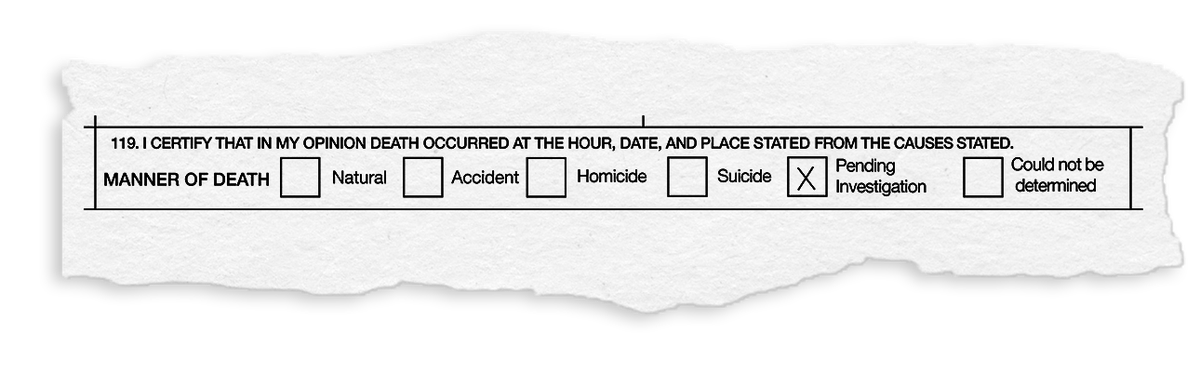
No, his sister’s death had not been ruled a suicide, he said he told the newspaper boss. The case was still open. Any statement to the contrary was patently false. He said he demanded a retraction, but the editor refused and suggested that he had a source close to the case who confirmed it was a suicide — which even the death certificate, then and now, did not actually state.
“I said, ‘I believe Sara may have been killed by Aaron,’” the Matthews brother said. “Explicitly said that.”
The call did nothing to change the story. Steve Miller, the editor at the time, recently told The Bee that he remembered having conversations with members of the Matthews family about the coverage, although he didn’t remember exactly what they discussed. “I do remember the family being adamant about them not accepting that it was a suicide,” he said. “It did cause us to reflect upon how we were phrasing the death.” In a later story about Easton, the writers mentioned that Sara’s death was unresolved.
But over the past seven years, the local paper has not published a substantive follow-up story about the case. And as Sara’s family lived with the anguish of uncertainty, plenty of Yuba-Sutter residents seemed to forget that anything had happened at all.
“I think people just keep their head down and move on,” said Lou Binninger, 73, of Marysville. Binninger, a fringe and occasionally incendiary podcast host, has written the only follow-up articles about Sara’s death. Though some of his claims are rife with unnamed sources, rumor and misinformation — and remain online — Binninger, who knows the Matthews family, is still hoping police will resolve the case.
He’s not optimistic, though. Other than Sara’s family, he said he felt like the only person still asking about it.
Sara’s case lacked public attention, but her police chief husband was about to become an internet sensation.
The Christmas after Sara died, an unhoused family that lived in the river bottoms posted on Facebook that the transmission had gone out on their Saturn. They didn’t have the money to get it fixed, and their two children had to walk more than 2 miles to school each day.
Aaron Easton saw the post and said he immediately wanted to help. But he also knew that spending $400 to buy the family a discounted 2011 Nissan would deplete his own kids’ Christmas fund. He told the kids — Oliver, Adam and Josie — about the homeless family, he said, and they told him to take the money, that there would be other Christmases.
Easton paid for the car, and reporters went wild. The story of the Easton family’s kindness appeared in a flurry of newspaper write-ups and national broadcast news segments.
Then, eight months later, Easton strode onto the stage of the ”Dr. Phil” show. He wore his Marysville police uniform, sans gun, and told the story of his generosity like he had in so many interviews before. The talk show was running a series on local police officers doing good deeds; the mustachioed host said he wanted to counter the critical news coverage from places such as Ferguson and Baltimore after police killed unarmed young Black men. Phil McGraw told the audience that Easton was one of the cops who was “going above and beyond to make their communities better.”
They filmed the show on the one-year anniversary of Sara’s death.
“My wife, who passed away a year ago today actually,” Easton said, “was the motivation we had to do something in her memory to help somebody else.”
He wore a shiny wedding band on his left ring finger, though by then he already had a new girlfriend he’d soon marry.
The episode aired on Sept. 9, 2016. A week later, the International Association of Chiefs of Police named Easton one of the top chiefs under 40 years old. And a few weeks after that, he spoke at an inaugural suicide awareness and prevention walk in Marysville.
Publicly, the narrative had taken hold that Sara killed herself. But charming as Easton seemed, not everyone believed the story he told in the year after his wife died. Aaron Matthews contacted the “Dr. Phil” show before the taping to say he thought Easton was a killer. The story about having to give up presents for Christmas was a lie, the Matthews family said. Easton had received thousands of dollars in gifts and donations after Sara’s death.
Easton told a story about a widower mourning his wife and raising their children, while some members of the community privately thought their police chief was getting away with murder. He remarried, and his career was unsullied by his first wife’s mysterious death.
But he was about to face consequences for something else in his past.
It had been years since Easton taught at Yuba College’s police academy. But one of his students never forgot a ride-along with him in 2008.
The cadet spiraled after that night. She never told anyone in the school administration a long-held secret: Easton had driven her to a secluded area in the dark, shoved his tongue in her mouth and then forced her to give him oral sex.
Not long after, she was kicked out of the academy. The exact reasons for her dismissal are not stated in public records; she attributed it in part to the alleged assault and its aftermath. She dealt with bouts of substance abuse and wound up in the Sacramento County Jail in early 2016. In the jail, she told someone that she’d been sexually assaulted. A sergeant heard the story and contacted the police.
The allegation made its way to Sgt. Detective Joe Million of the Yuba County Sheriff’s Office. Million and Brandon Barnes, a lieutenant, headed to the visiting room in the downtown Sacramento jail. There, in the cell with a partition between them, the woman told them what happened.
As far as she knew, Easton was still a deputy. She hadn’t kept up with him over the years, she said, and she was unaware that he had become the police chief in the county seat.
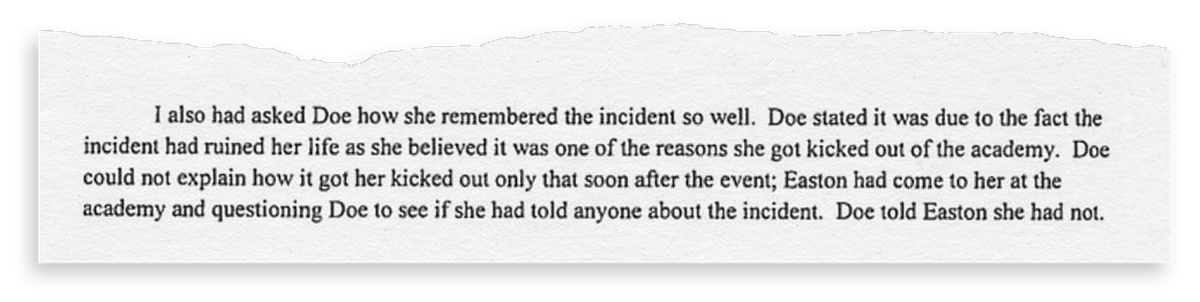
Million is a burly former lumberjack from Weaverville. He’d worked in law enforcement for 19 years at this point. He believed her. In an affidavit, he wrote that he “had asked Doe how she remembered the incident so well. Doe stated it was due to the fact the incident had ruined her life.”
He quietly chipped away at his investigation for more than a year, corroborating much of her account of the night of the alleged assault. Dispatch logs confirmed her memory of taking lunch at Carl’s Jr. The records backed up her recollection of a domestic violence call.
Another woman who’d been a cadet around the same time told Million that Easton had flirted with her during her ride-along, according to the affidavit. She said that Easton verbally harassed her, talking about a sexual fantasy of being in a movie theater with her.
A remarkably similar fantasy turned up in text messages Easton sent to Sara four months before her death.
Million had investigated his share of high-profile homicides and rapes in nearly two decades with the department. The corroborating details were notable on this one, though. He discreetly followed every lead for some 18 months.
Finally, it was time to interview Easton.
Million said Easton walked into the interview room just like a law enforcement officer should: He was commanding and competent. He spoke eloquently as the interview began and denied having any sexual contact with the cadet.
The investigator’s line of questioning turned toward Easton’s personal life — details about his sexual interests. In an interview for this story, Million said they were “personal, behind-closed-doors type questions.” Easton became riled.
The interview ended soon after. “It wasn’t disrespectful or rude,” Million said. “It was just, there was a strong understanding where I knew we weren’t going any further.”
The detective never spoke with Easton again. After 18 months on the case, he and his team had interviewed 55 people and gathered a slew of evidence. They filed a 2,279-page report to Yuba County District Attorney Patrick McGrath, making the case for criminal charges against the police chief.
Chanell Cheney moved in with Easton in November 2016. In July 2017 — six weeks after the breezy Wednesday in May when they celebrated their one-year anniversary — she wrote on Facebook, “If I had this life to do over, I’d find you sooner so that I could love you longer.” According to her social media posts, they became a couple nine months after Sara’s death.
The couple married, and she changed her name to Chanell Easton. She had two young kids and he had three; they shuttled their five children to violin recitals and birthday parties, scrambling to keep the calendar straight and turning to God when things turned difficult. Chanell, an avowed Christian who once told the local paper that “the Scriptures are like an instruction manual for your life,” oversaw the finances at St. Andrew Presbyterian Church in Yuba City.
Their outwardly tranquil and faithful domestic life exploded that winter. On Nov. 9, 2017, news broke of the sexual assault investigation. Two reporters at the Appeal-Democrat obtained copies of search warrants describing the investigation that had been unfolding behind closed doors at the Yuba County Sheriff’s Office.
The first story was published in the morning. The police chief’s attorney called the woman’s story “false and unfounded.” Still, by 5:30 p.m., Easton had resigned. His law enforcement career was over.
Though he faced professional repercussions, he never faced charges. That, despite the conclusion reached by the district attorney, shared publicly in a damning news release three months later.
“Based on a review of the totality of the admissible evidence,” the prosecutor wrote, “the allegation was determined to be credible and, more likely than not, to have occurred.”
While investigators couldn’t prove exactly what happened in Easton’s car that night in 2008, the district attorney wrote in the release that they could prove that he lied to them about other unspecified behavior. But they thought they didn’t have enough admissible evidence for a sexual assault conviction. The case was closed.
Million was dispirited. The detective felt the cadet deserved better from law enforcement. He knew that Easton had been tipped off that the woman had broken her promise to keep the assault a secret — and she was on her own.
“We consider ourselves the shields of the community,” he said. “If you can’t trust the shield to protect you, then who can you trust?”
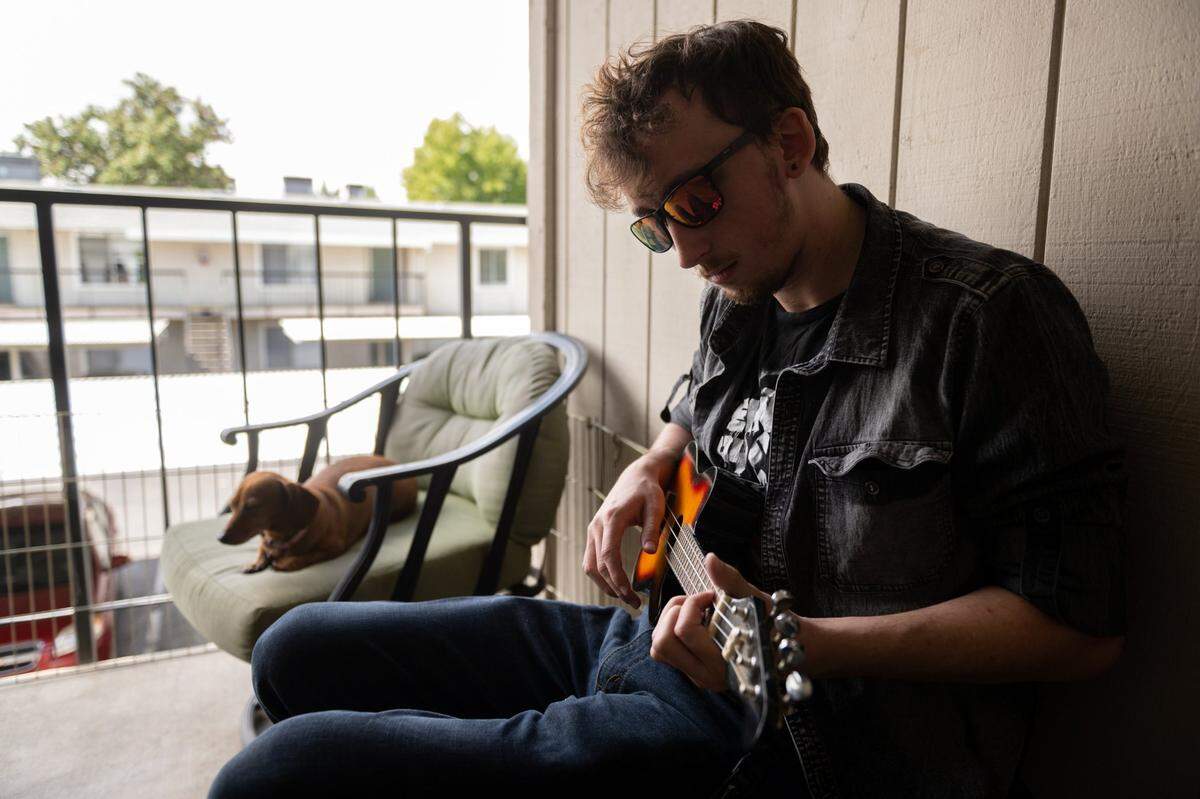
Not long after he left the Marysville Police Department in 2017, Easton and Chanell moved into a one-story brick house with a matching mailbox in suburban Moore, Oklahoma. The former police chief gave up primary custody of his teenage sons — the boys Sara had when she was just a teen herself. Rather than take Oliver and Adam to the Great Plains in the spring of 2018, Easton took only Josie, then 11, and left the boys in California with Sara’s parents. Her father, Joe, had just been diagnosed with cancer, so her brother Johnny ended up caring for the kids much of the time.
In Oklahoma, the Eastons received a financial fresh start of sorts, too. They filed for bankruptcy in 2019 after struggling to make ends meet with his job in consulting and her work in child care. Among their debts laid out in court papers: $2,100 a month for housing, his $83,000 federal student loan tab and the couple’s roughly $60,000 in credit card balances and other bills.
And while the Matthews family was still waiting for any sign of progress on the open investigation into Sara’s death, another investigation ensnared an Easton. But it wasn’t Aaron.
This past May, the U.S. Attorney’s Office unsealed an indictment that said Chanell embezzled money from St. Andrew Presbyterian Church between 2013 and 2018.
Prosecutors laid out a long list of her purchases: They said she paid down personal credit card debt; she used a secret church credit card to pay for a $2,072.20 vacation rental in Fort Bragg, and a youth pastor’s credit card to buy a rose gold ring, a necklace and a lace halter top. All told, the prosecutors said she stole more than $360,000 from the church, youth ministry and food pantry.
She was arrested and charged with 22 counts of wire fraud and two counts of identity theft. She could face up to 20 years in prison and a $250,000 fine for each count of fraud if convicted. Prosecutors have turned up more than 49,000 pages of documents detailing her alleged crimes; her attorney declined to comment for this story. The criminal case is pending.
It was bizarre for the Matthews brothers to see an alleged crime that came with a paper trail. They thought Easton should have faced criminal charges for reportedly assaulting his student. Johnny, Jesse and Aaron Matthews believe Easton has also escaped any scrutiny for something even more serious: ending their sister’s life.
Investigators long maintained that Sara Easton’s death was an open case. Despite the lack of updates, they had assured the Matthews brothers that they were working on it. But in a seven-year investigation, the Department of Justice never even sent a forensics report to the sheriff’s office.
In another seeming gap, multiple local investigators who are no longer involved in the case said they were dismayed that the state never asked them about the reports they wrote in the hours and days after Sara died. On their own, those reports can say a lot about what happened. But they’re also used as memory aids when officers are called to testify at trial.
Speaking directly to investigators about what they knew and observed could be critical to understanding the case, said James Middleton, a Sutter County deputy who assisted with the coroner’s investigation and interviewed Aaron Easton in the hospital after Sara died.
“Something that ventures into this high of a profile,” Middleton said, “I would expect a contact or somebody to say, ‘Is there anything that you saw or are aware of that may or may not be of interest to us?’”
There are others who also might have relevant information yet have never been approached by police.
Several of Sara’s friends had troubling recollections of the Eastons’ marriage.
Melissa Phethean and Heather Fochs Goodman called the Yuba City Police Department this past summer to share their observations. The city police refused to take their reports. Instead, the women said, Yuba City police instructed them to reach out to the California Department of Justice. But the local police didn’t actually provide any contact information for investigators at the state.
In August, after being informed by Bee reporters that potentially relevant information had not made its way to the police, the Department of Justice asked Aaron Matthews for a list of people they should contact.
Meanwhile, the Matthews brothers aren’t sure how much, if any, of the investigation into the church funds might overlap with the investigation into how their sister died. They’re separate cases being investigated by totally different branches of law enforcement. Still, they hold out hope that something — anything — might turn up in the more recent case that could shed light on Sara’s death. Something that could help them know, once and for all, whether Sara died by suicide or her husband killed her.
Because waiting for an answer has been agonizing. Johnny and Aaron Matthews in particular could not understand why there had been, apparently, no movement on an investigation into a death that happened in 2015.
“Truthfully after seven years, I don’t care what the answer is,” Johnny said. “I just want the answer.”
It’s a reasonable request, said Jennifer Dupré, the incoming Sutter County District Attorney who beat Amanda Hopper in the June election. It’s unlikely, she said, that her office would take the case back from the state. But obtaining information would be “a priority.”
“They deserve to know what happened and, to the extent possible, they deserve justice for Sara,” Dupré said. “Even if that is just finding out what happened, they deserve that. They do not deserve seven years of radio silence.”
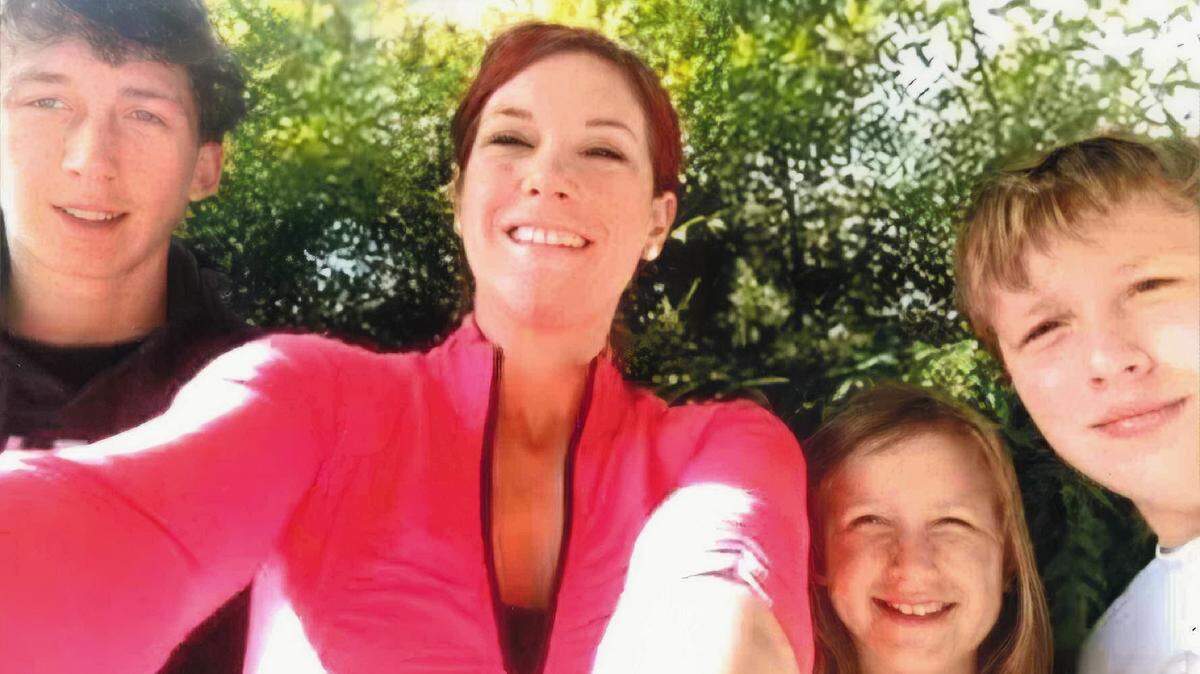
Not knowing has become particularly difficult for Sara’s oldest son, Oliver, who must confront two wrenching possibilities: His father killed his mother, or his mother killed herself.
Oliver has come to hope it’s the latter.
His father has never openly talked to him about the rumors that he killed Sara; his uncles have never clearly stated their suspicions to him. Now a young man, he thinks he first heard that the Matthews family believed Easton may have murdered his mother when he was 17 or 18, around the time that Easton moved to Oklahoma without him.
Since then, Oliver’s been left with vague rumors that his father might be a killer. He said, “I don’t like saying it out loud, because it makes me uncomfortable — viscerally.”
The unresolved question hanging between him and his father has chilled their relationship. Oliver is semi-estranged from Easton, with whom he rarely speaks. Still living in Yuba City, the young man has only memories of his mother, who he sees through “rose-colored glasses that are currently taped to my head.”
The hardest he ever laughed was when he caught his mom singing into a hairbrush, and she locked eyes with him right as she finished a twirl. He still avoids birthday cake when he’s celebrating, because she used to make him a perfect birthday Dutch apple pie.
“I would say I think it’s suicide, because — intuition — that makes sense. And I would like that to be the case,” Oliver said. “I mean, I wouldn’t like it to be the case, but it’s preferable to my other parent murdering her, I would say. I would say this is a lose-lose scenario. This is very lose-lose.”
Every year at Christmas and Easter for as long as Johnny could remember, he and Sara would roll their eyes at the fawning attention heaped on their aunt’s deviled eggs. Sara couldn’t bring her own deviled eggs to their family events because it would cause a ruckus (the source of another eyeroll). And so, a few weeks after that aunt trotted out her dish, Sara would make her own batch just for her and Johnny.
At holidays, the pair — both “Scrooges” — would always sit in the corner, he said. “We secretly heckled people behind their backs.” The eggs were their perennial target.
Even “dumb stuff like that,” Johnny said, is painful. He moved to Kentucky in June, a source of some relief for him. At the Yuba City park he and Sara frequented as kids, he told a reporter about life in his hometown, just before he left it.
“They’re comforting to think about, the good memories. But for as many good memories as I have in this town and of my sister, there’s just as many bad memories, too.”
She should still be here, he said. She should have been at her sons’ high school graduations; she should have been there to cry with him when their father, Joe, died of cancer in 2021; she should have been there to whisper a cutting remark every time the deviled eggs came out again.
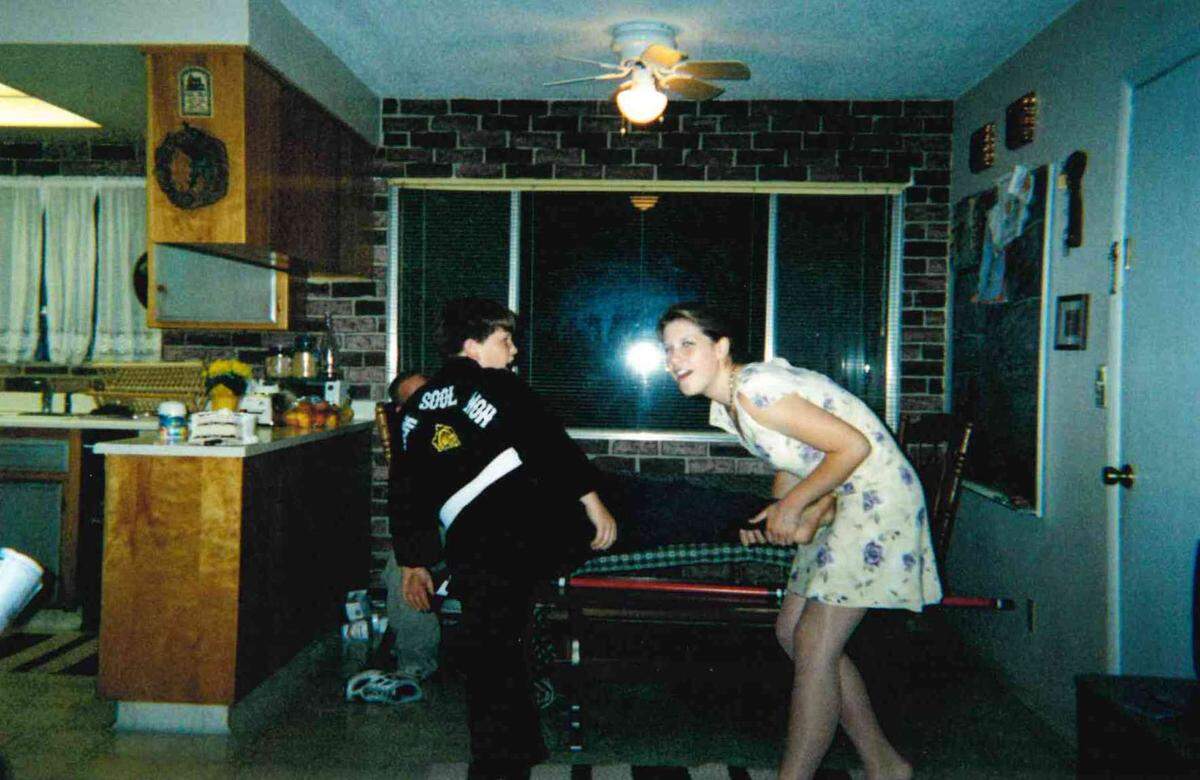
Johnny is convinced she did not kill herself. He can’t believe she would leave her kids. He can’t even believe she would leave him.
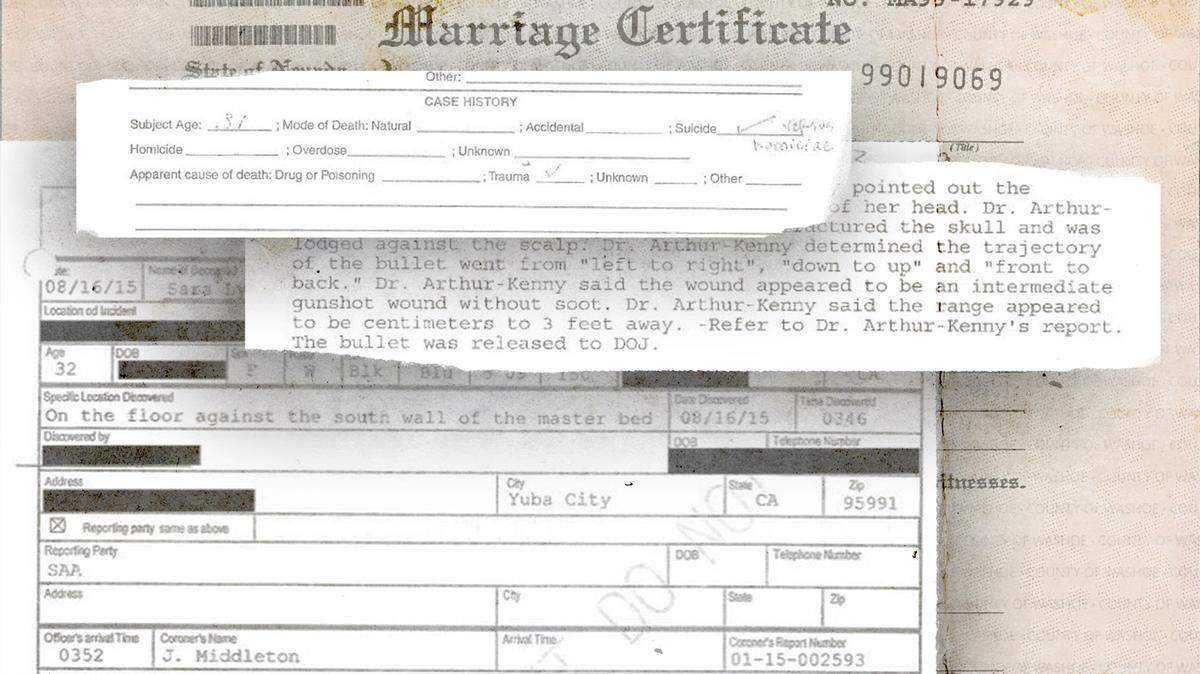
And as police have told him virtually nothing, he and his brothers have been left on their own, hitting wall after wall. Johnny and Aaron Matthews spent years haranguing the county just to finally get a redacted copy of their sister’s death certificate in 2018. Ultimately, the certificate told them nothing: The manner of death was obscured by a little black rectangle. So Johnny was hopeful when, in 2021, he found out he would finally receive the unredacted death certificate. Maybe it would give him an answer.
There was the information he already knew: Sara Lynn Easton, 31, daughter of Joseph and Joy. But when he looked at the line on the form that said “manner of death,” he saw what had been hidden. It was an X in a box next to the words “pending investigation.”
Just two words, and the same unanswered question.
Want to look at the death investigation report? Review the documents yourself.
BEHIND THE STORY
MOREWhy did we report this story?
Sara Easton died of a gunshot wound early in the morning on Aug. 16, 2015. Her husband, Aaron Easton, Marysville’s police chief at the time, called 911 saying his wife — a 31-year-old mother of three — shot herself.
Though Aaron Easton continued to say her death was a suicide, doubts cropped up, both for her family and for some investigators. Her brothers, Johnny, Aaron and Jesse Matthews, have suffered for seven years, trying in vain to pry answers from the authorities.
But virtually no concrete news has emerged, and police have remained tight-lipped about her death. Until now, the most information the public has had about Sara Easton and the investigation came from unsubstantiated rumors and rampant gossip about sexual affairs, police incompetence and government cover-ups reaching all the way to the California Attorney General’s Office.
The 68-page death investigation records The Bee obtained in February marked the first chance for the public — including Sara’s family — to see any substantive facts about her death.
Where did the idea come from?
Monica Vaughan was the crime and courts reporter at the local paper when Sara died in 2015. Vaughan knew that a manner of death had not been issued, and she wanted to report on the story. However, the Appeal-Democrat never approved any significant follow-up. She said she never stopped thinking about the case, so she sent tips to The Sacramento Bee. In 2021, reporter Jason Pohl followed up on one of her tips, filing a Public Records Act request with the Sutter County Sheriff’s Office. In February 2022, the sheriff released the death investigation report, which included an autopsy report. These records finally shed some light on what had been a completely opaque investigation.
Then, when reached by The Bee, Sara’s brothers were highly receptive to participating in the reporting process. They wanted her death to receive more attention.
How did we report it?
Once reporters Pohl and Ariane Lange received the death investigation records in February, they began interviews in earnest. Between the two of them, they traveled to Yuba City and Marysville six times to meet sources and to pore over court records. All events depicted in this series are based on police reports, court records, autopsy documents, historical archives, news clippings, social media posts and on-the-record interviews. All told, reporters spoke with more than two dozen people for the story. All scene descriptions are based on photographs or recollections from people who were there or had direct knowledge of the situation.
Who did we speak to?
Sara’s family — particularly her brothers Johnny and Aaron Matthews — collectively gave hours of their time to answer questions about their sister and to offer their recollections of the investigation. Her sisters-in-law, especially Heather, provided valuable perspectives and corroborated some details. Oliver Easton, Sara’s oldest son, met with reporters multiple times. Eight of Sara’s old friends spoke to The Bee about what she was like as a person, as well as their observations of her relationship with her husband.
Sara’s mother, Joy Matthews, ultimately declined to speak with The Bee, though she did confirm that she, too, has suspicions of her son-in-law.
Reporters tried to contact as many investigators and prosecutors who worked on the case as possible. Many of them declined interview requests, but some, in their first public comments about the case, said they had — and have — suspicions that Sara was murdered. The Bee also talked to outside experts in forensic pathology, crime scene investigation and mental health to better understand the suggestive but inconclusive evidence mapped out in the death investigation.
Most of the investigators who were involved with the case at the local level deferred to the California Department of Justice, which has taken the lead on the death investigation. The Department of Justice repeatedly refused to answer basic questions about their investigation and the family’s concerns that justice may be denied for Sara’s death. The state declined to arrange a meeting with Attorney General Rob Bonta. A Department of Justice spokesperson who provided a vague statement refused to even provide their name.
Reporters also made multiple attempts over several months to speak with Aaron Easton. He did not comment on any part of this story.
This story was originally published November 15, 2022 at 5:00 AM with the headline "A California police chief remarried and left his sons. His dead wife’s family wants answers."