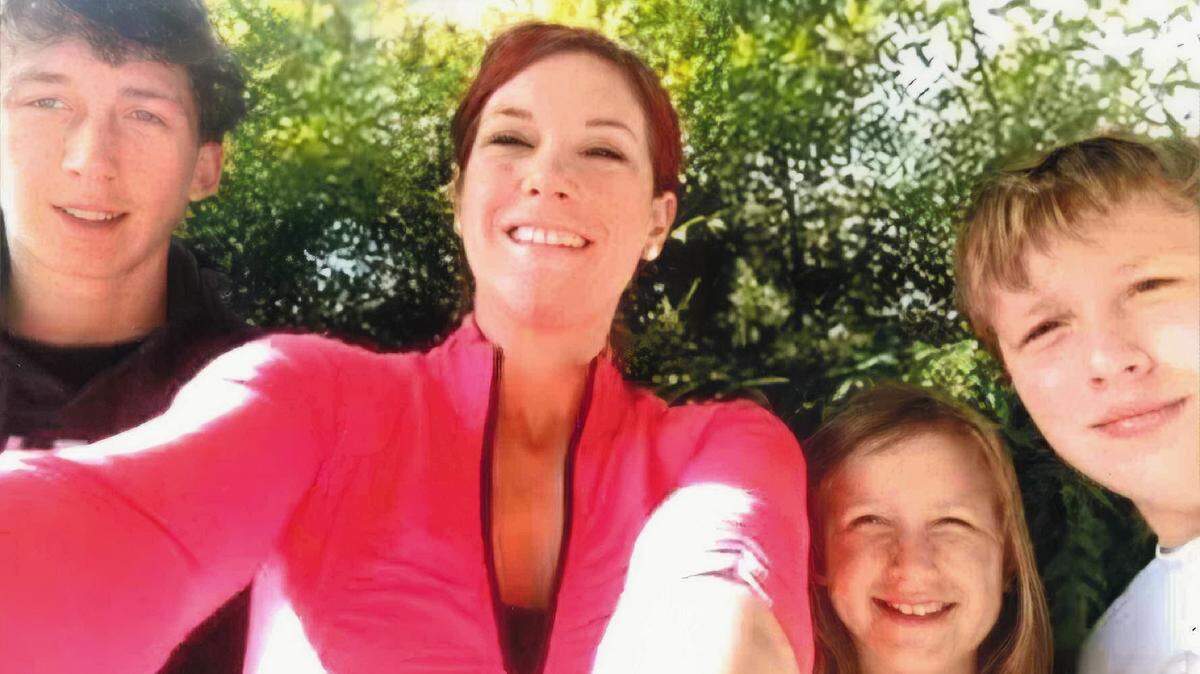

A California mom of 3 danced with family at her birthday dinner. Hours later, she was dead
READ MORE
Instant Suspicion
Seven years after her death, police are questioning whether this California woman was murdered by her husband. Click the arrow below to read more about the death of Sara Easton and the investigation of her case.
Expand All
What follows is the second in a four-part series that examines the circumstances around the death of Sara Easton. This account is based on interviews with family members, friends, law enforcement officials and forensics experts, as well as newly released investigatory records. Click here to read Part 1.
Aaron Easton strolled down one of Marysville’s main drags shortly after he was sworn in as the town’s new police chief. Now, in late 2014, he was one of the most powerful men in Yuba-Sutter. He stopped into stores to introduce himself to local business owners and workers.
His handshake tour was part of a larger strategy: Easton would implement community policing and “earn the trust and respect of citizens.”
“The field is under a shroud of secrecy,” he told a reporter for the Marysville Appeal-Democrat. “We need to pull the curtain back and explain why we do things.”
He planned to bring new body cameras to the department. He was going to embrace new law enforcement philosophies. Compassion and accessibility would be the cornerstone of his work. Easton spoke openly about how his own family’s struggles with poverty would inform his tenure as chief; he thought the police should play a more active role in connecting people with stable housing. At a Christmas party for the local Salvation Army Depot, he donned a Santa hat and mingled with Marysville’s do-gooders.
“The city has had its share of problems,” Easton said, “but it is my firm belief that with the help of volunteers and the citizens in the city, it will prosper again.”
Though they’d separated briefly years earlier, he and his wife, Sara, had since smoothed things over. She proudly posted a news story about his new job on Facebook. She called him “a good man.”
As her husband was coming into his own, Sara started changing, too. She was bolder — crasser. She’d strayed away from the church, and everyone could see it.
Flouting the Mormon aversion to tattoos, she had a small dove carrying an olive branch inked on her wrist. Despite its biblical implications, the tattoo caused a stir among her religious friends. She wore short skirts and low-cut tops that showed off her new breast implants, which made it obvious that she had stopped wearing the sacred undergarment worn by observant Mormons. When her oldest brother came back from Afghanistan in November, she wore a tank top when they met, even though it was freezing. She joked about porn and sex toys.
“I’m fresh out of a deployment where I’m living with soldiers in foxholes,” said her brother Aaron Matthews, “and her jokes and her language is making me blush.” To him, the crude stories seemed out of character, but he noticed Aaron Easton seemed captivated by them.
There were other changes, too. She’d dropped out of high school to get married and then raise Oliver, their oldest child; after she got her diploma when Oliver was a baby, she still spent her days as a full-time mom. But in the spring of 2014, she took a photography class at the local community college. “There is a lot of power,” she wrote in a Facebook comment, “in making people feel through art.”
On Facebook, Sara posted her final class project, a series that was mostly portraits of herself, her children and her husband taken in the cobweb-draped vacant house near her brother Johnny’s place. She called the project “Abandonment Issues.”
The photos are moody, black-and-white. One self-portrait is a double exposure: She covers her breasts with her hands as she looks off to the side, eyes cast down, her image fading between a dark corner and a bright tangle of vines.
“As humans we all desire and need to be (accepted) and loved,” she wrote. “Whether we realize it or not, worry of abandonment is innate within all of us. It is universal, a primal fear.”
There were other, clearer signs that Sara was struggling.
Sara’s friends — Emily Stubblefield Buys, Melissa Phethean, Heather Fochs Goodman and Tiff Vuki — had all noticed that Aaron Easton was controlling. So, too, did her brother Johnny.
When Johnny hung out with his sister at their house, Easton would sometimes come home from work, kiss his wife, then disappear into the back of the house and start texting her. “I’d see her whole facial expression change,” Johnny said. “Usually within about 10 minutes of that happening, it would be like, ‘Hey, are you ready to go home?’ And I’d be like, ‘Yeah, I’m ready to go.’ Because I kind of figured out that he was maybe upset or just didn’t want me there because he just got off work. I don’t know. But her whole demeanor would change in that moment.”
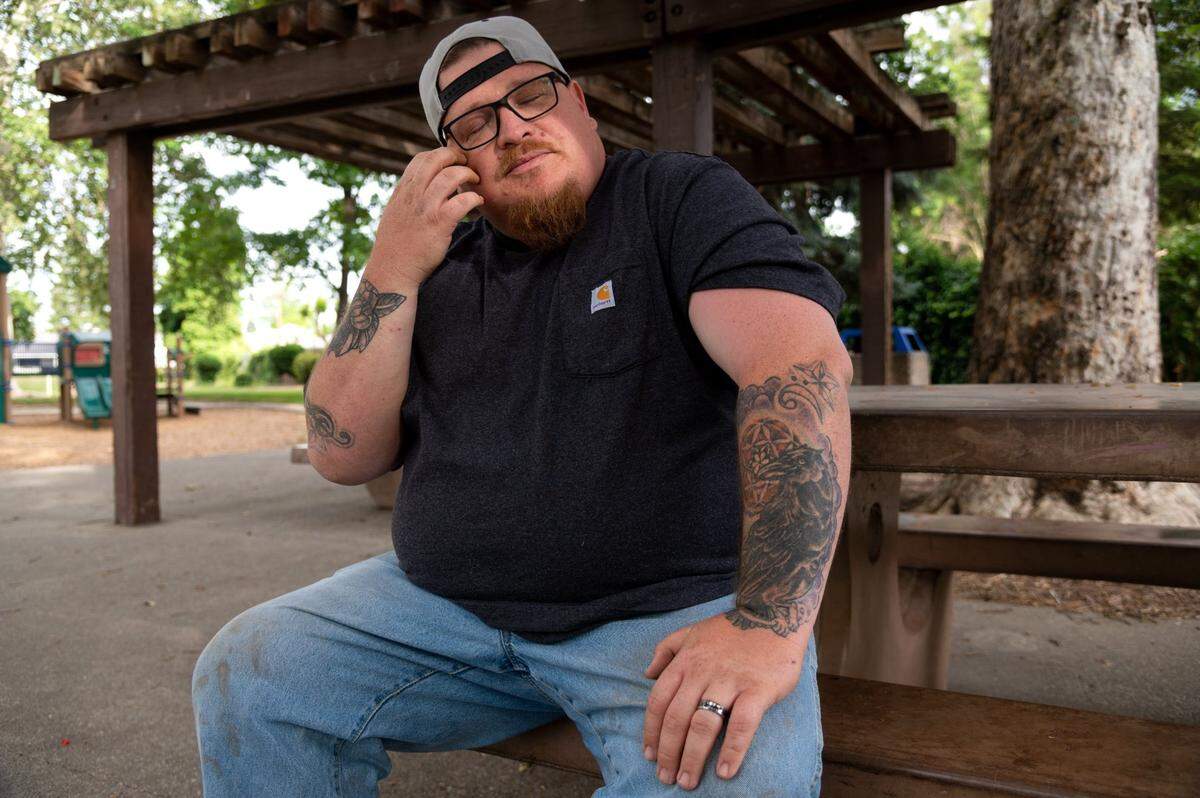
And after a lifetime of devout Mormon teetotaling, Sara started drinking. That in itself wasn’t shocking to the Matthews — not everyone in the family abstains from alcohol, including, most notably, Johnny. But she went to a family reunion in August 2014, a year before she died, and became falling-down drunk. When her father later told the story to his daughter-in-law, Heather Matthews, he started crying.
“She was just not handling whatever it was that was going on in her life,” Heather said. “Just clearly not handling it anymore.”
Jesse, the middle Matthews brother, knew she’d been depressed, too; he and his sister stopped having regular heart-to-hearts in the year leading up to her death. Around mid-July, the two of them were talking on the phone while Jesse sat in his house in Redding. He knew Sara was unhappy, but she wouldn’t tell him exactly why. He said she told him, “I just am not what Aaron wants me to be. I never have been.”
Jesse wanted details. He told her he wanted to help.
“I was prodding her and prying her,” Jesse said. “But she just kept saying this same phrase to me over and over: ‘I can’t tell you what’s going on. You wouldn’t believe me. It’s like shit that happens in a movie.’”
He told her he loved her. She said she’d sound crazy, but he assured her that he wouldn’t think so.
“She said, ‘Look, the only way I can have power in my life right now is for me to just keep quiet.’”
In the winter of 2015, Aaron Matthews and his wife, Heather, invited Sara to their home near Tacoma, Washington, to spend a week with them after the birth of their sixth and final child. Aaron told her, “Hey, we know this is our last one, and we really want you to come.”
Sara said yes immediately. “She told me she was hoping we would ask,” Aaron said. Sara had always loved babies, and she also loved grunge music; she and her brother planned to spend a day in Seattle, to see where Soundgarden, Mother Love Bone and Nirvana hung out.
But Sara called off the trip. Aaron and Heather recalled this happening the night before her scheduled flight to Washington.
Aaron remembered the phone call: “At first it was, ‘I’m really anxious; I don’t sleep well away from my bed,’” he said. He tried to tell her he’d made up the guest room for her, that she’d be comfortable, she’d have privacy. Then the tone of the conversation shifted.
“She’s like, ‘No, you don’t understand. If I leave, something bad will happen to my kids while I’m gone.’”
Aaron tried to press her for more information. What did she mean?
“She’s like, ‘You just have to trust me. Something bad will happen with my kids.’ That was all she would say.”
He was scared for his sister. The conversation seemed bizarre. He suspected her marriage was crumbling. He was aware of her depression and anxiety, and he knew about the drinking, which sounded out of control.
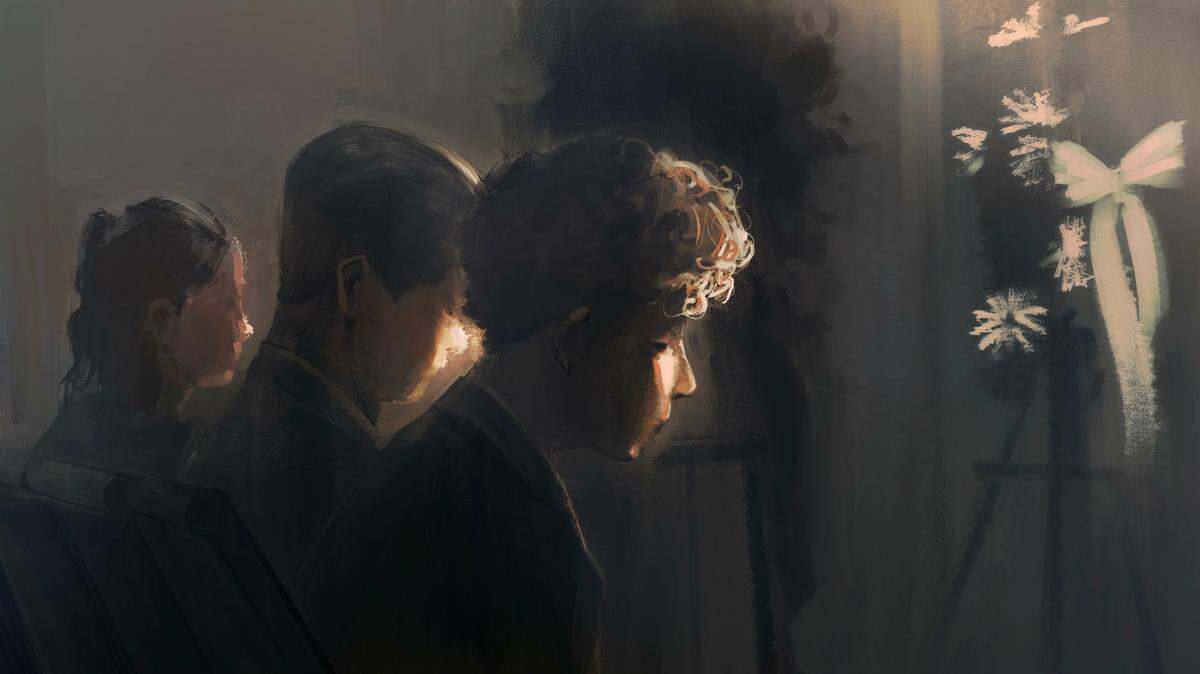
Six months later, she was dead, and Easton said she had killed herself. Everyone at the funeral would agree that her three children — then 14, 13 and 8 — had been the center of her life. And Aaron thought back to this canceled trip.
“She couldn’t come see me in February because she was worried about what would happen to her kids,” he said, “just for a week.”
Now, he thought, she would choose to leave them forever?
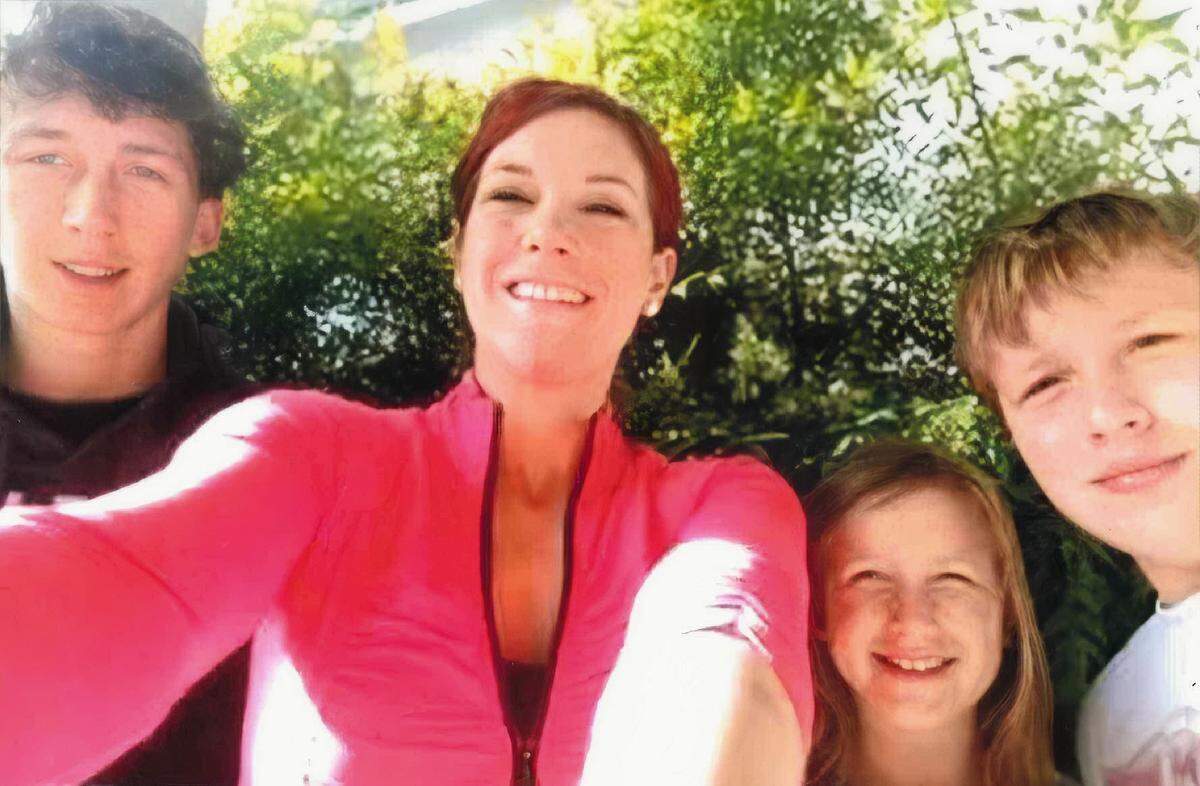
Hours before her death, Johnny Matthews and his wife, Jennifer, had just arrived at Applebee’s to celebrate his mom’s birthday when his phone rang. It was Sara. She and her family were driving to Joe’s Crab Shack to celebrate her 32nd birthday, which was just three days away. Sara wanted her little brother to join them.
But Johnny was already at Applebee’s to meet their parents, Joy and Joe. Johnny and his sister agreed to rain check. They would all have a joint birthday dinner together next year.
Sara seemed disappointed, Johnny said, but not upset. They said that in any event, they would plan to hang out the very next day, Sunday.
He hung up the phone. It seemed like a completely normal conversation about an accidental screw up. It was the last time they ever spoke.
By all accounts, Sara’s dinner at Joe’s Crab Shack was a party to remember. Video, which was later deleted but was seen by her brother Aaron, showed her dancing around the restaurant.
“It was a fun time,” Oliver recalled. Joe’s is a little on the expensive side, and Oliver remembered his dad telling him to just go ahead and order whatever he wanted. Everyone was laughing and joking. His mom, he said, “seemed happy. She seemed in the birthday-dinner kind of mood.”
After dinner, they headed straight back to the family’s home on Mariposa Drive in Yuba City. Oliver, now 22, doesn’t remember any tension between his parents on the 40-mile drive, but he said he was young. “I wasn’t really good at reading a room,” he said.
It was August in Yuba City, and it didn’t become dark until after 9. Oliver climbed into the bottom bunk in the room he shared with his younger brother Adam sometime after 10, which was standard for him in the summer. He was 14, and his freshman year of high school was about to start. A Mortal Kombat ninja poster hung on the wall by the twin-size bed he was starting to get a little too tall for.
His mother didn’t say anything particularly memorable to him, the little boy she had when she was 17. Just a good night.
Less than eight hours later, Sara was dead.
Aaron Easton called 911 at 3:46 a.m. His wife, he told the dispatcher, had shot herself.
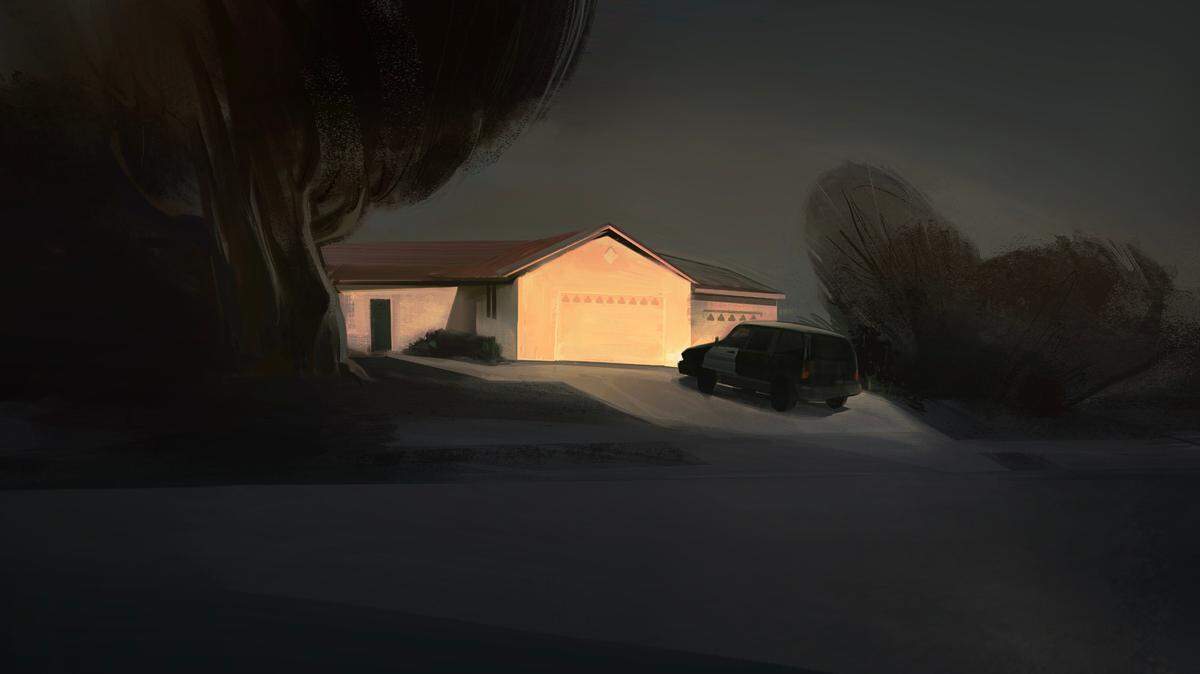
Officer Chad Cornwell was the first to arrive at the Eastons’ home, tucked in a tree-lined subdivision of single-story houses in south Yuba City. When he pulled up in his Yuba City Police Department squad car, Easton was standing outside waiting for him. He was wearing basketball shorts and no shirt.
He directed Cornwell to the bedroom where Sara was lying on the dingy beige carpet.
Sara was still alive. She was on her back, next to the bed. On top of the nightstand was a Glock model 26 semi-automatic handgun — the model issued to law enforcement officers. Gun smoke hung in the air.
Cornwell pulled her onto her side, which seemed to help her labored breathing. He could see a gunshot wound on the left side of her head.
Sirens screamed across Yuba City, and within minutes, paramedics rushed into the room. They loaded Sara into an ambulance and sped off.
With Sara on her way to the hospital, Cornwell turned to Easton and asked him what happened, jotting down notes for his official report. Easton told Cornwell that he was sitting on the couch in the living room in the middle of the night when he heard “two distinct gunshots.” The shots came in quick succession, Easton told him. When Easton went to the bedroom, he said he found Sara lying on her back on the bed.
He told the officer that the first thing he did was take the gun from Sara’s hand, unload it and put it on the nightstand.
After that, he tried to give her CPR while she was on the bed. He moved her body to the floor.
He called 911 for help and returned to CPR until he heard the officer arrive.
Cornwell drove Aaron Easton the three miles to Rideout Memorial Hospital while another officer headed to tell Sara’s parents that Sara had suffered a gunshot wound, and she might not make it. Joe and Joy called Johnny. In the predawn light, the Matthews family rushed to the emergency room, desperately hoping for a miracle.
The doctors tried to save her for an hour. With Easton at his wife’s side, a doctor pronounced Sara dead at 5:14 a.m.
After he heard the news, Johnny gathered himself and walked outside with his wife, Jennifer. He was 27, the baby of the family, and he’d be the one to tell his older brothers.
Jesse didn’t pick up the phone, so he called Aaron Matthews, who answered immediately, knowing something was terribly wrong. Johnny told him their sister was gone.
Aaron Matthews immediately asked his brother whether Easton had killed Sara. The police were asking the same question.
“It just might be a suspicious old sheriff,” then-Sutter County Sheriff J. Paul Parker said in an interview this summer. But he never took Easton’s story for granted.
“We were suspicious immediately.”
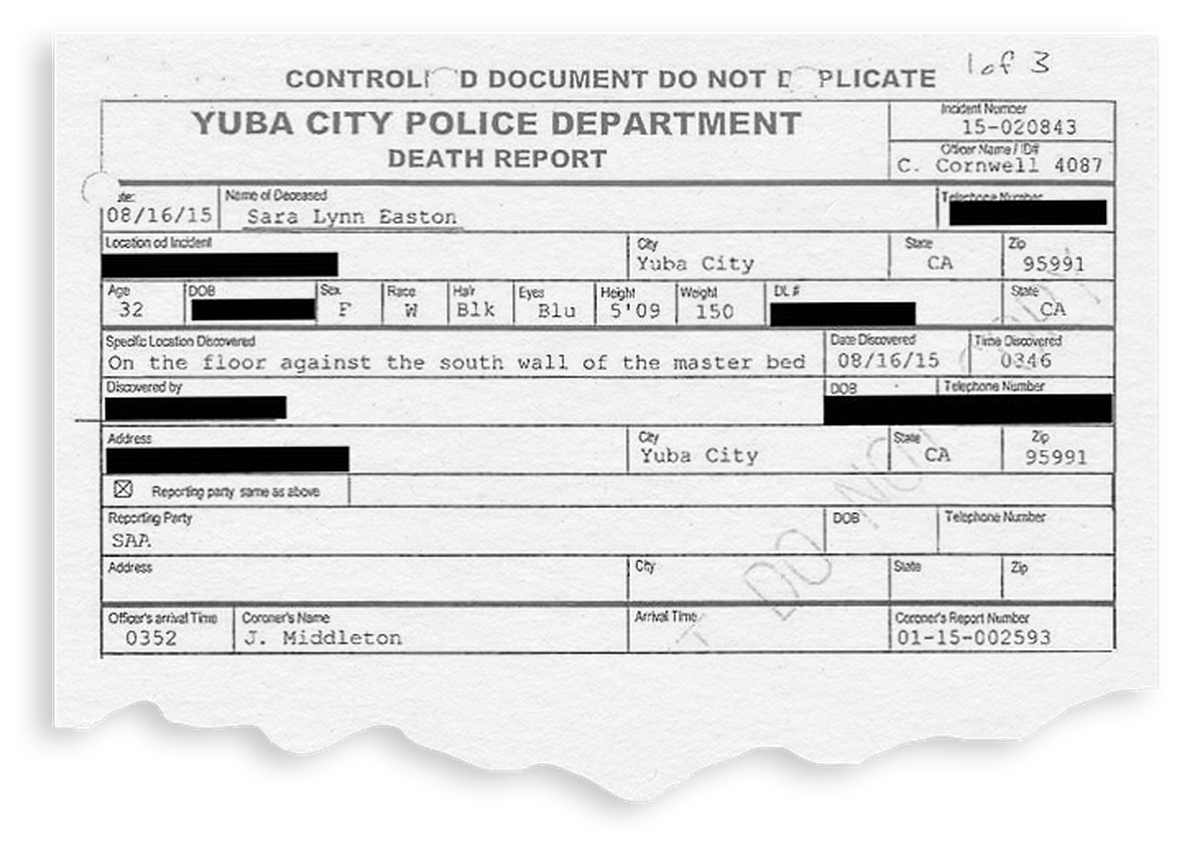
Aaron Easton did not return multiple messages left on his voicemail over several months. A reporter left multiple messages on another number listed as his in public records, and sent an email to an account he had used.
Easton did not answer text messages delivered to his iPhone. One message outlined the contents of this Sacramento Bee investigation. Reporters also mailed Easton a registered letter. He never retrieved it from the local post office.
About an hour after his wife was declared dead, Yuba City Police Department detectives met with Easton at the hospital. They told him they were going to secure a search warrant for his home — a necessary step, they said, to complete the investigation. Still, Easton was “set back” by the need for a warrant, an officer noted in his report. Soon, though, he said he understood. He turned over his cellphone, too.
Meanwhile, given the sensitivity of the situation, the local police put in a call for help to the California Department of Justice.
Investigators who searched the house that day walked into a bedroom full of muted colors — a tan floral-patterned comforter matched the brown drapes and the beige carpet. Above the bed was a child’s drawing of what appeared to be a family.
Police reported that they found the Glock 26 on the nightstand, its slide locked open so it wouldn’t fire. They located a single fired shell casing on the bed, next to the bloodied pillow. On the other side of the bed, they found an unfired round, ostensibly from when Easton said he ejected the round in the chamber and cleared the gun.
As far as they could tell, only one shot had been fired — not two, as Easton said he clearly heard from the living room.
Three days later, police canvassed the neighborhood for witnesses. Nobody reported hearing or seeing anything out of the ordinary.
A restoration company cleaned the blood and disposed of the soiled sheets and pillows. Johnny used to work for the company, and he eventually obtained the reference photos the cleaner took of the scene. For a long time, those low-resolution images would be some of the only evidence the Matthews family ever saw.
Almost six years after the morning his mother died, Oliver, her oldest son, spoke to investigators at the Department of Justice, which had taken the lead on the case. He said it was the first time they had ever contacted him, and he wondered aloud if maybe they’d struggled to find him because he changed his number.
Oliver told the Department of Justice about his perception of his mother’s state of mind; about his parents’ relationship; about the layout of their three-bedroom house. He told them that his parents sometimes went into their bedroom and closed the door to shout at each other, but he didn’t remember witnessing any physical violence. He didn’t remember how they stored their guns. His mother seemed normal on the last night of her life. He slept through the night — none of the kids woke up for the shooting or the ensuing commotion. He and his brother were still nestled in their bunk beds when Easton came into the boys’ room the next morning and told them their mother killed herself. The next six months were a blur of sadness.
When Oliver sat down with a reporter this summer, he was asked, once again, what he thought happened the night of Sara’s death. His eyes grew wide.
“If I’m being completely truthful,” he said, “I have no idea.”
Click here to read the next part of the story that details the odd findings related to Sara’s death. Or skip ahead to part four and read about the family’s ongoing search for answers.
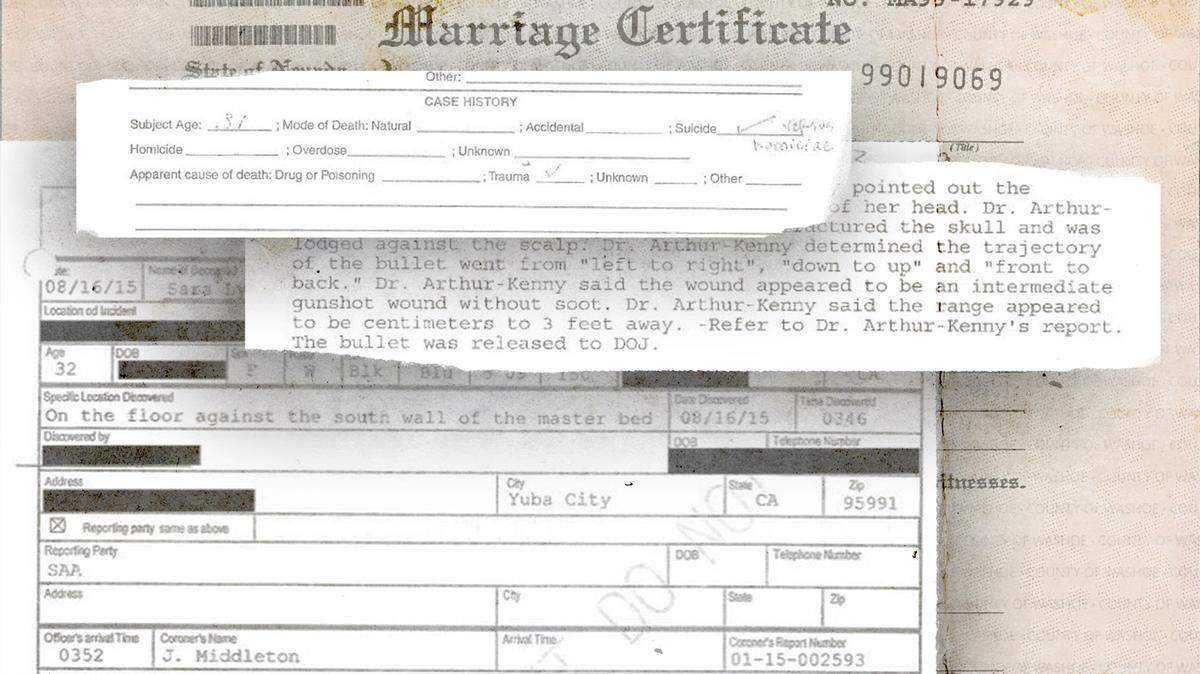
Want to look at the death investigation report? Review the documents yourself.
BEHIND THE STORY
MOREWhy did we report this story?
Sara Easton died of a gunshot wound early in the morning on Aug. 16, 2015. Her husband, Aaron Easton, Marysville’s police chief at the time, called 911 saying his wife — a 31-year-old mother of three — shot herself.
Though Aaron Easton continued to say her death was a suicide, doubts cropped up, both for her family and for some investigators. Her brothers, Johnny, Aaron and Jesse Matthews, have suffered for seven years, trying in vain to pry answers from the authorities.
But virtually no concrete news has emerged, and police have remained tight-lipped about her death. Until now, the most information the public has had about Sara Easton and the investigation came from unsubstantiated rumors and rampant gossip about sexual affairs, police incompetence and government cover-ups reaching all the way to the California Attorney General’s Office.
The 68-page death investigation records The Bee obtained in February marked the first chance for the public — including Sara’s family — to see any substantive facts about her death.
Where did the idea come from?
Monica Vaughan was the crime and courts reporter at the local paper when Sara died in 2015. Vaughan knew that a manner of death had not been issued, and she wanted to report on the story. However, the Appeal-Democrat never approved any significant follow-up. She said she never stopped thinking about the case, so she sent tips to The Sacramento Bee. In 2021, reporter Jason Pohl followed up on one of her tips, filing a Public Records Act request with the Sutter County Sheriff’s Office. In February 2022, the sheriff released the death investigation report, which included an autopsy report. These records finally shed some light on what had been a completely opaque investigation.
Then, when reached by The Bee, Sara’s brothers were highly receptive to participating in the reporting process. They wanted her death to receive more attention.
How did we report it?
Once reporters Pohl and Ariane Lange received the death investigation records in February, they began interviews in earnest. Between the two of them, they traveled to Yuba City and Marysville six times to meet sources and to pore over court records. All events depicted in this series are based on police reports, court records, autopsy documents, historical archives, news clippings, social media posts and on-the-record interviews. All told, reporters spoke with more than two dozen people for the story. All scene descriptions are based on photographs or recollections from people who were there or had direct knowledge of the situation.
Who did we speak to?
Sara’s family — particularly her brothers Johnny and Aaron Matthews — collectively gave hours of their time to answer questions about their sister and to offer their recollections of the investigation. Her sisters-in-law, especially Heather, provided valuable perspectives and corroborated some details. Oliver Easton, Sara’s oldest son, met with reporters multiple times. Eight of Sara’s old friends spoke to The Bee about what she was like as a person, as well as their observations of her relationship with her husband.
Sara’s mother, Joy Matthews, ultimately declined to speak with The Bee, though she did confirm that she, too, has suspicions of her son-in-law.
Reporters tried to contact as many investigators and prosecutors who worked on the case as possible. Many of them declined interview requests, but some, in their first public comments about the case, said they had — and have — suspicions that Sara was murdered. The Bee also talked to outside experts in forensic pathology, crime scene investigation and mental health to better understand the suggestive but inconclusive evidence mapped out in the death investigation.
Most of the investigators who were involved with the case at the local level deferred to the California Department of Justice, which has taken the lead on the death investigation. The Department of Justice repeatedly refused to answer basic questions about their investigation and the family’s concerns that justice may be denied for Sara’s death. The state declined to arrange a meeting with Attorney General Rob Bonta. A Department of Justice spokesperson who provided a vague statement refused to even provide their name.
Reporters also made multiple attempts over several months to speak with Aaron Easton. He did not comment on any part of this story.
This story was originally published November 15, 2022 at 5:00 AM with the headline "A California mom of 3 danced with family at her birthday dinner. Hours later, she was dead."