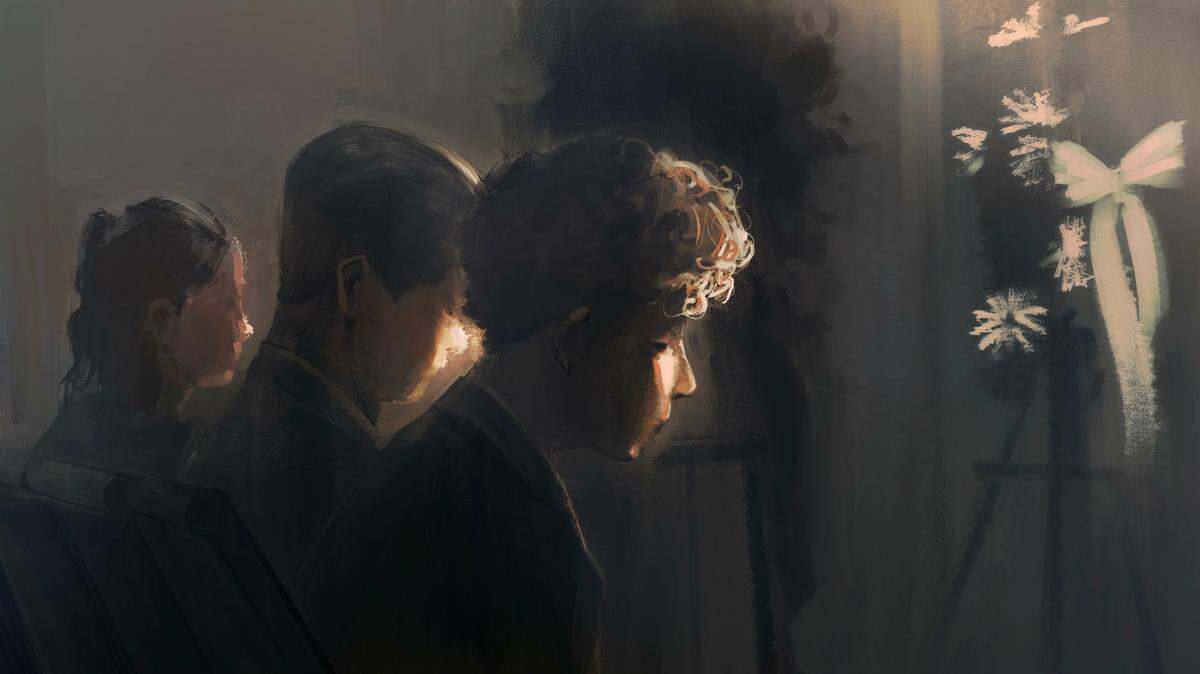

Was this California mom among the small percentage of women who shoot themselves?
READ MORE
Instant Suspicion
Seven years after her death, police are questioning whether this California woman was murdered by her husband. Click the arrow below to read more about the death of Sara Easton and the investigation of her case.
Expand All
What follows is the third in a four-part series that examines the circumstances around the death of Sara Easton. This account is based on interviews with family members, friends, law enforcement officials and forensics experts, as well as newly released investigatory records. Click here to read Part 1. Click here to read Part 2.
Dr. Kelly Arthur-Kenny led the autopsy two days after Sara Easton died. The day would have been Sara’s 32nd birthday.
In the autopsy report, Arthur-Kenny, a forensic pathologist with whom Sutter County contracted for autopsies, noted that Sara was wearing a reddish-purple tank top the night she died. Her top matched her dyed-red hair and her red toenails. She had bruises on her legs.
Toxicology results would show that she had no illicit drugs in her system. All they found were low doses of anti-anxiety and sleep medications. Nor did they detect any alcohol; Sara hadn’t had a drink at her birthday dinner some 12 hours before she died.
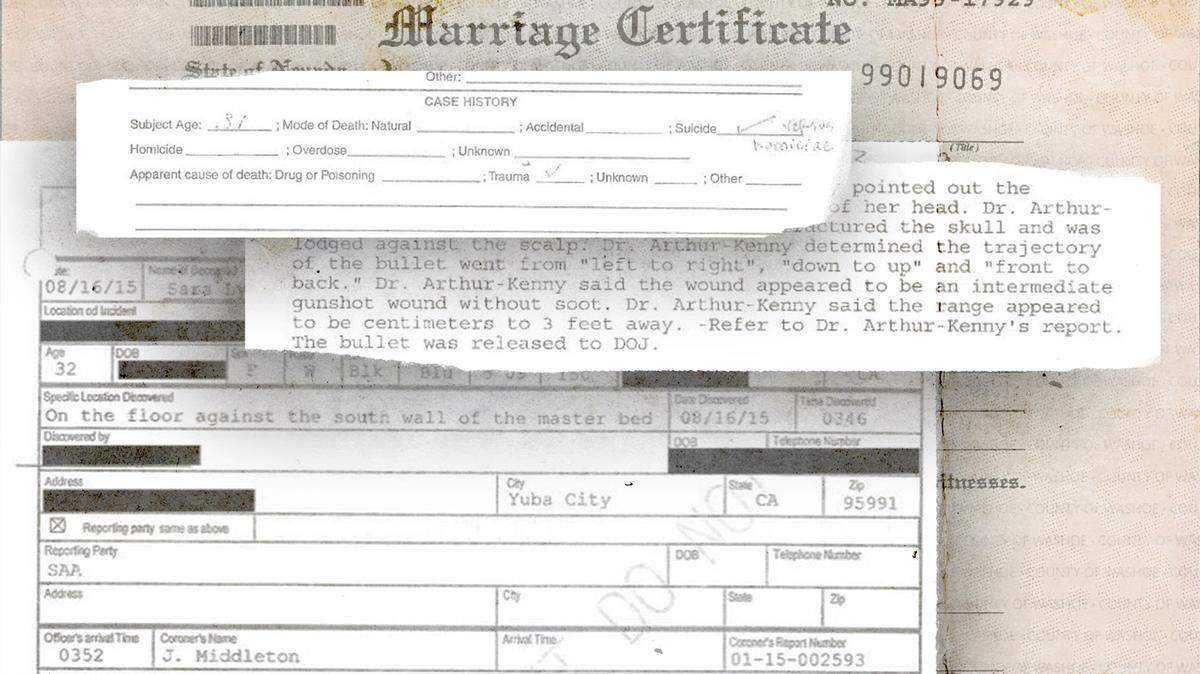
The gunshot wound was on the left side of Sara’s head near her temple, wrote Arthur-Kenny. A single bullet, no exit wound.
On Sara’s temple, Arthur-Kenny observed “stippling” — spotted burn marks from the gunpowder that blasts from the barrel of a gun. The burns meant the gun had not been pressed against Sara’s head at the moment it went off.
There was also no soot on her skin, in her hair or in the wound; there was no soot on the bandages wrapped around her head, either. If she’d died from the shot immediately and the scene had been untouched when investigators arrived, that would have been a telling piece of evidence. A lack of soot would have meant that the gun had been fairly far away from her head when the trigger was pulled.
But she didn’t die immediately. She went through multiple rounds of CPR; she went to the hospital; her husband and a police officer touched her body before the paramedics even arrived at her house in Yuba City. The shot was fairly close to her hairline, and her hair could have dislodged soot. It could have been wiped away while medical personnel spent an hour in the hospital trying to save her life.
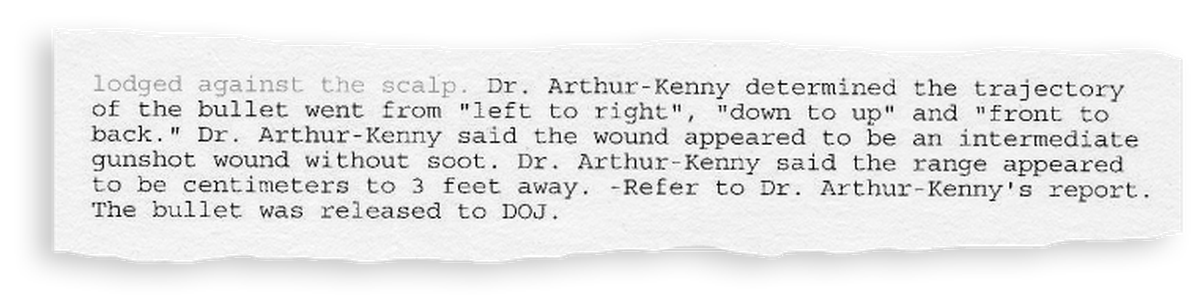
Arthur-Kenny determined that “the range of fire (was) intermediate” — the gun was at least an inch from her head when it went off, but according to her report, it also could have been several feet away.
Sara was shot in the left side of the head; detectives confirmed with her family that she was right-handed.
Sara’s hands were tested for gunshot residue, but the results are left out of the autopsy report. The California Department of Justice has those answers, as well as the findings from a postmortem rape kit. But the agency hasn’t made those details public.
While the autopsy report included any number of details, it failed to definitively answer the question on the minds of both police investigators and Sara’s family. Had Sara died by suicide? Or had she been murdered by the only possible suspect: her husband, the police chief.
The autopsy revealed evidence that was suggestive, but nothing in the pathologist’s report, not even the shot in the left side of the head, could totally rule out suicide. And so the manner of death — suicide or homicide — remained an open question. “Pending toxicology,” Arthur-Kenny wrote on the form.
A year later, investigators ordered an additional analysis of Sara’s blood, which turned up no red flags, just the same therapeutic medications. And yet to this day, the line on Sara’s death certificate that should say the manner of death says only “gunshot wound of the head pending toxicology.”
This inconclusive autopsy happened in a very particular context: The bedroom where the shooting occurred was a contaminated scene. Her husband, then-Marysville Police Chief Aaron Easton, moved the gun to the nightstand and his wife to the floor. Healthcare workers may have inadvertently wiped away gunshot residue or bloodstain patterns that could have shown where the gun was when it went off. Those pieces of physical evidence could have more conclusively told the story of what happened in that bedroom.
Easton did not return multiple messages left by The Sacramento Bee on his voicemail over several months. A reporter left multiple messages on another number listed as his in public records, and sent an email to an account he had used.
Easton did not answer text messages delivered to his iPhone. One message outlined the contents of this Bee investigation. Reporters also mailed Easton a registered letter. He never retrieved it from the local post office.
Against best practices, aspects of the immediate Yuba City police response took at face value the neighboring police chief’s story that the mother of three young children shot herself in the head. In one report, a responding officer noted he was dispatched to the Easton’s home “regarding a suicide.” What he was actually responding to was a shooting that Easton initially reported as an attempted suicide. By the time he wrote the report, it was a death investigation — a subtle difference that can significantly influence an investigation.
That series of choices and missteps coupled with Easton’s actions that morning, experts told The Bee, could have made it all but impossible to prove beyond a reasonable doubt what happened in the predawn hours on Mariposa Drive.
Each of the ways that Easton himself polluted the scene had two explanations.
“What are the things that are gonna f--- up your crime scene? Moving the body, right? In every crime scene manual everywhere, it says ‘don’t move the body,’” said Ralph Cilento, a retired lieutenant commander of detectives for the NYPD and a professor of police science at John Jay College of Criminal Justice. “Why did he do it? It’s up to you to decide. He says to perform life-saving resuscitation on her.
“Every bit of circumstantial evidence that a prosecution will use, defense is going to use it in the same way. So the only thing that’s left is the fact that the gun was off of her head when she got shot. And is that going to be enough for a prosecution? I don’t think so.”
The people trusted with interpreting this ambiguous evidence in their small community were mired in conflict, under-resourced and, Sara’s brothers said, unconcerned with offering closure to the family.
Typically, when someone dies an unnatural death in California, the county sheriff is also the coroner responsible for determining a person’s manner of death. A local agency where the death happened leads a parallel investigation into any potential crime. Then, based on those two investigations, the county’s elected district attorney decides what criminal charges, if any, are warranted.
Around the time that Sara died, Sutter County’s legal system was anything but typical.
Sutter County Sheriff J. Paul Parker did not issue a manner of death for Sara’s case; with conflicting evidence, he said he was waiting on the police investigation. But the Yuba City Police Department was a small agency facing a remarkably complex investigation into the death of the wife of the neighboring town’s police chief.
And then there was the county prosecutor’s office. Amanda Hopper, the elected district attorney, had been close with Sara. They’d met as devout members of the Church of Latter-day Saints, before Sara abandoned the church in pursuit of a different life. For a time, the Eastons and the Hoppers were also next-door neighbors. Hopper’s then-husband, Brian, had worked with Easton in the sheriff’s office, and the two men were good friends.
Before she died — and after a falling out with Hopper that the Sara’s family was hazily aware of — Sara told her brother Johnny Matthews through tears that she hated the district attorney.
Hopper recused herself from the investigation into her old friend’s death. And aside from these well-known personal conflicts of interest, Hopper’s office would soon be enmeshed in scandal, most notably linked to her hand-picked investigator, Jason Parker. The towering former cop with a long dark beard defied Hopper’s authority and sued the district attorney’s office and the county as a whole for turning against him.
In a complaint laden with unsubstantiated accusations, Parker claimed that Hopper’s husband had been having an affair with Sara.
Parker could not be reached for comment for this story; an attorney who represented him did not return a call seeking comment, either. In a text message, Brian Hopper declined to respond to the rumors. Amanda Hopper said the lawsuit “was summarily dismissed in court in its entirety and was completely without merit.”
With all these dramas playing out in Sutter County, local investigators called on outside help, both from a nearby county and from the California Department of Justice.
The state takes the reins on local investigations fairly frequently. More than 100 “conflict cases” make their way to state investigators each year, generally when locals decide that a case is too controversial to be handled in-house. In this case, the state assigned two investigators, Kirsten Wallace and Anna Brewer. Both were veteran criminalists who had assisted local law enforcement agencies processing complex crime scenes and prosecuting major crimes.
Despite the state agency having vast reach and providing forensics services for 80% of California counties — and holding DNA information for all of them — its Bureau of Forensic Services was dealing with its own internal crisis.
Funding for equipment was in flux, hiring was stalled, and some of the top criminalists with vast amounts of institutional knowledge were leaving for higher pay in the private sector. In the months after the state took the lead on Sara’s death investigation, its labs were “forced to economize wherever possible” and forgo even basic lab supplies.
State officials warned in budget reports that “delayed justice” could arise. Rural counties, they wrote, would feel the crunch the most when cases bogged down indefinitely.
“The further behind BFS becomes in recruiting, hiring and training, and maintaining critical equipment,” officials wrote in a 2018 request for millions of dollars, “the greater the impact will be on BFS’s ability to meet the needs of the criminal justice system and the public at large.”
Perhaps because of this backlog, the Sutter County Sheriff’s Office has still not received a forensics report from the Department of Justice. Undersheriff Scott Smallwood told The Bee in July that he wasn’t sure whether such a report was ever generated.
Johnny would later learn that prosecutors went outside of Sutter County to obtain authorization for warrants to tap calls made by two phone numbers. They notified Johnny because the people being monitored had called him, and investigators had been listening. One of the two numbers under surveillance belonged to Easton. The other belonged to Brian Hopper, Easton’s close friend and the now-ex-husband of the Sutter County district attorney. In a text message, Hopper said he was aware that he’d been the subject of a wiretap and that he hadn’t had contact with Easton for some time. He declined to answer further questions.
Brendan Farrell, a deputy district attorney in nearby Colusa County, signed off on that warrant as the state’s case appeared to move ahead. “And then no one really told me anything,” Farrell said in an interview with The Bee. “Everyone stopped contact.”
John Poyner, the Colusa County district attorney and Farrell’s boss, remembered wanting to investigate further. Two elements of the case have stuck with him: that the shot was in the left side of her head when Sara was right-handed, and that Easton — a trained law enforcement officer familiar with firearms — tampered with the scene when he moved the gun.
“There were some things that really, really bothered me,” said Poyner, who has since retired. “I always thought that case had an odor to it.” He said it could have been appropriate to file charges at the time based on what he knew; he thought the case should have gone before a criminal grand jury. But his office’s involvement ended after that search warrant spearheaded by the Department of Justice. “They just cut us out of the loop.”
Five years after a judge authorized it, the wiretap warrant remains under a court-ordered seal.
Although Poyner made much of the shot in the left side of Sara’s head, that piece of evidence is not, on its own, enough to support a criminal case. Though it’s not particularly common for a right-handed person to shoot themself in the left side of the head, it’s “not that unusual,” said Dr. Harry Bonnell, a forensic pathologist who reviewed Sara’s case file for The Bee.
A right-handed person, Bonnell said, might use their dominant hand to steady the muzzle of a heavy handgun and then squeeze the trigger with their thumb. It’s unclear how often that happens, but one of the few studies on the subject of handedness and suicide, published in 1980, found that 8% of people who shot themselves in the head did so on the side opposite of their dominant hand.
Another forensic scientist who specializes in gunshot residue patterns who reviewed documents this year for The Bee, Michael Kusluski, said he agreed with the pathologist that it looked like the gun was fired from within 3 feet of Sara’s head. A more precise measurement could be possible, he said, only if the gun were tested in a lab. Local and state investigators have failed to indicate whether that happened.
Moreover, Kusluski said that the presence or absence of gunshot residue on either her hands or Easton’s wouldn’t tell investigators much. The police chief touched the gun and his wife’s body shortly after the shot was fired. If there had been residue on his hands, there could be an innocent explanation. Likewise, he said, gunshot residue on Sara’s hands could be there because she fired the gun or because she held up her hands as it was being fired.
Regardless, her handedness “raises suspicions,” said Edward Imwinkelried, a professor emeritus at UC Davis and expert on the California Evidence Code. But he agreed that on its own, it’s likely not enough to warrant criminal charges.
“The best way to get over the threshold is to have another pathologist take a look at everything and exercise his or her judgment,” Imwinkelried said. “At least it would give the family some closure. And it might give a prosecutor a much more definitive basis for making a charging decision.”
According to the limited information made public, there was no second pathologist. And there’s no opportunity to perform any further forensic tests of her body.
Easton had her cremated.
Aaron Matthews didn’t know the results of his sister’s autopsy in 2015. He wouldn’t know until 2022, when a death investigation report was pried loose from the Sutter County Sheriff’s Office by a California Public Records Act request. But he was already scared about losing evidence right after his sister’s death. When he learned that Easton was planning to have Sara cremated, he tried to rally the Matthews men to stop it.
They were all at a memorial party for Sara at their grandparents’ house; it was a hot summer night, the grill was going, and lots of people were in the pool. Aaron Matthews asked his two brothers and their father, Joe, to walk with him to the garden, where they’d have a little privacy. The four of them stood in a tense circle as the oldest brother made his case.
He told them they “needed to make choices now to protect Sara.” When one of them said that they didn’t have the legal authority to stop the cremation, Aaron argued.
“We can fight for the right to make the choice in court,” he told them. “But in the end, we can’t do it after Sara is cremated. The evidence will be gone.”
Jesse and Johnny were listening, but their father was visibly shaken. Joe had doted on Sara, his goofy, unruly daughter. He was already overwhelmed by his own grief, and when his son started saying that he thought she’d been murdered and the family needed to get a court order first thing in the morning, Joe couldn’t handle it. He turned to his son and he said, “Please stop,” and he walked away.
The brothers continued talking, and they all agreed that a second autopsy was a good idea, that they would be doing their due diligence for their sister. Aaron insisted to them, again, “There’s no way Sara would have left her kids.”
But they didn’t go through with the plan.
“I just was trying to respect my dad,” Aaron said. “He was upset, and he said, ‘Please stop.’ And so that’s what I did.”
He still regrets it. The police have remained vague or outright ignored him. Both the Yuba City Police Department and the Department of Justice have declined to speak publicly about the case or release any records because they say it is open and active. Aaron Matthews said a conversation with the Department of Justice in July — the first in seven years — was just frustrating.
And the Matthews family never received any answers from Easton, either, even though Johnny tried to ask.
The youngest Matthews sibling had grown up with Easton. Although they weren’t exactly close, and Johnny had been livid when he found out Easton had admitted to Sara that he’d been unfaithful, both of them knew that Johnny didn’t judge Easton like the rest of the Matthews family. Sara’s little brother was just a kid when she ran off to get married at 16, and he hadn’t really been privy to the family’s collective and grown-up panic about what they saw as an older boy corrupting their little girl. At the time, the 11-year-old figured Sara was just making her own choices.
As Aaron Matthews put it, Sara and Johnny were “the black sheep of the family.” In their own ways, each of them had rebelled against their parents’ expectations and against the Mormon faith. Johnny didn’t care that she stopped going to church or that she decided to get breast implants, and he certainly didn’t blame Easton for it.
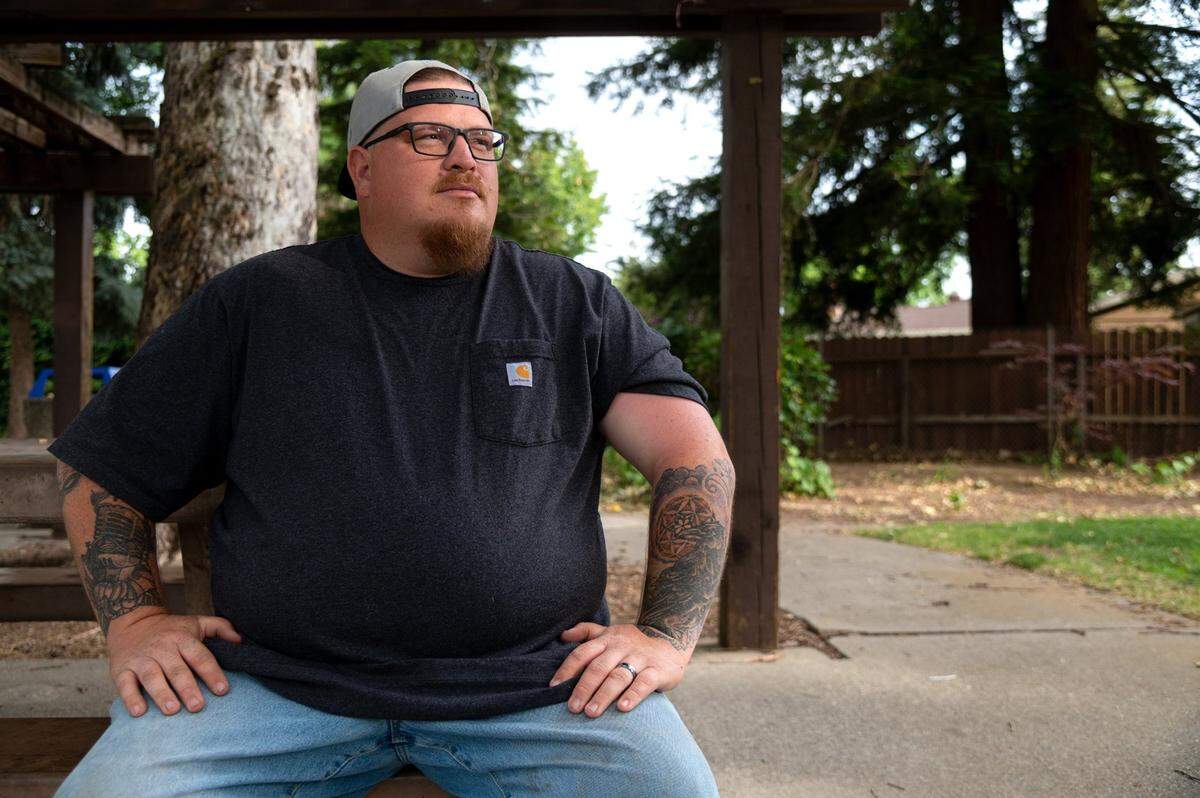
So at first, he was reserving judgment about whether Easton had something to do with his sister’s death. Yes, he’d agreed with his brothers that a second autopsy was a good idea, but only because he wanted to get to the facts. As part of his own personal investigation, he also wanted to talk to Easton in detail about what happened the night his sister died.
At family gatherings in the weeks after Sara’s death, “Aaron’s story was consistent but vague,” Johnny said. “Just, ‘Oh, I was having trouble sleeping. I got up, I moved to the couch. About an hour after I moved out to the couch, I heard a gunshot from the bedroom and found Sara.’”
Johnny wanted to hear more about what happened, and he wanted to hear it from the man who’d been there when it happened.
“There was a period of time after Sara’s death,” he said, “where I kept trying to get Aaron to meet with me and have lunch with me. And he would always agree. And then 20 minutes before the scheduled time, he would be like, ‘Oh, something came up. I can’t make it.’”
Johnny rescheduled with Easton multiple times, but the meeting never happened. “There was a text between he and I on his old number where I said, ‘You know, my sister’s dead. I’d really just like to have a conversation with you about it.’ And he never responded to that text.”
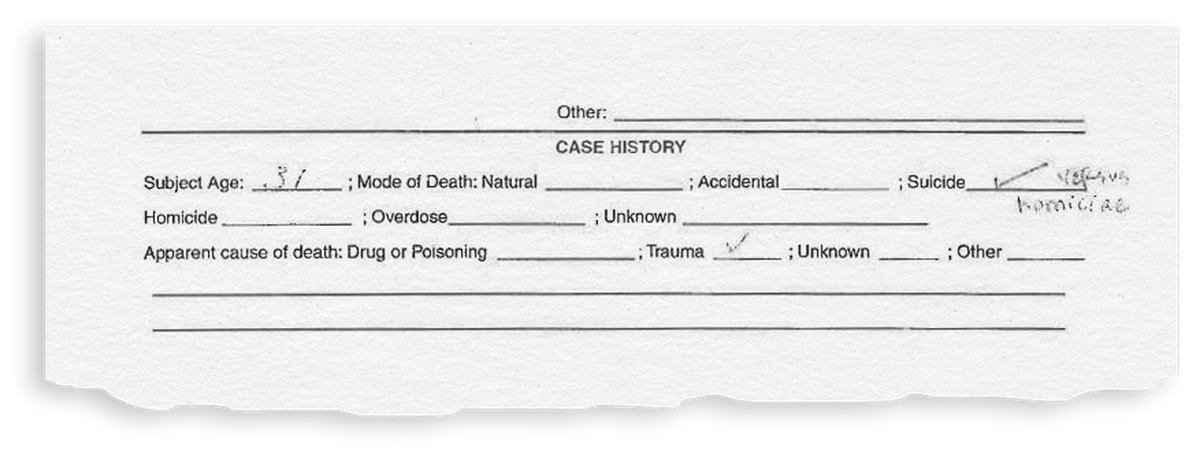
In February 2022, Johnny pored over the autopsy report released by the Sutter County sheriff, which was full of details he’d spent seven years waiting for. The documents finally confirmed that detectives were, in fact, considering murder. Midway down a toxicology screening form, someone had put a little check next to “suicide.” And right next to that check mark, an investigator scribbled in “versus homicide.”
But any suspicion about how Sara died was not evident at her funeral.
Easton planned the service without any input from the Matthews family. In his eulogy, he talked about meeting Sara when she was 15 on a fateful drive to see his then-girlfriend in Reno. He talked about how he realized the girl he would one day marry was hot.
Easton had his wife’s body placed in an open casket. Sara’s face, Aaron Matthews recalled, was swollen. Her arms were covered in bruises, and he could see where the IVs had been inserted. She was wearing a party dress. Her red hair was arranged to cover the bullet wound.
To her brother, it was not only unsettling but odd to see her like this. “My sister, as we’ve described, was interested in how she looks,” Aaron Matthews said. “The idea that she would shoot herself in the head … if I had heard that she overdosed on some pills, I might be willing to believe that. But this idea of shooting herself in the head doesn’t make sense.”
The sight of Sara’s three children at the funeral was also unsettling. He was so sure that she never would have left them.
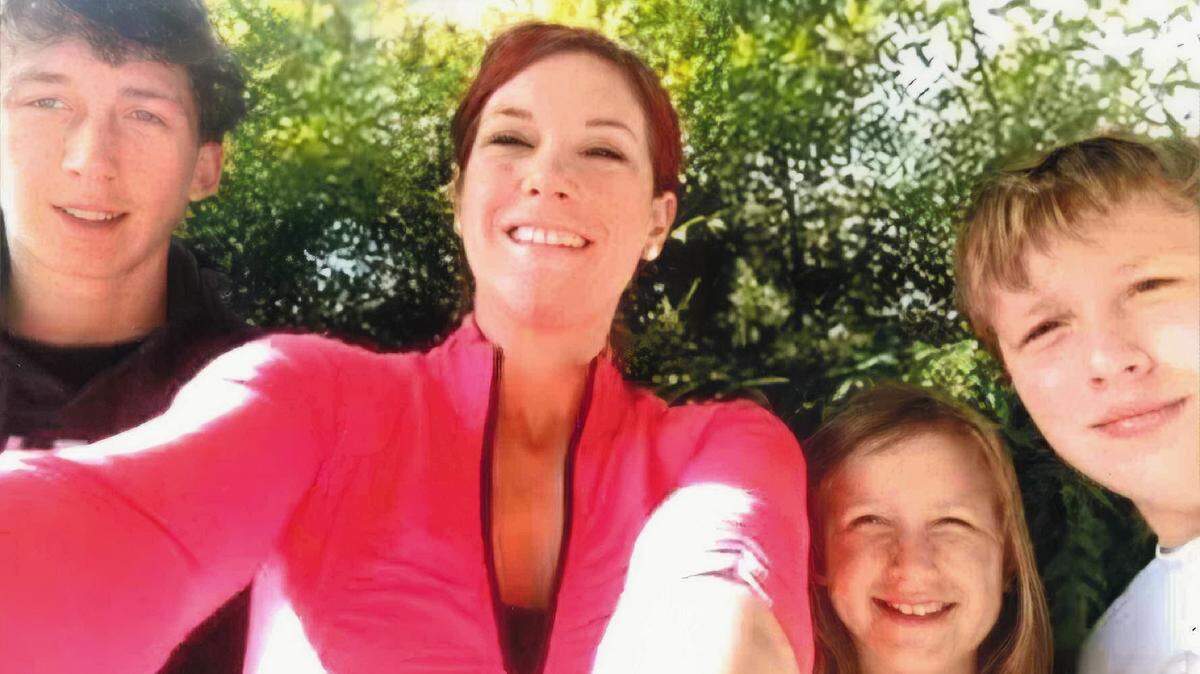
Adam, 13, wore a child-size suit. Josie was just 8 years old, and she’d put a white flower bracelet on her wrist. Oliver, 14 and looking a little gawky in his funeral suit and tie, walked up to the podium and joked that he was proud to be Sara’s “third-favorite child.” He beamed a little bit when people laughed, and he remembered how his mother thought he was funny.
Given the circumstances — that Sara was an image-conscious woman who died of a gunshot wound to the head and didn’t overdose; that she wasn’t a “gun person;” that she hadn’t been drinking or using drugs the night she died; that she had a history of reaching out for professional help when she was in a mental health crisis; that she didn’t appear to have a serious untreated mental illness; that she was in her pajamas and seemingly would have had to get up, retrieve the gun and bring it to her bed before shooting herself; that she had a particularly close and supportive family member, Johnny, who lived nearby; that she was a devoted mother to the three young children sleeping across the hall — psychiatrist Amy Barnhorst said Sara’s death would have been an extremely anomalous suicide.
“Killing yourself when you have kids at home?” said Barnhorst, the vice chair for community mental health at the UC Davis Department of Psychiatry and a leading expert on suicide and gun violence. “That’s a big thing to do.”
Shooting yourself in the head, she said, is a determined suicide attempt by a person who sees no alternative.
The simple fact that a gun was involved is notable: Gun suicides are seven times more prevalent among men than women. In California, population 40 million, only 11 white women in their 30s fatally shot themselves the year Sara died.
And the relatively rare women who do kill themselves with guns usually fit a certain profile. “Women who use firearms tend to be pretty familiar with them,” Barnhorst said. Female veterans and police officers, for example, are more likely to shoot themselves. Additionally, “Firearm suicide is more common if you’re drinking.”
Sara didn’t match this profile at all. She’d refused to shoot even pellet guns as a kid; she skipped all family hunting trips; and a dozen friends and family members did not recall her ever expressing interest in guns. Aaron Matthews is convinced she didn’t even know how to use one. The autopsy showed that Sara wasn’t drinking the night she died, and only had a therapeutic dose of anxiety and sleeping aids in her bloodstream.
Furthermore, Barnhorst said, even when mothers are dealing with persistent thoughts of suicide, “Moms usually tough it out.”
By all accounts, Sara had loving and untroubled relationships with her three children.
The story of Sara’s alleged suicide is a cascade of low-probability events blurring together in a pool of statistical unlikelihood. Of course, statistically improbable things do happen, and statistics can’t prove who pulled the trigger that summer night. But the psychiatrist said that looking at Sara’s general characteristics, she had “essentially none of the risk factors and many of the protective factors.”
Sara had close relationships with her family, especially with her three kids; she had been so attached to a baby who wasn’t even born that she planned a funeral after a miscarriage years earlier. When she was depressed after that loss, she sought professional help.
The forensic evidence might have been ambiguous, but Barnhorst said one thing seemed clear.
“That’s not the story of a woman who shoots herself in the head.”
Click here to read the next and final part about the family’s ongoing search for answers.
Want to look at the death investigation report? Review the documents yourself.
BEHIND THE STORY
MOREWhy did we report this story?
Sara Easton died of a gunshot wound early in the morning on Aug. 16, 2015. Her husband, Aaron Easton, Marysville’s police chief at the time, called 911 saying his wife — a 31-year-old mother of three — shot herself.
Though Aaron Easton continued to say her death was a suicide, doubts cropped up, both for her family and for some investigators. Her brothers, Johnny, Aaron and Jesse Matthews, have suffered for seven years, trying in vain to pry answers from the authorities.
But virtually no concrete news has emerged, and police have remained tight-lipped about her death. Until now, the most information the public has had about Sara Easton and the investigation came from unsubstantiated rumors and rampant gossip about sexual affairs, police incompetence and government cover-ups reaching all the way to the California Attorney General’s Office.
The 68-page death investigation records The Bee obtained in February marked the first chance for the public — including Sara’s family — to see any substantive facts about her death.
Where did the idea come from?
Monica Vaughan was the crime and courts reporter at the local paper when Sara died in 2015. Vaughan knew that a manner of death had not been issued, and she wanted to report on the story. However, the Appeal-Democrat never approved any significant follow-up. She said she never stopped thinking about the case, so she sent tips to The Sacramento Bee. In 2021, reporter Jason Pohl followed up on one of her tips, filing a Public Records Act request with the Sutter County Sheriff’s Office. In February 2022, the sheriff released the death investigation report, which included an autopsy report. These records finally shed some light on what had been a completely opaque investigation.
Then, when reached by The Bee, Sara’s brothers were highly receptive to participating in the reporting process. They wanted her death to receive more attention.
How did we report it?
Once reporters Pohl and Ariane Lange received the death investigation records in February, they began interviews in earnest. Between the two of them, they traveled to Yuba City and Marysville six times to meet sources and to pore over court records. All events depicted in this series are based on police reports, court records, autopsy documents, historical archives, news clippings, social media posts and on-the-record interviews. All told, reporters spoke with more than two dozen people for the story. All scene descriptions are based on photographs or recollections from people who were there or had direct knowledge of the situation.
Who did we speak to?
Sara’s family — particularly her brothers Johnny and Aaron Matthews — collectively gave hours of their time to answer questions about their sister and to offer their recollections of the investigation. Her sisters-in-law, especially Heather, provided valuable perspectives and corroborated some details. Oliver Easton, Sara’s oldest son, met with reporters multiple times. Eight of Sara’s old friends spoke to The Bee about what she was like as a person, as well as their observations of her relationship with her husband.
Sara’s mother, Joy Matthews, ultimately declined to speak with The Bee, though she did confirm that she, too, has suspicions of her son-in-law.
Reporters tried to contact as many investigators and prosecutors who worked on the case as possible. Many of them declined interview requests, but some, in their first public comments about the case, said they had — and have — suspicions that Sara was murdered. The Bee also talked to outside experts in forensic pathology, crime scene investigation and mental health to better understand the suggestive but inconclusive evidence mapped out in the death investigation.
Most of the investigators who were involved with the case at the local level deferred to the California Department of Justice, which has taken the lead on the death investigation. The Department of Justice repeatedly refused to answer basic questions about their investigation and the family’s concerns that justice may be denied for Sara’s death. The state declined to arrange a meeting with Attorney General Rob Bonta. A Department of Justice spokesperson who provided a vague statement refused to even provide their name.
Reporters also made multiple attempts over several months to speak with Aaron Easton. He did not comment on any part of this story.
This story was originally published November 15, 2022 at 5:00 AM with the headline "Was this California mom among the small percentage of women who shoot themselves?."