
California’s grid, SMUD avoid rolling blackouts but several small cities shed load ‘in error’
READ MORE
California Heat Wave
Click the arrow below for more coverage of the dangerous California heat wave.
Expand All
With temperatures soaring and electricity supplies dwindling, California’s power grid teetered on the very brink of rolling blackouts for several hours Tuesday evening before conditions improved and grid officials said the crisis had passed.
After averting blackouts Monday night, the Independent System Operator was struggling to fortify the grid. It declared a Stage 3 “energy emergency alert” just before 5:30 p.m., a sign that the first rolling blackouts since 2020 could happen at any time. The organization said on Twitter that blackouts were “very possible.”
There were conflicting reports of outages beginning in parts of Northern California about an hour later. ABC10 reported rolling blackouts in parts of Lodi, and Healdsburg and Alameda’s municipal utilities reported on social media that they’d been ordered by the state’s grid manager to begin blacking out customers. All three cities are part of a joint powers authority called the Northern California Power Agency, based in Roseville.
But spokeswoman Anne Gonzales of the Independent System Operator, which runs the grid, said the ISO didn’t impose any blackouts, and the organization announced on Twitter that its stage 3 emergency ended at 8 p.m. with no rotating outages.
Late Tuesday, the city of Lodi said on its Facebook page that a “communication error” between NCPA and ISO caused the city to shed load “in error.” The city had cut off close to 1,400 customers for less than an hour, shedding about 5.5 megawatts of load to the system.
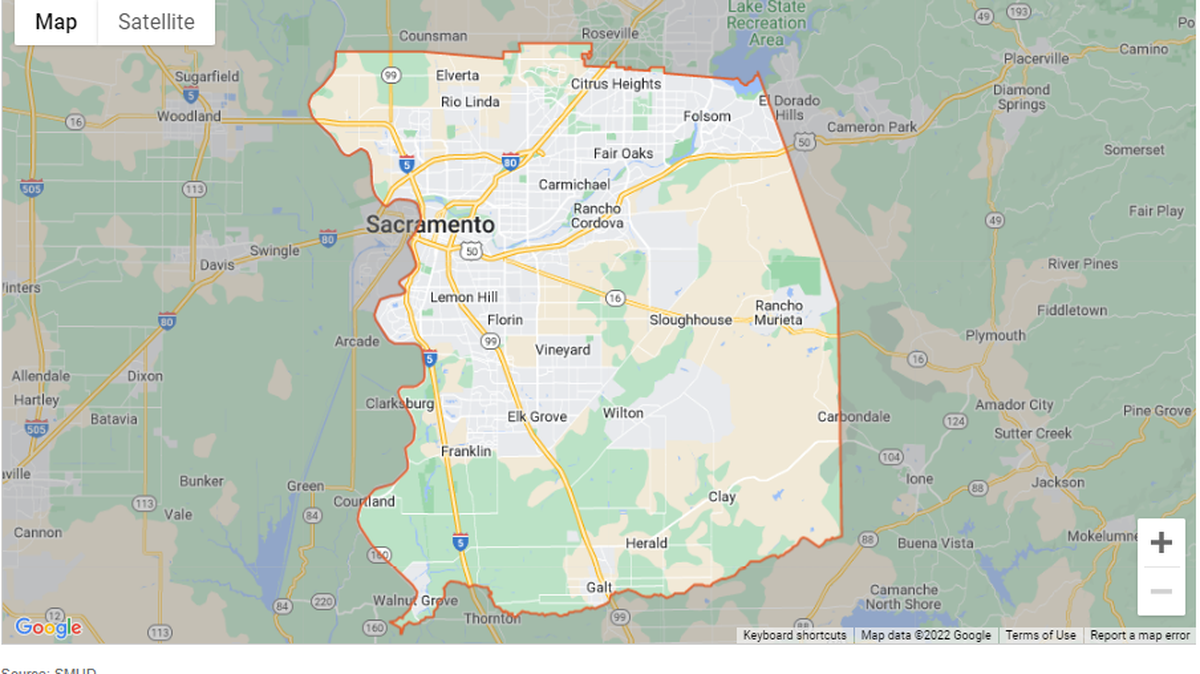
Meanwhile, SMUD issued its own warning to the Sacramento region that blackouts could hit the area for the first time in 20 years, and urged customers to raise their thermostats to 82 degrees late in the afternoon. But at 8:30 p.m. there still weren’t any power outages in the area, other than those caused by equipment malfunctions.
“Thanks to our customers we avoided the rotating outages today,” SMUD spokeswoman Lindsay Vanlaningham said.
For several hours it appeared that rolling blackouts would be inevitable. The ISO said stage 3 emergencies are just “one step away from ordering rotating power outages.”
But somehow the grid held together. The state Office of Emergency Services made a last-ditch plea for conservation, sending text alerts to Californians’ phones saying, “Power interruptions may occur unless you take action.” About an hour later, Cal OES said the texts resulted in “an immediate and significant drop in energy use.”
The ISO emergency was declared around the time power demand peaked at 52,061 megawatts — smashing the record 50,270 consumed in July 2006.
It was also hundreds of megawatts more than what ISO officials had been predicting just a day earlier for Tuesday’s outlook — a sign that the record heat wave and grid conditions were worsening, seemingly by the hour. Temperatures in parts of the Sacramento Valley were expected to hit 118 degrees Tuesday, the National Weather Service said.
“We’re heading into the worst part of this heat wave,” Gov. Gavin Newsom said in a video posted Tuesday morning. “The risk of outages is real and it’s immediate.” He later signed an executive order relaxing air-pollution restrictions on various types of power plants and backup generators.
SMUD, the Sacramento Municipal Utility District, isn’t part of the ISO system and wouldn’t be affected by the state rolling outages. But SMUD was having problems of its own with supply and warned customers they must conserve or risk blackouts.
“Our forecasted peak is more than what we have available. If customers don’t conserve, we could be forced to do rotating outages, which we have not done in 20 years. We need SMUD customers to conserve between 4-9 pm. And of course we are doing everything we can on our end,” VanLaningham said earlier in the day.
SMUD: Turn thermostats to 82
SMUD asked customers to cool their homes down early — and then turn thermostats up to 82 degrees, or four degrees higher than the state was seeking, in another sign of how difficult the evening was shaping up.
“SMUD will exhaust every avenue before rotating outages are called,” the utility said, including buying power on the open market. The utility might also deploy its “air conditioning load management program,” which gives it the ability to cut off air conditioning to customers who’ve signed up for the program. They get bill credits in return.
“This would be the last step before rotating outages,” VanLaningham said.
The ISO called a Flex Alert for the seventh straight evening, calling on Californians to reduce energy consumption between 4 to 9 p.m. in order to avoid blackouts. That includes turning thermostats up to 78 degrees and shutting off heavy appliances such as dishwashers.
Even with voluntary conservation, it was clear that the grid was going to be pushed to the limit — the organization said it was facing “supply deficiencies” of as much as 3,400 megawatts Tuesday evening. That would be enough electricity to power more than 2.5 million households.
Adding to the ISO’s troubles: More than 8,700 megawatts of power were unavailable to the grid as of Tuesday morning because of various plant outages, according to ISO data. That was about 1,000 more lost megawatts than a day earlier.
“We have now entered the most intense phase of this heat wave,” ISO chief executive Elliot Mainzer said Monday.
The ISO called a Stage 2 emergency Monday evening — an indication that blackouts were increasingly likely — but the alert expired three hours later as conditions improved.
The state has been pulling out all stops to try to avoid a repeat of the two nights of blackouts that hit California in August 2020, when a total of about 800,000 homes and businesses experienced power outages lasting from 15 minutes to more than two hours.
Thermostats at state office buildings in Sacramento were ordered turned up to 78 degrees at 4 p.m. Tuesday — and 85 degrees an hour later.
Despite Newsom and the Legislature’s drive to fight climate change and eliminate carbon emissions, the state fired up a new fleet of gas-fired, state-owned power generators for the first time Monday in Roseville and Yuba City. An executive order Newsom signed last week allows commercial companies to run backup generators that ordinarily would be forbidden because of air-pollution regulations. The governor’s top aides were “dialing for megawatts” — a frantic push to cajole big companies to scale back their electricity use.
The blackouts would rotate from one bloc of customers to another, usually lasting an hour or two. They would affect the member utilities of the ISO’s grid, including PG&E Corp., Southern California Edison and other major utilities.
Mainzer said Californians had done an excellent job of curbing their power consumption over the past week, but more would be needed as scorching temperatures remain in place for most of this week.
“We know this has been a long haul,” Mainzer said, “and it’s about to get even more difficult.”
This story was originally published September 6, 2022 at 10:36 AM with the headline "California’s grid, SMUD avoid rolling blackouts but several small cities shed load ‘in error’."
.JPG)
.jpg)

.JPG)