How did China Peak get its name? Here’s the story of the honor given to a Chinese cowboy
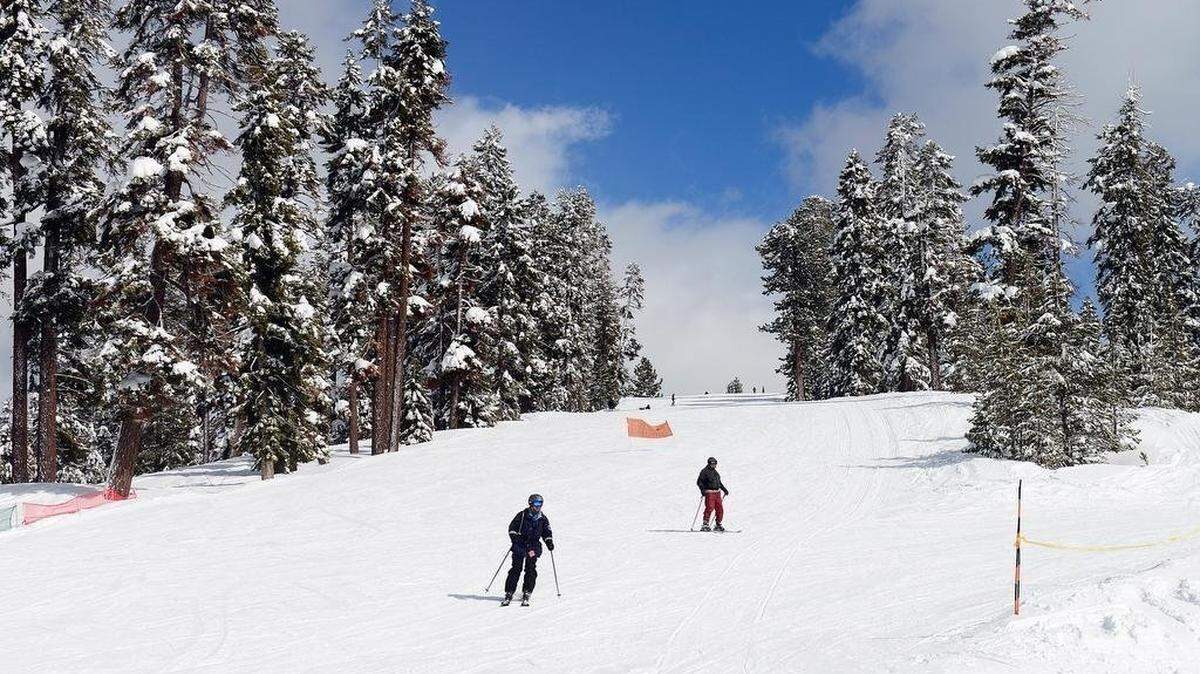
Temperatures are dropping, leaves are falling, and recent storms have dropped a lot of snow, which can only mean one thing — ski season is upon us.
For all our bemoaning Fresno’s triple-digit summers, one of the perks of living in the heart of the Central Valley is our relatively easy access to hiking, swimming, skiing, and snowboarding adventures in the mountains up Highway 168. Like many Fresnans fortunate enough to grow up surrounded by the outdoors, I’ve spent many chapped winters building snowmen with plastic buckets at Huntington and skiing (or tumbling) down China Peak. But it wasn’t until I really looked at the peak’s whitening slopes from the San Joaquin River Gorge trail this past Thanksgiving that a question began to gnaw at me: Why is it called China Peak?
As a Chinese American wary of the past two years of anti-Asian hate both locally and nationally, my first inclination was to think the mountain’s name carried racist undertones. The real story, though, is much more optimistic.
According to California State University Fresno researchers Jeffrey M. Der Torosian and Bradley W. Hart, China Peak is named after Charley Lee Blasingame, a Chinese cowboy who defied the racial discrimination emblematic of his time.
In their research paper, “The Cowboy and the Mountain: Charley Lee Blasingame and Chinese American Interactions in the Sierra Nevada,” Der Torosian and Hart write that in 1873, Jung Lee, a Chinese immigrant, was recruited as a house servant for the prominent Jesse August Blasingame, a herder and one of the largest land owners in Fresno County.
Though Lee was hired to perform domestic chores, he found his true home outdoors in the rugged Sierra Nevada, where he developed great talent herding sheep (adding on to a tradition of Chinese shepherds in the Sierra). As Lee gained respect as a skilled herder and diligent worker, the Blasingame family came to see Lee as more a family member than a servant. Over the years, the relationship between the Blasingame family and Lee became so close that Lee changed his name to Charley Lee Blasingame, which he held until the end of his life.
.jpeg "36127872_136720534771 (1).jpeg")
Lee was known as “Indian Charley,” reflective of the racialized climate of his time, according to The Fresno Bee’s 1924 obituary.
As Der Torasian and Hart observe, Charley’s ability to successfully walk the line between this newfound American identity and his Chinese roots “was atypical for Chinese immigrants in the period.” In the 1870s, when the number of Chinese immigrants in Fresno County dramatically increased because of the Central Pacific Railroad, racial animosity towards Chinese immigrants was common. White residents routinely “accused their Chinese neighbors of stealing prime real estate east of the railroad in Fresno”, forcing them into less desirable sections of town. Yet, despite persistent discrimination and nicknames such as “Chinaman Charley”, Charley Lee Blasingame enjoyed such a great reputation for his outdoorsmanship that he was entrusted, after J.A. Blasingame’s death, to manage the Blasingames’ herds and range as head cowboy.
Thus, when naturalist John Muir and University of California Professor Joseph LeConte rallied behind the Sierra Club (a society dedicated to preserving the natural beauty of California’s wild places) to ban sheep herding in the Sierra, it was Lee who spearheaded a financially prudent and contentious conversion from sheep herding to cattle ranching for the Blasingame family. Muir and LeConte themselves also encountered Lee during this time.
According to an interview with Morgan Blasingame by Der Torosian, “Lee first met Muir in the Vermilion Valley while tending sheep and was intrigued to see the naturalist chasing butterflies with a net.” LeConte, however, would remain a dear friend of Lee’s until his passing. Stopping by Lee’s camp frequently (infamously known in the region as China Camp), LaConte spent long nights drinking whiskey with Lee and swapping stories of their backcountry adventures.
By the early 1920s, a battle with diabetes forced Lee to retreat from the Sierra to Clovis, where he remained until his death in June 1924. In honor of his work as a sensible businessman and cowboy, the obituary in The Bee wrote that “Lee’s memory is perpetuated by a mighty monument, China Peak, in the hills back of Clovis. It was named for Lee by Joseph LeConte.”
Lee was buried in the Blasingame family plot, “a remarkable gesture in a period when cemeteries were still generally segregated by race and nationality”, Der Torasian and Hart write. Indeed, Lee’s story — one of hard work, dedication, and chance encounters with people progressively minded enough to see past his race for his character — is one that each Fresnan should be proud to know as they ski down China Peak’s slopes every winter.