
Fresno student’s essay: Pancakes bind Americans even when politics pull them apart
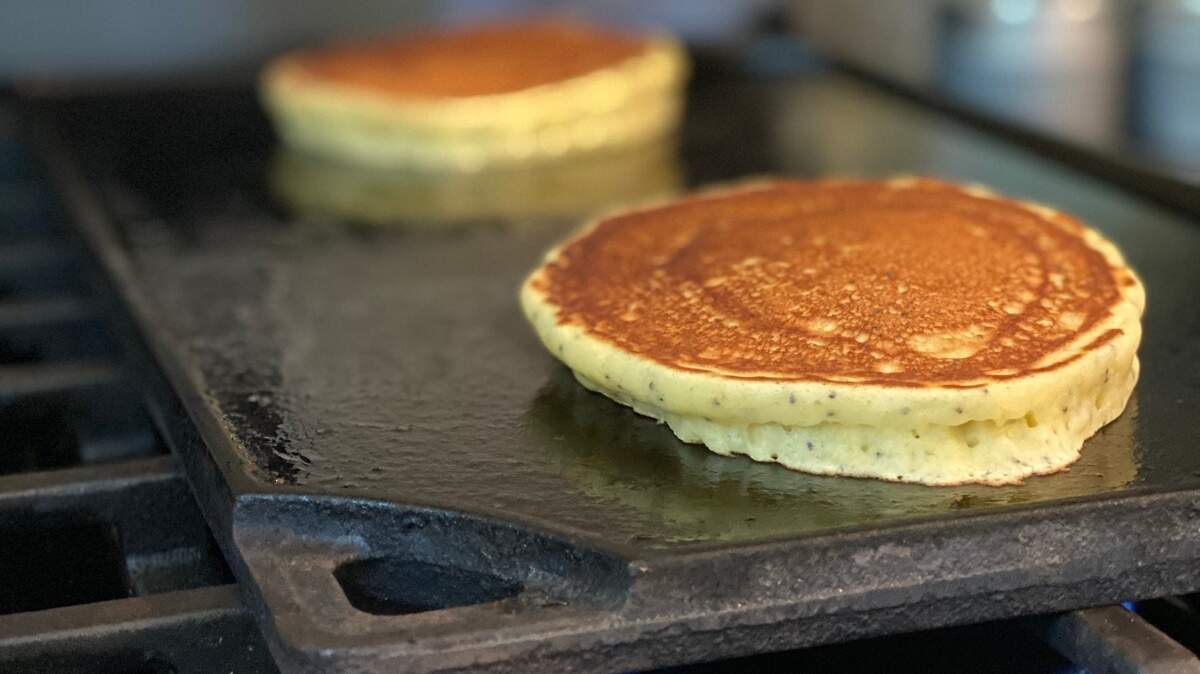
The pan sizzles aggressively, the oil on its surface pulsating in shimmering waves. I plop a half cup of a tan concoction — flour, eggs, milk — onto the pan’s face and watch the glossy surface slowly bubble to a crisp golden brown. A healthy serving of sticky syrup and a side of fresh berries are requisite accompaniments to my endlessly American pancake breakfast.
But I could have just as easily made French crepes by watering my batter down with milk and spreading it thinly on my pan. Or, roamed the streets of China by adding green onions and butter, creating flaky, chewy disks with copious amounts of hoisin sauce. A swap of flour for fermented lentils and the absence of egg would’ve created Indian dosas, to be served alongside a refreshing mint chutney dip. The point is, the world loves a pancake.
Like emus and ostriches, pancakes are the products of convergent evolution. Throughout the 200,000-some odd years of Homo sapien history, humans have created the same food across each continent. Because humans desired the same gastronomical things from their environment — practicality, nutrients, deliciousness— pancakes have naturally become the world’s choice breakfast food. Making pancakes seems instinctual, built into our DNA: mix grain flour and liquid and cook.
And despite their simplicity, pancakes around the world infinitely vary in grain — semolina, wheat, lentil — cooking methods, textures and thicknesses. From the first flour and honey pancakes documented by fifth century Greek poets Cratinus and Magnes to the Internet-famous Japanese souffle pancakes, the pancake takes its form and flavor from the people who make and eat them. Each pancake is a vehicle for a people’s language, religious observations, and local traditions. Indeed, a lot of what can be said about pancakes can be said about us.
If pancakes can represent people, then America is the world’s breakfast table. But what good is breakfast when not all of our neighbors are invited? While we’ve come a long way in social awareness (see: the reinvigorated Black Lives Matter movement and the increased political participation of Gen Z), American sentiment indicates we are still far away from passing maple syrup to just anyone.
While we champion freedom and cultural variety, hundreds of Mexican children huddle under space blankets in the ongoing Mexico-America border crisis. We gorge on dumplings and have elevated bubble tea to national ubiquity, but associate Asian American people with viruses. We covet jazz and blast hip-hop in our cars while systemically discriminating against African Americans in education and the criminal justice system. These are only a subset of cultures and people that have created America’s immensely dynamic and diverse character. So why doesn’t it feel like BIPOC are invited to the breakfast table?
Turns out, we still have a lot to learn about empathy. With demonizing news headlines and radical political characters, political and social polarization has raised metaphorical walls across America. We ignore our similarities and zero-in on our differences: the shape of someone’s nose, the sound of an unfamiliar tongue, the smell of a foreign food.
If pancakes can teach us anything, it’s that, despite what color our skin is, we all still have a lot in common. Just as we love our respective pancakes, we all want love, success, happiness, our mother’s cooking. I’m inclined to believe that if we spent more time breaking bread or eating each other’s pancakes rather than parsing out our physical and cultural differences, we’d have a lot more to agree on. At our core, after all, we are grain, eggs, and milk.
In 1831, Alexis de Tocqueville called America “exceptional.” In 2021, I ask: How can we be exceptional when we can’t call ourselves a community?