
Wildfires usher in apocalyptic reality, but this Fresno teen refuses to yield to anxiety
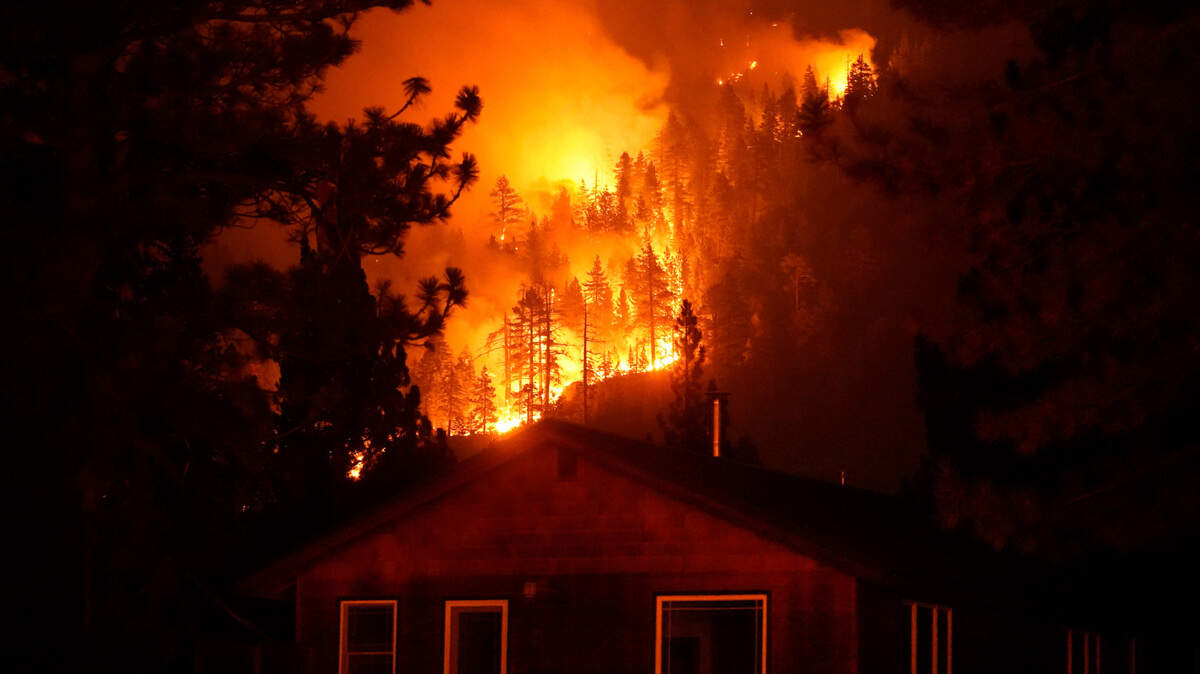
For the entirety of August, Fresno’s skies were an empty shade of gray. The air smelled like burnt wood and hot rubber, but two days in, I was used to it. I tightened my face mask against the acrid fumes and walked to class. It was as normal a month as it could be.
I’m a high school senior who’s lived in Fresno her entire life, but it’s only in the past few years that I can recall these raging wildfire seasons. The Camp Fire in 2018 killed 85 people and ravaged Paradise. Then, in 2020, the Creek and Mineral fires burned so close to Fresno that many of my friends’ families were forced to evacuate, and this year, the smoke from the Dixie Fire has settled so thickly on the Central Valley that a film of ash has built up on the tomato plants in my backyard. And as soon as the Dixie Fire seemed to fade from news headlines, the devastating Caldor Fire swooped in with fury to take its place.
I’ve gotten used to planning my running schedule around the bad air quality and seeing the burned trees and fields of ash on hikes with my family. Just recently, the running trail near my house has exploded into flames for the fourth time this year. Despite the smoke, runners and bikers scurry across the trail as if nothing’s happened. Like me, they’re numb to the smell of ashes. But this isn’t normal.
Wildfire season in California is a natural phenomenon that serves as an opportunity to clear the forest floor of debris, nourish the soil, and usher in a new generation of plant growth. But in the West, wildfires are starting earlier and persisting with greater intensity and duration every year. The reasons why are both endless and interconnected: poor forest management results in buildup of easily ignitable shrubs and pine needles, unseasonably warm temperatures and subsequent insect infestations, unreliable rainy seasons, and irresponsible campers. Already, 1.6 million acres have burned in California, almost a third more than the five-year average.
When I was in elementary school, climate change could be defeated by picking up trash and closing the faucet when brushing my teeth. Plastic straws were to be avoided at all costs if the planet stood a chance. But now, when my friends flee their homes with only a backpack of essentials and helicopters deposit fire-stranded hikers in my middle school’s football field, these worries seem incredibly trivial. Thousand-year-old sequoias, homes, and entire towns have been destroyed. Swaths of people have died. This is climate change, and these persistently intense wildfires are just the tip of the iceberg into the cataclysmic fallout of our actions.
As a senior applying to college, I’ve long felt the migratory urge to leave the smoke and dust of my hometown behind. But that reality is changing, too. In the East, there’ll be raging blizzards; Southeast, hurricanes. The Pacific Northwest, like California, has been plagued by wildfire. There’s no running away from the many forms of climate change, and trying to escape it won’t do us any good, either. As the latest Intergovernmental Panel on Climate Change’s reports, humans are “unequivocally” responsible for the warming planet. But that doesn’t mean it can’t be managed.
We need systemic change in prescribed burns, research, and biomass utilization to even begin fighting wildfires. On the federal level, the Biden-Harris administration has outlined a plan to suppress the growing wildfire threat, and it’s my hope they’ll see it through. In the meantime, individuals like me can do our best to support these projects and vote, if old enough, for the candidate in the ongoing recall election that has our best interests at heart.
So even though it’s hard to suppress the thought that we’re teetering on the edge of an apocalyptic reality when the sun is glows angrily red behind a thick sheet of smoke, I have to be optimistic. At 17 years old, there’s too much life in front of me to spiral into climate anxiety, and Fresno’s skies are recovering with each passing day.