
A hard rain’s gonna fall: Glimpsing the rise of hate through the lens of our Valley
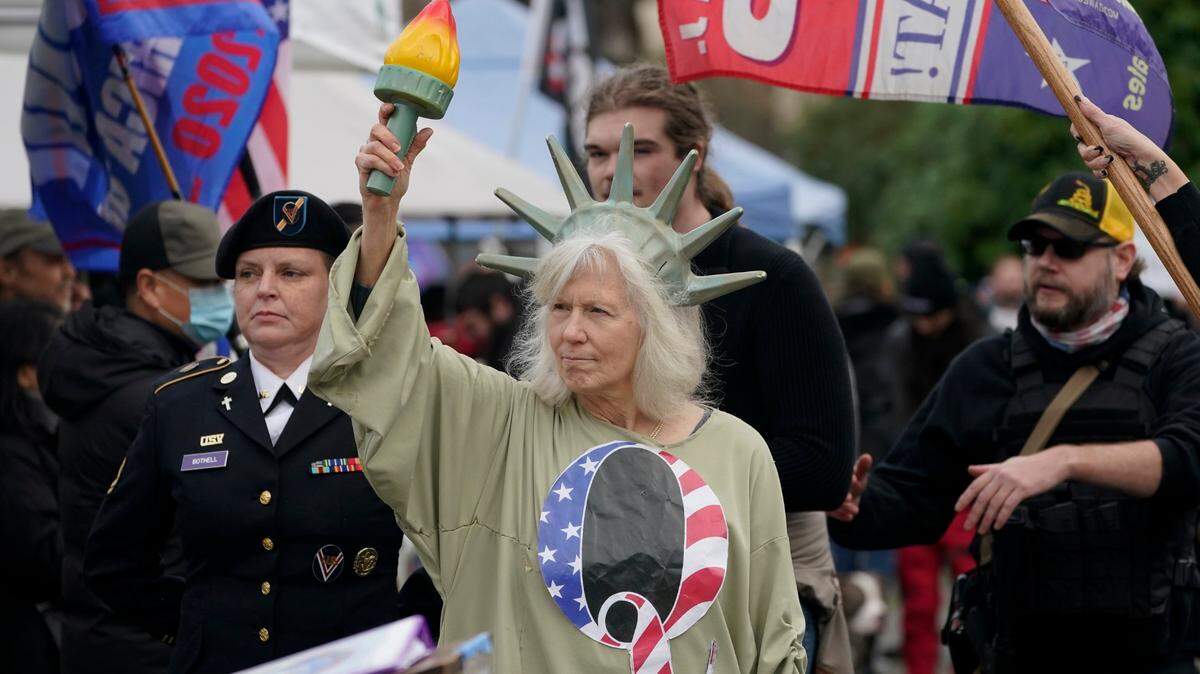
Over the years, I’ve written from the premise that the San Joaquin Valley is an ideal place to contemplate America. The view from Fresno almost never lets me down. Today, I can see, on the same uneasy ground, the two Americas side by side, a place more or less half red and half blue, one political tribe looking backward to its glory, the other political tribe looking forward to its ascendancy.
As the Valley undergoes its conversion from one reality to the other, a long process of roil, it becomes an excellent place to study how the cult of Donald Trump came to be and what forces truly vivify it.
For me, an understanding of our current situation began four years ago as Trump was about to be sworn in as president. I was meeting my brother, Donny, a high school football coach, at our favorite watering hole, the Lime Lite, in the northwest part of town. This is a special place on Friday Nights after his games. Parents, coaches, past players — Black, white, Latino and Asian — take over the bar and half the restaurant and mix in a natural way. What routinely happens on those nights is a kind of intimate sharing of story that is all too rare in this country. We don’t dance around issues of race. We put our chins right in. It can be truly magical, the stuff we solve there.
But this particular night, in January 2017, was a slow Thursday. A handful of white businessmen, guys I had known for 30 and 40 years, Republicans who liked to tease me about being the liberal, sat at the bar. Not many minutes passed when my brother and I noticed that something had changed in the room, the very air I might say. Eight years of Barack Hussein Obama. That’s what these successful white businessmen had been made to swallow. And their resentment was seeping out finally, allowed to breathe because Trump had given it lungs to breathe.
The Muslim, they called him. He wasn’t born here, they said, repeating Trump’s birther conspiracy theory. Then one of them started letting loose the N-word, an utterance I had never heard out of his mouth. I was, I must admit, thrown off balance by just how matter-of-factly hate came off their tongues, and the assumption that my brother and I, who had been raised differently, could be ears to their confession and just let it go. We did not let it go. The argument grew so heated that the bartender had to step in.
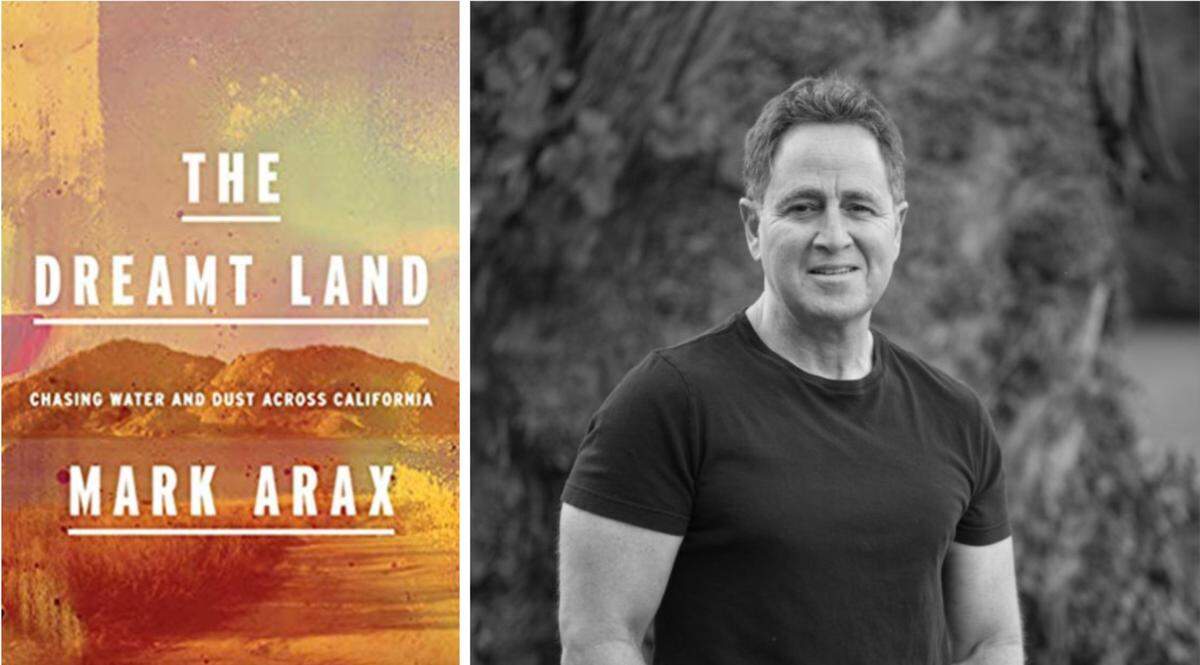
In the days and months to follow, as I traveled the Valley to finish a book on the invention of California through the manipulation of water, I had several more encounters with angry white men and women that revealed the same scapegoating of Blacks and Mexicans. I began to question how political pundits were explaining the rise of Trump: that blue collar white America, marginalized in an ever-growing service economy, had made a rational calculation and switched its vote from Democrat to Republican. The rural embrace of guns, God and Trump, the experts wanted us to believe, had a logic, and if we cared to listen closely to it, we might even detect a poetry.
The economy, I concluded, had little to do with a demagogue occupying the White House. No, what Trump was tapping into was racism pure and simple. He was both feeding the hate and feeding off it. He was like a Geiger counter the way he revealed the ugliness that had long been hiding just a few inches below the polite soil. He was playing on white America’s fear of being eclipsed, if not eaten, a deep psychological dread over its diminished status in a new country in gestation. Make America Great Again was the very essence of looking backward for salvation.
Hate finds a home on social media
When the book came out in the spring of 2019, my publisher asked me, a social media novice, to go onto Facebook to promote it. That’s how I discovered this portal, one link leading to another, that transported me to a subterranean world, a cesspool inside a cavern, brimming with the most vile and absurd conspiracy theories. People I had known for years I hardly recognized. The muscle in their brains — their bullshit detectors — had grown slack from the screen, I reasoned. Their spirits had been hijacked by the drone of Trump and the incantations of right-wing media: Fake News, the Deep State, The Hoax, The Ring of Democratic Pedophiles that Sacrifice Children and Drink their Blood, The Socialists Who Will Steal Your Job, Your 401(k), Your Guns, The Maskers Who Tread on Your Liberty, The Hospitals that Inflate the Covid-19 Numbers for Cash, The Crooked Doctors who Hide the Wonders of Hydroxychloroquine.
It was a church inside the church, a choir that never stopped singing the same tune to the same converts. It was a song of fear, and its newest hook was Your Vote Will Be Stolen.
I tried my best not to engage. How many times I typed a reply to an old friend from high school whose idolatry of Trump I wanted to question and then erased it? But at some point, as the nonsense and dead bodies from the virus kept piling up, I couldn’t contain myself.
Trump lost the first election by 3 million popular votes, I replied. He lost the second election by 7 million. You don’t need a model of elaborate conspiracy to explain his defeat. We can agree that he is a man utterly lacking in warmth, a man whose crude act has worn thin, and he’s now reviled by anyone with a working conscience. There is no need for a multitude of dead people and weaponized voting machines to remove him from office. No need for The Steal. Plenty of alive Americans were more than eager to do the job.
My old pals furiously replied back. Their answers, disarranged though they were, had an explanation for everything.
So there he stands, aggrieved and wounded, a messiah in the eyes of the committed. Counting the crowd of QAnon-ers, Boogaloo Bois, Proud Boys, Three Percenters, Oath Keepers, militias, Christian warriors and the rest, this may be an army of 10 million, 20 million, 30 million, who knows. We can now start arguing whether or not they pose a threat to the country greater than Islamic terrorism.
Valley’s long racist history well documented
Our Valley, no surprise, is old ground for such fantasy and hate.
Waves of confederates left the South during and after the Civil War. Many of them landed here and went about inventing a new South. So high were Southern sentiments that the Union Army was forced to build a fort outside the town of Visalia to quell the pro-slavery crowd. They brought their cotton and planted it in the Tulare Lake bottom. They summoned their Black labor. They grafted the old plantation economy onto middle California.
The cotton may have been taller out here, but the racism was near as wicked. Blacks were locked out of Fresno, Tulare, Visalia, Hanford, Corcoran, Bakersfield. They built their shacks in the alkali dust where no water ran. The Ku Klux Klan went about infiltrating the highest levels of city and county government and the police and sheriffs.
Blacks became expendable when the farmers figured out that they could reach across the border for cheaper Mexican labor. Then the Depression hit, and caravans of dustbowl Okies, carting their mattresses and bigotry, arrived. They were not welcomed, either. Ditch Bank Okies, the locals called them. But because they were white, they got the jobs driving trucks and managing crews, and they quickly worked themselves up the ladder.

This is the place where I rode my bike in the late 1960s when redlining was the law of the land. Real estate codes forbade Negroes, Mexicans, Asians and my own people, the Armenians, from living in the fancier parts of town. I got into my first fist fight when I was in the 5th grade and a kid called me a “Fresno Indian.” “What’s a Fresno Indian?” I asked my dad. “Well, that’s what they call us Armenians.” When I asked him why, he had no good answer. My second brawl was with a Mormon classmate who called me a “dirty Armenian.” This I plainly understood.
By then, my father, Ara, had moved us to the fancy new Fig Garden subdivision, building a custom house out of adobe brick in the style of the Spanish missionaries who were the first to steal California. A cotton merchant from New Orleans lived across the street with his wife and two children. The mansion they built was Georgian and if I hit my whiffle ball square, it would fly to the other side of Lafayette Street, across their immaculate lawn, and land at the foot of their Black lawn jockey.
My father, a grape grower and groceryman, bought a bar near Motel Drive and turned it into the hottest rock ‘n’ roll joint in the Valley. In the summer of 1971, he brought in Chuck Berry to duckwalk across the small wooden stage in back-to-back shows that filled the house twice. My mother couldn’t understand what my father was up to. He told her he was using music to mix the races. Fresno was one of the most partitioned towns in America, he said. It could use a little mixing up.
His experiment didn’t always end well. One night a Hell’s Angel broke off the base of a table and struck the head of young Black man named Cooley whose family owned the biggest funeral home on the west side. Cooley nearly died.
Today, the Valley keeps on growing — grapes, almonds, pistachios, mandarins and houses — and yet it remains to the core a hidebound place. Our native sons have played no small part in the national rise of right-wing extremism. There’s House Minority Leader Kevin McCarthy, a world-class suck up who Trump calls “My Kevin,” and Congressman Devin Nunes, the dairyman without a dairy who received the Presidential Medal of Freedom for smoking out the Russia Hoax and who swears the California drought is a communist conspiracy. There’s our agrarian and classicist Victor Davis Hanson, the oh-so-sane one on Fox News, who gives intellectual cover to right-wing delusions that manage to both simplify the world and paint it intricately perverse.
And there’s our boys who became part of the mob that swarmed the Capitol and shouted down South Carolina Sen. Lindsey Graham for momentarily turning his back on Trump. A few days prior, they had ranted at the clerks at our local Trader’s Joe’s — for kindly asking them to wear a mask in this worst time of a pandemic, when not a single intensive care hospital bed was open.
Outside my window, the right winger and the left winger, whatever that taxonomy means anymore, sing their different songs. The old Latina flies her “Nunes For Congress” sign long past voting day, as if his re-election, too, remains in doubt. The young white kid walking his dog has signed on to a movement to erase, or at least obscure, John Muir from the Sierra. Muir’s crime? Among the million bold words he wrote, there was once or twice a slur.
From my house to the low running river, we all seem mad waiting for a hard rain. “Ten thousand talkers whose tongues were all broken,” Bob Dylan wrote. Might we rediscover our common language is the plea of our new president. Watching the storm approach, I no longer believe such a language was ever there to begin with.
This story was originally published January 31, 2021 at 5:00 AM.