Fresno stretch of San Joaquin River home to bumper crop of returning salmon | Opinion
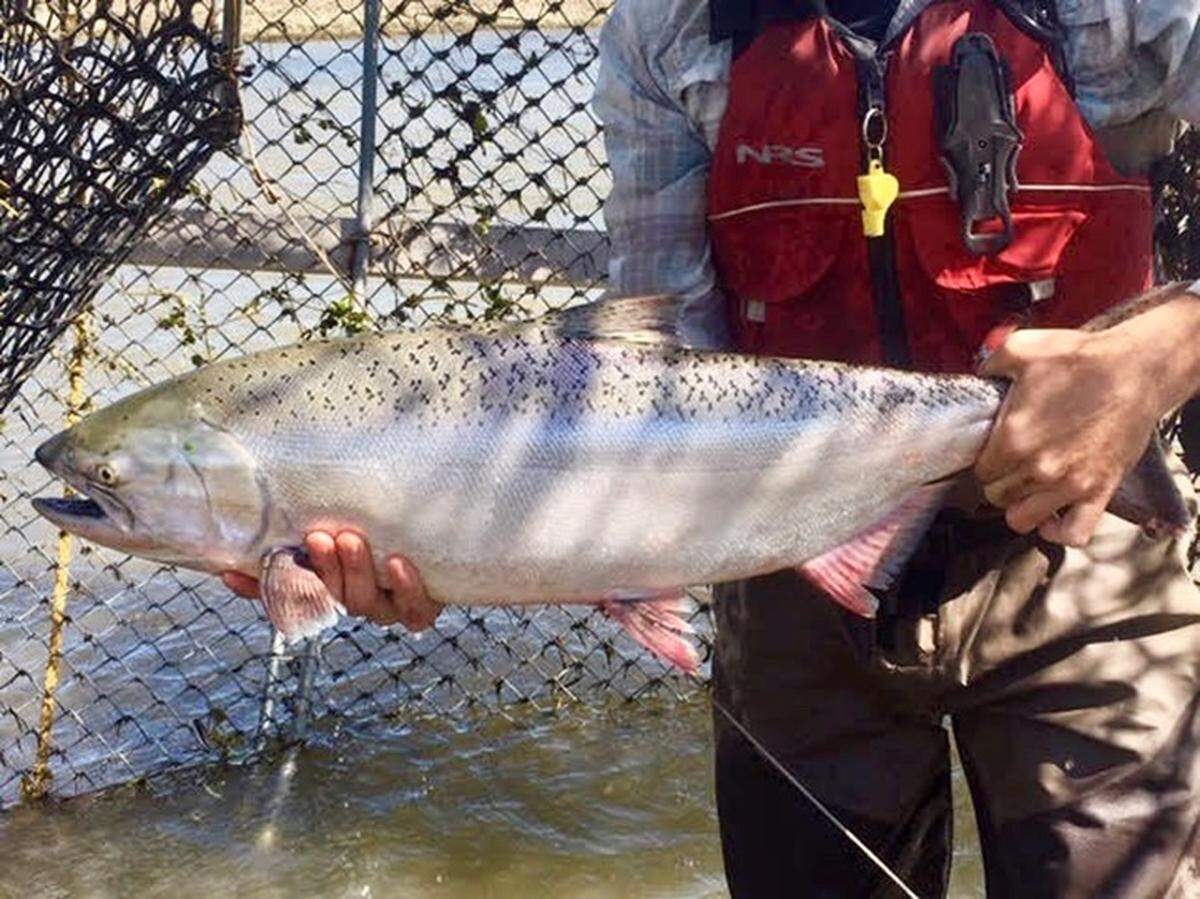
Earlier this month, Fresno welcomed 448 members of the Salmonidae family to town.
Which in this case is Latin for adult, spring-run Chinook salmon.
The 448 adult salmon represent a milestone for the San Joaquin River Restoration Program, marking the highest number of captured returns since spring-run juveniles were reintroduced to the river system in 2014 following the 2008 legal settlement that modified the operations of Friant Dam to provide minimum flows for native fish.
Prior to the dam’s completion in 1942, hundreds of thousands of Chinook salmon migrated along the San Joaquin River every spring and fall either on their way toward the ocean or up river to spawn.
Over the ensuing decades, the waterway was significantly altered to meet the demands of agriculture. The passage of salmon is blocked by dams, spillways and other impediments – except during precipitation-heavy years like 2017 and 2023.
Most of this year’s bumper crop were trapped in fyke nets placed downstream of the Eastside Bypass Control Structure in Merced County. (Some made their way upstream to Sack Dam until being captured.) After being placed into tanks with oxygenated, temperature-controlled water, the salmon were trucked 120 miles then examined and measured before being released back into the river in northwest Fresno.
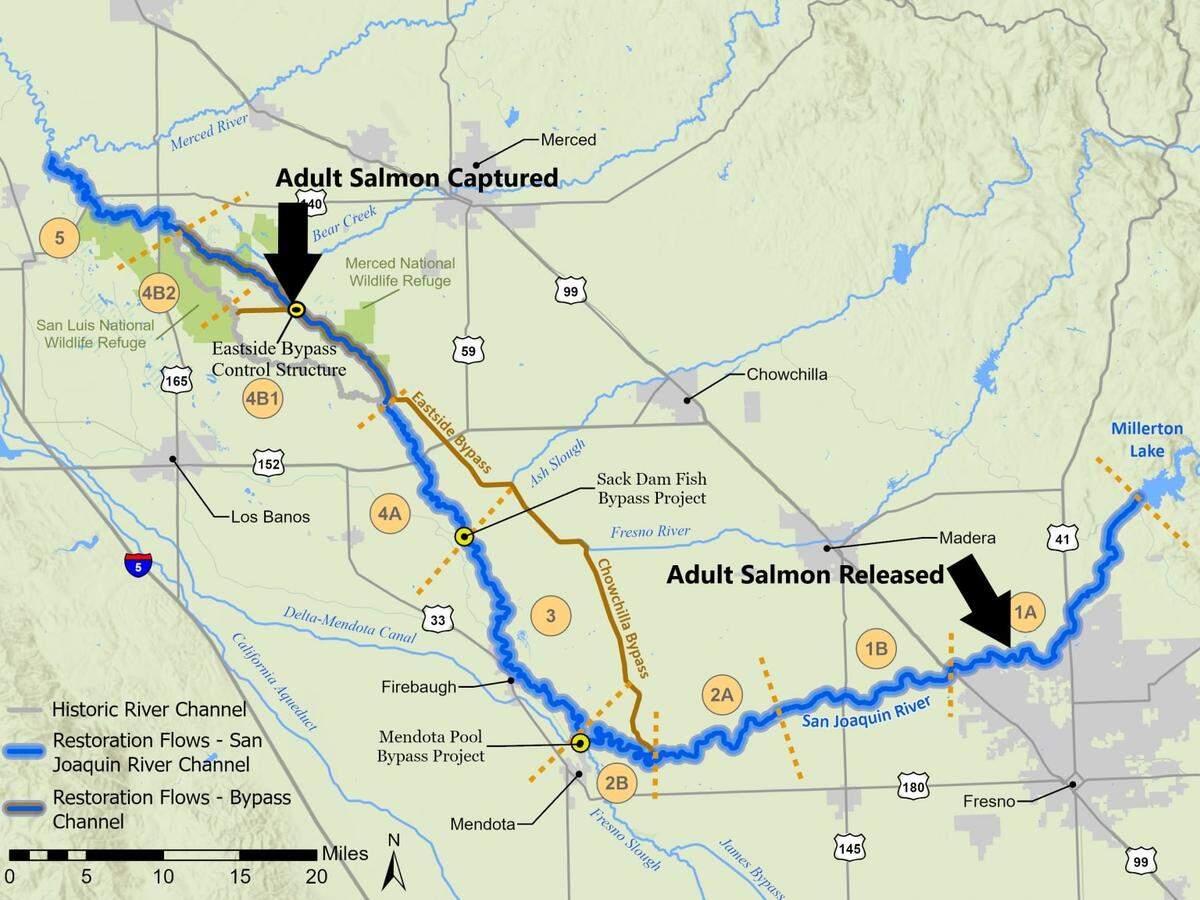
The salmon will spend the summer getting acclimated to their new but familiar surroundings before making their way to the base of the dam for the September and October spawning season, when females dig and lay eggs in gravel spawning beds (called “redds”) that are then fertilized by males.
Central Valley Chinook salmon typically spent two to three years in the ocean before returning to spawn in their native rivers. Don Portz, a Bureau of Reclamation fisheries biologist who serves as San Joaquin River Restoration Program Manager, attributed this year’s high number of returning adults to the high survival rate of juvenile salmon born in the record-setting snowpack year of 2023 that forced dam operators to make prolonged flood releases.
“The primary reason for the record returns in 2025 is believed to be the successful outmigration of a high number of juvenile salmon in 2023 due to a high-water year that provided the conditions conducive to improved survival on their way out to the ocean,” Portz said.
In 2019, two years after the last high-water year, program biologists counted 209 redds (gravel spawning beds) in the river below Friant Dam. Since it takes two to tango, that means there must’ve been at least 418 surviving adults.
Portz and his staff are hopeful that record number will also be surpassed in 2025 but won’t know until the fall.
Salmon ‘a threatened species’
What measures are taken to ensure nearly 450 adult salmon residing on the outskirts of a city of 547,000 people remain undisturbed until they can reproduce? The short answer is enforcement and education.
“Spring-run Chinook salmon are a threatened species,” Portz said. “Illegal fishing and harassment of threatened species is the jurisdiction of the California Department of Fish and Wildlife, and they include patrols of the river by game wardens. The program also makes a concerted effort to educate the public about restrictions including signage and speaking to interest groups.”
Despite this year’s high rate of returns, the San Joaquin River Restoration Program’s “restoration goal” of a naturally reproducing and self-sustaining salmon populations along the 152-mile stretch of river between Friant Dam and the Merced River confluence remains a ways off.
The biggest obstacles – literally – remain the creation of several fish passages that allow for salmon to travel freely while completing their life cycle.
One such project, a fish bypass around Sack Dam and a fish screen on the Arroyo Canal, is scheduled to begin a two-year construction in late summer, according to restoresjr.net. A second, and even more complex, involves building a mile-long passage channel around Mendota Pool. Portz anticipates construction to begin in 2028.
Additional work is being prepared to improve fish passage at two locations where the river is diverted into canals: the Eastside Bypass Control Structure and the Chowchilla Bifurcation Structure.
Not until spring-run Chinook salmon can travel unencumbered on a stretch of river that was affixed for six decades, and at certain minimum population thresholds, will the program be considered a success.
But 448 returning adults, Fresno’s special summer guests, are a silvery indication of progress.
This story was originally published June 15, 2025 at 5:30 AM.