Development, politics, homicide: 7 Clovis stories in 2025 that are shaping the city
Clovis policy decisions this year will impact the city’s nearly 130,000 residents in various ways, as the city continues to transform from growth and political changes.
The city raised the sales tax to enhance public safety. It accelerated expansion to the north while developing an infill rezone program to accommodate more affordable housing units.
It’s undergoing political transformation — the fallout from changing to district-voting in local elections and the passage of Proposition 50 will unfold in 2026.
Clovis continues to invest in improving trails and parks.
The iconic dance instructor returned to teach at the senior center after elderly students addressed the city council for weeks on the issue. The city also launched its first official children’s book to pass down history and tradition.
The brazen killing of high-schooler Caleb Quick outside a McDonald’s has shaken the community.
Here’s a list of Clovis coverage highlights from The Bee this year.
From at-large to a district-based voting system
In March, Clovis took a major step in shifting from at-large to district-based elections by dividing the city into five voting districts.
Clovis is one of the last California cities of its size to make the change. The transition started after Malibu-based law firm Shenkman & Hughes threatened last year to sue the city for its at-large system, alleging it potentially discriminated against communities of color by denying them an equal opportunity to elect officials to represent them.
The new voting system will take effect in 2026, at which time voters from three of the five districts — including District 1 in the southwest of the city where no incumbent currently resides — will elect their council representatives.
Click here to read the details of the voting change.
New sales tax for public safety
Clovis raised its sales tax rate by 1% effective April 1, making it one of the cities with the second-highest sales taxes in Fresno County. The current rate stands at 8.975%.
The increase is the result of voters’ approval of Measure Y, a bond to support public safety and city services. The measure is projected to generate approximately $28 million annually to reduce response time for emergency calls, maintain police patrols and fire protection, accelerate repairs to streets and parks and address homelessness, among other usages.
Clovis has long struggled financially to hire additional public safety personnel to keep up with the city’s rapid population growth. Over the past two decades, its population has grown by 50%, yet the number of police officers and firefighters has remained unchanged or even decreased.
Measure Y will fund five new police officer positions and nine fire positions, according to an allocation plan approved by the city council in May.
Click here to read the allocation plan for Measure Y.

Shooting death of Caleb Quick
18-year-old Quick was shot and killed at a McDonald’s parking lot on April 23.
Clovis Police made arrests of two suspects, a 16-year-old boy who is charged with murder and a 16-year-old girl who is accused of driving the getaway car.
Quick and the suspects attended Clovis Unified schools at the time of the shooting.
Click here to read the case’s latest development.
Transgender athlete in CIF championship drew national attention
Clovis made national headlines in June after President Donald Trump criticized California Interscholastic Federation for allowing transgender athletes to compete in the track and field championships held at Veterans Memorial Stadium.
After some Clovis’s elected officials claimed publicly at press conferences and on social media that the state’s rules unfairly disadvantaged cisgender girls, over a dozen residents addressed the city council meetings, urging council members to stay out of divisive issues that the city does not have legal authority over.
The city spent $21,000 in police overtime to address two-day protests at the state track meet over the weekend, according to City Manager Andrew Haussler.
Click here to read about the controversy.
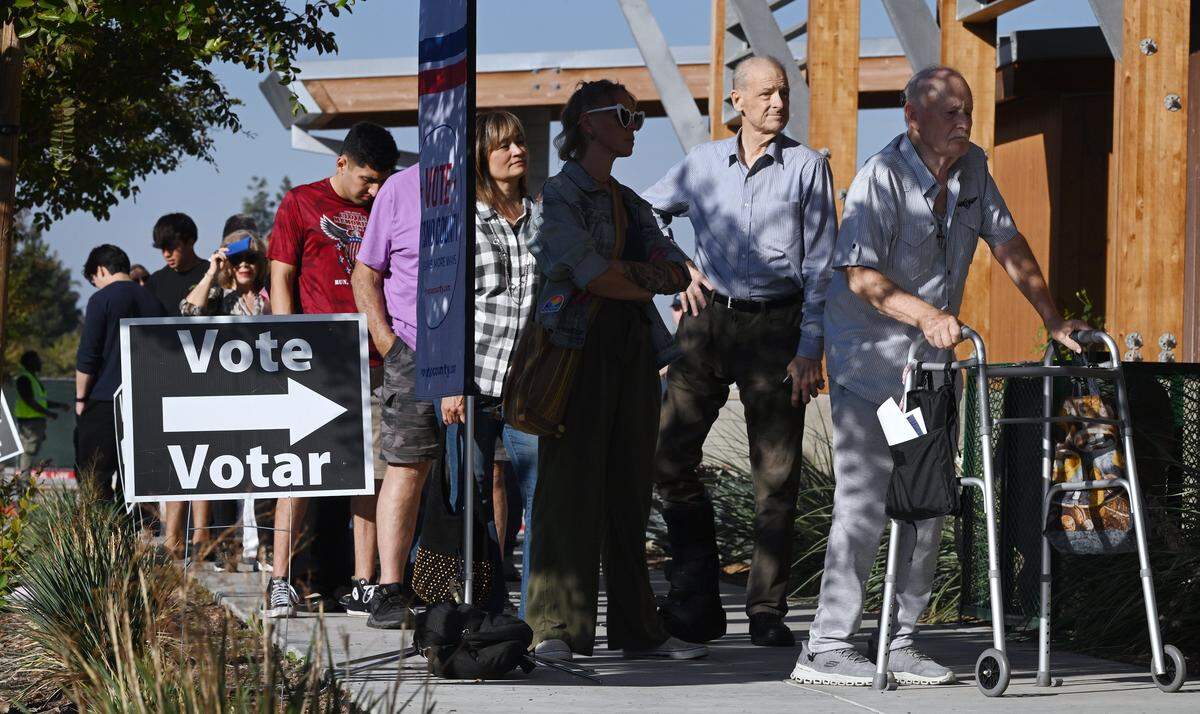
Prop 50 splits Clovis into three congressional districts
With the passage of Prop 50, Clovis is split among three congressional districts: District 5 represented by Rep. Tom McClintock (R-Elk Grove) to the north, District 21 represented by Rep. Jim Costa (D-Fresno) to the west, and District 20 represented by Rep. Vince Fong (R-Bakersfield).
Before the November election, Clovis City Council adopted an official position opposing Prop 50.
“They’re saying that this is an emergency because of what’s happening in Texas. I don’t live in Texas. I don’t vote in Texas,” said Councilmember Drew Bessinger. “But it basically sends the voices of our citizens, literally and figuratively, out into the wilderness.”
Click here to read Prop 50 redistricting in Clovis.
New public transit network
In November, Clovis launched a redesigned public transit system with eight bus lines and three new micro-transit pick-up locations.
The new system, which adds a three-fold increase to the city’s bus operating costs, expanded its old loop services and now runs along key corridors and destinations. It also connects with nearly all Clovis Unified high schools, Clovis Community College, and Fresno State.
The transit services are free to residents.
Click here to look at the new bus routes.
Housing development
Clovis is getting ready to house more residents.
The city incorporated 400 acres of land north of the city’s limits in the past 18 months, with developers planning to build 1,250 homes.
Meanwhile, an infill rezone program proposes redesignating 20 underutilized parcels for high- or very-high-density residential land within established neighborhoods to accommodate 1,303 dwelling units, as a result of a settlement agreement from a lawsuit accusing Clovis of not complying with a state mandate to provide adequate affordable housing opportunities.
Click here to watch a video about Clovis’s annexations.