The Fresno Bee has covered news for 100 years. Its history is the story of the Valley
Twenty-five years ago, a teenager who was asked to imagine The Fresno Bee in the distant future described CDs encoded with news stories being dropped onto front porches each morning instead of newspapers.
This was 1997, and the girl was trying to guess at what local news would look like 75 years later. Her quotes were included in one of many Fresno Bee stories celebrating the newspaper’s triumphant 75th anniversary. Another teen at that time offered a prediction that’s already come true in this post-CD era: “I think the newspaper will be on the Internet.”
It was hard for many to envision just how quickly news dissemination would change within just a fraction of that imagined future. Today, as The Fresno Bee embarks on its 100th anniversary year, it thinks of itself as a digital-first news company that also prints a newspaper. A news organization that’s constantly evolving, but still rooted in principles laid out at its founding.
“The primary purpose of The Bee is to tell the news; to tell it fairly, simply and impartially; unfairly to hurt none, no matter how lowly; to favor none, no matter how powerful,” reads an editorial printed on its first editorial page that arrived hot off the presses on Oct. 17, 1922.
By the early 2000s, those principles were further served by this succinct mission statement: “To inform and advocate for the enhancement of life in the Valley.”
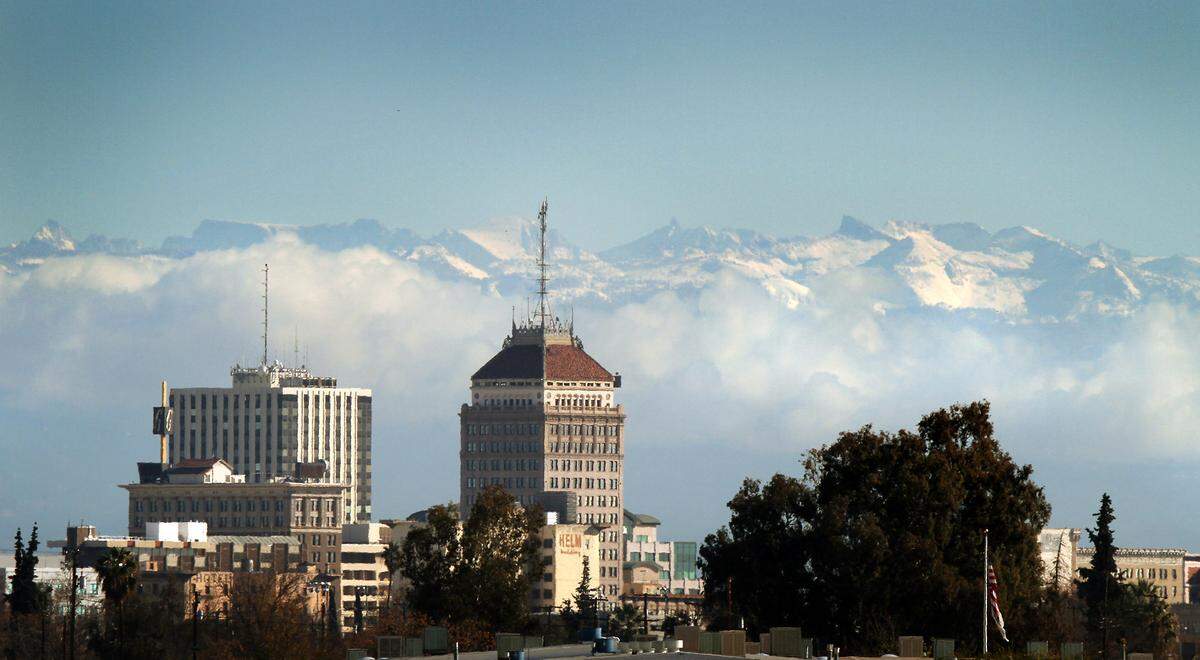
That local focus remains even as The Fresno Bee’s stories are read across the globe. The Bee is among the top-read news sites in California’s central San Joaquin Valley, with an average of nearly 2 million monthly unique visitors at fresnobee.com.
The Valley stories that primarily cover issues across Fresno, Madera, Tulare, Kings, Mariposa and Merced counties are augmented by news from throughout the country and state, much of it coming from a handful of other McClatchy-owned newsrooms in California. And some Fresno Bee stories are now written by reporters who were hired in recent years through innovative philanthropy-backed initiatives that support local journalism.
“The news business has changed in ways that would have been incomprehensible a century ago,” Fresno Bee Executive Editor Joe Kieta wrote in a column that published on The Bee’s 100th anniversary. “But The Bee continues and thrives as a trusted source for news and information.”
Bee history: Fresno news leader ‘replanted itself’ and evolved
The Fresno Bee has changed right alongside the city of its namesake.
Fresno County had approximately 129,000 residents in 1922, and Fresno was believed to be growing at a rate of 5,000 people a year. The newspaper magnate McClatchy family thought the city seemed ripe for another newspaper. They founded The Fresno Bee with clout from their successful Sacramento Bee that’s been in publication since 1857.
The Fresno Bee was a major news source for Fresno from its very first edition. That Oct. 17, 1922 newspaper was 60 pages and delivered to 12,000 homes. Another 4,000 people bought it on the street.
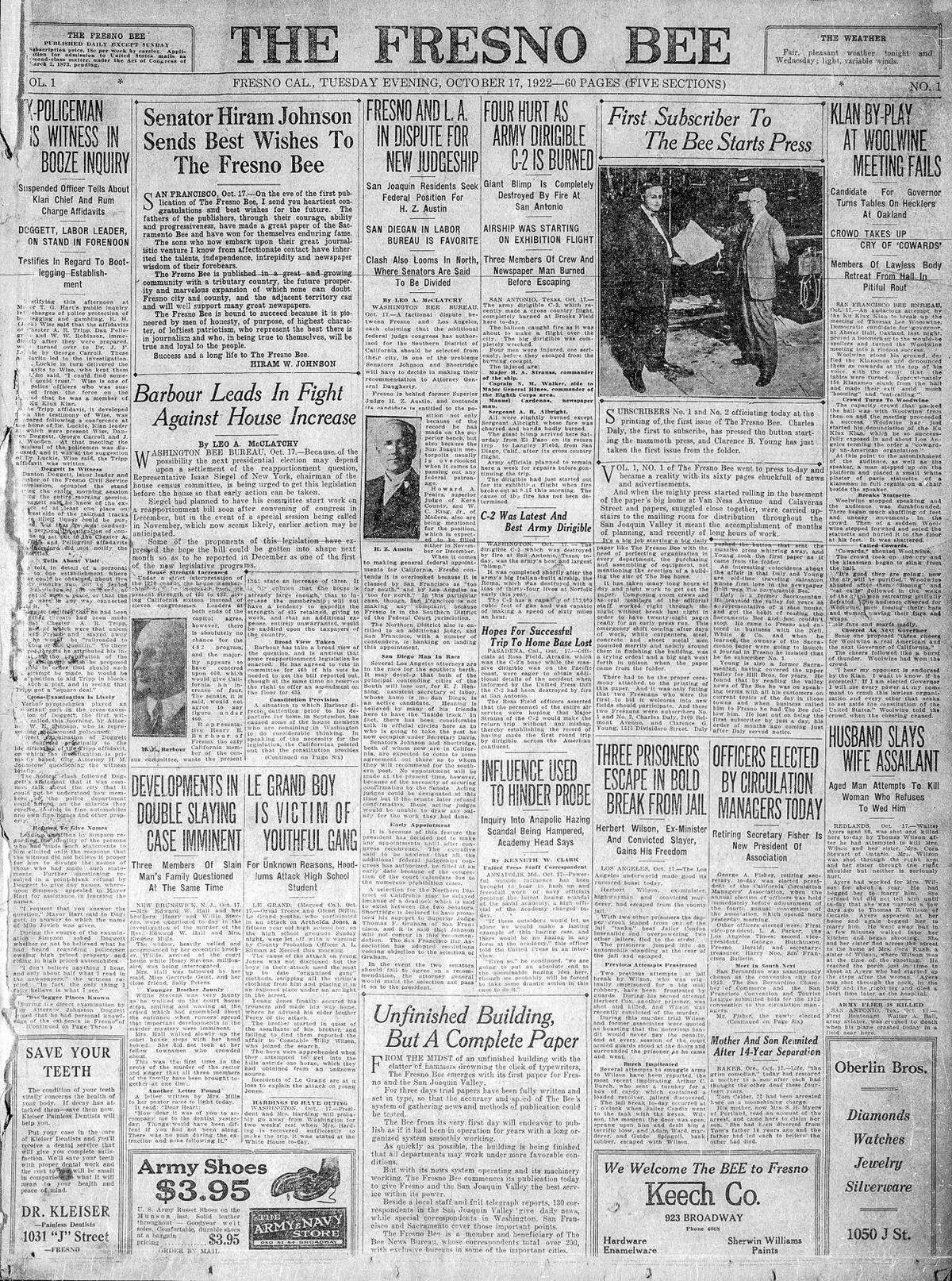
The newspaper confidently proclaimed from Day 1 that with two Bees now serving the state, one in Sacramento and one in Fresno, the news organization would cover “California intensively as few other papers can,” along with providing “the most comprehensive news of the nation and the world.”
Within a decade, The Fresno Bee bought both of the city’s other major dailies to become the only newspaper in town.
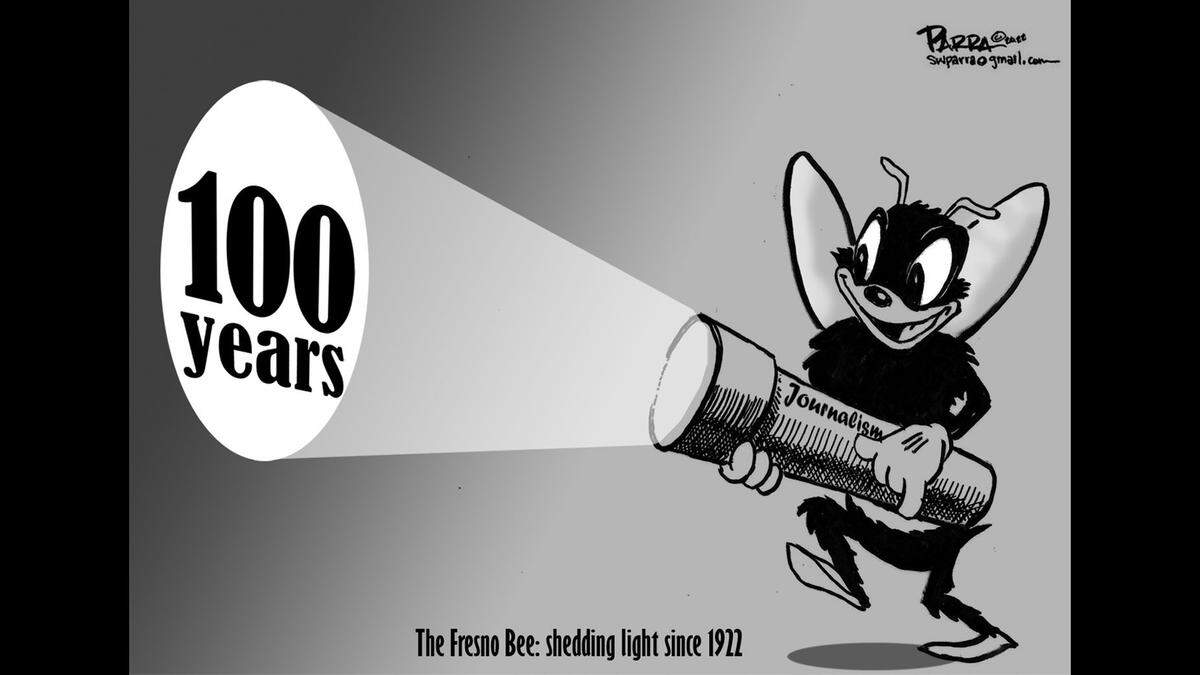
Walt Disney drew its mascot, “Scoopy,” in 1943, along with fellow cartoon bee “Gaby” for radio station KMJ, then owned by McClatchy. The Bee’s media portfolio expanded further in 1953 when it established Fresno’s first television station, KMJ-TV, now KSEE24. The TV station also earned a bee mascot during its McClatchy residence.
The newspaper’s handsome first office, a six-story brick building at Van Ness Avenue and Calaveras Street downtown, was still being built when linotype machine operators set The Bee’s first edition there.
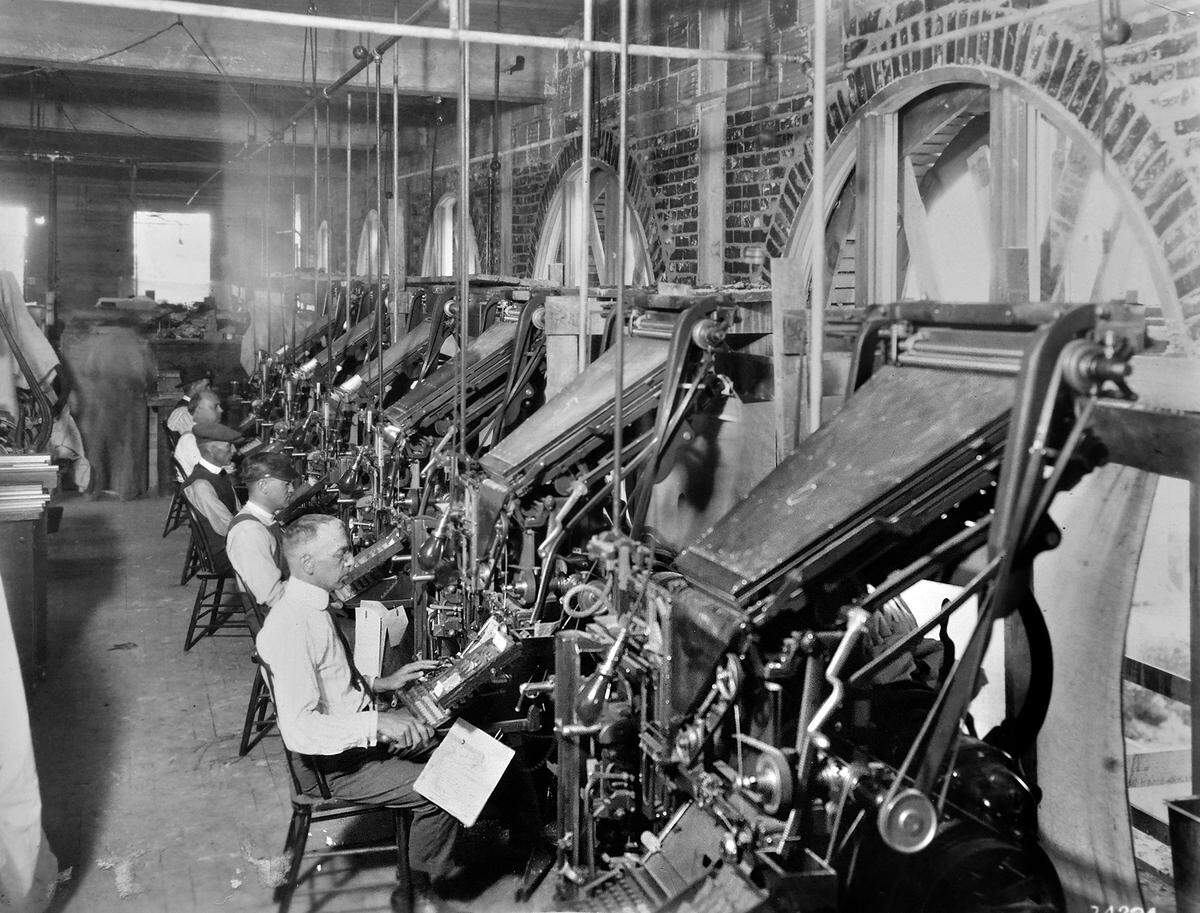
Ray Steele, a former Bee publisher, started his longtime Bee career in that original building in 1967.
“You hear that ol’ press running and you knew things were getting done,” Steele recalled. “And there was a smell, the smell of the ink permeated the whole building.”
As the newspaper business grew, Bee employees would move into a much larger flagship building in the 1970s, located just across the railroad tracks on E Street.
The Bee no longer needed that cavernous space when newspaper printing was moved to the Sacramento area in 2016. Four years later, packing light, its smaller-but-mighty staff moved into a sleek office in a Bitwise building downtown that was retrofitted for their digital future, but time wasn’t on their side. Within days, the emerging COVID-19 pandemic moved everyone into home offices in early 2020. Bee journalists now sometimes work in another shared workspace downtown.
The power of The Bee’s first printing press is now accessible to its journalists anywhere in just a few keystrokes. Another former Fresno Bee publisher tried to imagine this future and vowed The Bee would be there to meet it.
“You’ll see that The Bee, much like the fertile agricultural region in which it publishes, has evolved, grown and ‘replanted’ itself to remain current,” wrote then-publisher J. Keith Moyer in 1997. “And rest assured that such refinement of The Bee will continue as we enter our second 75 years of publication.”
Kieta is looking ahead a century. He signed his centennial column with boldness and optimism: “Here’s to 100 more years of telling your stories.”
Telling stories that matter to the Valley
There’s a lot to be proud of.
The Fresno Bee has reported on every aspect of Valley life over the past century. Many of those stories were extensive investigations that revealed injustices and helped hold leaders accountable.
“The Fresno Bee’s story mirrors the story of this great city over the last 100 years — and, indeed, that of the wider Valley we so dutifully serve,” Kieta said. “We’ve documented triumphs and tragedies and have worked to make sense of what often is senseless. Most of all, we shine a bright light and ask questions.”
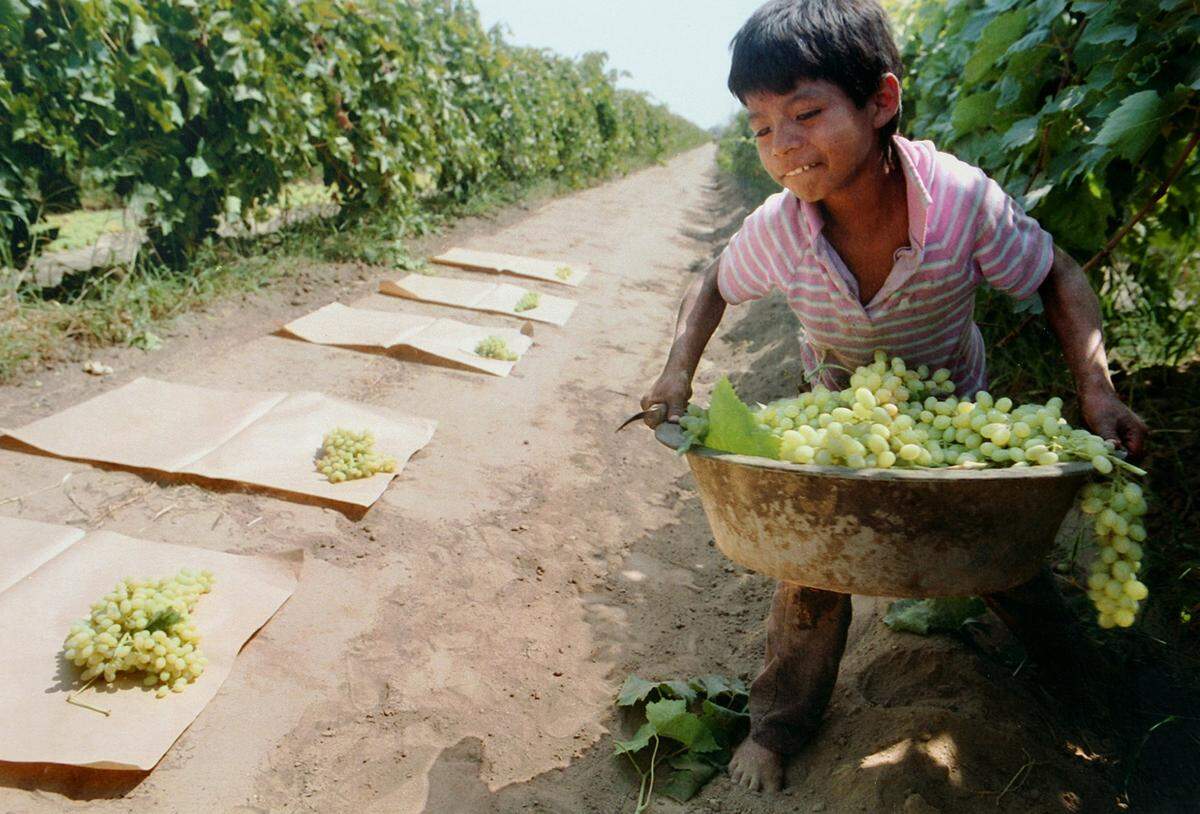
Bee reporting exposed children being used for farm labor in Valley fields, government mismanagement, unlawful arrests, housing insecurity and slumlords, human trafficking networks, and unsafe drinking water supplies, to name just a few of its investigations.
Most recently, Bee reporter Yesenia Amaro investigated Community Medical Centers’ questionable use of state and federal funds in affluent Clovis that were meant to offset the cost of providing care for indigent patients who primarily visited the downtown Fresno hospital. Relevant to that, reporter Brianna Vaccari led a project a few years ago that examined Fresno’s “tale of two cities.” The roots of that north-south divide are in segregation practices that kept people of color from moving into certain Fresno neighborhoods decades ago.
“It’s crucial to our democracy that we have a well-informed citizenry so that they can make decisions about their school boards and their city hall and their county government,” said Jim Boren, who retired as executive editor after a 48-year Bee career. “They need to be informed.”
On the environmental front, retired Bee reporter Mark Grossi shed a light on toxic air pollution and the endangered San Joaquin River over his 29-year Bee career. Those stories and so many others have made a difference.

“Laws were changed, minds were changed, I think political careers were launched,” Grossi said of The Bee’s journalism. “It’s that sort of thing, and I think that’s important.”
Reporting about the region has sometimes taken journalists far from home. Current veteran staffers are among those explorers, including reporter Tim Sheehan, who flew to Spain, a leader in high-speed rail, in 2011 to learn about how that form of transportation could be used in California. Visual journalist Craig Kohlruss traveled to Mexico in 2000 as part of a project investigating drug cartels and methamphetamine use in the Valley. And Bee journalists, including columnist Marek Warszawski and visual journalist Eric Zamora, hiked the 211-mile John Muir Trail in 2006 and reported on the adventure from Yosemite National Park to Mount Whitney. The four have each worked for The Bee for around 25 years.
The Bee has also covered countless breaking news events with unrivaled depth over the past century.
Its journalists walked alongside many movers and shakers during presidential visits and historic marches, like those led by labor leader and civil rights activist Cesar Chavez as farmworkers pushed for more equitable working conditions.
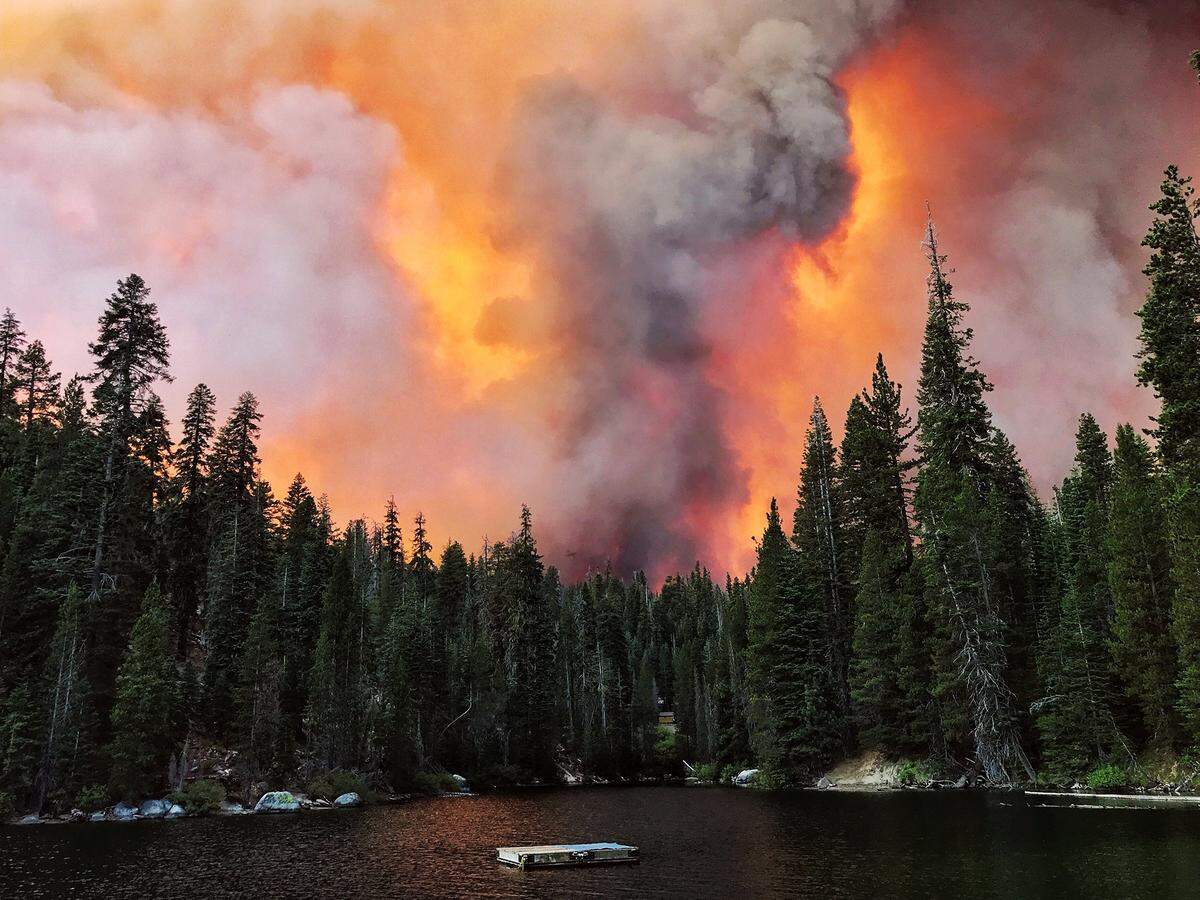
The news organization covered many natural disasters, including destructive floods, a 1983 earthquake that leveled Coalinga buildings and injured more than 200, and the 2020 Creek Fire in eastern Fresno County, then the single-largest wildfire in California’s history.
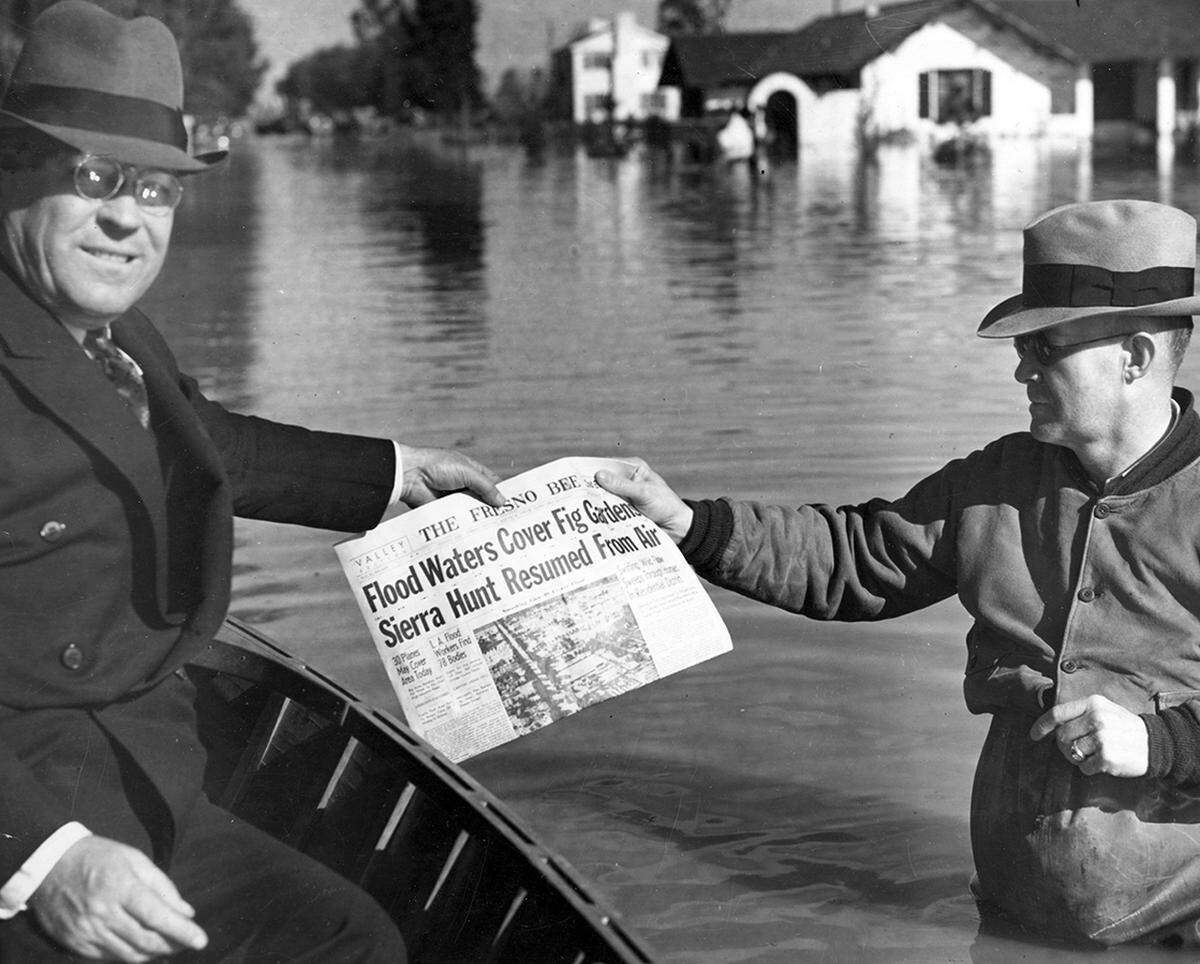
The Bee reported on ventures meant to aid Fresno’s swelling population: the damming of rivers flowing from the Sierra Nevada, including Friant Dam construction that started in 1939; the building of new skyscrapers, freeways and airports; and the construction (and later, destruction) of Fulton Mall.
Political scandals reported include the arrests of Fresno police chiefs, from a 1925 conviction for taking bribes from bootleggers during Prohibition, to the 2017 conviction of then-Deputy Chief Keith Foster for selling drugs. The Bee has endeavored to help the Valley produce better community leaders with its education reporting, now done by its Education Lab.
Some of the most horrific crimes covered include the 1976 Chowchilla bus hijacking and kidnapping case, a 1993 Fresno nightclub shooting that killed seven, the 1999 slayings of four women in the Yosemite area by serial killer Cary Stayner, the 2004 murders of a Fresno family by Marcus Wesson, and a 2019 mass shooting that killed four in Fresno’s Hmong community.
The Bee reported on a different kind of crime when it detailed how Valley residents of Japanese ancestry were forced into U.S. internment camps during World War II simply because of their race. And, The Bee witnessed what many consider to be a major crime against architecture: the demolition of Fresno’s domed courthouse in 1966 because the stately building was deemed unsafe.
.JPG "FZ CO COURTHOUSE (2).JPG")
Among the largest accidents covered: A 1991 pileup involving more than 100 vehicles on Interstate 5 south of Los Banos during a dust storm that killed 17 people and injured 118, and thousands of birds found dead or deformed in 1985 at Kesterson National Wildlife Refuge in Merced. The blame fell on contaminated water from farms, carried by the adjacent San Luis Drain.
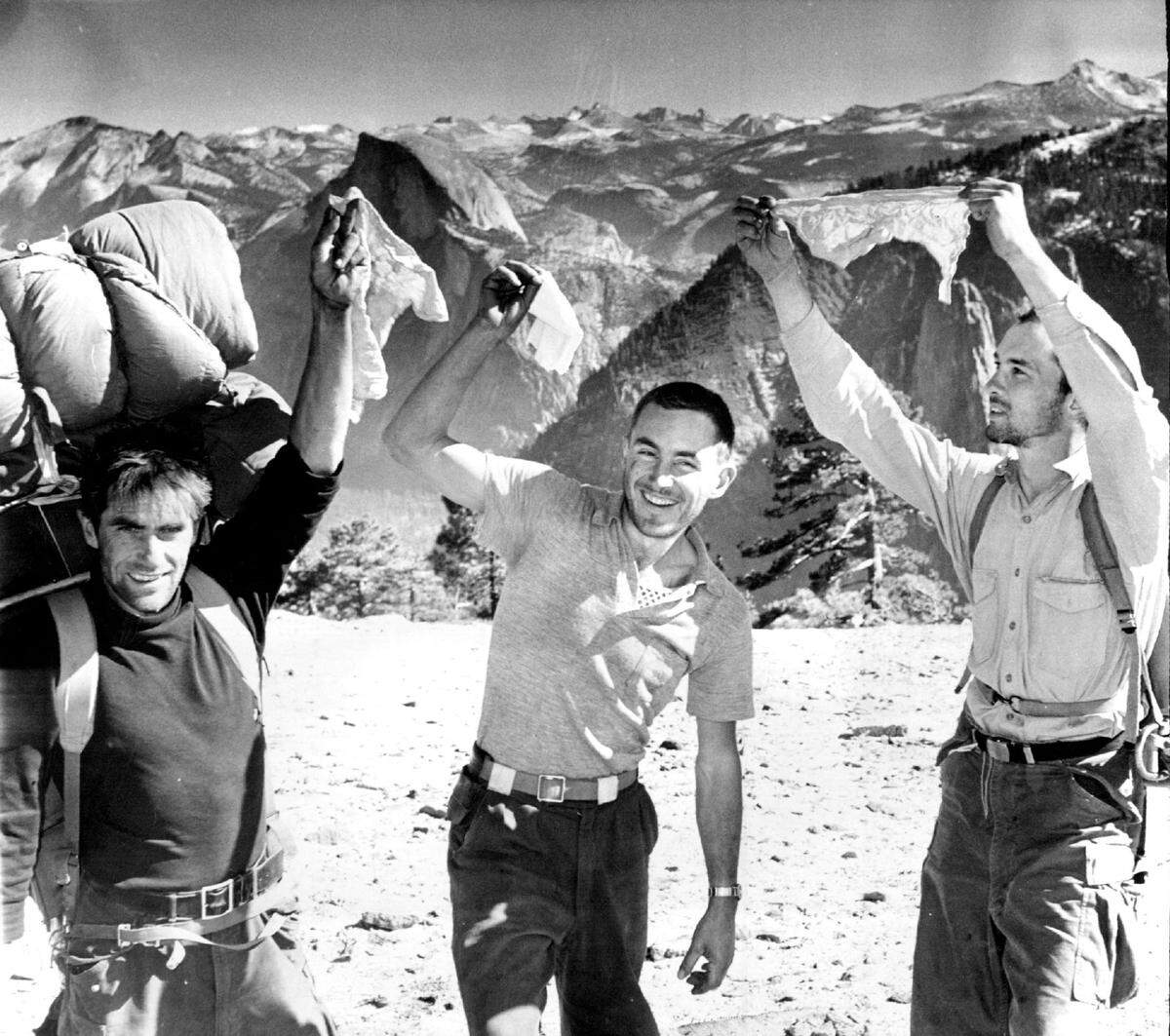
Bee profiles include obituaries of luminaries like author and Fresno native William Saroyan, who died in 1981. Bee tales of pioneers included Dust Bowl victims and Hmong refugees starting new lives in the Valley, and the first rock climbers to ascend the sheer face of Yosemite’s El Capitan. The Bee was waiting atop that enormous granite monolith to meet the climbers in late 1958 when they reached the summit.
There’s also been coverage of more enjoyable aspects of life, from stories about faith to updates about sports and new restaurants, concerts, and events. Bee journalists have been there alongside proud parents at routine sports matches and the biggest national championships, including several won by Fresno State basketball, softball, and baseball teams — in 1983, 1998 and 2008, respectively.
In addition to impartial news reporting, The Bee’s Opinion Page has published a wide array of letters to the editor and guest columns, along with candidate endorsements and other recommendations from the Editorial Board that spurred change.
“Consider The Bee always as a tribunal which desires to do justice to all,” The Bee proclaimed at its founding, adopting rules the news company followed since the 1800s, “which fears far more to do injustice to the poorest beggar than to clash swords with wealthy injustice.”
And there’s been feature stories focused on shared humanity. Those range from big endeavors — like The Bee’s annual Kids Day edition that’s raised nearly $11 million for nonprofit Valley Children’s Hospital over the past 35 years — to stories that made a difference on a more individual level. Retired visual journalist John Walker recalled finding one of those tales at a Fresno park in 1988, when he came upon a boy with muscular dystrophy sitting in his grandmother’s arms on a swing, his empty wheelchair beside them.
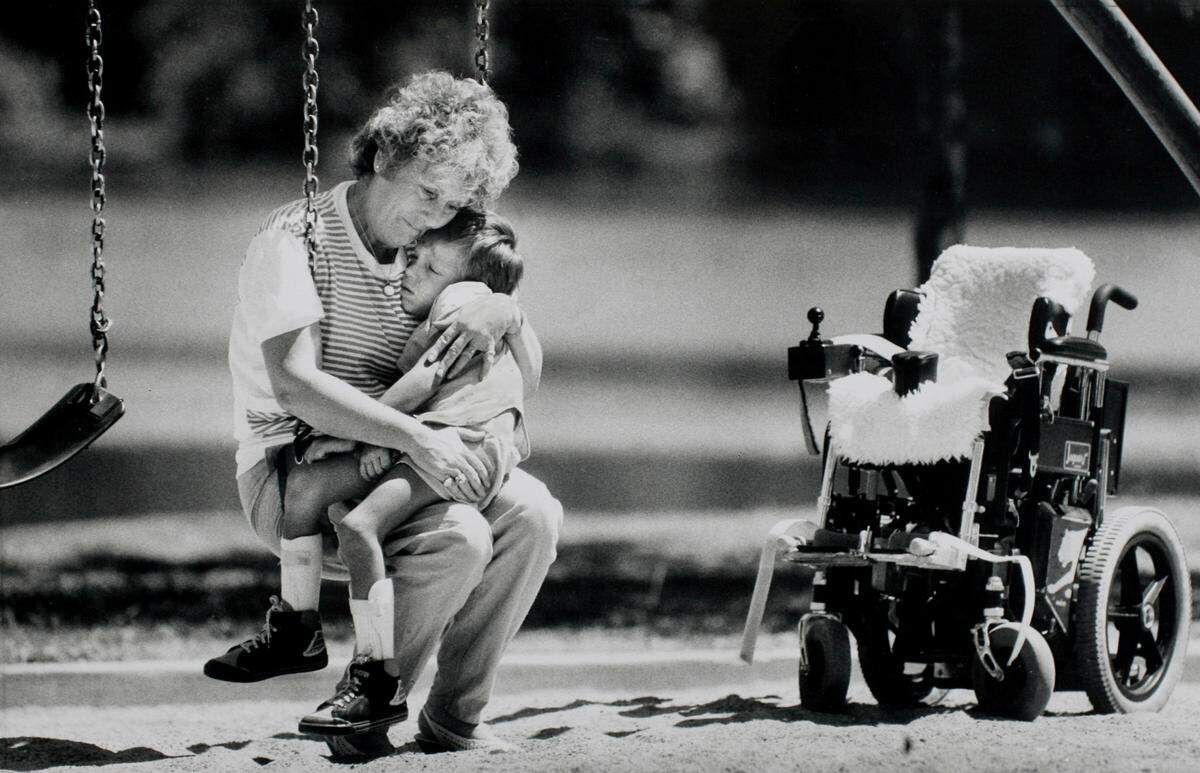
Walker’s poignant photo of that moment inspired an outpouring of donations from readers to help the boy and his family. Getting to be part of acts of kindness like that, “just helping the everyday person and telling their story,” was the most rewarding part of the job for Walker.
The Bee’s compelling photos and videos amplify the impact of every story and often strike a nerve in ways that writing cannot. Walker was stunned to discover embarrassed city officials quickly cleared a homeless encampment in 1986 after a powerful photo he made of a homeless woman living in a car was published.
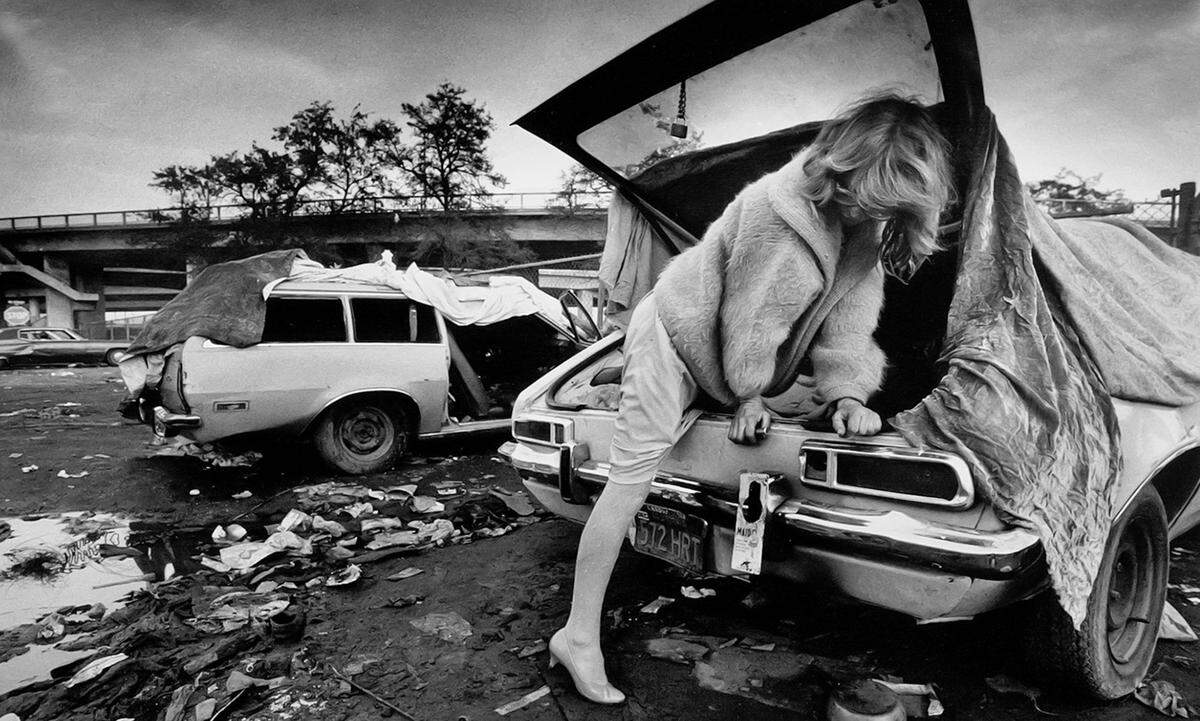
Walker retired this spring after a 37-year Bee career that included writing about the past in a series about Valley history. Early on in his career, when covering assignments far from Fresno, he’d set up darkrooms in motel bathrooms to develop the film in his camera, then transmit those images back to The Bee using a special device attached to telephone wires. At the end of his career, a small memory card from his digital camera inserted into the computer replaced what had been a cumbersome process to develop and send photos. He was also making videos to accompany stories online.
The technology used to make and transmit images has changed dramatically over the past century, as have the tools used by reporters, but not the heart of The Bee’s mission.
Managing Editor John Rich, who’s been at The Bee since 1984, likes to tell journalists that the four most powerful words in any language are, “Tell me a story.”
“For 100 years, our approaches may have differed,” Rich said, “but our intent has always remained the same: tell stories that matter to the Valley.”
Older Bee stories are available to the public on newspapers.com — beyond what’s searchable on fresnobee.com — and the Fresno County Public Library has microfilm of the newspapers.
Ads in The Bee have also told many interesting stories over the past 100 years.
“One of the best ways we can learn about the history of the Valley, and the nation as a whole, is by studying the advertisements in the paper,” said Elizabeth Laval, president of the Fresno County Historical Society. “You can see items that will make you laugh, such as sliced bread, gasp at the low prices and wonder that some products, like some of the elixirs, were even able to be sold.”
Her great-grandfather, Claude C. “Pop” Laval, was one of The Bee’s first photographers. The Fresno County Historical Society partnered with The Bee to help preserve its collection of bound volumes and clip files when the news organization moved out of its E Street office in 2020. The historical society is working to catalog and digitize the old newspapers.
“People in the Valley don’t realize how lucky they are to have this opportunity that few other communities in the nation have. … Because The Bee protected this history for so long,” Laval said, “we can go back to the beginning.”
Facing challenges
Bee journalists have overcome many obstacles to do this work.
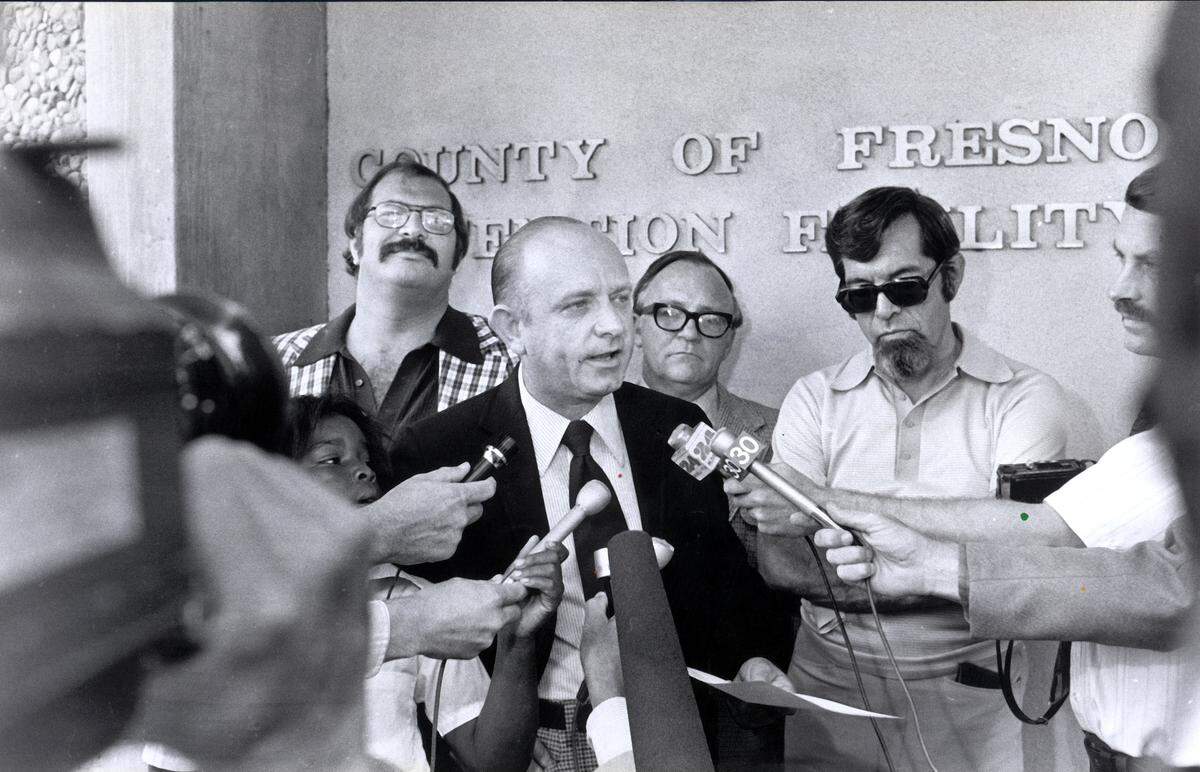
Four Fresno Bee journalists spent 15 days in jail in 1976 because they refused a judge’s order to give up the identity of a confidential source. The integrity that the Bee Four showed in standing behind their principles remains an inspiration to Bee journalists today.
Also during that era, pioneering women in The Bee’s male-dominated newsroom were proving they could do their jobs just as well as the men at a time when gender stereotypes were still deeply entrenched in society.
“It didn’t happen overnight,” said Desa Belyea, who retired as The Bee’s first assistant managing editor, “in fact, it took years before members of the Women’s section were recognized for their abilities and moved into traditional male-dominated jobs: news reporter, assistant Metro editor, Sunday editor and a first for the company, assistant managing editor.”
Gail Marshall, who worked at The Bee for more than 40 years, retiring as Opinion Page editor, started at The Bee when women had to wear skirts to work. She and other Bee staffers protested in the 1970s by showing up to work one day wearing pantsuits.
“Most people just took it with a good sense of humor,” Marshall recalled, “but it sent a big message.”
Marshall was working in the Women’s section then, a precursor to Life. It was previously called the Society Department when Belyea started at The Bee in 1956. It being renamed the Women’s section was an exciting opportunity.
“We felt like we had wings because we could just go anywhere, and they couldn’t say anything,” Marshall said, “because we just added women in.”
“We started covering heavy issues,” Belyea recalled. “One of the staff spent a couple of days at a hospital to see how rape victims were treated, another spent a night in jail. A couple of others covered the Chowchilla kidnapping.”
Marshall was one of them.
The biggest newsroom challenges today center on funding journalism jobs, and enduring attacks by those who would rather allege a story is “fake news” than deal with facts that can paint an unfavorable picture. Former Rep. Devin Nunes made The Bee his target in tabloid-style mailers following a 2018 story he didn’t like.
The attack caught national attention. A GQ magazine writer who profiled the newspaper’s journalists wrote about how Bee reporters were “fighting to keep news alive in an age when the forces they cover are working equally hard to destroy them.” Nunes also sued The Bee — a defamation lawsuit he dropped in 2020 when the company filed for bankruptcy.
“An ill-timed $4.4 billion acquisition of the Knight Ridder chain in 2006 left The McClatchy Co. deeply in debt just as the newspaper industry’s fortunes started crumbling in the digital era,” reported The Sacramento Bee in a story about the bankruptcy and McClatchy family giving up its stock. Control of the company was transferred to a group led by longtime investor Chatham Asset Management. The bankruptcy allowed McClatchy to restructure its debts and invest more in growing online readers and advertisers.
In the years leading up to the bankruptcy, The Bee’s newsroom, like many across the country, was hit by several waves of layoffs and buyouts, along with the elimination or consolidation of some jobs when journalists retired or left. The losses were and are deeply felt.
One consolation: The Bee has been through this before and come out on top. A story in The Fresno Bee’s first edition, titled, “Success comes after long, hard struggle,” highlighted that.
“The Bee had its difficulties without number,” that 1922 story reads, referencing its Sacramento counterpart, “James McClatchy persisting in the face of all obstacles, hanging on when other men would have been discouraged. Many a week he had not even a dollar above expenses, but he never lost courage.”
That tenacity lives on in its journalists today.
Innovative solutions support the future of local news
The Bee has found innovative solutions to bolster local news. That includes using philanthropy to fund some journalism jobs without journalists becoming beholden to donors.
“Our funders understand this is essential to our credibility and theirs,” Kieta wrote in a column, “and even require journalistic independence as a condition of their financial support.”
The Bee’s Education Lab will soon enter its third year. Its two reporters and an editor go into depth on important education topics. The Central Valley News Collaborative — which includes The Bee, Vida en el Valle, Valley Public Radio and Radio Bilingüe — focuses on coverage of the region’s communities of color. The Bee also partners with nonprofit journalism organizations, including Fresnoland, to augment its coverage.
Boren now supports news organizations across the country in different ways than he did as an editor in his work as executive director of the Fresno State Institute for Media and Public Trust, and on the national board of Journalism Funding Partners.
“Philanthropy isn’t the only answer,” Boren wrote in a column this fall, “but it will help fund local journalism until newsrooms come up with a better model to hire and support local journalists.”
Boren is also helping lead a Journalists of Color training program to boost diversity in newsrooms. That goal remains important to The Bee, too. The organization has hired reporters and started initiatives in recent years that place issues affecting Latino and diverse communities at the center of news decisions. These stories are often featured in a new McClatchy newsletter, La Abeja, and several each day are translated into Spanish and republished to Vida’s webpage, now part of The Bee’s main site. There’s a lot of potential for growth. More than half of Fresno County residents identified as Hispanic in the last census.
“The newspaper industry is suffering difficulties now as it struggles to find a successful business model,” said another former Bee executive editor, George Gruner, “but the public’s right to know is still the goal for success. The great names of the trade — The Times, the Post, the Trib, the Chronicle, and yes, the Bees — live on. Let’s hope the delivery of local news, without fear or favor, lives on, too.”
“You need somebody to keep elected officials in line, to watch how money is being spent,” Steele said of the enduring importance of The Bee and local journalism. “You’ve got to be a good watchdog.”
Walker sees a lot of hope for the future in The Bee’s newest reporters who are reporting on many complex issues with passion and enthusiasm. He made it a point to tell them as much during an informal centennial celebration on Oct. 17.
“The bedrock of what we built our profession on is what they’re doing,” Walker said, “this incredibly important work.”