
McClatchy family empire is ending. Legacy lasted from Gold Rush, to fortune, to bankruptcy
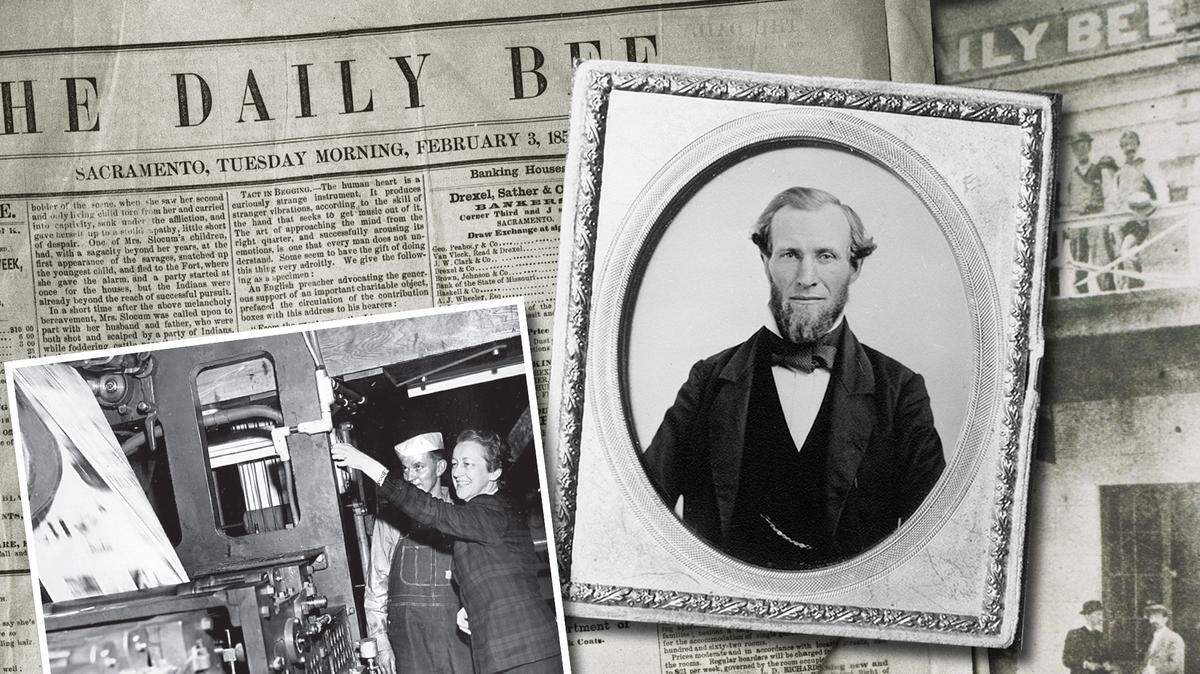
The McClatchy family dominated the Sacramento landscape for decades, publishing its leading newspaper while shaping the history and culture of the city.
Starting with the first edition of The Daily Bee during the Gold Rush, the McClatchys built one of the titans in American media. They controlled dailies from coast to coast and a nationally respected news bureau bearing the family’s name in Washington, D.C. They mingled with presidents and governors, crusaded for civic improvement and stood alongside California’s other great newspaper families: the Chandlers in Los Angeles, the Hearsts and de Youngs in San Francisco.
But the 21st century has been hard on the McClatchys. An ill-timed $4.4 billion acquisition of the Knight Ridder chain in 2006 left The McClatchy Co. deeply in debt just as the newspaper industry’s fortunes started crumbling in the digital era.
Early Thursday, McClatchy filed for Chapter 11 bankruptcy. The move will erase about 55 percent of the debt but transfer control to a group of hedge funds led by Chatham Asset Management of New Jersey.
The family will give up its shares of stock in the company, bringing “the end of an amazing 163-year journey,” said current Chairman Kevin McClatchy, 57, a fifth-generation descendant of founder James McClatchy. “That’s difficult. It’s tough to process. But it’s a reality we’re all aware of.
“It’s a necessary step forward for the McClatchy business,” he added.
“We’ve accomplished a lot over the five generations. It’s been a privilege and an honor to be a steward of this enterprise.”
Still, the McClatchy family retains a legacy in Sacramento, where the company has been headquartered since its founding.
The city’s second-oldest high school, built with funds from the New Deal in 1937, is named for C.K. McClatchy, the late editor of The Bee. There’s a McClatchy Park in Oak Park and a McClatchy Library in the old family homestead in Poverty Ridge. Sacramento is the “city of trees” in part because C.K. McClatchy championed tree planting and even had the paper publish front page “obituaries” on trees that had been killed by vandals or developers.
“The McClatchy family goes back to the very beginning of the city,” said Marcia Eymann, the Sacramento city historian. “They are our direct link back to the Gold Rush.”
The family is the major source of funding behind the James B. McClatchy Foundation, a 25-year-old charity devoted to First Amendment awareness and supporting English learning for children. The theater community’s annual awards are known as the Ellys, named for former company president Eleanor McClatchy, who was instrumental in creating the summer theater company now known as Broadway at Music Circus.
The family used its editorial pages and its influence to push for a variety of mostly liberal causes, from tree-planting in Sacramento to railing against land barons who were swallowing up much of California in the 19th century.
The family learned “when they were born that newspapers were a public service,” said Gregory Favre, a retired Sacramento Bee executive editor and McClatchy executive. “For years and years and years they operated that way.”
Former Gov. Jerry Brown recalled how The Bee supported the career of his father, former Gov. Pat Brown, who served from 1959 to 1967 and championed California’s massive infrastructure and public college expansion. Brown said the McClatchy family played a major role in California politics — a hallmark of a time when newspapers wielded considerably more influence.
“That world like everything else evolved,” Brown said.
McClatchy, The Bee, the Gold Rush
The company’s story began with Eleanor’s grandfather, James McClatchy, an Irish immigrant who arrived in New York in 1841 at 16. He found work at the New York Tribune and later heeded his boss Horace Greeley’s legendary advice: “Go West, young man.”
McClatchy moved to California during the first year of the Gold Rush, in 1849, as a correspondent for the Tribune but soon went to work for two competing Sacramento papers, the Placer Times and the Transcript. By then, so many newspapers had come and gone in Sacramento’s early days that the city was known as “the graveyard of newspapers.”
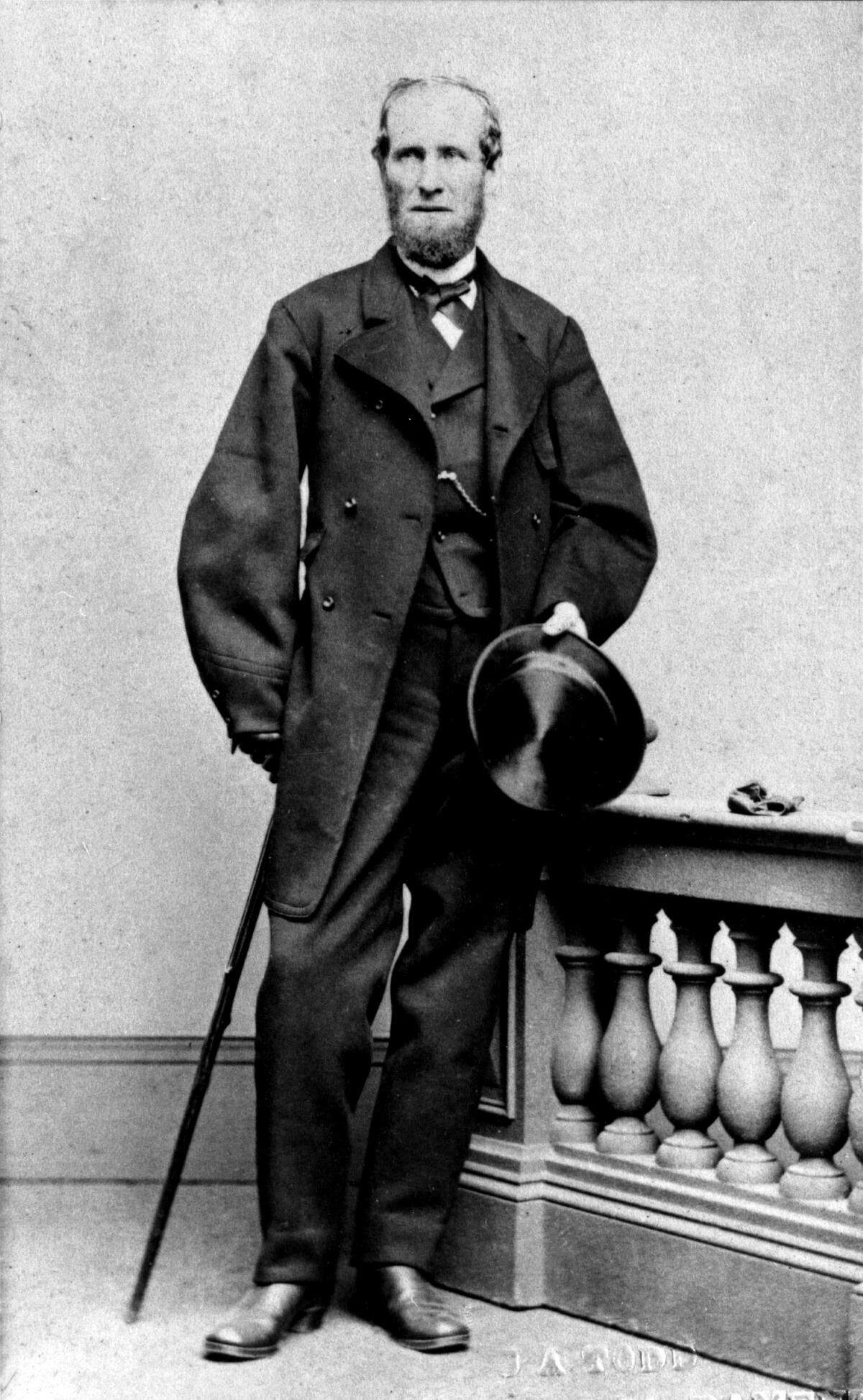
Seven years later, on Feb. 3, 1857, barely a year after the first passenger train in the West made a trial run through Sacramento, McClatchy helped start a six-day-a-week paper called The Daily Bee. It was four pages and cost 25 cents for a week’s subscription. Its office was at 3rd and J streets. The paper’s first editor was John Rollin Ridge, a member of the Cherokee Nation who is considered the first Native American novelist. (He left after a week.)
Although McClatchy was initially an editor, not an owner, the company dates its origins to the Feb. 3 publication. Initially a morning paper, The Bee soon switched to afternoon publishing and wouldn’t switch back until the late 1970s.
McClatchy had other interests and served a two-year stint in the 1860s as Sacramento County sheriff. But in 1866 he cemented his relationship with the newspaper. For $1,800, he bought a one-third stake in the paper. (In today’s dollars, his purchase price is equal to about $30,000.)
“It is a good bargain for me,” he wrote in a letter to his wife, Charlotte, who was away receiving medical treatment.
James McClatchy died of a stroke in 1883 and bequeathed his ownership to his sons Valentine and Charles Kenny “C.K.” McClatchy. Along with shares owned by his widow, the surviving McClatchys now had firm control of The Bee.
The Bee became known as a fearless, crusading newspaper, picking fights with judges, governors and others as it built its subscriber base across Northern California. But it wasn’t until the 1920s, under the direction of C.K.’s son, Carlos McClatchy, that the company began to expand.
Expanding across the Central Valley
In 1922, the company launched The Fresno Bee. Five years later the family bought the Modesto News-Herald and renamed it The Modesto Bee. The family jumped into radio in the Central Valley and Northern Nevada, and later founded KOVR-TV in Sacramento and KMJ-TV in Fresno.
When Carlos died in 1933, control passed to his sister, Eleanor, an aspiring playwright with a severe stutter and scant experience in the publishing business. Along with editor Walter Jones, she ran what became known as McClatchy Newspapers for more than 30 years.
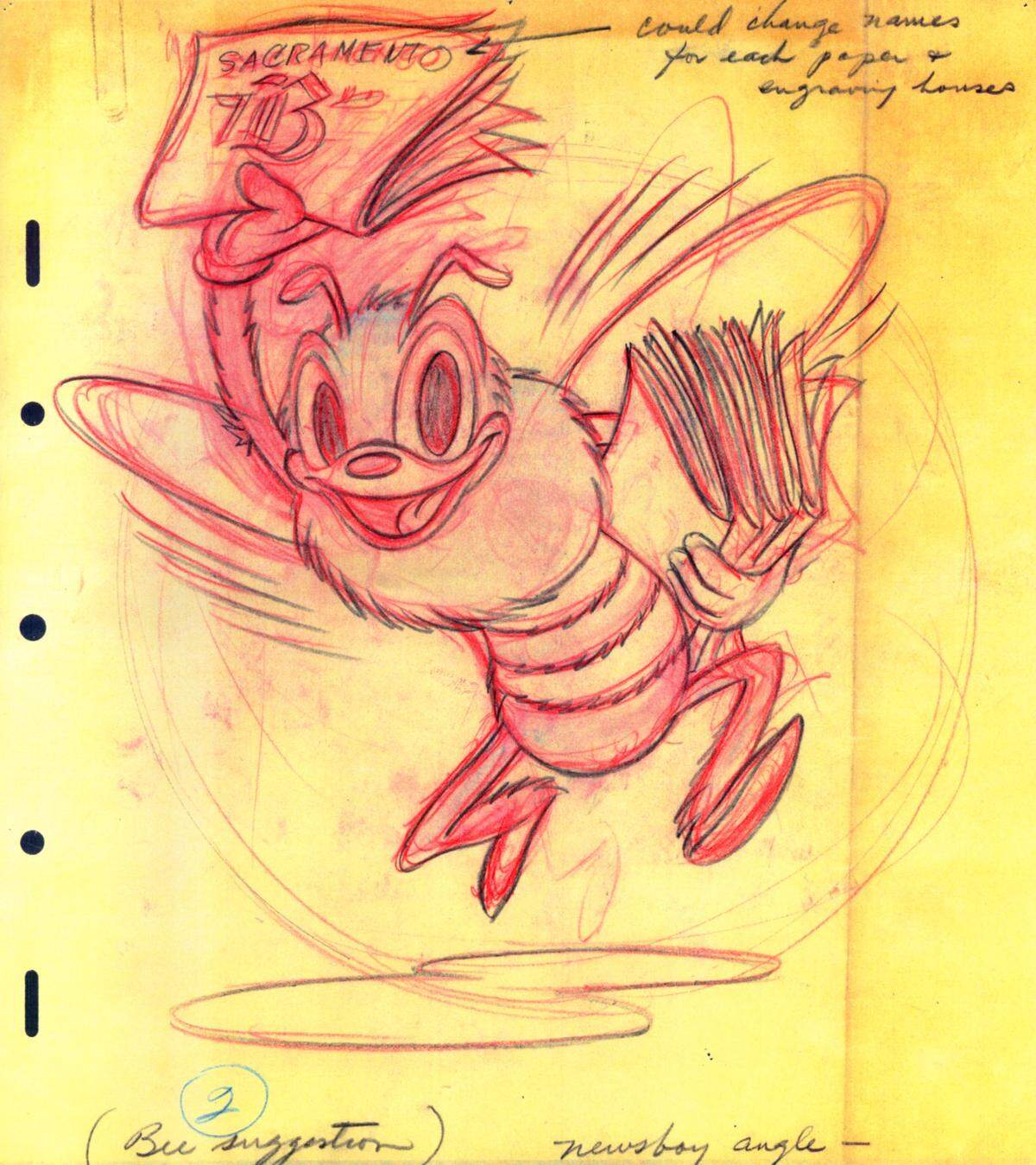
It was during Eleanor McClatchy’s watch that The Bees’ cartoon mascot, Scoopy, was born. She approached animator Walt Disney in 1943 about creating a logo for McClatchy, and he agreed. His price: a $1,500 donation to the Army Relief Fund. (Disney drew companion mascots for McClatchy’s TV and radio stations). In 1951, she invited two young theater producers from Los Angeles to Sacramento to build what was a novel idea at the time: a theater in the round. The result was Music Circus.
A decade later she led a public fight to block the construction of I-5 through the heart of Old Sacramento, personally interceding with President John F. Kennedy, who had befriended her during the 1960 campaign. Kennedy stepped in and froze construction funds until the freeway could be rerouted.
“I think of her as this little lady — people would underestimate her,” Eymann said. “She had a friendship with JFK.”
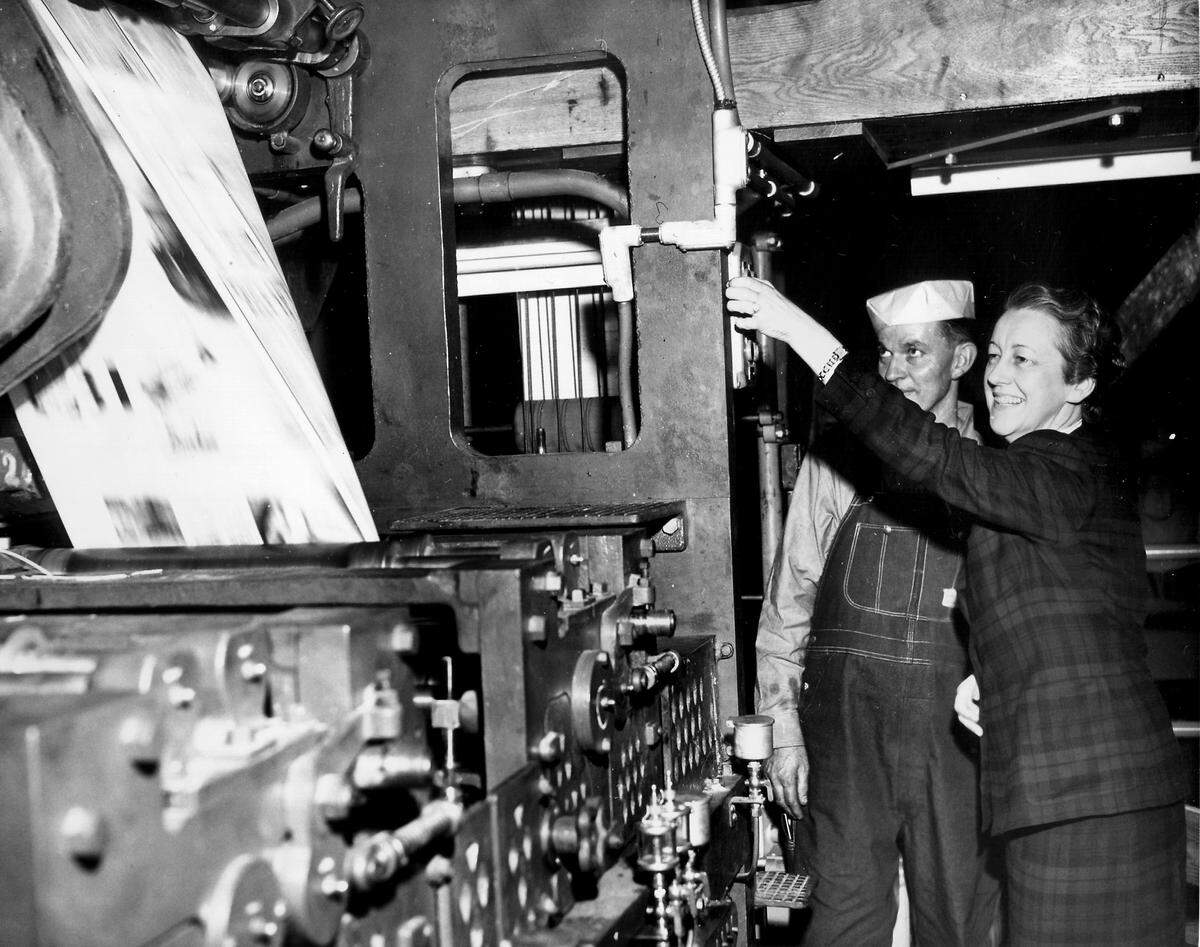
Eleanor McClatchy’s I-5 campaign was in line with the family tradition. The founder James McClatchy had crusaded on a variety of fronts, including tirelessly editorializing against “the giant evil of land monopoly” in the late 19th century. Later generations would push for such causes as public ownership of utilities.
The McClatchy newspapers were influential in promoting the career of former Democratic Gov. Brown, serving as an editorial counterweight to such conservative papers as the Los Angeles Times, said Miriam Pawel, author of “The Browns of California.”
“The newspapers were so powerful in that era and McClatchy was by far one of the most Democratic-leaning papers,” she said.
Gov. Brown said his father was in frequent contact with Eleanor McClatchy and Jones, who was The Bee’s editor for decades. “They always endorsed him,” Brown said. “The Bee was a pillar of support.”
At times the family was slow to criticize injustice. An editorial about the internment of Japanese-Americans during World War II noted that most were innocent but urged the internees to “accept such hardships as part of their obligation to their adopted country.”
After Eleanor McClatchy retired in 1978, her nephew C.K. McClatchy took charge, and expanded the company’s footprint beyond California for the first time, adding papers in Alaska and Washington state.
McClatchy turns to outsiders
The 1980s became a pivotal decade as the family came to grips with questions about succession. The company sold stock to the public in 1988, under a two-tier stock structure, popular among newspaper companies, that vested voting control with the family. After C.K. McClatchy died in 1989, the board of directors named a non-family member as CEO: Erwin Potts, a former newspaper reporter from North Carolina who had worked in McClatchy corporate offices since the mid-1970s.
Potts engineered the 1995 purchase of the News & Observer newspaper in Raleigh, N.C., building on the acquisition of three small papers in South Carolina five years earlier. Two years later, Potts’ successor Gary Pruitt announced the purchase of the Minneapolis Star Tribune for $1.2 billion – still a record for a single American newspaper.
By that point, the McClatchy family had reduced its profile around Sacramento, with several making their mark in other communities. Kevin McClatchy owned the Pittsburgh Pirates from 1996 to 2007 and still lives in Pennsylvania, although he would later become McClatchy’s chairman. His cousin Brown McClatchy Maloney, another member of the board, bought radio stations and a weekly newspaper in Washington state.
However, Molly Maloney Evangelisti has maintained her ties to Sacramento, where she has remained a director on the board since 1995 and is the largest single shareholder. She is known in Sacramento as one of the forces behind the California Central Valley Spelling Bee.
Meanwhile, the company kept expanding. The Knight Ridder acquisition, announced by Pruitt on March 13, 2006, turned McClatchy into the nation’s second-largest newspaper chain, up from No. 10, and nearly tripled its revenue.
The deal cost $4.4 billion in a mixture of cash and stock. McClatchy also assumed $2 billion in Knight Ridder debt. Even after McClatchy spun off a dozen of the Knight Ridder papers to reduce the financial strain of the purchase, the Sacramento company still owed lenders $3 billion.
There were already signs that the newspaper industry was in trouble, and McClatchy completed the deal just as the loss of advertising and subscriber revenue to the internet accelerated. Within months, it sold the Minneapolis paper for $690 million, or a little more than half of what it paid.
Even as McClatchy ramped up its own digital strategy, it was unable to gain enough revenue to make up for the downturn in print. While the debt was whittled down to $700 million, it continued to weigh heavily on the company and ultimately triggered the restructuring with Chatham.
McClatchy Chief Executive Craig Forman alluded to the effect the Knight Ridder acquisition on McClatchy’s fortunes in a conference call with investment analysts last November.
It was a deal, he said, “made in another newspaper era.”
Editor’s note: This story was based in part on the reporting of former Sacramento Bee reporter Steve Wiegand and his book, “Papers of Permanence,” published by The McClatchy Co. to commemorate the company’s 150th anniversary in 2007.
This story was originally published February 13, 2020 at 2:37 PM with the headline "McClatchy family empire is ending. Legacy lasted from Gold Rush, to fortune, to bankruptcy."