
Closed for now and unemployed: Fresno businesses, workers feel pain of new COVID lockdown
On the final day that salons and barbershops in Fresno County were allowed to remain open before the latest coronavirus stay-at-home orders went into effect, a local business owner reminded his employees to file for unemployment as soon as they could.
“Hopefully, they’ll get their funds by Christmas,” said Matt Kneeland, a franchisee of six Sports Clips Haircuts in the central San Joaquin Valley.
“But I don’t know,” added Kneeland, who has 41 employees. “Unemployment takes about three weeks before the funds come in.
“This is another financial punch in the face.”
Kneeland’s barbershops — along with many other “nonessential” business sectors throughout California — will be required to close for at least the next three weeks as of midnight Monday due to Gov. Gavin Newsom’s regional stay-at-home orders that apply to groups of counties nearing capacity in their hospital intensive-care units.
Among other notable sectors to close, many of which have never reopened fully or previously were required to shut back down: bars and wineries, movie theaters and nail salons.
Restaurants must shut down in-person dining, whether indoors or outdoors, and offer only take-out or delivery.
Unemployed during Christmas
The mandates were issued as part of the California Department of Public Health’s latest attempts to discourage socializing outside of one’s household, slow the transmission of COVID-19 and avoid overloading hospitals in regions. Lockdowns are ordered when ICU availability falls below 15%.
The San Joaquin Valley region (Calaveras, Fresno, Kern, Kings, Madera, Mariposa, Merced, San Benito, San Joaquin, Stanislaus, Tulare and Tuolumne counties) were at a combined 14.1% of remaining capacity as of Friday. By Saturday, that percentage was single digits.
As of Sunday, according to the state, the region’s ICU bed percentage available was just 6.6%.
Nonetheless, shutting down a business or losing a job — even for the short term — was painful to endure, a pair of local business owners said Sunday.
“Almost 100% of the women working for us are single moms, and they’re going into Christmas knowing they might not get to have a Christmas,” Kneeland said. “It’s heartbreaking beyond belief.”
Kneeland and other local business owners remain frustrated and confused by how Newsom’s team decided which business sectors were considered essential and viewed as safe enough to remain open during the coronavirus pandemic.
Restaurants, bars, salons ‘targeted’
In the case of local restaurant owner Lewis Everk, he said his businesses installed Plexiglass, rented tents to move dining from indoor to outdoor, bought fans and heaters, and required staff and those entering his restaurants to wear masks and have their temperatures taken before entering the facility.
Still, whether he could keep his businesses operating as initially intended was determined by things out of his control: the government, and the community’s behavior in limiting the spread of COVID-19.
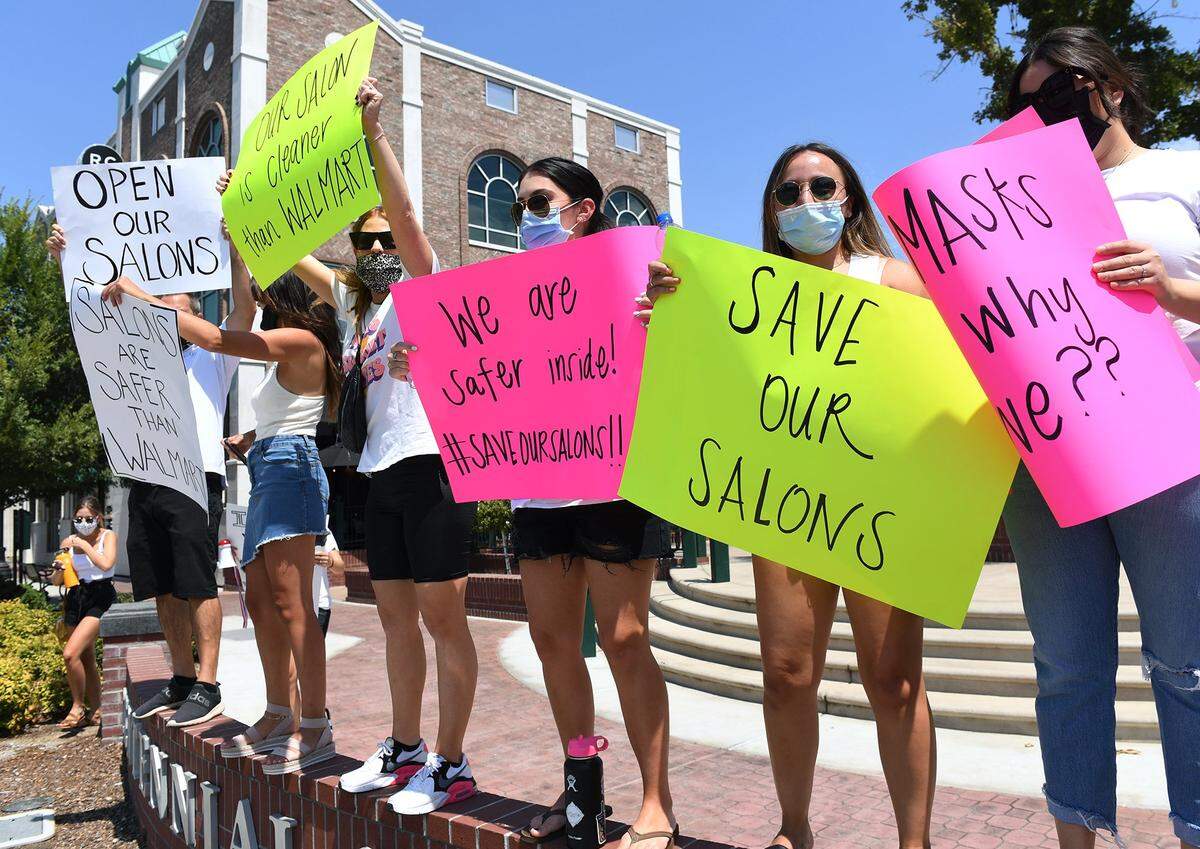
“We understand the numbers are rising, that hospitalizations are rising,” said Everk, who tested positive for COVID-19 in July and explained that he was on an oxygen machine while fighting the virus for 18 days. “But why are restaurants and bars and salons being targeted?
“It’s not going to stop in-home gatherings. People are still going to get together. And guess what? There’s no temperature checks at those in-home gatherings like there are at restaurants.”
Closing shop amid ‘Thanksgiving effect’
So Everk, who owns the posh restaurant Vyxn and three Jugo Salad & Juice Bar establishments, previously had decided to close all of his restaurants for the time being.
Their last day open was the day before Thanksgiving, with Everk’s decision based on last month’s late-night curfew for counties such as Fresno that are in the state’s purple tier and considered an area where the coronavirus is widespread.
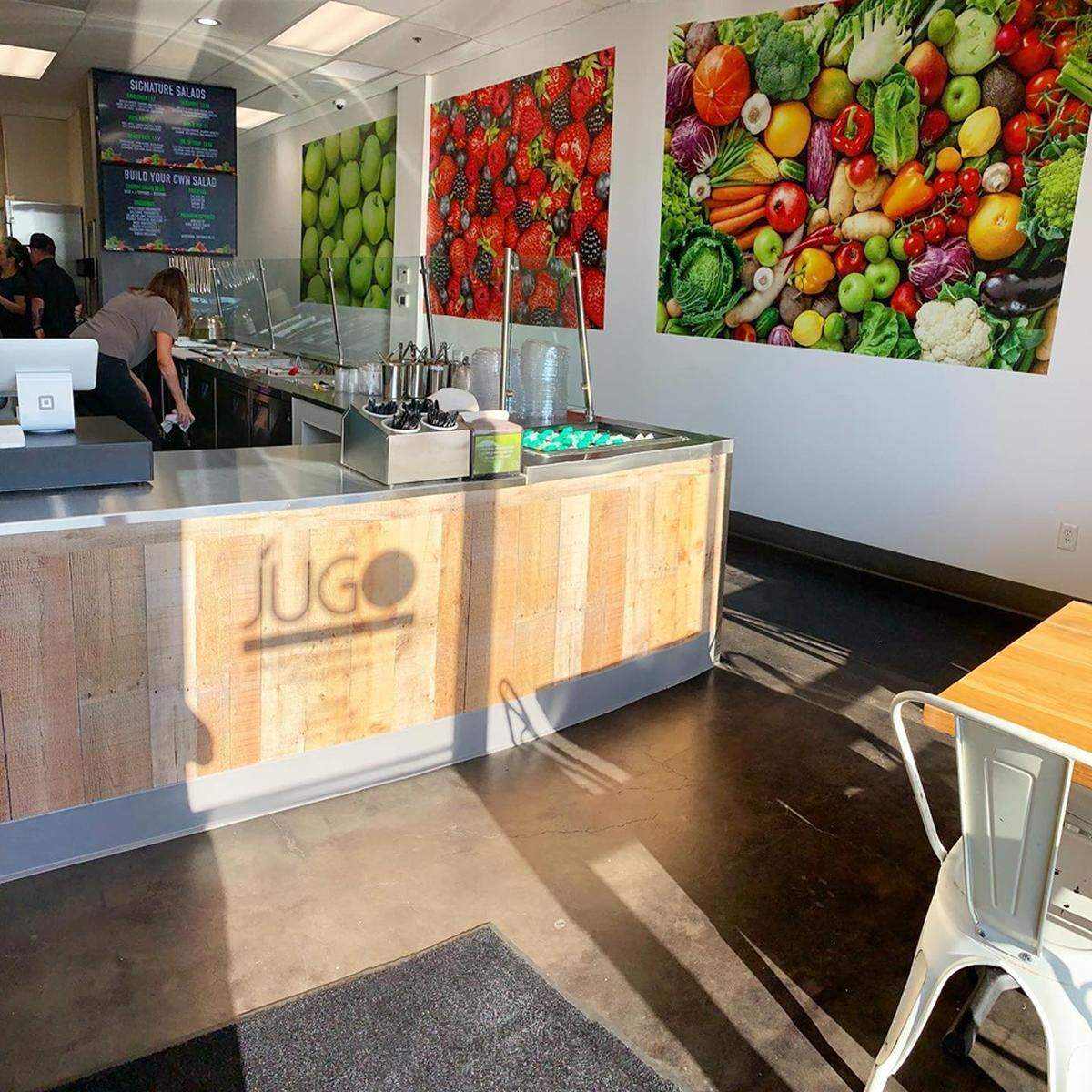
“It’s just this constant roller coaster,” Everk said. “And it’s not even the financial part, but the mental part of it all.
“There’s nowhere left to pivot. It costs more money for a restaurant like us to stay open than remain closed. Hopefully, we can ride this out and reopen later.”
Kneeland believes that the regional stay-at-home order will last well beyond the three weeks.
“The Thanksgiving effect hasn’t really hit yet,” Kneeland said.
As a father of a child who has had a heart transplant, Kneeland said he appreciates the state’s attempt to slow the spread of COVID-19.
Kneeland said his family has tried to self isolate as much as they can throughout the pandemic to reduce their risk of exposure.
But from a business perspective, he worries about the survival of the many businesses that have been forced to close their doors.
“I believe we’ve been operating in a very safe manner,” Kneeland said. “It’s a safe place for our clients, for our employees.
“It’s been very difficult. We’ll just have to wait until we can open up again.”
This story was originally published December 6, 2020 at 6:06 PM.