First PG&E standalone solar grid near Yosemite is attempt to stop sparking California fires
UPDATE: PG&E announced June 6 that the standalone power system is complete.
ORIGINAL STORY PUBLISHED APRIL 1: A new standalone power system that produces energy with solar panels, batteries and generators will be operational near Yosemite National Park soon – the first of its kind owned by Pacific Gas & Electric Company with the aim of reducing wildfires.
It comes after PG&E was ordered to make changes after its equipment sparked wildfires that killed people. The latest: PG&E equipment ignited the deadly Zogg Fire in Northern California six months ago when a tree fell on a transmission line, state investigators announced last week.
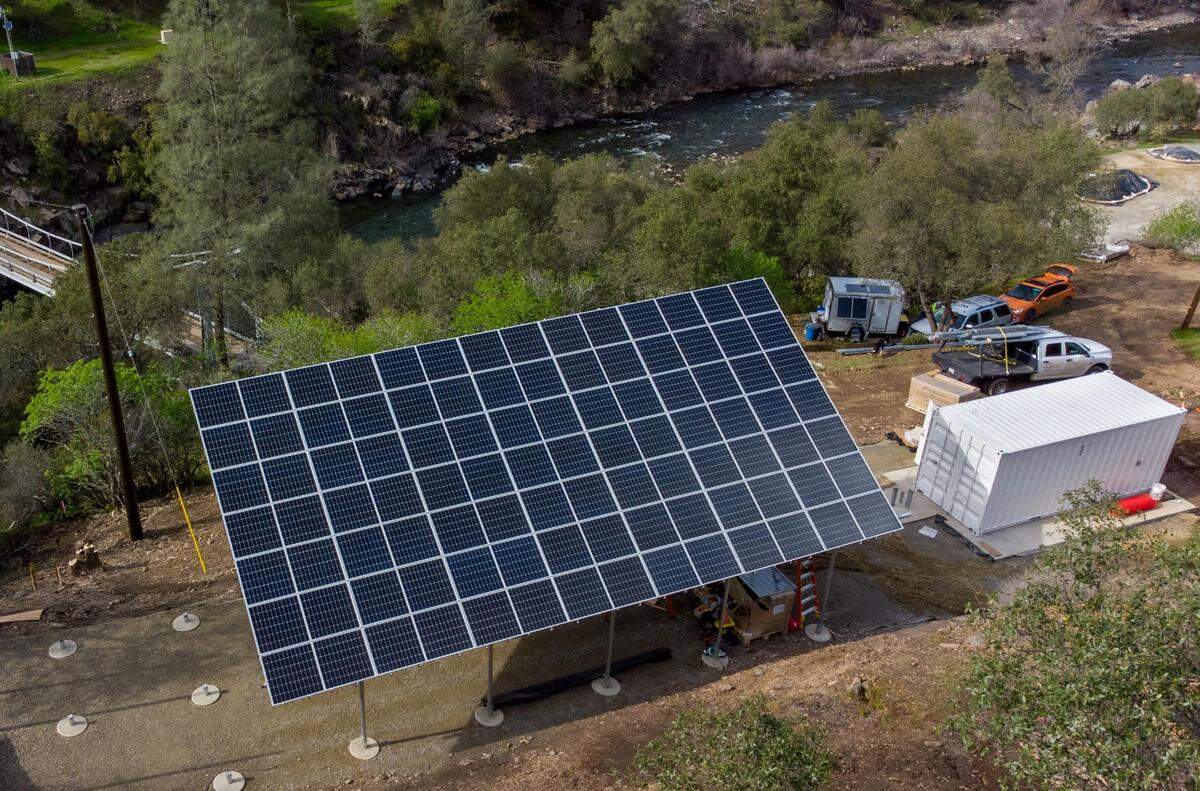
The new power grid – a network that delivers electricity from a centralized hybrid source – is being constructed in Briceburg, a small community along the Merced River and Highway 140 in a steep canyon leading to Yosemite.
It should be operational in April. It’s part of PG&E’s Remote Grid Initiative outlined in its 2021 Wildfire Mitigation Plan.
The Briceburg grid was designed and installed by BoxPower, an energy company based out of Grass Valley. PG&E, which owns the grid, will be able to monitor and control the system with BoxPower.
More remote power grids are coming to California, PG&E said. The company set a goal of having 20 operational by the end of 2022, according to its wildfire mitigation plan submitted to the California Public Utilities Commission.
PG&E said it’s looking at potential sites for more of these grids in seven California counties. Three are in the central San Joaquin Valley: Fresno, Madera and Tulare counties.
“We can’t comment about specific sites at this time, but generally they tend to be located in foothill areas,” PG&E spokesman Denny Boyles said.
Contracts haven’t been signed for more remote grids at this time, Boyles said.
PG&E told the California Public Utilities Commission in December that it might have “an eventual portfolio of several hundred Remote Grid line segment opportunities” that could serve a “small but significant number of locations at the edge of the distribution system where energy use is low, but delivery infrastructure challenges are high.”
Eliminating some PG&E powerlines
The new standalone grid in Briceburg means PG&E won’t have to rebuild 1.3 miles of distribution lines that extended down into the remote river canyon near Yosemite. Those lines were destroyed in the October 2019 Briceburg Fire.
Since they were destroyed, five customer meters in rural Briceburg have been getting power from temporary diesel generation. PG&E has used alternative sources like this to provide power temporarily, but never full-time and permanently via a standalone remote grid like the hybrid Briceburg project will do, Boyles said.
The 5,563-acre Briceburg Fire burned in the Merced River canyon and destroyed one structure. It was sparked by a vehicle along the roadway, said Cal Fire spokesperson Jaime Williams. She said her office doesn’t have more details about that.
PG&E said removing long distribution lines “could reduce fire ignition risk as an alternative to or in conjunction with system hardening.”
The company’s Remote Grid program includes bringing remaining distribution or service facilities within a grid up to that “hardening design standard,” Boyles said, which includes burying electrical infrastructure underground whenever possible, and using an insulated conductor for lines still overhead.
“In the case of Briceburg,” Boyles said, “the residual wires are hardened overhead, as they need to cross the river and steep terrain.”
Boyles said powerlines from the remote grid to Briceburg customers range from about 200 feet to approximately 650 feet.
BoxPower Chief Executive Officer Angelo Campus said the voltage of those lines will be low, less than the voltage that was in the distribution lines leading into the canyon that PG&E isn’t rebuilding. The five Briceburg customers are also in relative close proximity to each other, Campus said.
Boyles said the new grid won’t provide power to the nearby communities of Midpines, El Portal or Yosemite.
The standalone power grid also means Briceburg customers won’t be subject to periodic public safety power shutoffs. A federal judge last week overseeing PG&E’s criminal probation for a 2010 natural gas line explosion was considering making the company turn off its power more frequently.
PG&E was found responsible for a series of wildfires in 2017 and 2018 that killed more than 100 people and destroyed more than 27,000 buildings, including the devastating Camp Fire in Paradise.
How else can new hybrid power grid reduce wildfire risks?
Campus said about 89% of energy generated from the new standalone power system at Briceburg comes from solar. Excess solar energy is stored in batteries. In order to make it 100% reliable, there’s two propane generators that can also kick in on cloudy days.
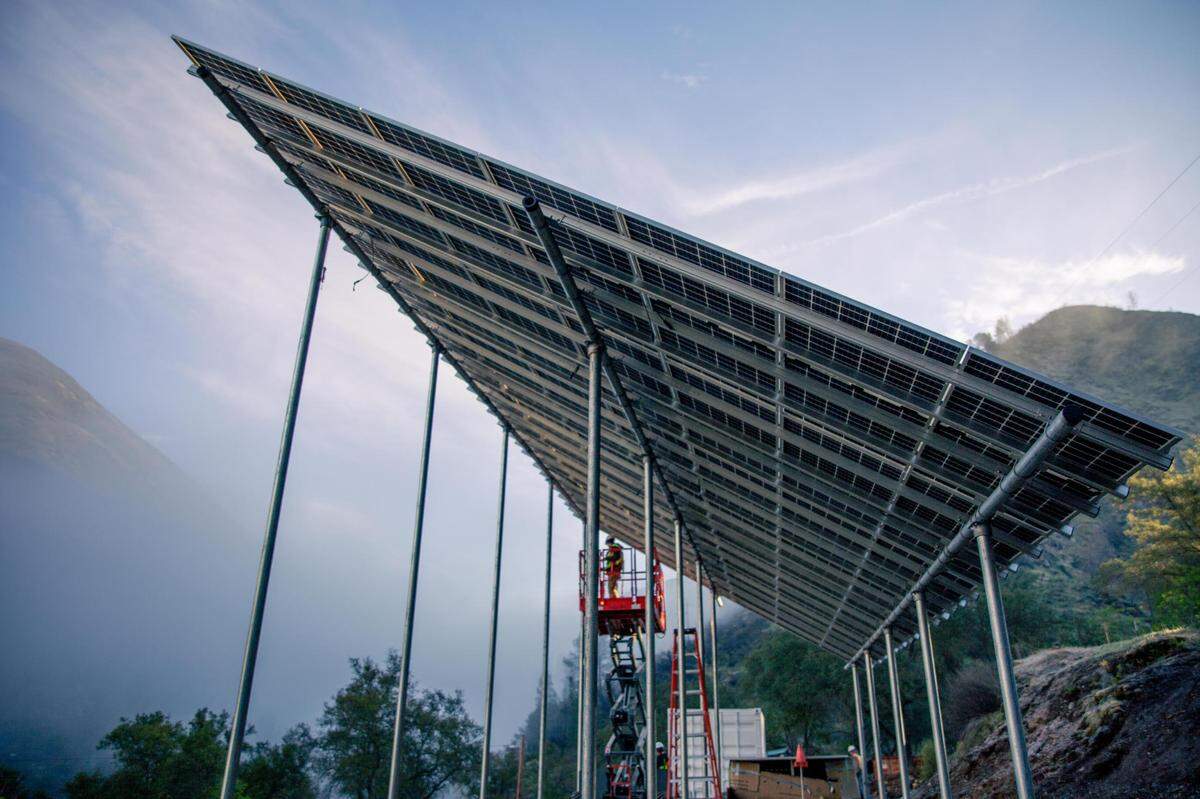
This isn’t the first time PG&E has utilized solar and renewable energy. PG&E owns 12 solar plants – eight of them in Fresno County. But those plants feed solar energy into PG&E’s interconnected, traditional power grid. The Briceburg project is unique in that it’s the company’s first standalone remote hybrid source.
It’s also different from the microgrids that can operate independently but are still connected to a larger grid.
The new grid is near the Briceburg Visitor Center operated by the Bureau of Land Management – the first structure located beside the Merced River after dropping down a steep grade from Midpines.
Campus said the system’s very existence already reduces wildfire risks by eliminating long, higher-powered distribution lines. But in addition to that, the non-solar components are set within a 20-foot metal shipping container designed to keep sparks from blowing out of, or into, the grid.
It also has a fire suppression system, he said, where ventilation ducts will melt and self-seal if temperatures reach high levels. On the low chance of a battery fire, Campus said the system can find that and flood the battery compartment. It has a lithium ferro phosphate battery bank, which is safer than many batteries, he said.
BoxPower and PG&E will be able to monitor and control the system via satellite. Campus said BoxPower has never had fire issues inside or outside one of its systems.
BoxPower recently completed a similar project for another utility company in the Lake Tahoe area.
“It’s exciting to be working in this new area of utility-owned remote power systems, and even more so to be actively striving to protect California from devastating wildfires,” Campus said in a recent news release. “We are thrilled to be working on a solution that can lead to a more sustainable, resilient, and safe electric distribution system.”
This story was originally published April 1, 2021 at 5:00 AM.