Fresno farming giant Jack Woolf, leader in transforming San Joaquin Valley, dies at 102
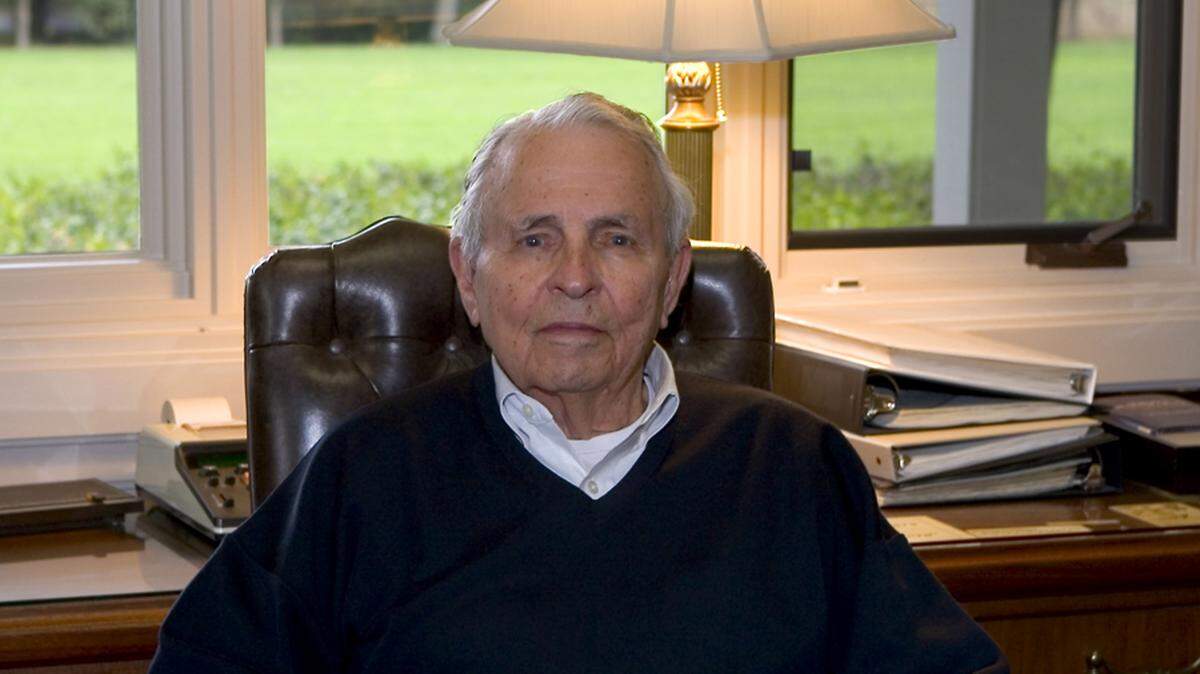
John Leroy Woolf Jr., a pioneering farmer who helped re-imagine the dry and dusty west side of California’s San Joaquin Valley into an agricultural oasis, died Tuesday. He was 102.
Woolf, who went by “Jack,” died of natural causes at his Fresno home surrounded by his family including Bernice, his wife of 71 years.
“Dad let it be known that when his day came he did not want to be in a hospital, he wanted to be home with his family, and that is exactly what happened,” said his son Stuart Woolf. “He lived a long, full life.”
Depression upbringing
Born and raised in Scottsdale, Ariz., Woolf and his siblings grew up on a small farm and dairy, providing the labor during the Depression. After graduating high school in 1935 he and his twin brother, Leyton, were shipped off to Woodbury Business College in Los Angeles.
They arrived at the YMCA with $25 in their pockets. They each finished the college’s three-year degree program in two years while holding down several part-time jobs. The Woolfs graduated at the top of their class.
Jack Woolf landed his first job working for cotton merchant Anderson, Clayton & Company in Los Angeles. The job would prove to be the link that started him on the path to becoming an agricultural icon in the San Joaquin Valley.
Army first, then farming
First, though, war broke out overseas and Woolf rushed to help. In 1941 he joined the Army, rising to the rank of captain during World War II. As a member of the 204th Anti-Aircraft Battalion he landed on Omaha Beach as part of the D-Day invasion of Normandy. He received seven battle stars during his service and was discharged in December 1945.
He returned to Anderson Clayton where a few years later he was dispatched to Mendota to meet with cotton farmer Russell Giffen, who had recently sold holdings to Anderson, Clayton.
Gifffen was impressed with Woolf’s skills of planning, execution and management. He made a bid to lure Woolf away from Anderson, Clayton. Stuart Woolf said the story goes something like this:
“Russell asked my Dad, ‘What are they paying you at Anderson, Clayton?’ Dad said he got $250 a month. Russell said, ‘I’ll pay you $500.’ Dad said, ‘Well, then, I’m staying here.’”
That was the beginning of a 30-year-plus relationship that resulted in one of California’s largest and most successful farming operations: Giffen, Inc.
Pioneer in ag diversity
When Giffen retired in 1974, Woolf and Bernice decided to roll the dice and buy some of Giffen’s farmland to launch Woolf Farming Company.
In the early days, the Woolfs farmed mostly cotton, grain and melons. But Woolf also began to move away from the traditional, subsidized crops like cotton in favor of specialty crops like processing tomatoes, almonds and pistachios.
Stuart Woolf said his father was among the first to plant pistachios on the west side. These days, pistachios and almonds are among the top crops produced in California with most being grown in the San Joaquin Valley.
Fresno County owes much of its standing as one of the most productive agricultural regions in the nation to west-side farmers. In 2018, the county’s total crop value was $7.8 billion.
With a laser focus, determination and a healthy amount of courage, Woolf laid the groundwork for how to farm and process higher-value crops, all with an eye on water efficiency.
Woolf was also involved with decision makers, serving on the Westlands Water District board of directors from May 1976 to November 1992.
‘Not enough superlatives’
“It would be impossible to overstate the contribution Jack Woolf made to irrigated agriculture on the west side of the San Joaquin Valley,” said Tom Birmingham, general manager of Westlands Water District. “There simply are not enough superlatives to describe Mr. Woolf, but he will always be remembered as a man of great integrity and a true gentleman.”
At its height, the Woolf company farmed around 30,000 acres throughout the Valley. It also is involved in a partnership with fellow west-side farmer John Harris to process almonds.
Under Jack Woolf’s leadership the family company also built a tomato processing facility in Fresno County.
“Jack Woolf made an indelible impression on the development of California agriculture. He was multi-talented, a decorated WWII veteran, a pioneer in opening up the West side when he was Russell Giffen’s key adviser, and then took his own fine family into some very successful farming and food processing ventures,” Harris said. “Always one to keep focused, his polite, but resolute manner will be long remembered.”
Sam Reeves, entrepreneur, former cotton company owner and investor, knew Woolf for more than 30 years. Reeves was a founding partner of Dunavant Enterprises, one of the largest cotton merchants in the world.
Reeves said Woolf had tremendous courage, wisdom and vision for what the west side could become and agriculture in general.
“There are about half a dozen men who had the courage, creativity, capital and the spirit to fulfill that role of transforming the San Joaquin Valley,” Reeves said. “And Jack Woolf was one of those men.”
Stuart Woolf, who is president and chief executive officer of Woolf Farming & Processing, said he not only lost his business partner and mentor, but also his friend.
Working at 100
Although he wasn’t managing the company anymore, Jack Woolf could never stay away. At the age of 100 he was still visiting the office two or three times a week.
“He was the founder of our company, but he was also my friend, he was the guy who I could go into his office and tell him that something was troubling me, and I’d ask him, ‘How would you look at it?’” Stuart Woolf said. “I’ll miss that. He was just a great guy to talk to.”
Woolf was involved with several boards and organizations, including the National Cotton Council, Huron Ginning, Kingsburg Cotton Oil, The University of Santa Clara Board of Regents, the Fresno Historical Society, Valley Public Television and The California Tomato Growers Association.
He helped establish a graduate agribusiness program at Santa Clara University and received an honorary doctorate degree from Fresno State. Both institutions offer scholarships in his name. Jack and Bernice have been longtime supporters of Saint Agnes Medical Center, Valley Children’s Hospital and Juvenile Diabetes Research Foundation.
Woolf is survived by his wife Bernice and six children: Anne Franson, spouse Don; Nancy Woolf; John Woolf, spouse Mary Pat; Mike Woolf, spouse Shelly; Stuart Woolf, spouse Lisa; and Chris Woolf, spouse Sarah. Also, 24 grandchildren and four great-grandchildren.
Private burial services will be held.
This story was originally published August 1, 2020 at 5:00 AM.