This Week in Fresnoland: Fresno County’s rural transit agency started with a lawsuit
READ MORE
Read more about Fresno County’s Measure C
Fresnoland, a nonprofit news outlet, has partnered with the Fresno Bee and Vida en el Valle, with support from the USC Annenberg Center for Health Journalism, to report on transportation barriers for people in rural areas or those less likely to own a car in Fresno County - and what solutions might exist, as county leaders look towards renewing Measure C, the county’s transportation sales tax. Read more here.
Expand All
Good morning.
This week in Fresnoland, the entire team was buried deep in reporting stories related to transportation in Fresno County. We looked at the cities as well as the rural areas — incorporated and unincorporated; we looked at the challenges of living in communities without regular bus service as well as at communities finding innovative ways to meet their transit needs. We are excited about the stories that are emerging from all the research, engagements and ride-alongs, and can’t wait to share them with you.
It’s Monica Vaughan, water and development reporter for Fresnoland, here.
Residents of rural Fresno County often live miles from basic services like hospitals, grocery stores and social services. With a high portion of community members living in poverty and often without a reliable car, public transportation can be a lifeline for seniors, school children, people with disabilities and the general public.
Funding those services has historically been a fight by residents and advocates.
I spoke with Moses Stites, manager of Fresno County Rural Transit Agency, about how the organization came to be and how it’s funded.
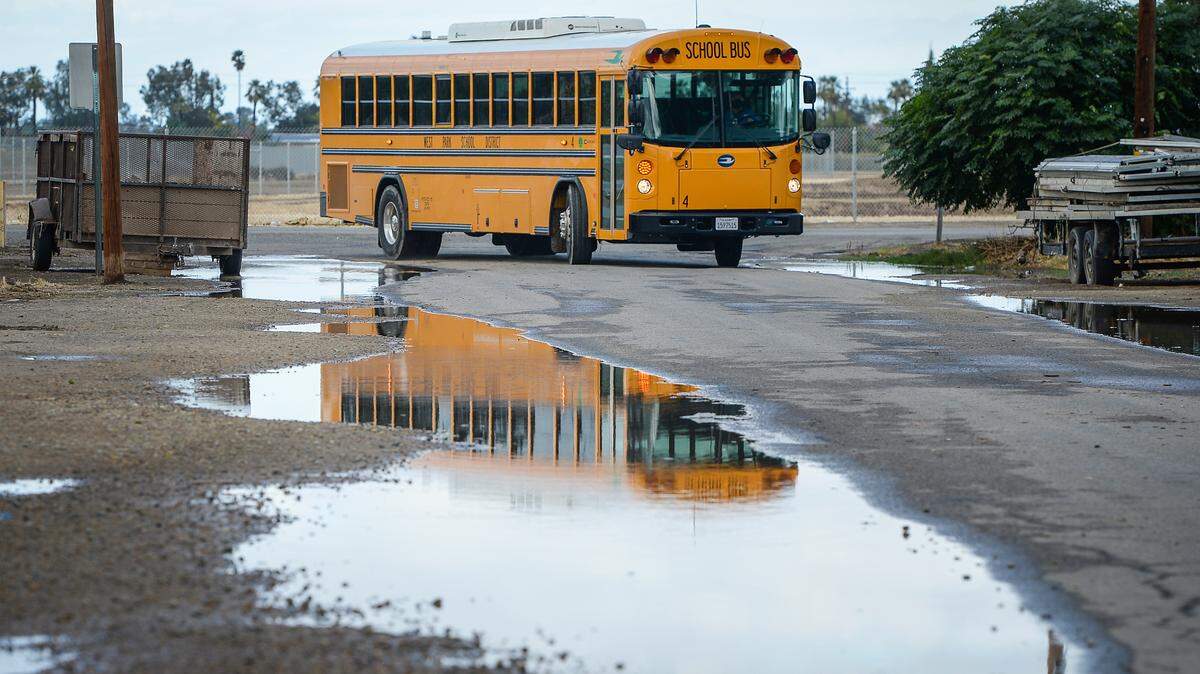
“The majority of the rural residents are transit dependent,” Stites said. Last year, FCRTA carried 266,621 passenger trips with its fleet of 120 vehicles including electric buses, vans and cars. It has an operating budget around $7.7 million.
Those vehicles moved people from Friant, Pinehurst, Kingsburg, Riverdale, Caruthers, Mendota and dozens of other communities across a large portion of the 6,000 square miles that make up the county. See a service map here.
It started in response to a lawsuit
The rural transit agency started in 1979 in response to a lawsuit against the Fresno Council of Governments based on a lack of addressing certain transportation needs in rural areas. (According to the book “Reconnecting Rural America”, the lawsuit was brought by a group “concerned that transit funds were being used for street and road projects.”)
It’s a joint powers agreement between the 13 incorporated cities and the county. When it started, there wasn’t a cohesive network of routes and not all cities wanted FCRTA to operate their local transit systems. It wasn’t until July 2021 that all the cities came under the one umbrella of FCRTA.
FCRTA gets a sliver of Measure C funds
The most recent iteration of Measure C — a half-cent sales tax to be used to improve mobility for all county residents — was approved by the voters in 2006. About 24% is allocated to regional public transit, with 3.99% going to Fresno County Rural Transit.
The agency expects about $3.2 million in Measure C funding for the 2021-2022 fiscal year. Of that, $1.2 million is for operations and the remaining $2 million is set aside for capital, like a maintenance facility and microgrid solar resilience hubs.
Prior to that, Measure C largely funded highways and roads. Public transportation received a larger share of funds only after community organizations and air quality advocates “were adamant in the renewal to increase the transit, non-streets and roads funding,” Stites said.
Stites said all the routes and services provided by the agency are possible because of Measure C funds. And, the agency was recently able to use previous portions of multiple years of Measure C allocations as a local funding match to receive an FTA grant to build a maintenance facility in Selma.
“Otherwise, we would not have been awarded the grant from FTA due to the national competition with limited funding available,” Stites said.
Most areas served by the agency have “an extremely high poverty rate,” and are identified by the state’s CalEnviroScreen map as disproportionately burdened by multiple sources of pollution and vulnerable to health risks. That establishes a threshold that FCRTA staff can use when pursuing local, federal or state funding.
Other revenues include fares from passengers, city and county budgets, as well as state and federal grants from the CARES Act and operating assistance from the Federal Transit Administration, CalTrans.
THIS WEEK IN LOCAL PUBLIC MEETINGS
Be sure to catch live-tweeting of the Clovis City Council (Oct. 18) and the Fresno City Planning Commission (Oct. 20) by Heather Halsey Martinez at @heatherhalsey.
At the Lemoore City Council meeting on Oct. 5, Documenter Ramiro Merino reported that the council approved the city’s Red Ribbon Week, starting the week of Monday, Oct. 25, 2021 and the Lemoore National Night Out event on Oct. 26 from 4 - 6 p.m. at Veterans Park. The Council held a public hearing regarding annexing land tied to the Cannabis Cultivation Project. Residents expressed concern over the smell of cannabis, which the Council said they will review the weed abatement policies. Read here for more info.
At the Madera City Council meeting on Oct. 6, Documenter Josef Sibala reported that the Public Health Director Sara Bosse announced the availability of boosters to individuals who have taken the 2nd dose of the Pfizer vaccine at least 6 months ago. The Council voted (3-3) against the hybrid model in AB 361, requiring everyone in the councils, boards, and commissions to be present and (3-3) against the motion dissolving the current Cannabis Ad Hoc Committee. Read here for more info.
At the Clovis City Council meeting on Oct. 11, Documenter Heather Halsey Martinez reported that the Clovis Unified School District governing board and Clovis City Council held a joint meeting to discuss the Terry Bradley Educational Center, dress code, later school start time, developer fees, city growth projections, state vaccine requirements and the student and staff vaccine requirement. The city will bring a firm on board to help determine the scope and estimates to update its General Plan from 2014. The city is also preparing to incorporate findings from the Regional Housing Needs Assessment, which shows the region needs 63,000 units. Preliminary estimates show Clovis being allotted 9,100 units that it will need to account for in the housing element by Dec. 2023. Read here for more info.
This newsletter has been corrected to accurately reflect the Fresno County Rural Transit Agency’s budget. An earlier version misreported the total dollar amount the agency will receive from Measure C this fiscal year.
This story was originally published October 18, 2021 at 8:54 AM.