Late-night street food in Fresno’s Tower District is in peril. Here’s why
AI-generated summary reviewed by our newsroom.
- Council moves to ban sidewalk food vending in Tower District Fri–Sun, 6pm–3am.
- City raises sidewalk-vendor fines to $100–$500, up from $25–$100, increasing penalties.
- Business group backs ban citing congestion and safety; advocates call it punitive.
Sidewalk vendors could soon be banned from selling in Fresno’s arts and culture district on the weekends — a move that would cut into peak sale hours for street vendors, community advocates said.
The proposed ban by the Fresno City Council marks a shift in the city’s strategy from a carrot to a stick approach in working with street vendors.
The council voted Thursday to add new rules under the city’s Sidewalk Vending Ordinance that would prohibit sidewalk vending in the Tower District from Friday through Sunday between 6 p.m. and 3 a.m. (Councilmembers Tyler Maxwell and Nelson Esparza voted against the new regulations.)
Additionally, the changes include increased fines between $100 to $500 for failing to comply with permit requirements, up from the current $25 to $100 range.
“Limiting their hours during peak times will directly harm their income, reducing their ability to sustain their businesses. It will also limit the vibrant street life that makes our city welcoming and unique,” Julia, a community member who helps vendors through the permitting process, told the City Council.
The new proposed rules build upon existing regulations, which limit where and when vendors can sell in the Tower District. In 2023, the city launched a pilot program with limitations on where vendors could operate following a surge in vendors along the nightlife corridor. An official sidewalk vending ordinance that went into effect in January.
Martha Alvarado, owner of Tamales La Jarocha push-cart, said the new rules feel overly punitive toward street vendors. She instead asked for more workshops and trainings and stressed that many licensed vendors start out without their licenses.
“We are small businesses, and we are doing our best to work legally and have everything in order,” she said. “I know there are those who do not have all their permits, but the majority of us are working hard to gather everything that we need.“
Multiple street vendors and small restaurant owners told the council via an interpreter that unpermitted street vendors have impacted their business.
“The problem isn’t only in the Tower District,” taco vendor Gerardo Avalos said.
Anthony Armour, president of the Tower District Business Association, said his group expressed “strong support” for the weekend street vending ban.
“Our business owners, employees, and customers regularly encounter issues related to sidewalk congestion, improper food handling, and unsafe public conditions that compromise the quality of life and deter visitors,” Armour said in a letter.
Night vendors in Tower
The Tower District drew an influx of street vendors after the pandemic.
Hot dog vendor Jaime Gómez told The Bee in 2023 that vendors like working in Tower District because of the crowds of hungry people in search of food after a night of drinking and dancing at nearby bars and nightclubs.
“By 1:30 a.m.,” he said in Spanish, “the sidewalks are full” with street vendors and customers buying tacos, hot dogs and other late night snacks.
City officials cited late-night police calls for service after bars and restaurants are closed as the reason for introducing the sidewalk vending ban. Most of these calls took place between two and four a.m., officials said.
Councilmember Miguel Arias, whose district includes Tower, said the ordinance isn’t meant to suggest vendors are creating the calls for service.
“It’s the congregation of people waiting for their food,” he said. “When you have a lot of inebriated people congregating afterward, being impatient about how long it takes to get a hot dog or taco, calls for service results.”
Between January and August, Fresno Police Department has received more than 2,366 calls for service for issues such as public intoxication, trespassing, and resisting and assaulting officers, according to the proposed ordinance amendment. It’s not immediately clear how this volume of calls for service compares to previous years or other parts of the city.
Genoveva Islas, executive director of Cultiva La Salud (Cultivating Health), a nonprofit that advocates for public health and street vendor education, called the council’s framing of the ordinance “horrendous” in how it blames calls for service on the presence of street vendors.
“If the issue is crowd control, then why not create a designated area for vending? If the issue is drunkenness, then why not restrict the sale of alcohol?” she said in a written public comment.
“Nothing of what’s written here will address the root cause thing that you want to address,” she said.
Ariana Martinez Lott, a longtime community advocate running for city council, said the proposed weekend ban treats street vendors as a scapegoat for high calls for service that have historically been linked to one problematic Tower District bar.
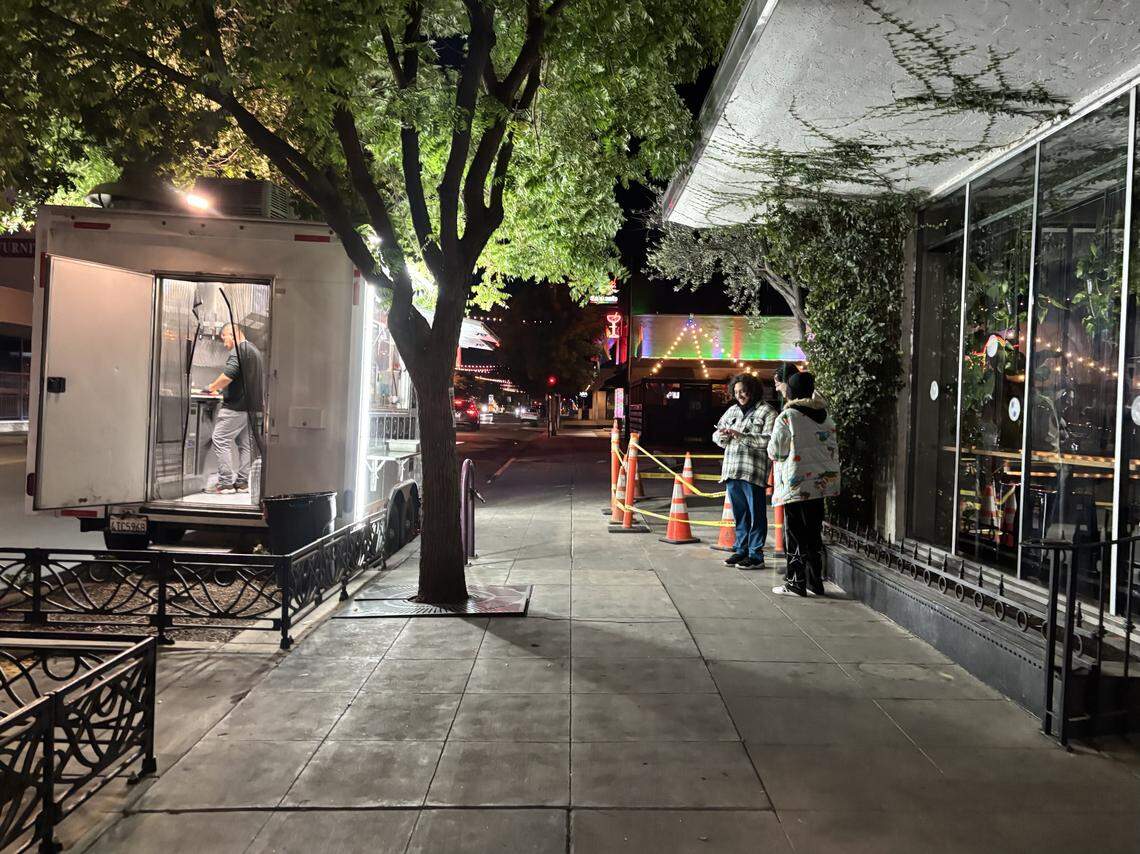
Gerardo, an employee of the Casa del Sazon food truck, which parks in front of Component Coffee, said Wednesday evening in between grilling tacos and attending customers that vendors, that lately city police have been urging people to go home when the bars close down. On occasion, there are fights and vandalism in the late hours of the night.
He said city officials are out almost every weekend lately and that the truck has been fined. The truck used to set up chairs on the sidewalk but stopped upon request by city officials.
“We try not to pour onto the sidewalk,” he said.
Carrot versus stick approach with food vendors
City leaders made a concerted effort to build a bridge with street vendors following the murder of Lorenzo Perez, a 45-year-old father of four and street vendor working in Fresno’s Roosevelt neighborhood of southeast Fresno. Following the tragedy, city leaders helped form the Fresno Food Vendor Association, provided some mobile vendors with security cameras on their mobile carts and allocated funds to help build a commercial kitchen for street vendors.
The city council has also beefed up regulations for street vending in recent years, such as creating rules on where vendors could sell in city parks, a city-issued vendor identification program and fines and restrictions on where and when vendors can sell in the Tower District.
An initial version of the Tower street vending pilot program emphasized educating vendors on how to get a business license and register for health permits.
Arias said this approach has worked with local vendors but doesn’t help without of town vendors. He said the city has tried a softer approach, such as issuing warnings, smaller fines that start at $25 for a first violation and urging businesses to shut down by 1:30 a.m. But this has been very resource-intensive, he said.
“And what we found out is they all stayed still out till 3 a.m. because that’s when they make the money,” he said.
Plus, he said, a $25 fine isn’t much of a disincentive for many vendors, he said.
These new rules, if approved, would apply to sidewalk vendors – those who either use a push cart or set up a stationary table to sell food, beverages or other goods, including those who cook on site using a grill or barbecue.
It would not impact food trucks, which are regulated by other city and state laws, Arias said.
A second reading will take place during the Oct. 30 council meeting. If passed, the proposed changes will go into effect in early December.
This story was originally published October 17, 2025 at 10:55 AM.