
District attorney's son says sheriff's detectives ruined his life with false arrest
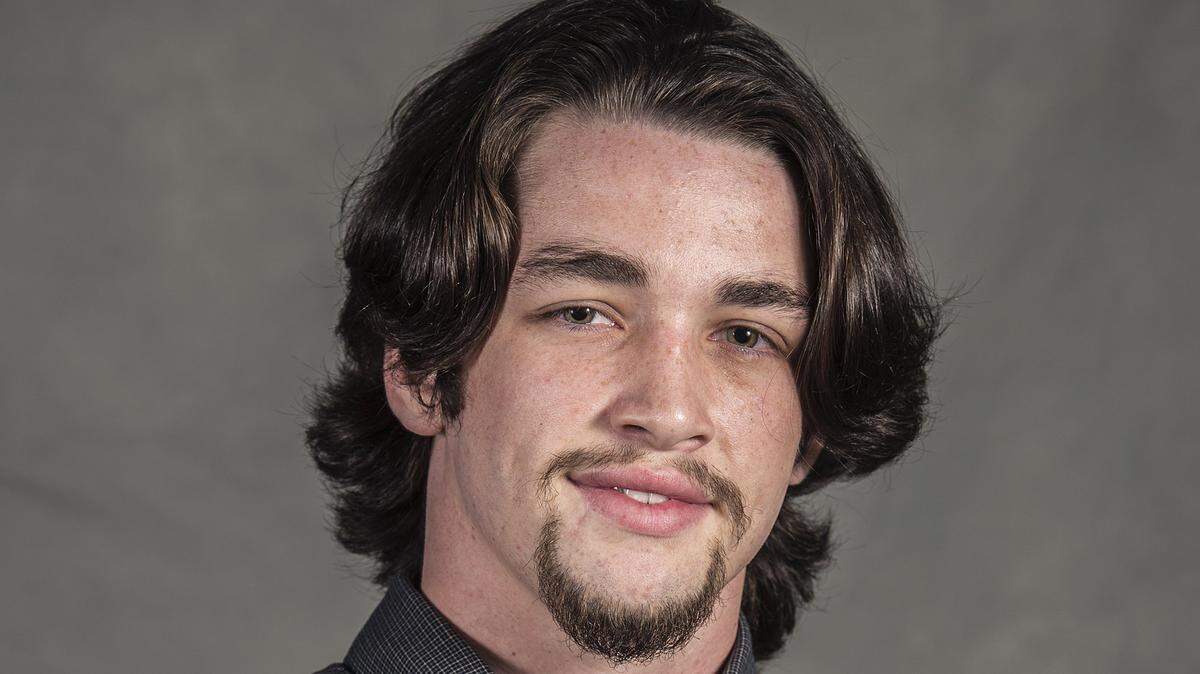
Ethan Morse testified Tuesday in his federal civil rights trial that Merced County sheriff's detectives ruined his life when they falsely arrested him in July 2014 in connection with a triple murder.
Since his release from jail in November 2014, Ethan Morse said he has been afraid to leave his home in Merced because social media posts has labeled him a murderer in a gang slaying. "Out in public, I never feel safe," he said.
A defense expert testified that Morse suffers from anxiety and depression from his 114 days of incarceration. "He's a man who has lost his peace of mind," Oakland psychologist Paul Berg told the jury of six men and two women. "What happened to him is unerasable."
But lawyers for Merced County contend detectives had probable cause to arrest the son of Merced County District Attorney Larry Morse on a murder charge. And once a judge ordered his release from jail, Morse has never been threatened or attacked, and has not sought mental health treatment, said attorney Dana Fox, who represents Merced County and Lt. Charles "Chuck" Hale, who authorized Morse's arrest.
Morse, 21, has accused Hale and sheriff's detectives Erick Macias and Jose Sam Sanchez in U.S. District Court in Fresno of false arrest. His lawyers, Jayme Walker and J. Gary Gwilliam contend Hale and the two detectives violated Morse's civil rights by maliciously or recklessly lying to a judge to get a warrant for his arrest.
In the second week of the trial, Morse spent most of Tuesday on the witness stand, telling jurors that while his parents were out of town, he and his friends smoked marijuana and drank alcohol before going to a house party in Atwater where three people were shot to death in March 2013.
He admitted that he knew one of his passengers — Jacob Logan-Tellez — brought a .22-caliber revolver with him to the party. "It was a terrible idea," he said in hindsight. "I should have never done that."
Morse also testified that he lied to his father when he told him that he hadn't gone to the party.
But he was adamant that he and Logan-Tellez and his six other teenage passengers had nothing to do with any of the March 30, 2013, killings: Samantha Parreira, 16, and Matthew Fisher, 19, were fatally shot in the backyard. Bernabed Hernandez-Canela, 18, was killed out front.
Following a four-day preliminary hearing in November 2014, Merced Superior Court Judge Ronald Hansen released Morse from jail after making several factual findings, including that Logan-Tellez did not fire a gun from Morse's vehicle and that he did not fire the weapon that killed Hernandez-Canela, court records say.
In his ruling, the judge said he could not hear any admission of a shooting by Logan-Tellez in his 911 call that Logan-Tellez accidentally made shortly after the triple slayings. Hanson also said the detectives used "improper interrogation techniques" on Morse's passengers, court records say.
On the witness stand, Morse pounded on that issue, saying detectives yelled at and threatened one of the passengers before handcuffing him. The passenger was later allowed to go free.
Morse's troubles began at age 16, when he took his father's sports utility vehicle without permission to drive seven friends and acquaintances to the Atwater party that was advertised on Twitter. Before leaving his home, Morse said Logan-Tellez showed him a revolver. He testified that he never told Logan-Tellez that he couldn't take the gun to the party.
Morse testified he and his group spent only 10 to 15 minutes at the party before his friend, Andrew Masengale, told him he had a "bad feeling." Morse said he interpreted Masengale's comment to mean the the party might turn violent, so he and the rest of his group walked back to the SUV.
Inside the SUV, Morse said he and his group decided to return to the party after all. But then gunfire erupted.
Morse described a chaotic scene, with people running every which way, and cars trying to leave all at once. He also recalled seeing two men engage in a gunfight as he drove off.
Morse said when his parents returned home, his father asked him if he had gone to the party. Morse testified he told his father no.
Then, a couple of weeks after the slayings, he learned that Logan-Tellez had accidentally made a 911 call and was arrested, then released.
Over the next year and a half, Morse testified he never talked to Logan-Tellez or the other passengers in his SUV about the deadly party. Instead he concentrated of school and wrestling.
In July 2014, Morse testified that he was getting ready to head to a Baptist college in Arkansas on a wrestling scholarship, when his life was upended.
The triple-homicide made headlines in July 2014, when the Sheriff's Department announced the arrest of Jose Carballido and Jose Botello in the killings of Parreira and Fisher, and the arrest of Logan-Tellez in the killing of Hernandez-Canela. (Carballido and Botello were later convicted and sentenced to prison. Hernandez-Canela's killing remains unsolved.)
The sheriff's announcement came as a surprise, Morse testified, because Logan-Tellez had nothing to do with the killing of Hernandez-Canela. When he told his father, his father got upset, he said.
"You guys got it wrong. I know for a fact he didn't do it," Morse recalled telling his father. "I think he felt offended."
Morse testified that he was raised to stand up and do what 's right. But he told the jury he initially didn't want to talk to detectives. "But I knew I had to do it," he testified.
His father drove him to the sheriff's interview, but Larry Morse didn't attend it. Afterward, Morse testified that he felt uneasy about the questions detectives asked him. But he also said detectives were professional and polite to him.
A key issue in the trial is whether Morse cooperated with detectives. Fox, who represents the county, has told the jury that Morse declined to name his passengers. Morse, however, testified that he gave the detectives the names of his passengers, but not their phone numbers. He told the jury that he wanted to call the passengers first to see if they would like to cooperate since talking to detectives about a gang slaying could put their lives in danger.
In the end, Morse said he convinced some of his passengers to talk with detectives. He testified he even drove one of them to the sheriff's interview. "I was fully cooperating," he told the jury.
Morse testified that he didn't know he was a suspect in a murder until sheriff's detectives arrested him outside his home on July 25, 2014. Initially, he thought detectives would realize their mistake and he would be let out of jail .
But days turned into weeks and weeks turned into months. He missed his first semester of college and his grandfather's funeral. While in jail, Morse testified, his grandfather had written him letters. "I felt hopeless," he said. "I thought I would never get out."
Because he is son of Merced's top prosecutor, Morse was incarcerated in the Mariposa County Jail. He testified he was always on high alert, worried that he might be raped or assaulted. "Everyone is angry in jail," he told the jury. "There's a constant threat of sexual or physical violence."
To make matters worse, Morse said, his cell mate was a gang member.
When the judge declared him innocent, and ordered Morse's release from jail, Morse said he felt happy, but in a state of shock. He testified he thought people would find out he was innocent and he could return to his life before his arrest.
But critics on social media, he said, constantly label him a murderer and contend his father pulled strings to get him off. "They said they saw my father golfing with the judge," Morse told the jury. "But that's not true because my father doesn't golf."
Morse attended one semester at the college in Arkansas, but he said acquaintances there learned of his link to the triple murder and ostracized him. He then attended Sacramento City College for one semester in the fall of 2015, but his dream of being a college wrestler ended when he hurt his back.
In late 2015, he returned to Merced. In May 2016, at the age of 19, he became a father to a daughter.
He told the jury that he no longer goes to parties or hangs out with friends. He testified that strangers often stop him in stores and asked him if he did it. He said he's always worried that someone might avenge Hernandez-Canela's killing by "whacking me."
"I'm innocent, but the fear of retaliation is always there," he said.
This story was originally published April 24, 2018 at 5:59 PM with the headline "District attorney's son says sheriff's detectives ruined his life with false arrest."