
Merced DA's son accuses police of false arrest. But a lawyer says the arrest was valid
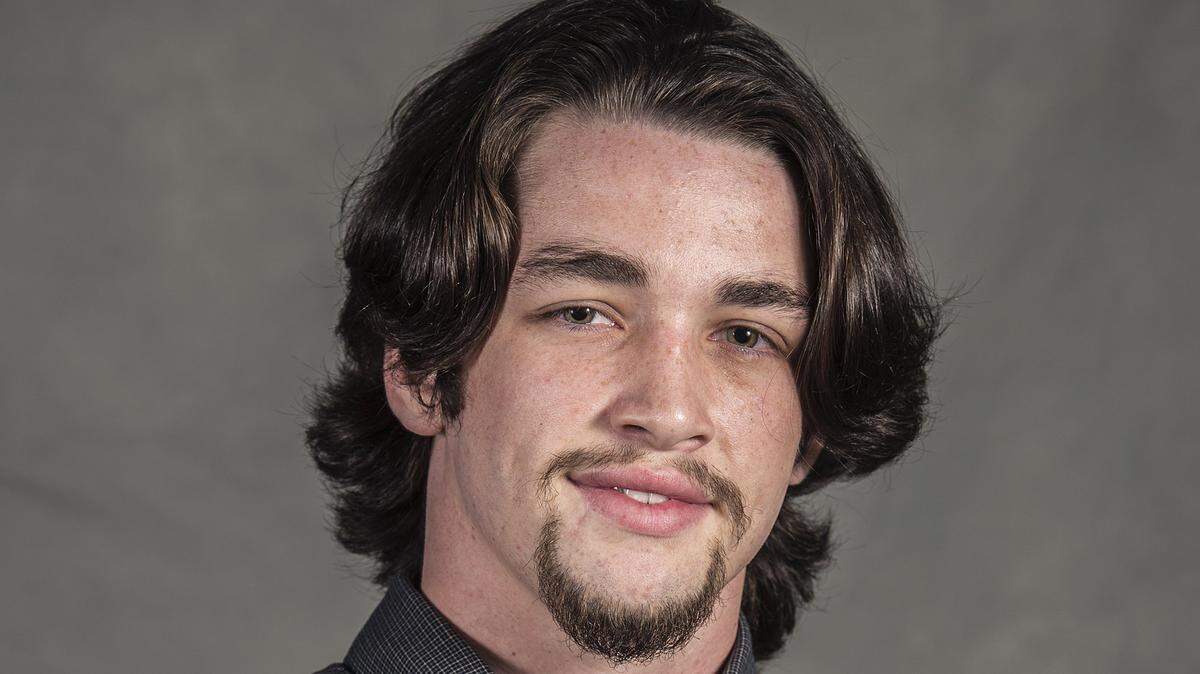
Nearly four years after Ethan Morse was declared innocent of murder charges, he and his lawyers were in a Fresno courtroom on Wednesday to repair his reputation and to accuse Merced County Sheriff's deputies of false arrest and malicious prosecution.
But a lawyer for Merced County contended that sheriff's detectives had probable cause to arrest Morse because he was evasive in answering questions and wouldn't identify witnesses in connection with a triple homicide at a house party in Atwater in March 2013.
In U.S. District Court, Morse, 21, has accused Lt. Charles "Chuck" Hale and detectives Erick Macias and Jose Sam Sanchez of violating his civil rights by maliciously or recklessly lying to a judge to get a warrant for his arrest in July 2014.
After Morse had spent nearly four months in jail, Merced Superior Court Judge Ronald Hansen in November 2014 declared Morse factually innocent of the murder charges and freed him from jail.
On Wednesday, both sides traded accusations on the first day of the civil rights trial in Judge Dale Drozd's courtroom.
Morse's attorneys Jayme Walker and J. Gary Gwilliam accused Hale, Macias and Sanchez of coercing witnesses, covering up evidence that would have exonerated Morse, and manipulating evidence to get a judge to sign a warrant for Morse's arrest in July 2014.
A key piece of evidence is a 911 call that sheriff's detectives used to get a warrant for Morse's arrest. Walker said the 911 call is inaudible, so detectives made up what was on it to get a warrant. To prove her point, Walker played the 911 to the jury.
Attorney Dana Fox, who represents Hale and Merced County, shot back, saying Morse's father, District Attorney Larry Morse II, tampered with witnesses. According to Fox, Larry Morse called one of the witnesses during an interview with sheriff's detectives.
"What are you going to say?" Larry Morse asked the witness, according to Fox.
A tape recording of Larry Morse's conversation with the witness will be played to the jury.
Fox also pointed out that because Larry Morse is Ethan Morse's father, he had a conflict of interest, so the state Attorney General's Office authorized the arrest of Ethan Morse and sought his prosecution.
The trial, which resumes Friday, comes as Larry Morse is seeking re-election. He is a key witness.
Ethan Morse's troubles began March 30, 2013, when he decided to drive seven friends and acquaintances in his father's SUV to a house party that was advertised on social media. His passengers included his friend, Andrew Masengale, and Masengale's friend, Jacob Logan-Tellez.
Walker and Fox gave this account to the jury of six men and two women:
Walker said Morse, then 16, hardly knew Logan-Tellez. But Fox said Logan-Tellez was a known gang member, and that before leaving the Morse home to go to the party, he showed Morse a gun. Fox, however, conceded that Morse had no gang ties.
The party was on Westside Boulevard in Atwater. Many of the partygoers were gang members.
Because Morse and his passengers had an uneasy feeling about the party, they stayed only 10 to 20 minutes. But while leaving, gunfire erupted. Samantha Parreira, 16, and Matthew Fisher, 19, were fatally shot in the backyard. Bernabed Hernandez-Canela, 18, was killed out front.
Chaos erupted and Logan-Tellez tried to pull out his gun, Walker said. But Masengale told him not to do it. Morse and his passengers left unscathed.
After Logan-Tellez was dropped off, he accidentally called 911 on his cellphone. A dispatcher believed Logan-Tellez was talking about the deadly shooting in Atwater, so she told detectives. Based on the 911 call, sheriff's detective Dwayne Pavelski arrested Logan-Tellez. During an interview, Logan-Tellez admitted that he took a .22-caliber handgun to the party but said he never fired it.
After listening to the 911 call, Walker said, Pavelski believed Logan-Tellez was telling the truth and let him go.
Jose Carballido and Jose Botello were later arrested, convicted and sentenced to prison for killing Parreira and Fisher. But the killing of Hernandez-Canela remained unsolved.
After the unsolved case lingered for months, Larry Morse appeared in front of the Board of Supervisors in January 2014. Walker said Larry Morse criticized the sheriff's department for not devoting enough money and resources to combat gang violence. In his speech, Larry Morse specifically pointed out the triple homicide in Atwater, Walker said.
The next day, the Merced Sun-Star published an article about Morse's comments, which upset the sheriff's department, Walker told the jury. In May 2014, Hale, who was then a sergeant, was put in charge of the investigation.
After listening to the 911 tape, Hale authorized the arrest of Logan-Tellez in July 2014, Walker said. The sheriff's department then called a news conference to announce the arrest.
Upon learning of the arrest, Ethan Morse for the first time told his father that he was at the Atwater party when gunfire broke out. Larry Morse also learned for the first time from his son about Logan-Tellez bringing a gun to the party, Fox told the jury.
On the advice of his father, Ethan Morse voluntarily talked to detectives without his father or a lawyer being in the interview room, Walker said. He told the detectives Logan-Tellez had a .22-caliber revolver but did not fire it from his car at the party.
Morse was not arrested, but he declined to give detectives the names of his other passengers, Fox said. He wanted to talk to them first, Fox said.
Sheriff's detectives, however, talked to most of the passengers in Morse's car. Initially, they all said Logan-Tellez had a gun but never fired it, Fox told the jury. But during the interviews, three of them changed their stories and said Logan-Tellez might have fired a weapon from Morse's vehicle.
Fox said Morse was arrested on July 25, 2014, because detectives have reasonable suspicion that he was the getaway driver in a deadly drive-by shooting of Hernandez-Canela. He also told the jury Logan-Tellez refused to tell detectives what happened to his gun, which has never been found.
But Walker said the passengers who changed their accounts were either tricked or threatened with arrest. In fact, one of them was handcuffed before he was released. She said Morse also was willing to take a lie detector test, but detectives declined to do it, even though they had done it in the past with other suspects.
In addition, sheriff's detectives knew Logan-Tellez could not have killed Hernandez-Canela, who was shot in the back of his head near his right ear with a .38-caliber firearm and twice in the chest with a .25-caliber firearm, Walker said. Hernandez-Canela was facing west when he was shot and Morse's SUV was headed east, she told the jury.
On Thursday, Pavelski, who was the first lead detective of the triple homicide, bolstered Morse's civil rights case when he testified that the 911 tape was difficult to understand.
Initially, Pavelski testified that it sounded as if Logan-Tellez bragged about shooting someone on the 911 call, so Pavelski got a warrant to arrest Logan-Tellez on April 15, 2013. But once he questioned Logan-Tellez about the 911 call, Pavelski said he had doubts about whether he had enough evidence to book Logan-Tellez on murder charges, so he let him go.
Pavelski told the jury that Logan-Tellez cooperated in the investigation and gave him Masengale's name and first names of some of the other passengers in Morse's SUV, including a person named Ethan. He also said Logan-Tellez offered to help him find the gun that Logan-Tellez took to the party. But he recalled telling Logan-Tellez that if it was dangerous to get the gun, not to do it.
After Logan-Tellez was released from custody, Pavelski testified he was never able to contact Logan-Tellez again. Once Pavelski left the Sheriff's Department in July 2013, the triple-homicide file was turned over to Macias.
Before leaving for a new job with the Tracy Police Department, Pavelski testified he recalled getting a call from one of the sheriff's detectives in the Major Crimes Unit. The detective was only interested in knowing the identities of the witnesses to the slaying of Parreira and Fisher. After that call, Pavelski testified that no one in the Major Crimes Unit called him about any information he might had about the killing of Hernandez-Canela.
Morse was released from jail in November 2014 following a four-day preliminary hearing in which Judge Ronald Hansen made several factual findings, including that Logan-Tellez did not fire a gun from Morse's vehicle and that he did not fire the weapon that killed Hernandez-Canela, court records say. The judge also said he could not hear any admission of a shooting by Logan-Tellez in his 911 call. In addition, the judge said, "the detectives used improper interrogation techniques" on Morse's passengers, court records say.
In July 2017, Drozd issued a 36-page ruling in Morse's lawsuit, saying a jury needs to decide the case because Macias "cherry-picked" portions of witness interviews and evidence and made "misstatements" when writing his affidavit for Morse's arrest. The judge also called the detectives' interview tactics "ruses," and said those tactics have been linked to a number of false confessions in other cases. "Simply put, the probable cause showing was nowhere near as strong as the (writer of the affidavit) led the reviewing magistrate to believe," Drozd wrote. Additionally, law enforcement officers pursued interviews and Morse's arrest rapidly, leaving little time for the deputy attorney general prosecuting the case to independently review the evidence, the judge said.
Walker told the jury that Morse was falsely arrested because sheriff's detectives were unwilling to admit that the theory of the high-profile case was wrong. Morse is seeking damages for emotional distress because he missed his grandfather's funeral and the first semester of college in Arkansas, where he had a wrestling scholarship, while he was locked up. He is seeking punitive damages because the Sheriff's Department never punished the defendants for what they did to him, Walker said.
Because he had a difficult time transitioning into college, Morse has returned home to Merced. Worst of all, Walker said, when someone does an internet search on Morse's name, social media identifies him as a murderer and being involved in a gang slaying.
"He has a fear that he was going to spend the rest of his life in prison for a crime he didn't do," Walker told the jury.
This story was originally published April 18, 2018 at 8:59 PM with the headline "Merced DA's son accuses police of false arrest. But a lawyer says the arrest was valid."