Newsom’s plan closes the gap for Health for All access regardless of immigration status
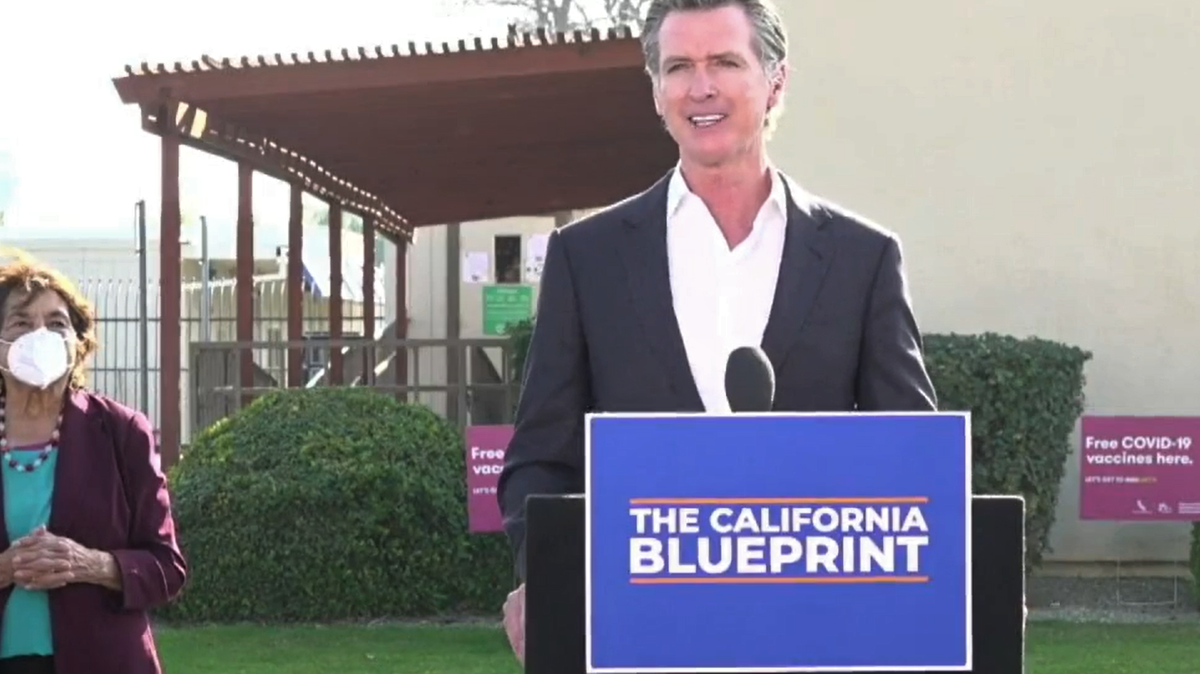
For health and immigrant rights advocates, Gov. Gavin Newsom’s plan to expand health care access for all Californian residents regardless of legal status, is a “historic moment” that reflects years of advocacy work to ensure everyone in the state have healthcare coverage.
The historic investment would expand access and affordability to health care including the expansion of Medi-Cal to all income-eligible Californians, regardless of immigration status, starting Jan. 1, 2024. Newsom’s plan would expand access to coverage to an estimated 764,000 undocumented immigrants in Californias.
“We are here today to celebrate and to thank Gov. Gavin Newsom for including health care for undocumented in the budget for the state of California,” said civil rights leader Dolores Huerta in Lamont. “This is a very, very historic moment.”
Newsom today visited Clínica Sierra Vista’s Lamont Community Health and Dental Center in Kern County to highlight his proposed healthcare investments, including expanding healthcare coverage regardless of immigration status.
“We’re here to advance a cause that you champion for quite literally decades. We talk about health care for all,” Newsom said to Huerta. “Finally, we’re at a point where we’re making those words real.”
Newsom said California is a very diverse state with so many mixed status families where children themselves ma have healthcare, but their working parents might not.
Newsom said California is positioned with this budget to be able to deliver “Universal health care for all, regardless of pre-existing condition, regardless of the ability to pay, and regardless of your immigration status.”
The health care coverage gap for undocumented individuals has been closing little by little in the past couple of years.
In 2016 California expanded full-scope Medi-Cal to all low-income children, regardless of their immigration status. In 2019, Newsom signed a state budget plan that funded a further expansion of Medi-Cal to include income-eligible undocumented young adults up to the age of 26, which started in January 2020.
In July 2021, Newsom visited Clínica Sierra Vista Elm Community Health Center in south Fresno to sign a bill that expanded Medi-Cal to low-income undocumented immigrants ages 50 and older starting in May 2022.
Now, the full-scope Medi-Cal will be expanded to individuals ages 26-49.
Since 2013, the #Health4All coalition - comprised of immigrant rights activists, health care advocates, and community members from across California - has advocated for expansion of health care to all Californians, regardless of immigration status.
“Previously, we had people that were undocumented, covered under health care up to the age of 26, and then last year it passed, the legislature and the governor signed the bill to cover people 50 and above. But now they have closed the gap,” said Huerta, who called the moment historic and a day of celebration. “So that all undocumented people will be covered under our California healthcare system.”
Huerta said California will be the first state in the nation to recognize immigrants and to give them the kind of health care they need.
“We know that no one is safe, in terms of health care, unless everybody is eligible for the kind of health care benefits that we have in the state of California,” the 91-year-old icon.
She is confident the state Legislature will “cover the governor’s leadership in making this happen.”
Huerta said advocates still have a lot of work to do to make sure everybody knows about the health expansion.
Assemblymember Rudy Salas, D-Bakersfield, said Newsom not only visits the Central Valley, but he is also “delivering for our families here.”
“Today is a very historic moment where we’re saying that we care about all Californians, we care about our families. We care about your health and the governor’s proposal in his budget. Does exactly that,” said Salas , whose 32nd Assembly district encompasses Kings County and parts of Kern County.
Salas said Newsom selecting Clínica Sierra Vista in Lamont for his visit has also a historic significance since back in 1971 the UFW started the first community clinic there.
“Because this is a community that we’re outreaching to, we’re reaching out to families, reaching out to individuals, and this is not only for our community and our region, but for Californians up and down the entire state,” said Salas.
Esta historia fue publicada originalmente el 11 de enero de 2022, 4:48 p. m..