Oceano Dunes plan would turn refinery land into a massive new off-road playground
California State Parks has announced plans for a massive recreational development on the Phillips 66 Santa Maria oil refinery property, even though the oil company will not cease operations at the plant near Arroyo Grande for another two years.
Those plans, proposed by State Parks in its Public Works Plan and subsequent environmental impact report, hinge on whether the agency buys or leases the property from Phillips 66.
Additionally, State Parks would have to wait until the property has been remediated from the environmental damage caused by the oil refinery before it could begin construction, according to the Public Works Plan.
State Parks says it wants to develop on the land to “support recreational activities” for the nearby Oceano Dunes State Vehicular Recreation Area. Should State Parks acquire the Phillips 66 property, about 1,800 acres would be added to the nearly 3,500 acres the park currently encompasses.
Bernardo Fallas, a spokesperson for Phillips 66, told The Tribune that the energy company is “aware of the California State Parks conceptual plan” and it “has no comment on the plan at this time.”
History of Phillips 66 Santa Maria refinery
Located off Highway 1 just north of Willow Road, the Santa Maria Refinery was built in 1955 by the Union Oil Co. of California. Through the years, the energy company was bought by Tosco Corp., Phillips Petroleum and eventually ConocoPhillips — from which Phillips 66 was formed in 2011.
On average, the facility produces about 44,500 barrels of crude oil per day and employs 140 people.
The entire property encompasses 1,780 acres, but only 200 acres are used for the refinery and other Phillips 66 operations. The remaining 89% of the property is used to graze cattle and for nature preservation purposes, according to the oil company.
The crude oil produced at the Santa Maria Refinery is transported north by a 200-mile pipeline to a refining facility in Rodeo on the banks of the San Pablo Bay.
In August 2020, the refinery announced plans to end its 66-year run in 2023 because its sister refinery in Rodeo is set to transition into the world’s largest renewable fuels plant, according to the company.
State Parks plans for massive development on Phillips 66 property
State Parks is the first to come forward with comprehensive plans to transform the coastal property into something new.
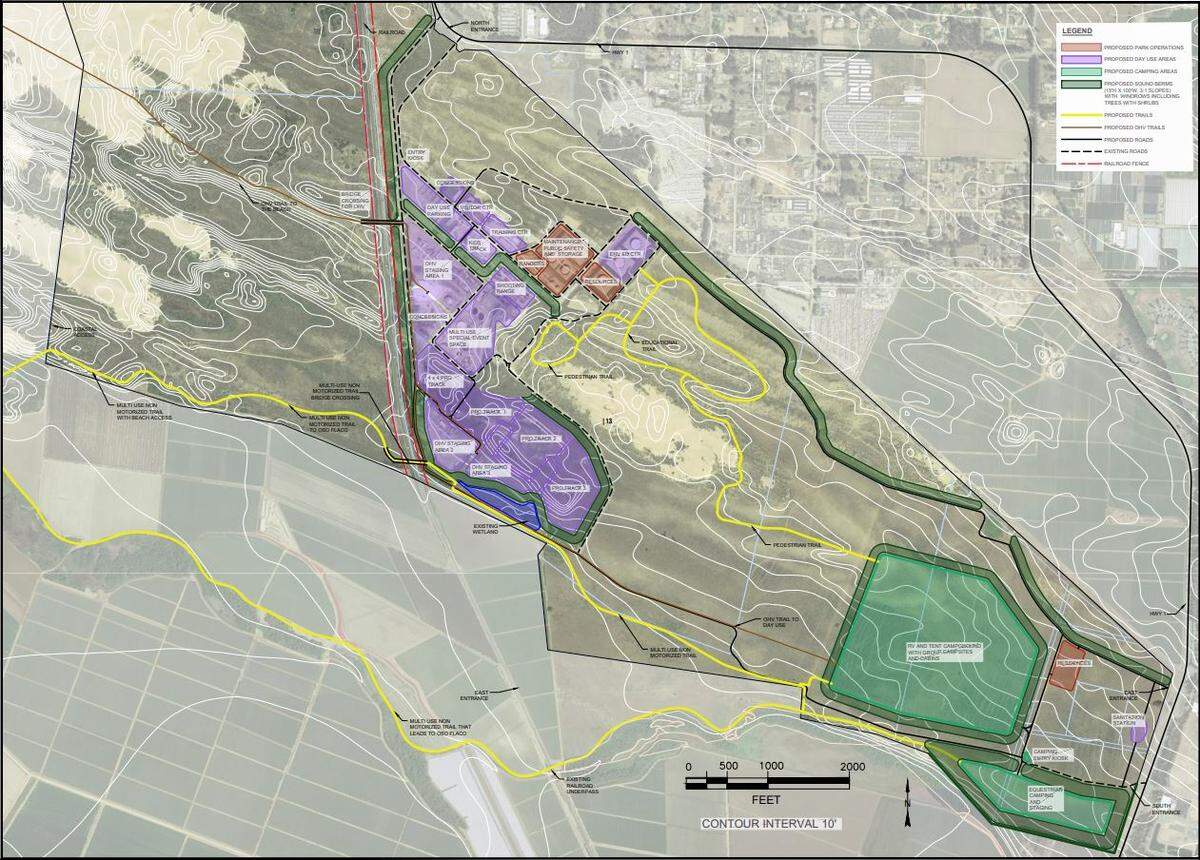
Included in the agency’s roughly 900-page plan and report released at the end of December 2020 were ideas for extensive new facilities on the property.
They include:
- An entrance kiosk, visitor center and concessions for groceries and general merchandise;
- Six acres of paved parking spaces and 25 acres of staging areas for off-highway vehicles that would include picnic tables and stoves as well as concessions for OHV equipment rentals;
- An OHV track for youth, a 33-acre professionals-only track for motocross, ATV practice and quarter midget racing, and a separate area for a 4-by-4 obstacle course, plus a training area with an OHV safety and basic training center;
- An environmental education center that could include a campfire center, outdoor classroom and amphitheater; and
- An RV sanitation station with space for two three-hole dump stations.
Additionally, State Parks wants to build 225 RV campsites, up to 20 cabins, 50 drive-in tent sites, 25 hike-in or bike-in sites and a minimum of six group campsites. Another 15 acres would be allotted for equestrian use and up to 75 more campsites.
A new office building for park operations could be added to the property, along with storage facilities, residences for park staff and a weapons range for peace officer training.
OHV and walking trails would connect the Phillips 66 site to the southern part of the Oceano Dunes park and beach area, according to the plan.
Land set aside for conservation in decades-old agreement
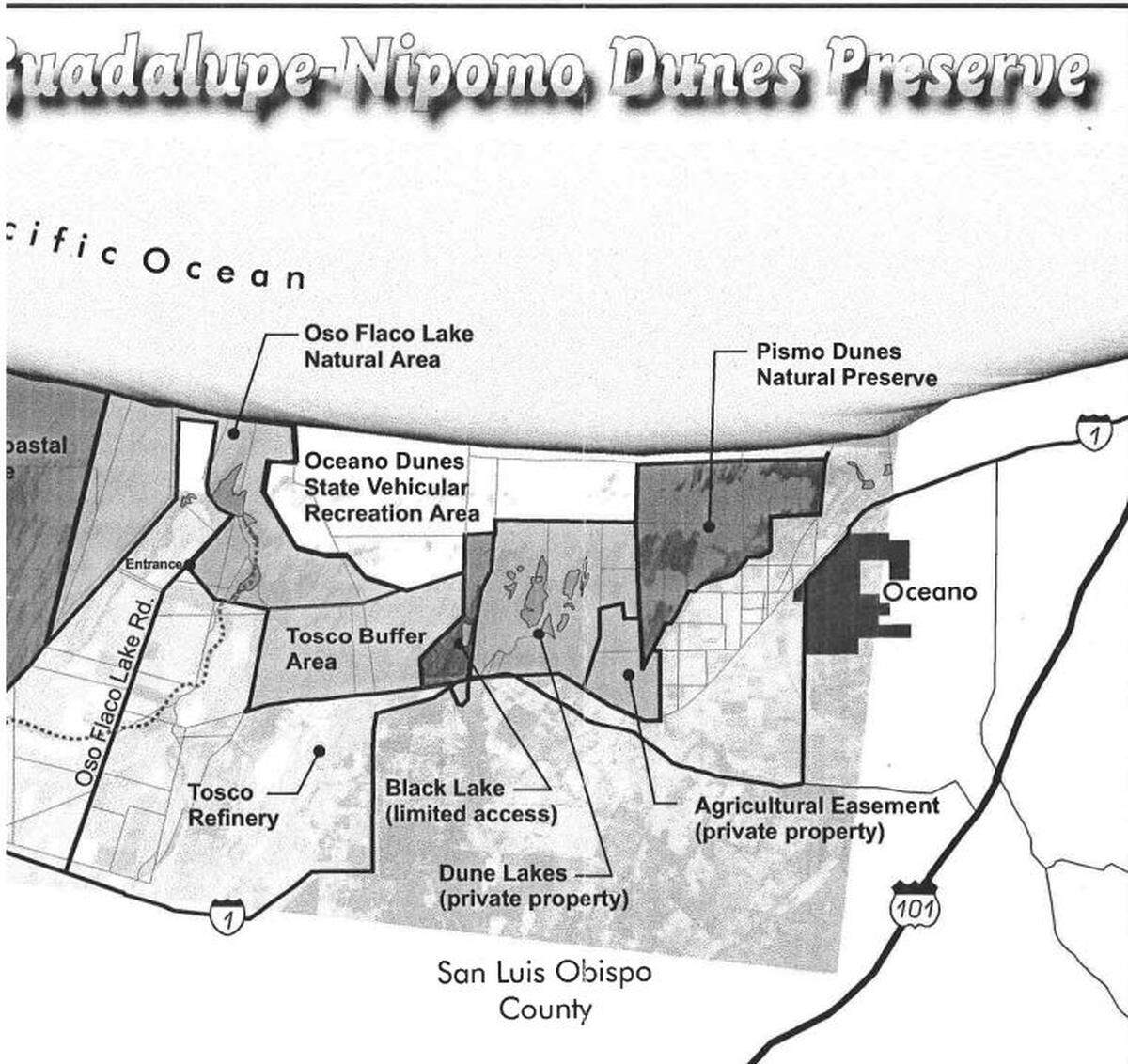
A portion of the Phillips 66 site — 630 acres — was set aside in January 1999 for preservation, according to the Guadalupe-Nipomo Dunes Preserve Management Program released in 2000.
An agreement between State Parks and Tosco Corp., the oil company acquired by Phillips 66 in 2001, stated that 630 acres along the western part of the property would not be developed, to maintain “the sensitive ecosystem that exists on the property.”
That agreement lasted five years. But Fallas told The Tribune via email that the oil company “continues to honor” the 1999 preservation agreement.
State Parks considers the property part of the Oceano Dunes SVRA, though it says no OHV riding is allowed there.
An OHV access trail currently runs through that portion of the property from the Phillips 66 refinery site to the dunes. State Parks notes in its plan that the trail “could be enhanced to provide access to the open riding area on the beach.”
Kara Woodruff, a former program director for The Nature Conservancy and the author of the 2000 Guadalupe-Nipomo Dunes Preserve Management Program, said State Parks’ plan to develop the Phillips 66 site would destroy an ecologically important area.
“It is odd that we’re talking about now running a southern entrance (to the dunes) through there,” which would undermine efforts by The Nature Conservancy to protect the land, Woodruff said.
Oil leak leads to groundwater contamination
State Parks points out in its Public Works Plan that the groundwater under the Santa Maria Refinery is contaminated with a light non-aqueous phase liquid, or LNAPL, which can be a liquid such as petroleum oil. The contaminated groundwater plume extends about 3.7 acres, at a depth of 50 to 70 feet underground, according to the plan.
It is unknown when the LNAPL leak began, but a line carrying the fluid was last “visually inspected in 2006” and the leak was stopped when the line was replaced in April 2016, according to a letter sent to Phillips 66 by the Central Coast Regional Water Quality Control Board in 2019.
Though the leak does not pose any immediate human health threats, it could have significant impacts on development in the area.
“Chemicals could travel upwards through the soil and volatilize inside new buildings, which could result in an indoor human health hazard,” the plan states.
In addition, if groundwater is withdrawn from the area under the Phillips 66 site, “such withdrawal could either directly encounter contaminants or indirectly cause contaminants in the plume to migrate, thereby expanding the size of the plume and potentially resulting in additional contaminated groundwater,” according to the plan.
Remediation efforts by Phillips 66 are currently underway, and the company had extracted nearly 3,000 gallons of the LNAPL as of January, according to Stantec Consulting Services, a company contracted by Phillips 66 to research and plan required environmental remediation on the property.
Matthew Keeling, executive officer of the Central Coast Regional Water Quality Control Board, told The Tribune in an email that the amount of LNAPL remaining is “currently uncertain and subject to interpretation.”
Once the recovery system is built — likely in the third quarter of 2021 — it’s expected to take less than five years to remove the LNAPL from the water “to the maximum extent practicable,” Keeling said.
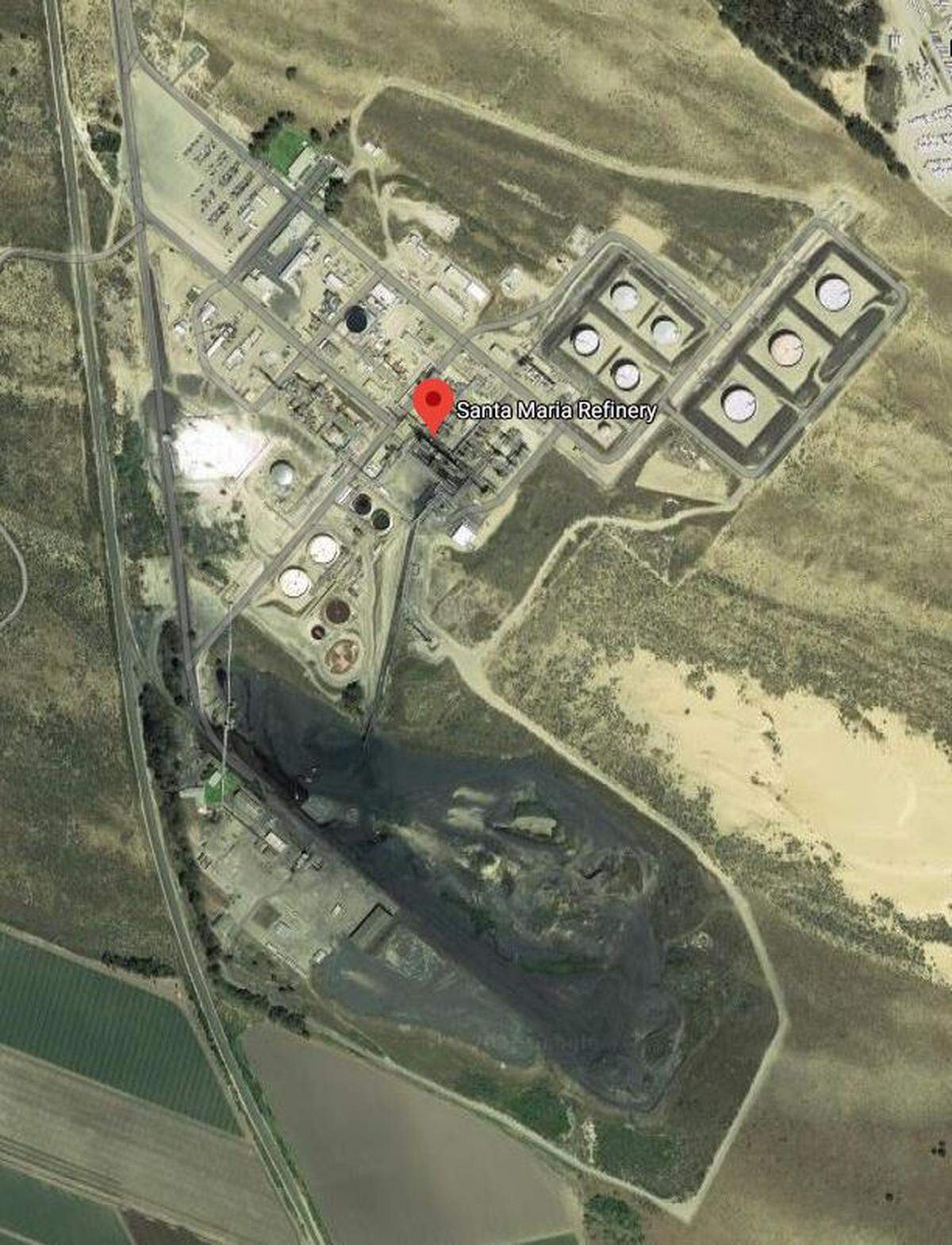
Not mentioned in State Parks’ plan is additional environmental damage on the site, including an area contaminated by piles of unused petroleum coke — a solid material that is a byproduct of petroleum refining — and another area contaminated after being used as a dumpsite for chemicals and building waste.
The former dumpsite, which measures 0.8 acres, contains 13,000 cubic yards of oily soil that was first discovered in the 1990s and still exists there today. Contaminants identified in the soil include total petroleum hydrocarbons and two types of asbestos: amosite and chrysotile, among other things, according to analyses by Stantec.
The former waste site was tentatively set to be excavated in the summer of 2020, but work has been delayed until summer 2021 or 2022 pending permits from the San Luis Obispo County Planning and Building and Environmental Health departments, Keeling wrote to The Tribune.
The area with 10,320 cubic yards of unused petroleum coke had elevated levels of nickel and vanadium that exceeded the California Environmental Protection Agency limits, according to Stantec. Both substances can have negative health impacts to humans and the environment.
The unused petroleum coke piles were removed from the site, according to Keeling, though additional piles remain on the property because the refinery is currently in operation.
When asked about the remediation efforts, Adrienne Ursino, Phillips 66 public affairs director, said the company “has no comment at this time.”
Before State Parks were to continue with any of its plans for the Phillips 66 site, the plan notes that it would conduct extensive health risk assessments and hydraulic analysis to determine whether it can safely build and extract water from the area.
BEHIND THE STORY
MOREBehind our reporting
Tribune reporter Mackenzie Shuman spent hours reading and analyzing more than 900 pages of California State Parks’ Public Works Plan and related Environmental Impact Report for Oceano Dunes State Vehicular Recreation Area and Pismo State Beach, released in December 2020.
Click the arrow to see what went into her reporting.
Who was interviewed for this story
After reading the plan, Mackenzie then went to experts who could help fill in the blanks about the plan, including State Parks officials, California Coastal Commission leaders, environmentalists and advocates for off-highway vehicle users.
She also spoke with local business owners who fear their livelihoods may be destroyed by State Parks’ plan.
Those folks answered questions such as: What are the long-term effects of this plan? How will this impact the local environment? What about the local economy?
Other background research
Additionally, Mackenzie examined decades-old documents that walked her through the history of the entire Nipomo-Guadalupe dunes complex.
She read about how conservationists and an oil company agreed more than 20 years ago to set aside several hundred acres of land for preservation, and how toxins leaked into the ground on Phillips 66’s Santa Maria Refinery property.
What stood out to Mackenzie the most was the precarious balance State Parks must strike between its duty to protect the unique ecosystem that exists at the Oceano Dunes, while allowing for accessible recreation.
In her article, she breaks it down to the essential facts you need to know.
This story was originally published February 12, 2021 at 8:00 AM with the headline "Oceano Dunes plan would turn refinery land into a massive new off-road playground."