State Parks offers dramatic new vision for Oceano Dunes. Here’s what it has planned
Roughly 900 pages of documents released by California State Parks reveal the possible future of off-road riding and camping at Oceano Dunes State Vehicular Recreation Area and the neighboring Pismo State Beach.
The Draft Public Works Plan and resulting Draft Environmental Impact Report outline new development ideas, safety and infrastructure improvements and environmental damage mitigation efforts at the popular parks in southern San Luis Obispo County — predicting what’s ahead for the area for the next 20 to 30 years if it’s approved by the California Coastal Commission.
The plan, which was released in December 2020 after nearly two years of work, aims to “strike an acceptable balance between motorized recreation and protection of natural resources while complying with the (California) Coastal Act.”
Yet, advocates on both sides of that precarious balance — off-highway vehicle (OHV) users and conservationists — expressed disappointment at State Parks’ plan.
Leaders of local environmental and conservation organizations told The Tribune that the plan is “insulting” to their efforts to protect the natural ecosystem of the Oceano Dunes area and called some of the development plans “completely illegal.”
“State Parks is going in the wrong direction in terms of endangered species protection,” said Jeff Miller, a senior conservation advocate with the Center for Biological Diversity. “I don’t see how this Public Works Plan is somehow gonna fly with the Coastal Commission.”
On the other side, Jared Macleod, vice president of the Friends of Oceano Dunes, said the plan largely ignores State Parks’ obligation to provide off-highway vehicle access to the park. The nonprofit organization advocates for continued and expanded OHV use at the Oceano Dunes.
“The current draft is a disappointment,” Macleod told The Tribune. “Nothing in there gives us any real opportunity for expanded OHV use or at least no immediate benefit.”
The Coastal Commission has to approve, deny or ask for modifications to the plan before it is finalized. A staff report addressing the Public Works Plan is expected to be released on Feb. 12.
The Coastal Commission is expected to deny the plan and instead suggest — again — that State Parks largely phase out OHV use at the park near Pismo Beach.
The public can submit comments and feedback to State Parks regarding the plan until March 2 at 5 p.m. And the Coastal Commission will hold a special hearing on the Public Works Plan on March 18, which the public can virtually attend via Cal-Span.org.
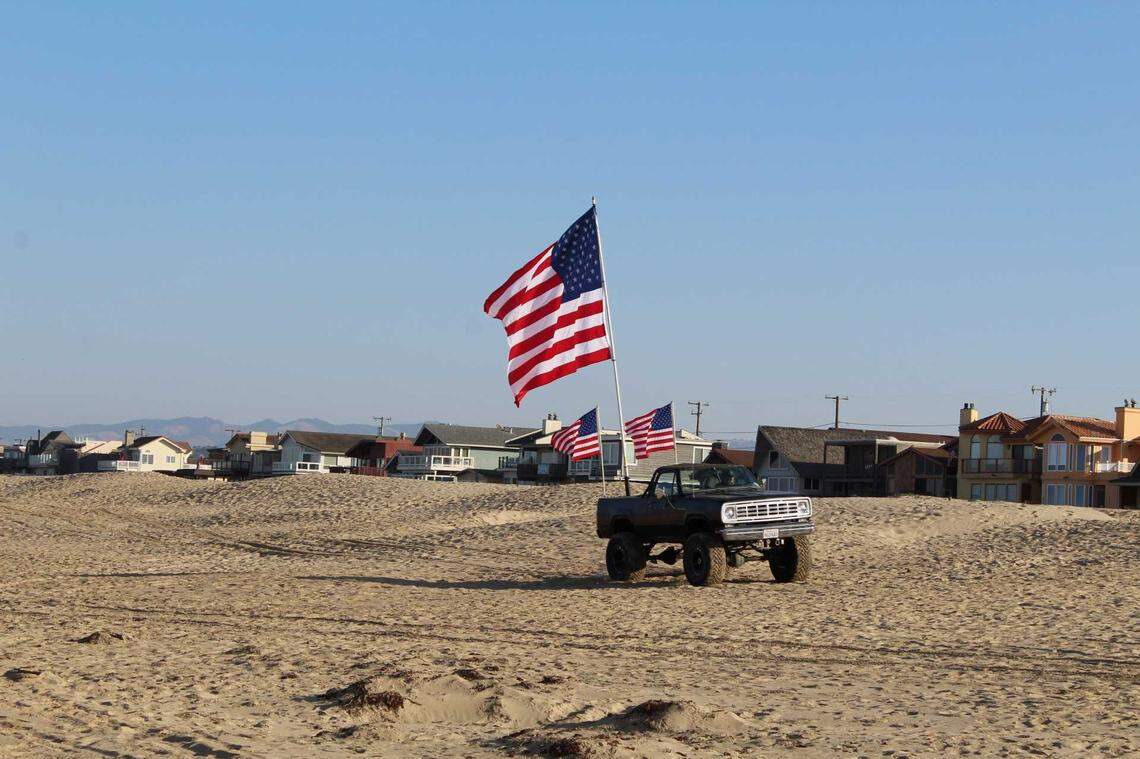
State Parks proposes to limit vehicle access to Oceano Dunes
Under the Public Works Plan, State Parks would cut the number of beach-use camping sites available at the Oceano Dunes in half from 1,000 to 500, while reducing the number of street-legal vehicles allowed per day by more than 60% from 2,580 to 1,000. The number of OHVs allowed each day would be cut by more than 40% from 1,720 to 1,000.
State Parks would not make exemptions to use limits for holidays such at Independence Day and Labor Day, as the agency has previously done.
In its plan, State Parks says it will update a 2005 study with new data to evaluate the current potential impacts of nighttime vehicle use on birds.
As of now, the park is open to nighttime riding. The 2005 study found that birds have “a higher degree of reaction to an approaching vehicle at night than day, probably equating to a lower risk of collision,” according to the Oceano Dunes Habitat Conservation Plan released in February 2020.
According to the documents, State Parks intends to “phase out OHV/ATV rental concessions” in order to “limit the number of inexperienced OHV riders in the riding area, as visitors would have to bring in their own OHVs.”
State Parks contracts with several shops near the Oceano Dunes that rent off-highway and all-terrain vehicles (ATV) to people looking to experience dune riding.
Those contracts are set to expire in April 2022 and would not be renewed, according to State Parks’ plan.
Local ATV rental shop owner Steve Dayton said State Parks’ plan is unfair to lower-income people.
“You’re cutting out a huge chunk of families that can’t afford their own ATVs. ... For 50 or 60 bucks, they can ride one for a couple hours on the beach,” Dayton said. “They don’t have to have a typical truck and a toy box with the toys in it.”
In contrast, he said, ATV owners can have as much as $150,000 invested in their vehicles, trailers, trucks and camping setups.
“It’s just discriminatory that somebody suggested this is supposed to be an owners-only beach or an owner-only riding area,” Dayton added.
Infrastructure, safety improvements planned for park near Pismo Beach
One of the main components of the draft Public Works Plan is a push for various infrastructure and safety improvements to the Oceano Dunes and Pismo State Beach.
For example, State Parks could replace entrances and lifeguard towers at Pier and Grand avenues in Oceano, according to the plan. Those structures are currently “outdated, in poor condition, and not (Americans with Disabilities Act) compliant,” the plan said.
Additionally, a new entrance kiosk could replace the existing facility at the North Beach Campground in Pismo Beach in 2022. The new kiosk would be elevated to avoid flood damage, since the old one has experienced repeated flooding, resulting in mold and structure damage, according to the plan.
The plan also proposes a new, 1.1-mile-long boardwalk between the Grand and Pier avenue entrances to be built in 2022. The new boardwalk would run parallel to the ocean with two loops that extend inland into the native dune vegetation.
Infrastructure improvements beginning in 2024 are also proposed for the Oceano Campground located off Pier Avenue, such as repaving and the addition of street directional striping and signage.
State Parks would upgrade existing RV electrical and sewage hookups; plant native trees and shrubs to provide shade and privacy and add new amenities such as metal fire rings, accessible picnic tables and larger parking spaces, according to the plan.
Pismo Beach butterfly grove could get more trees, better entrance
Included in the plan are significant changes to the Pismo State Beach Monarch Butterfly Grove off Highway 1. If approved, those could begin in 2023.
State Parks proposes to plant new, sterile eucalyptus trees and replace the current entrance with a native vegetation buffer to “further protect the grove,” according to the plan.
New parking, benches and picnic tables are also proposed, as well as possibly moving power lines underground. State Parks also plans to build a new concession kiosk and restrooms for the butterfly grove.
New OHV entrance, campgrounds proposed for Phillips 66 refinery site
As part of the Public Works Plan, State Parks has proposed developing the 1,780-acre Phillips 66 Santa Maria oil refinery property after the energy company shuts down operations in 2023.
The future of the proposed developments hinges on whether State Parks buys or leases the property from Phillips 66, and would be delayed until the property is remediated.
State Parks’ Public Works Plan features ideas for extensive new facilities on the property such as 20 cabins, hundreds of campsites, an OHV training area with a safety center and multi-use tracks for kids and professional riders.
A new office building for park operations could be added to the property, along with storage facilities, residences for park staff and a weapons range for peace officer training.
OHV and walking trails would connect the Phillips 66 site to the dunes and beach area, according to the plan.
Before State Parks could continue with any of its plans for the Phillips 66 site, the plan notes, it would need to conduct extensive health risk assessments and hydraulic analysis to determine whether it can safely build in the area or extract water from it.
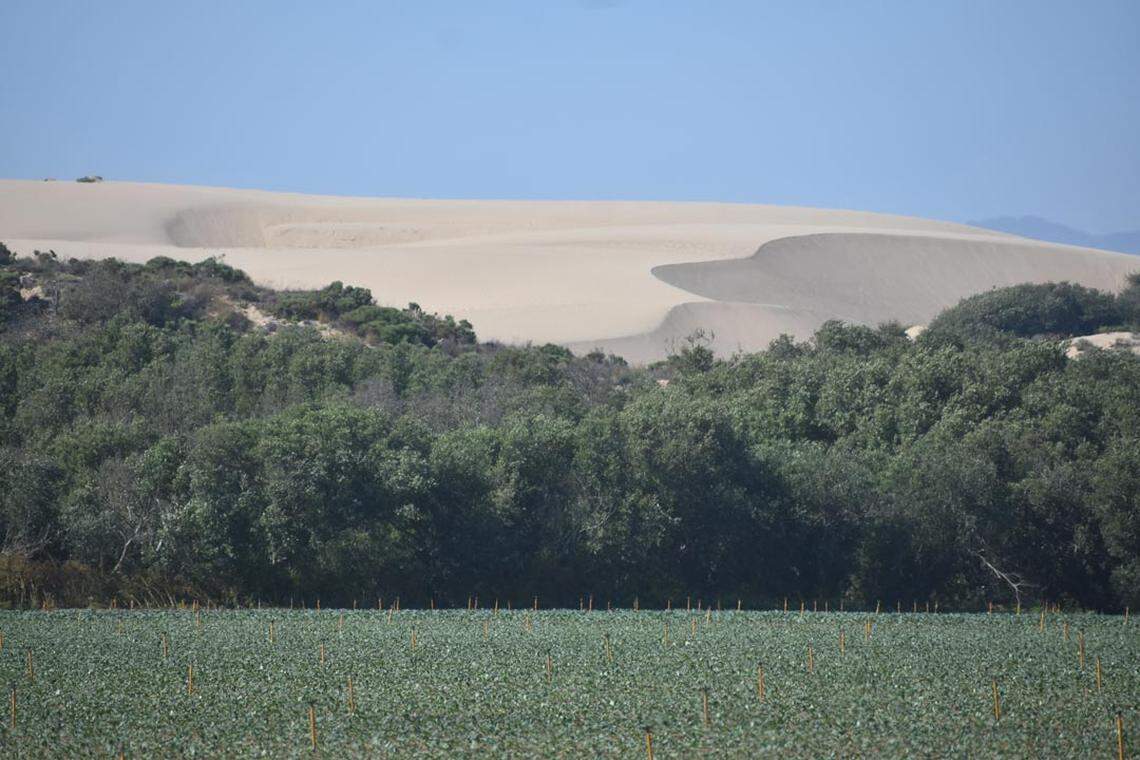
Major development planned for Oso Flaco Lake area
Some of the bolder ideas included in the Public Works Plan involve developing Oso Flaco Lake Natural Area, which is part of the Oceano Dunes SVRA. Construction likely would not begin until 2026, the plan said.
Adjacent to the Oso Flaco area are 116 acres of State Parks-owned farmland. State Parks plans to develop this land, which is currently leased out to a farmer and designated as “prime farmland” by the California Department of Conservation.
The land around Oso Flaco is also designated as an “environmentally sensitive habitat area” by the California Coastal Commission, and therefore “shall be protected against any significant disruption of habitat values, and only uses dependent on those resources shall be allowed within those areas,” according to the Coastal Act.
Despite those restrictions, State Parks proposes to build 20 cabins, up to 300 campsites and paved and unpaved parking for 100 vehicles on the agricultural land.
The agency’s plan also calls for a paved concession and event area; a large shaded picnic area; a loading zone for buses; a campfire center for special events and a new entrance kiosk.
In addition, State Parks plans to construct parking spaces, storage facilities and mobile homes for agency staff.
The agency would also build a new OHV path beginning at the new camping area and heading over Oso Flaco Creek via a bridge and into the back dunes, according to the plan. This would provide a southern entrance to the dunes, which State Parks said in its plan it has recommended since 1975.
Macleod said the plan for the Oso Flaco area does not use OHV funds adequately.
“This project is undefined and vague,” he said. “There is little in there that would expand OHV access — and since this (Oceano Dunes) is an OHV park, State Parks must provide that access.”
Macleod said State Parks should redefine the Oso Flaco area plan so it opens up more OHV access to the dunes, and is implemented sooner than in 2026.
As of now, Oso Flaco Lake Natural Area is a quiet spot visited mainly by local hikers and avid bird watchers.
Conservationists worry that the proposed construction would bring noisy campers and increased traffic.
“For me, it really does feel like they’re paving paradise,” said Kara Woodruff, former project director for The Nature Conservancy for the Guadalupe-Nipomo Dunes Preserve. “Right now, it’s a tranquil, passive recreational area with rare plant species and a really rich birding area. And if they do what they intend to do, which is proposed in the Public Works Plan, it will absolutely undermine its ecology.”
In its plan, State Parks maintains that the construction would have a low impact on the Oso Flaco area, and that water quality and marine resources would be protected.
State Parks wants to bring back OHV riding to 40-acre site
Also included in the Public Works Plan is a proposal to allow off-highway vehicle access in an area of the Oceano Dunes SVRA called “The 40 Acres,” for its size. The area is located in the southern part of the dunes, just north of Oso Flaco Lake.
OHV users previously had access to the 40 Acres area until the early 1980s, when State Parks found the vehicles caused “excessive sand migration” into Oso Flaco Lake and degraded the environment, according to the plan.
Now, the area is fenced off to prevent such activity.
However, State Parks wants to reopen the 40 Acres to OHV use via a fenced-in, 20-foot-wide trail. The project would remove approximately 4.8 acres of dune scrub that provide habitat to various special-status plant species and some lizards, according to the plan, but OHVs would not be permitted anywhere in the area aside from on the trail.
Althought the trail could be closed by a gate, it will likely remain open 24 hours a day, seven days a week, State Parks said in its plan.
This, together with the development plans for the Oso Flaco Lake area, would cause “massive dislocation of birds and wildlife,” said Jeff Miller, a senior conservation advocate from the Center for Biological Diversity.

State Parks will not consider Coastal Commission’s ‘No OHV’ plan
In 2019, the Coastal Commission approached State Parks with a plan to reduce the number of OHVs allowed within the park.
“To continue high-intensity OHV use is to suggest that State Parks should simply disregard the realities affecting this park, and to suggest that those realities are somehow inconsequential,” the Coastal Commission wrote in a letter to State Parks in 2019, referencing the air quality, Endangered Species Act and environmental and tribal justice issues that have plagued the park during its existence.
The Coastal Commission essentially told State Parks that, in order to comply with the Coastal Act and other legally binding plans and programs, OHV use cannot continue at the Oceano Dunes.
According to the Coastal Commission, the entirety of the Oceano Dunes SVRA is designated as an environmentally sensitive habitat area. Therefore, OHV use is not allowed within the park because such use disturbs or degrades valuable plant and animal life, according to the Coastal Act.
However, the park is designated as an OHV park. So, the Coastal Commission has allowed OHV use, for the time being — granted State Parks follows certain conditions to lessen the detrimental effects the use has on the dunes, and considers phasing out vehicle use over five years.
The Coastal Commission says that state legislation backs up its proposed phase-out plan.
“The protection of public safety, the appropriate utilization of lands, and the conservation of natural and cultural resources are of the highest priority in the management of the state vehicular recreation areas,” the California Public Resources Code says.
The legislation broadly states that if OHV use contributes to or causes detrimental effects on the local environment, it should be discontinued until restorative actions can repair the damage.
The Coastal Commission asked State Parks to instead allow limited OHV use for people with disabilities between the Grand and Pier avenues entrances, and block the area south of Pier Avenue to OHV use.
In its Public Works Plan, State Parks refuses to implement the Coastal Commission’s suggestion to phase out OHV use, citing agency financial problems and its duty to provide accessible recreation.
Because State Parks garners fees from OHV use, the agency has money to fund programs to restore the environment that vehicles damage. No OHV use equals no more money for restoration, according to State Parks.
“Our conservation efforts (in the park) are constantly scrutinized when they should be a model for the entire West Coast,” Macleod said. “And the funds from OHV fees make the conservation programs possible.”
Critics, however, assert that without the OHV use, there would be no need for the conservation programs.
“(Park officials) say, ‘If we didn’t have the off-highway vehicles, we wouldn’t have the money to do this work.’ But if you didn’t have off-highway vehicles at the dunes you wouldn’t need the money to save the birds,” Andrea Jones, director of Bird Conservation for the California Audubon Society, told CalMatters.
OHV use is mandated in the park’s general plan, which would have to be modified to discontinue such use, according to State Parks.
Macleod asserts that State Parks simply has not done enough in its new plan to open up the Oceano Dunes SVRA for what he says its intended to be used for: OHV recreation.
Conservationists say ending OHV use is necessary, and would not cut off access to the area altogether.
“It’s (State Parks) just an agency who thinks that their only constituency is off-roaders and it believes that the only true access is on a vehicle, and if you somehow restrict vehicles, you’re restricting public access,” Miller said.
“Even though we saw this during the pandemic shutdown at Oceano, it was wonderful out there — people finally started accessing the beach on horseback, on foot, on a bicycle. People were surfing,” Miller said. “And people were like, ‘Wow, it’s really nice to be out here and not have vehicles, you know, whizzing by.’ “
It’s highly unlikely that the Coastal Commission will approve State Parks’ plan, according to conservationists who say the plan does not follow the Coastal Act or any of the recommendations set forth by the commission in previous years.
“The bottom line on this whole Public Works Plan draft is it’s worse than when it started,” said Andrew Christie, director of the Santa Lucia chapter of the Sierra Club. “After the Coastal Commission said, ‘here’s what you need to do to get it approved,’ State Parks has gone in the other direction.”
BEHIND THE STORY
MOREBehind our reporting
Tribune reporter Mackenzie Shuman spent hours reading and analyzing more than 900 pages of California State Parks’ Public Works Plan and related Environmental Impact Report for Oceano Dunes State Vehicular Recreation Area and Pismo State Beach, released in December 2020.
Click the arrow to see what went into her reporting.
Who was interviewed for this story
After reading the plan, Mackenzie then went to experts who could help fill in the blanks about the plan, including State Parks officials, California Coastal Commission leaders, environmentalists and advocates for off-highway vehicle users.
She also spoke with local business owners who fear their livelihoods may be destroyed by State Parks’ plan.
Those folks answered questions such as: What are the long-term effects of this plan? How will this impact the local environment? What about the local economy?
Other background research
Additionally, Mackenzie examined decades-old documents that walked her through the history of the entire Nipomo-Guadalupe dunes complex.
She read about how conservationists and an oil company agreed more than 20 years ago to set aside several hundred acres of land for preservation, and how toxins leaked into the ground on Phillips 66’s Santa Maria Refinery property.
What stood out to Mackenzie the most was the precarious balance State Parks must strike between its duty to protect the unique ecosystem that exists at the Oceano Dunes, while allowing for accessible recreation.
In her article, she breaks it down to the essential facts you need to know.
This story was originally published February 11, 2021 at 5:00 AM with the headline "State Parks offers dramatic new vision for Oceano Dunes. Here’s what it has planned."