
California voters feel increasingly disillusioned with political system | Opinion
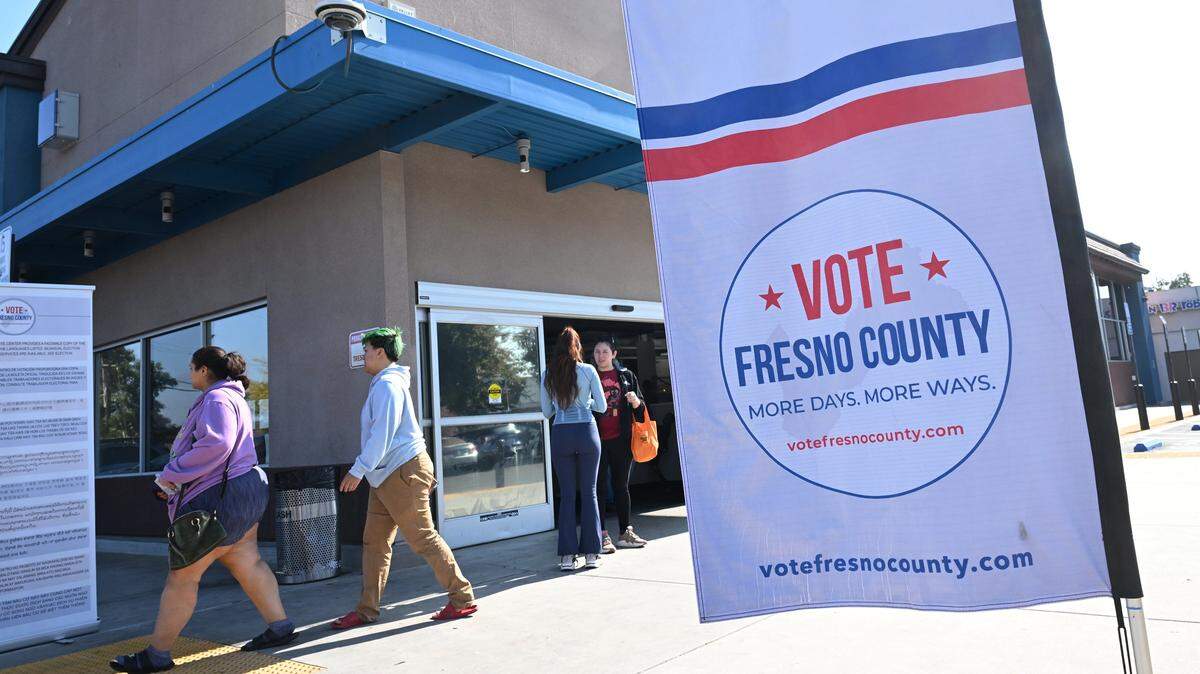
For the last three months, I have been walking throughout Western Fresno County speaking directly with registered voters in communities like Mendota, Firebaugh, San Joaquin, Tranquillity, Kerman, Cantua Creek and the western portion of the city of Fresno that makes up Fresno County’s Supervisorial District 1. While helping campaign for Felipe Perez, a candidate for supervisor, many people told me they are refusing to vote because they no longer believe in the political system.
They feel disconnected, unheard and forgotten. They believe politicians only return during election season to ask for support, then disappear once elected, focusing instead on donors, lobbyists, political insiders and special interests.
Across California, many voters are beginning to ask a difficult but necessary question: Who are our elected officials truly representing: The people who vote for them or the donors who finance their campaigns?
A recent Fresno Bee investigation highlighted growing concerns about the influence of political money in Fresno County politics. The article described how Nav Gurm, a Fresno City Council candidate, benefited from financial support connected to a political action committee he cofounded, sparking criticism and frustration even among fellow Democrats.
Stories like this reinforce what many ordinary voters already believe: that politics increasingly revolves around money, consultants, fundraising and political insiders instead of community trust and public service.
What I encountered while walking neighborhoods across District 1 was not simply anger, it was disappointment. Many residents feel abandoned by a political system that asks for their vote but rarely their voice. Others openly stated that both political parties have become too dependent on wealthy interests and campaign donors to truly represent working families.
At the same time, there is another large group of residents who actually want to participate in democracy but feel overwhelmed and uninformed. Many do not know who the candidates are, what offices they are running for or how political decisions affect their daily lives.
Some voters receive stacks of campaign mailers filled with attacks and slogans but very little real information about policies, funding sources or community priorities. Others feel embarrassed to ask questions because politics has become so polarized and confusing.
This is not a failure of the people. It is a failure of our civic education system and our political culture. Democracy only works when voters are informed, engaged and empowered. Yet too many communities — especially working-class rural communities and underserved urban neighborhoods in the Central Valley — have been left out of meaningful civic investment for decades.
Low voter participation benefits those already in power. When communities are disengaged, organized money and special interests gain even more influence over elections and policymaking. Politicians understand that uninformed voters are easier to manipulate through fear, expensive advertising and carefully crafted political messaging funded by wealthy interests.
This problem is not confined to one political party. It reflects a broader political culture in which staying in office often depends on maintaining donor support. Oil companies, developers, corporate agriculture, labor groups, political action committees and powerful lobbying organizations invest heavily in campaigns because they understand a basic truth: money often drives political influence.
As a result, many ordinary Californians feel disconnected from the political process. They watch decisions being made about land use, energy development, transportation funding, housing, education and economic policy without meaningful community participation. In rural communities in particular, many residents increasingly believe they are being politically managed rather than democratically represented.
The solution is to rebuild trust through civic education, transparency and genuine community engagement. Residents deserve simple, honest information about who is funding campaigns, what candidates actually stand for and how government decisions impact local issues.
Public service was never supposed to be about protecting political careers or satisfying donors. It was supposed to be about improving the quality of life for the people being represented.
The future of California depends on whether ordinary people once again feel that democracy belongs to them, not just to political consultants, lobbyists and wealthy donors. Until communities become more informed and engaged, many voters will continue to believe the system was never designed to represent them in the first place.
Espi Sandoval, a former cross-country coach at Tranquillity High School, is an educator and community advocate in Kerman.