
Fresno County has high rates of domestic violence. What’s being done? | Opinion
For decades, we have viewed domestic violence as something that primarily affects middle-aged, married couples. But this notion is no longer accurate.
Fresno County has some of the highest reported rates of domestic violence in California, and only 12% of those involved in domestic violence cases are reportedly married to one another. We need new strategies to combat domestic violence in our region.
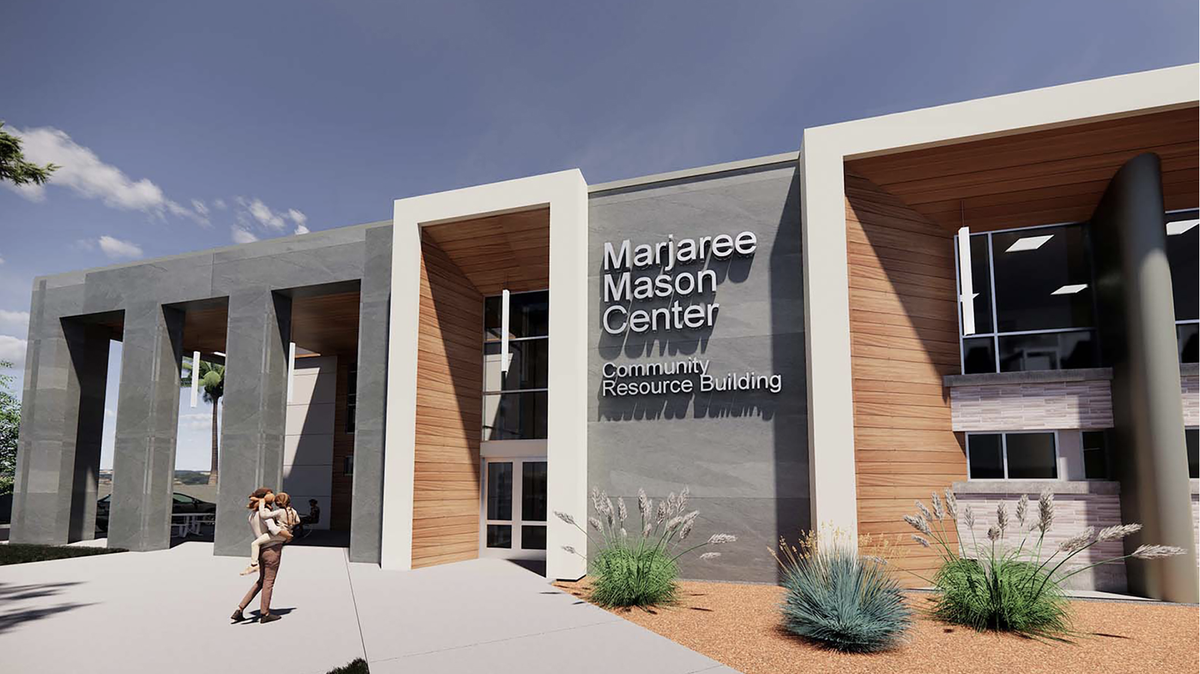
Fortunately, the 45-year-old Marjaree Mason Center of Fresno will soon have a valuable new addition — a $21 million facility solely focused on serving people affected by domestic violence — an intentional investment in prevention and early intervention.
History of intimate domestic violence
Domestic violence, also known as intimate partner violence, is not a new issue. It is rooted in religions and cultures where women are considered subservient to men, or even considered to be their property. Demeaning terms used in the past, such as “battered women” or “battered wives” — which inadvertently or sometimes intentionally place the identity and blame on the victim or survivor instead of holding the violent offender accountable for their actions — have long identified the problem as solely a heterosexual, male versus female issue, where an adult man physically assaults his wife or romantic partner.
Oftentimes, this abusive behavior was attributed to the husband’s alcoholism, financial stress or due to the fact that he was just a mean or tough individual. In other cases, abuse was deemed a result of the wife’s inability to serve, respect or obey the desires or expectations of the husband.
Galvanized in part by the wider Women’s Liberation Movement and the fact that domestic violence was still not taken seriously by the justice system, the Battered Women’s Movement began in earnest in the early 1970s, led by feminist activists and survivors. At that time, in our own community, a coalition of concerned citizens were initiating their efforts to make local changes and provide needed support for survivors.
Then, in 1978, Marjaree Mason, a beautiful, intelligent and service-driven African American woman from Fresno, was tragically killed by a former boyfriend, who was also a member of law enforcement. That horrific event propelled the Fresno community on a path to provide needed support to survivors.
Current day domestic violence
Fast forward to 2024, and marriage rates have decreased. What does that mean for rates of domestic violence? According to data reported by local law enforcement, from January 2023 to June of 2024, only 12% of survivors who engaged with law enforcement said they were married (25% had an unknown marital status, while 45% identified as either “dating” or “formerly dating” their abusive partner).
Twenty-three percent of survivors of domestic violence identified as male, and 13% of survivors are between the ages of 13 and 25. I personally believe those numbers are under-reported, because I don’t believe most men are comfortable identifying as victims, nor do teens feel like they can or should reach out to law enforcement for relationship issues.
Why are these numbers important? As a community with the highest reported rates of domestic violence in California, it is imperative that we identify what intimate partner violence really looks like and tackle it before the situation turns severe — deadly.
Domestic violence will only end when each of us can look in the mirror and reflect on how we respond to conflict in our own relationships. We must all be brave and willing to address our own behaviors, and we must be willing to hold people — even family members — accountable for harmful behaviors. Power and control have no place in loving relationships.
Commitment to our community
In order to truly break generational cycles of abuse, our community, state and nation needs to increase our investment in children who have been exposed to violence and abuse in the home. We need to invest in critical interventions that will stop abuse from escalating and provide support to address long-term recovery.
The Marjaree Mason Center has long provided emergency and longer-term safe housing as well as support services for victims of domestic violence. It will complete a significant facility remodel to create The Isnardi Foundation Building. This will double our capacity to provide community resources. With a dedicated 24/7 crisis drop-in center, children’s services, mental health rooms, individual and group therapy rooms, a health clinic and a large training space, the center is fulfilling a life-long dream to enhance our capacity to serve, improve the physical and emotional safety of our facilities and increase accessibility by providing a true one-stop shop.
From now through December 1, The Isnardi Foundation, for which the new building will be named, has committed to matching up to $1 million donated to help us fully fund this transition.
Domestic violence will only rise to a level that a community is willing to accept. Projects like these are a testament to what a community will stand for. Disrupting generational cycles of abuse will have positive ripple effects on families and communities throughout Fresno and California.
Nicole Linder is CEO of the Marjaree Mason Center, which provides emergency and longer-term safe housing as well as support services for victims of domestic violence in Fresno County.