From whites-only events to housing discrimination, Fresno’s racism targets Blacks | Opinion
When I recently received an online message from the Aryan Freedom Network about a “Meet & Greet” to be held in Fresno on Jan. 28, I didn’t know if I was specifically being targeted. As a Black man who advocates for policy solutions to combat and reverse structural racism, I have faced backlash and even death threats.
I investigated further and confirmed that this convening was indeed taking place in Fresno, and that our police chief and elected officials were aware, but had initially chosen to not speak out against this blatantly racist event where white racial purists planned to strengthen and expand their ranks.
The Aryan Freedom Network meeting in our community is a symptom of a widely accepted and entrenched systemic racism — policies that are perpetuated to keep people of color from sharing in opportunity and prosperity.
When it mattered most, our elected leaders had expressed no condemnation or outrage or even reassurance to minority communities. It was the type of deafening silence that had allowed the perpetuating of atrocities on innocent lives and which legacies continue to define our lives.
Maybe our elected leaders did not speak because they cannot comprehend the gravity of what this white supremacy event meant for me and other Black residents, or the implications of the Aryan Freedom Network choosing our city for its meeting. It is possible that our leaders are unaware of the historical thread in the San Joaquin Valley as the center of Ku Klux Klan activity in California, beginning in the 1920s and ‘30s.
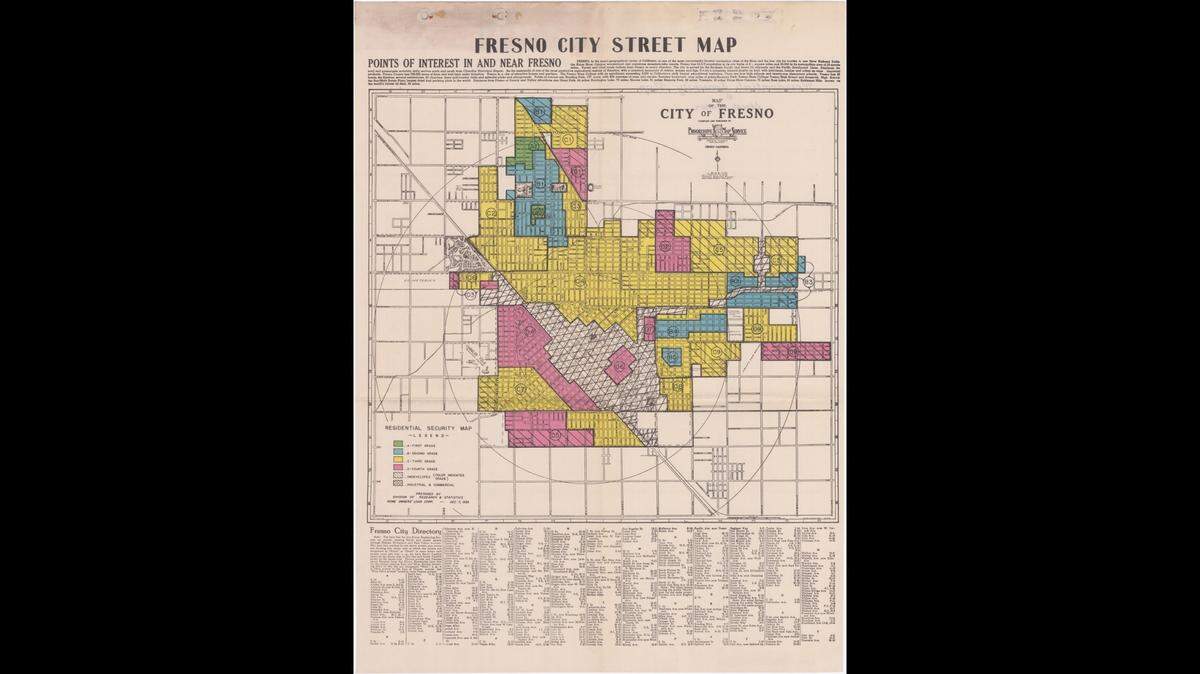
It was probably an unwillingness to speak against injustice that led to redlining — a practice that intentionally relegated people of color to certain parts of town, effectively ensuring that white neighborhoods had better schools, infrastructure and opportunity. Now, southwest Fresno, where Blacks were allowed to settle, still suffers from abject neglect and an oversaturation of industrial development, which harms its residents.
It is the silence of past leaders that created policies that locked most Black families in Fresno into generations of poverty that persist today — a hallmark of structural racism known as economic exclusion.
Make no mistake, I love Fresno and its people. But that doesn’t mean I can stay silent about our history and the profound impacts of inaction — that in Fresno County, people of color are two to three times more likely to live in poverty, and half of all Black children are raised in poverty, and that the Black homeownership rate was 30.6%, the 87th lowest among US metropolitan areas, according to the 2020 U.S. Census.
Silence around unfairness solidifies the structural racism that prevented most Black families from buying homes, building equity, and creating generational wealth. But it can be addressed if our elected officials are willing to take deliberate action to create more home ownership opportunities by accelerating the production of affordable, entry-level homes, and streamline the approval process for smaller developments in urban infill areas, even if they need to amend present laws.
Our leaders can speak forcefully about these changes that would help make smaller homes that are built by small, local builders, easier, faster, and less expensive to build — policy changes would help people of color (and really, all first-time homebuyers) become homeowners and build wealth, especially in the current housing environment, where a severe housing shortage has pushed Fresno home prices up 20.2% from 2021 to 2022.
This February, Mayor Jerry Dyer should recommit to his One Fresno goal of “developing as much quality housing as fast as possible at a price every Fresno resident can afford.” It could be an important and meaningful step toward equalizing housing opportunity and correcting structural racism — one that I hope is expanded and fully realized.