Six of California’s biggest-ever fires burned in the last 3 years. Thinning is needed
For 30 years I’ve served as a conservation leader defending water, forests, and wildlife in the Sierra Nevada region. My previous background of 13 years as a wildland firefighter provides me expertise on fire and forest issues.
As an environmentalist, I am deeply frustrated by misinformation in the Feb. 15 Bee opinion piece by anti-logging activist Chad Hanson. The thrust of his claims was that a highly publicized new study by forest scientists intentionally omitted key information and that large Sierra Nevada wildfires supposedly kill few mature trees. He claimed the scientists who authored the study were funded by the U.S. Forest Service, and that the agency will benefit from the commercial logging promoted by the scientific study.
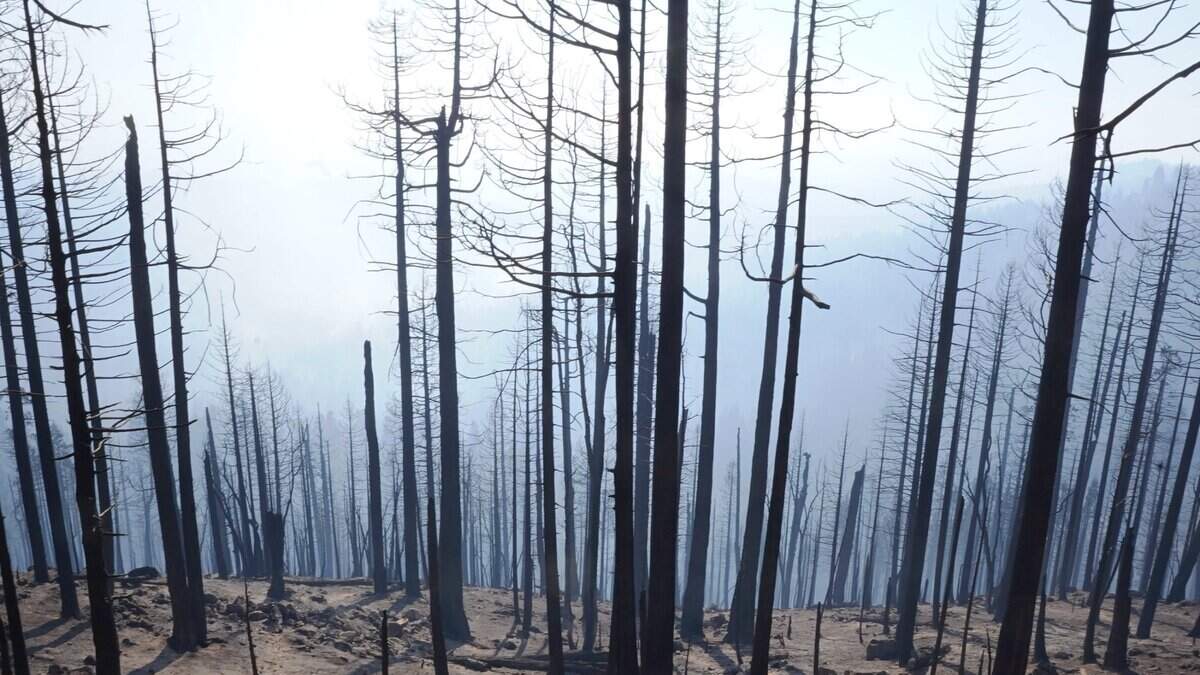
Such misinformation matters because six of the 10 largest, most extreme wildfires in California’s recorded history all burned in just the last three years. The science study criticized by Hanson used historic forest inventories to show that forests in recent years have become far more choked with smaller trees — creating overgrown conditions that fuel extreme wildfires. High-severity fires degrade recreational areas, harm watersheds, and destroy old growth habitat for wildlife.
Here are just a few reasons to reject Hanson’s claims:
▪ He asserted that the scientists were funded by the Forest Service, when in reality four of the six scientists are funded by the University of California.
▪ He claimed that the thinning of trees promoted by the study is commercial logging that financially benefits the Forest Service. In reality, the vast majority of the recommended selection thinning would remove medium-small to small trees in projects that would cost the Forest Service far more to implement than any payments received from timber purchasers.
▪ Hanson criticized the scientific study because it used field inventory data from 1911 and then used 2011 comparison data, instead of the last few years. The study’s authors openly chose 2011 because it was the “100-years later” date for comparison.
What matters more than correcting Hanson’s misinformation is the basic reality of the current situation.
What we now face in the Sierra Nevada are public forests where large blocks of forest have burned so hot in recent years that few conifers or conifer seeds remain to grow back into restored, healthy forests. Hanson claimed current wildfires burn mostly at low and moderate severity with a “minor portion” of high severity, creating “snag forests.” This would be news to Sequoia National Park, where in just the last 16 months the park has lost 15-20% of their largest giant sequoias, considered one of the most fire-resistant trees in the world.
With so many giant wildfires dramatically shown on newscasts, it is surprising there are still extreme positions being taken by Hanson and others when there is a strong consensus of support elsewhere for balanced, ecologically sound solutions. Thinning treatments can reduce fuels while carefully avoiding larger trees — far different from out-of-control wildfires. Fuel treatments can remove excess flammable woody material, and prescribed burns can treat surface fuels to reduce the threat of extreme wildfires.
It is time to stop attacking credible scientists who point to the need to restore broad areas of public forests to the open and park-like conditions (with scattered patches and clumps of trees) that historically dominated Sierra Nevada forests.
In the northern Yosemite region, the full range of forest stakeholders (from loggers to environmentalists) support the Forest Service using all the tools in the toolbox to deal with decades of fuel build-up that creates extreme burn conditions. There are middle-ground solutions, and science-based selective thinning of forests is one of the appropriate tools.