
Fresno State graduate recalls the English teacher who asked ‘Why do you think that?’
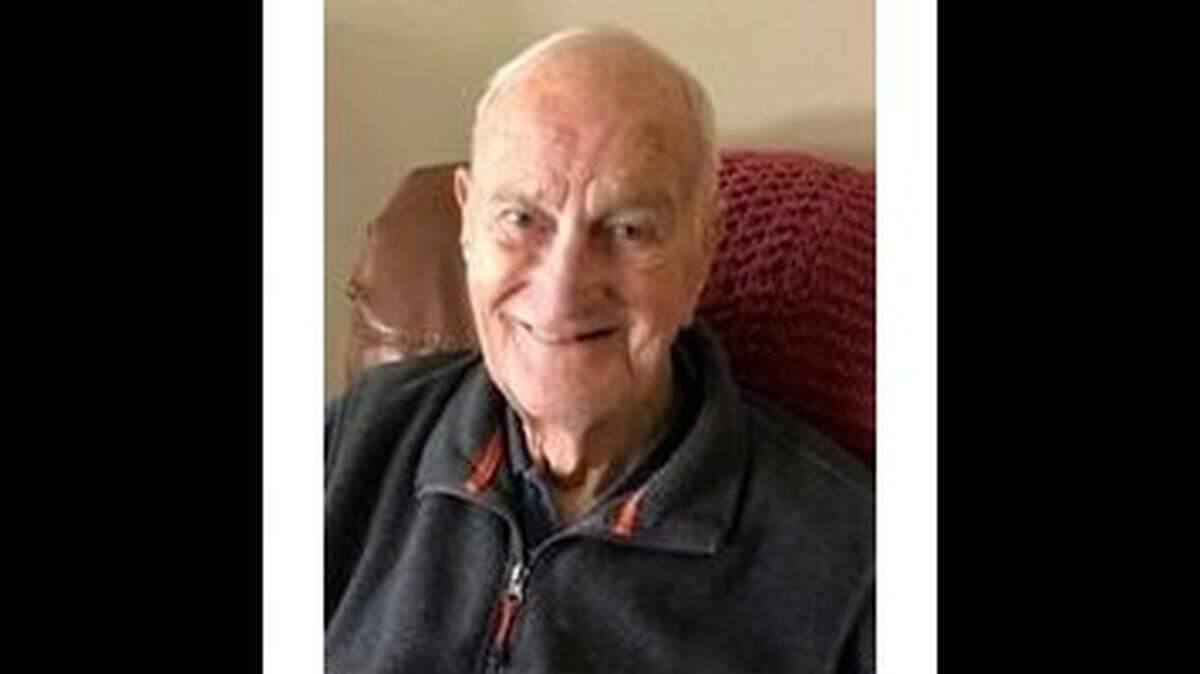
I read in the Fresno Bee (Nov. 7, 2021) that one of my favorite Fresno State professors, Bob O’Neil, had passed away at the age of 93. I was surprised only because I thought he had died years ago. After his wife passed away, he sold his home in Old Fig Garden. Thereafter, I lost track of him. But I never forgot what he had meant to me as a student and later as a colleague.
English majors at Fresno State were required to take a course entitled “Rhetoric,” an area of study my 19-year-old brain knew little about other than it was a composition course. I learned that rhetoric was the art of effective, persuasive speaking and writing, using figures of speech and other composition techniques. I soon discovered “The Art of Persuasion” could have been the subtitle of this course.
I clearly remember feeling lost, confused during the first few class lectures — that feeling of someone talking over your head, ideas flitting by. It was with this apprehension I wrote the first assignment: A description of a place that conveyed an underlying significance that should be clear to the reader.
I decided to write about a neighborhood north of Hamilton Junior High School. I lived south of the school, but one of my friends lived in this area, so it was familiar to me. The street was extra wide, the lot sizes double that of most homes, with many homes being two-story. Each house was uniquely designed, unlike the “model” home concept that later emerged in planned neighborhoods.
In my first draft I described my thoughtwhile walking down this street on a Saturday afternoon, thinking about the families who lived in these glamorous houses with balconies and brick facades, and yards tended by gardeners. I was a high school sophomore by then and very much aware of social class beyond the subtleties of cashmere sweaters and Capezio flats, items I could not afford.
Before assigning a grade, Dr. O’Neil scheduled conferences with all students to discuss our papers. We were to arrive with a revised draft to each meeting, prepared to describe our changes for better or worse. After several of these conferences, I finally came to understand the underlying significance clawing its way through my ineffective prose.
“Why do you think that?” Dr. O’Neil would ask. “Why is it important?” “What does this scene represent?” Ultimately, through his questioning and my responding, I found the words to describe the significance of a seemingly normal activity — a walk through a neighborhood — but one that revealed so much more to my young mind. That a home can reflect success, social status, privilege — a world so distant from my own family’s bungalow-style house built in the early 1900s, yet only a few blocks away.
At the age of 15, on the edge of adulthood, I came to understand this neighborhood as a material world beyond my current grasp, a divide that grew wider from junior high to high school — the clothes, the cars, the family vacations. But I also understood how much more my family had than my grandparents before them, the first generation of immigrants settling in a rather unwelcoming Valley. And that I would have even more opportunities as a college graduate, though I might not reach the level of the families on the affluent street that piqued my curiosity. This was my story that Dr. O’Neil helped to uncover.
Ten years later, Bob O’Neil took over the responsibility of supervising student teachers who were working toward a credential in English. Somehow, he found me teaching at Clovis High, and for the next 10 years or so assigned student teachers to me and invited me to be a guest lecturer in his college class. It was the highest compliment he could have paid me — looking at me to share my knowledge of teaching writing and to inspire teachers in the making.
When he retired, I lost contact with him, eventually learning that his wife had died and that he was selling their Fig Garden home and moving out of state. That must have been more than 30 years ago. But there he was the other morning, his picture in The Bee, and a lengthy obituary written about his life. He passed away at 93, having married again, and probably living life on his terms in Montana. I only wish I had known where he was and could have written to tell him what an impact he had on my life.
I tell this story because Bob O’Neil is not the only person I let go of and wished I had not. My high school drama teacher, Tom Wright, was another. After his death, I learned that he had left Fresno High to teach for years at Fresno City College. And then there was Kenney Green, the man who gave me my own radio show when I was in the sixth-grade, a children’s show we recorded at the old Fresno State radio studio. He too has passed.
I understand that life often takes us in unforeseen directions. But we need to pause a moment to think about on whose shoulders we might have arrived.