
It is time to get rid of Squaw Valley’s offensive name. Native leaders have a new idea
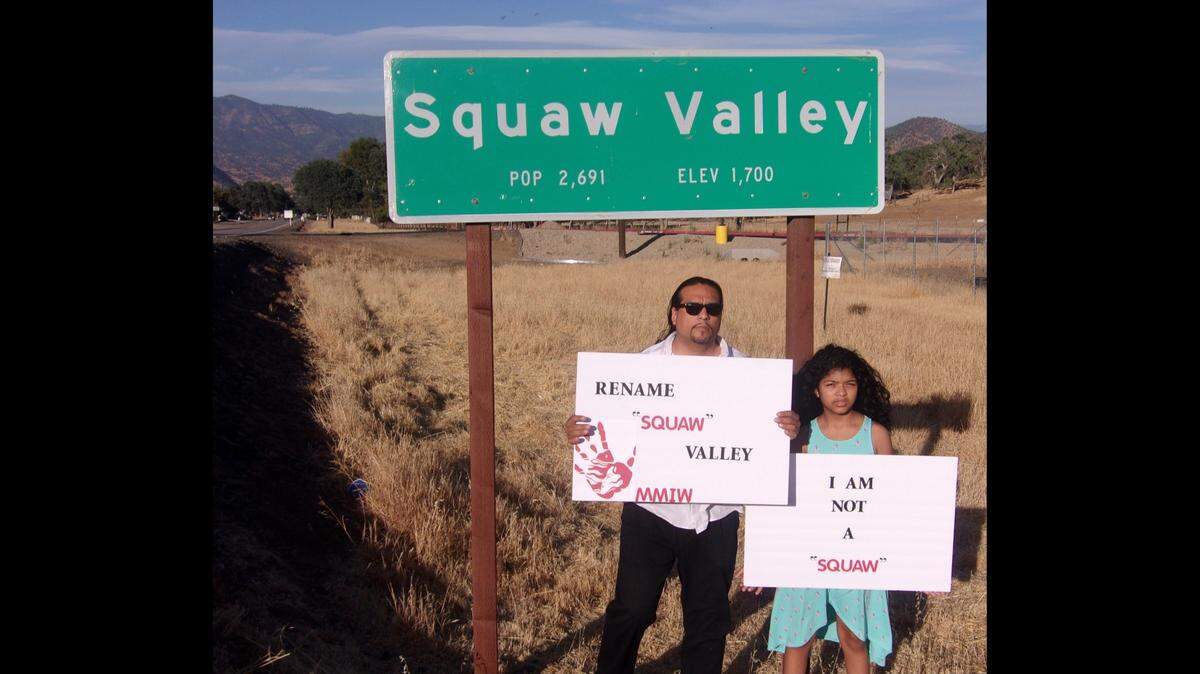
The fight to rename Squaw Valley isn’t new. Native American people have spent decades articulating the pain that this name inflicts on our community.
The word “squaw” has been used for more than 200 years to degrade, sexualize, and objectify Native women and justify the oppression, marginalization and sexual violence they experience.
Federal agencies, state and local governments, and even an Olympic ski resort have recognized the term “squaw” as a racial slur. However, here in Fresno County, the Board of Supervisors has refused to put changing the name on the agenda despite significant community support for renaming the valley and many attempts at open dialogue.
I am a member of the Dunlap Band of Mono Indians and Choinumni people. My mother, Gina Charley, is my inspiration for working on this campaign for change. She said to me, “Roman, we are human beings, not squaws. Your mother is not a squaw.”
No respectable person would call their mother the “c-word” and argue that it is a term of endearment. Yet, that’s what the continual use of the “s-word” allows non-Indians to do to our grandmothers, our mothers, our sisters, and our granddaughters. “Roman,” continued my mother, “your daughter signifies the birth of a new generation of girls impacted by this offensive word.”
Humanity itself is born from Mother Earth. For many Indigenous people, their homeland is the center of their universe. Innumerable cultural, spiritual, and tribal connections are forged with the land on which they are born. “My cradleboard and your cradleboard were made with materials gathered in the valley,” said my mother, “the sourberries you gathered and ate growing up came from that valley. I grew up riding my horse in that valley. This area is not just your ancestral homeland; it’s in your DNA. It’s who you are.” The restoration of our humanity begins with changing the name of our homeland.
Native American women are degraded by language that sexualizes and furthers violence against them. When people are systematically dehumanized, it sends the message that their lives are not worth protecting. According to the National Congress of American Indian Policy Research Center, nearly half of Native American women report having experienced sexual violence, and over one-third will be raped in their lifetimes. In California, cases of missing and murdered Indigenous women and girls are among the highest in the nation.
While some argue that Native American team mascots and names honor Indigenous people, research proves otherwise. The impact of mascots and names like squaw has been shown to be “psychologically detrimental,” “associated with negative stereotypes of Native Americans,” and further “prejudicial ideas.” Clearly, a moniker like “squaw,” associated with a whole host of negative stereotypes about Native American women, has similarly traumatic impacts.
Our towns and landmarks should be named after things and people we celebrate and cherish. Instead of a word that glorifies violence against Indigenous women, we propose the name Nuum Valley. “Nuum” means “the people” in the Western Mono language, the people upon whose ancestral land the valley encompasses. Replacing the term “squaw” with this word will not only prevent future harm to our community, but will honor our community’s first inhabitants.
While we cannot change past injustices, it is our collective responsibility to ensure they do not endure. This past Wednesday, the community joined an online town hall to learn from tribal members about the history of the word “squaw” and its impact on Indigenous peoples today. The vast majority in attendance expressed strong support for renaming the valley. We’ve also circulated an online petition that has more than 13,000 signatures.
Fresno County Board of Supervisors, now is the time to listen to the community and change the name.
This story was originally published June 25, 2021 at 6:00 AM.