Will blast mine on San Joaquin River proceed? Fresno lawmaker throws up stop sign | Opinion
CEMEX’s proposal to expand gravel mining operations less than 3 miles north of Fresno near California’s second-longest river for another 100 years could be derailed by a state lawmaker.
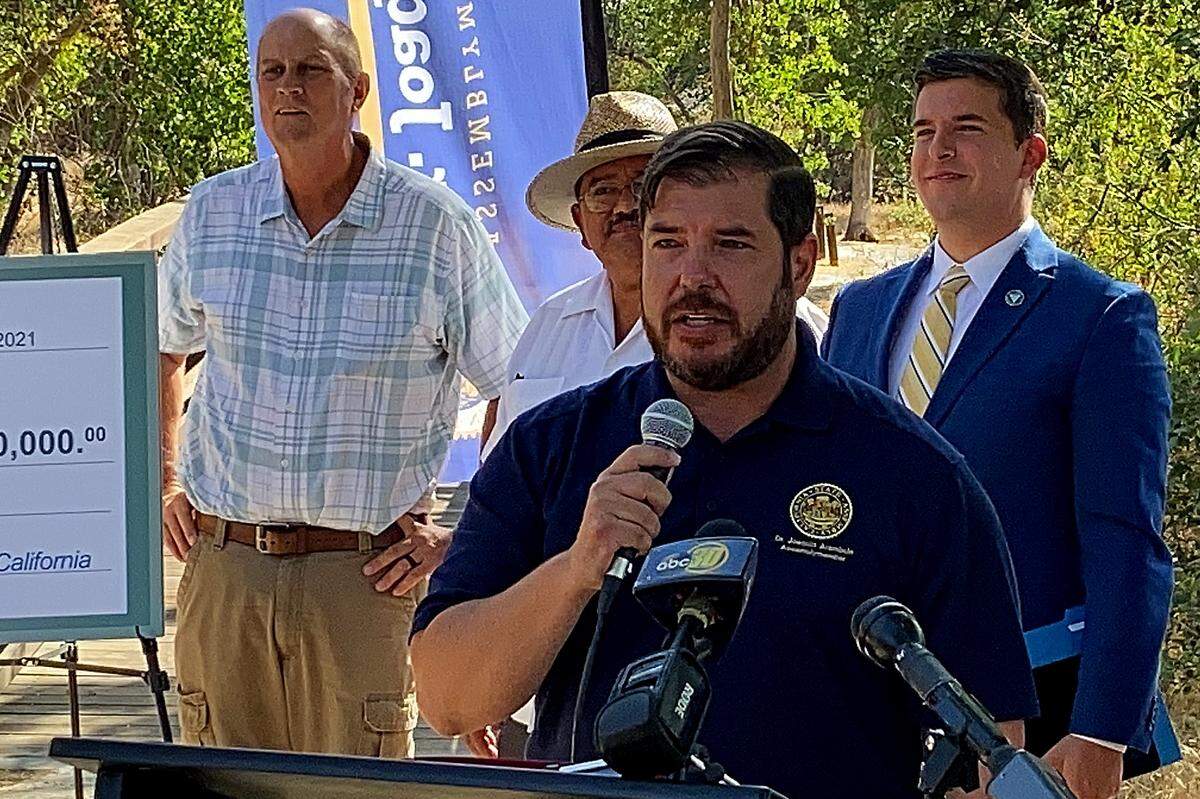
Among the bills introduced during the current legislative session by Assemblymember Joaquin Arambula is AB 1425, which seeks to prohibit pit dewatering within the San Joaquin River Basin “in areas with subsurface river flow or groundwater levels shallower than 50 feet below ground.”
Pit dewatering is legally defined as any process used by mine operators to pump, drain or otherwise remove water that is impounded or collected inside a mine. This includes direct rainfall and ground water seepage.
Such a law would preclude CEMEX Construction Materials Pacific LLC from operating an open pit mine that could potentially reach 600 feet deep at its Rockfield Quarry Site located along Friant Road south of Lost Lake Park, as proposed in a 1,093-page draft Environmental Impact Report whose public comment period closed earlier this month.
According to the report, the planned mine’s dewatering requirement could be as high as 1,610 acre feet per year. That’s 524,620,000 gallons of water that would need to be pumped or otherwise removed.
AB 1425, for now, is a placeholder or “spot bill” introduced by Arambula to meet the Feb. 21 deadline for new legislation. Its amendments are still being crafted.
A preliminary version sent my way proposes to add a section to the California Public Resources Code that specifically bans pit dewatering near or along the San Joaquin River under specified conditions.
“The Legislature finds and declares that a special statute is necessary … because of the unique needs of the communities within and surrounding the San Joaquin River Basin,” it reads.
Final language will be added in the next two weeks once the bill gets referred from the assembly’s rules committee to its natural resources committee, according to my sources.
“I appreciate Assemblymember Dr. Joaquin Arambula’s leadership and protecting the San Joaquin River Parkway,” said Sharon Weaver, executive director of the nonprofit San Joaquin River Parkway and Conservation Trust, which helped organize community opposition to CEMEX’s proposal.
During Tuesday’s Fresno County Board of Supervisors meeting, Paul Yoder (the county’s lobbyist in Sacramento) didn’t mention Arambula’s bill during his presentation of state legislative efforts and trends to the county supes.
Guess the cat’s out of the bag now.
Arambula’s commitment to the San Joaquin River as a public resource for recreation, education and wildlife conservation was evident in 2018 when his bill to expand the Millerton Lake State Recreation Area to include the 22-mile river parkway reached the governor’s desk. (Alas, Jerry Brown had other ideas.)
It was again in 2021 when Arambula got the state Legislature to set aside $15 million for the maintenance and operations of parkway properties. (Even though most of that money is now being used to construct River West Fresno.)
But if Arambula, during his final term in Sacramento, can convince his colleagues to pass legislation thwarting CEMEX’s continued pillaging of the San Joaquin River corridor, that would represent an even greater triumph.
Fresno objects to CEMEX mine
While Arambula aims to stop the gravel mine, the City of Fresno is employing tactics that would at the very least cause significant delays.
To respond to CEMEX’s blast mine proposal, city officials hired outside counsel from the Los Angeles-based law firm Tucker Ellis LLP. In a 32-page letter addressed to county senior planner David Randall, attorney Douglas Hedenkamp listed several “procedural and substantive deficiencies” that in his opinion merited “significant revisions” to the project’s environmental impact report.
Foremost among those deficiencies are the draft EIR’s failure to consider the physical and cumulative impacts of truck hauling on Friant Road during the project’s 100-year lifespan, as well as the potential impacts to groundwater flow as a result of continuous dewatering during mining operations.
Hedenkamp’s letter said the county “fail(ed) to describe the vastly expanded operations that would be allowed under the Project” in legally required preparation and noticing documents. It also charged the draft EIR’s authors with using “inaccurate and misleading” figures to portray the region’s permitted gravel aggregate production and future demand.
In 2023, the City of Fresno appealed a decision by the Fresno County planning commission to extend CEMEX’s existing operating permits until 2027. At the time, City Attorney Andrew Janz mentioned litigation as a potential option.
It still is – provided Arambula’s bill doesn’t do the trick first.