CEMEX must be stopped from blasting 600-foot deep pit near San Joaquin River. Here’s how | Opinion
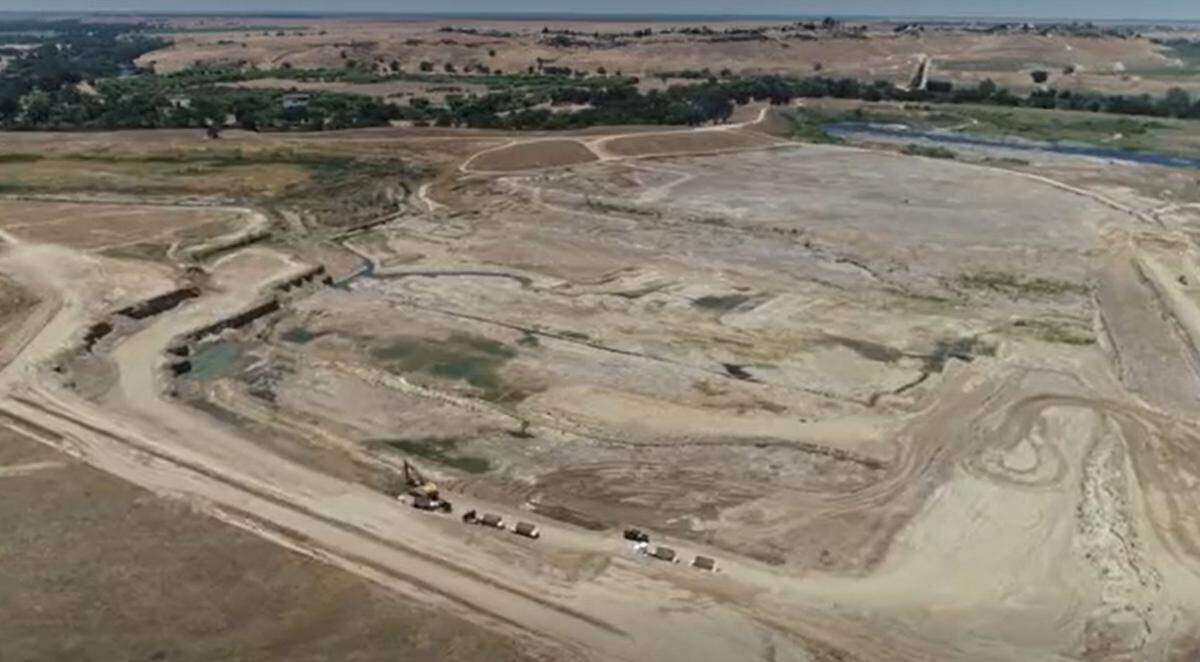
A multinational mining company with a litany of environmental violations seeks Fresno County’s blessing to blast a 600-foot deep pit near the San Joaquin River, 3 miles before California’s second-longest waterway flows into its fifth-largest city.
What could possibly go wrong?
CEMEX’s proposal is an atrocity against Fresno’s greatest natural resource, already scarred by a century of gravel mining the company previously agreed to wind down, and should have been rejected point blank. Undeterred, county planners and hired guns spent five years preparing a draft Environmental Impact Report for the so-called Rockfield Quarry Modification Project.
Modification? They want to dynamite hundreds of feet below ground in close proximity to one of the country’s most endangered rivers.
The 1,093-page report (plus two appendixes totaling 3,767 pages) is ostensibly a detailed analysis of the project’s significant and potentially adverse impacts on the environment. Separate chapters are devoted to air quality, water quality, fish and wildlife, traffic, recreation, land use and planning, cultural resources and visual aesthetics. Mitigation measures and alternatives are proposed.
By no means reader friendly, draft EIRs are technical documents packed with acronyms and references to charts and tables requiring constant back and forth page-clicking. Still, they offer the only guaranteed chance for members of the public to give feedback and, by law, receive a response.
This is where you come in. Meaning anyone concerned about the health of the San Joaquin River – not just in the present day, but for the next 100 years. Anyone that cares about fish, birds and other critters, sees value in the San Joaquin River Parkway, worries about increased air pollution or is simply tired of the truck traffic and chipped windshields on Friant Road.
Unfortunately, writing a few sentences expressing opposition to the very idea of blasting and drilling a 600-foot deep pit a couple stone’s throws from the San Joaquin won’t do much good.
Much more effective are responses that focus on the project’s negative impacts – of which there are literally dozens – and point out glaring flaws in the proposed mitigation measures. We’ll get to a few of these later.
Another strategy is to cast doubt on the need for the project using real data. For help, look no further than the Aggregate Sustainability in California report, last updated by the California Geological Survey in 2018.
Report: Fresno has ample aggregate
Gravel, sand and crushed stone are hugely important construction materials essential for all building and paving projects. Aggregate is also what economists call a low-unit-value, high-bulk-weight commodity, meaning it must be obtained from nearby sources to minimize costs to the consumer as well as the air quality impacts incurred during transportation.
With this in mind, state geologists compiled permitted aggregate reserves in various regions of California and compared them to the projected demand.
For the Fresno region, which includes Madera County, the report estimates 305 million tons of aggregate will be needed for the next 50 years’ worth of construction. Good thing we have 556 million tons of permitted aggregate reserves – nearly double (180%) the projected demand and one of the most comfortable buffers in the state.
Of those 556 million tons of aggregate, the vast majority are permitted for extraction from the Kings River outside Minkler and from the Austin Quarry near Highways 41 and 145 at facilities owned by Vulcan Materials, one of CEMEX’s primary competitors.
So, no, there isn’t a compelling reason to mine aggregate from along the San Joaquin River utilizing more destructive methods than those previously employed since the 1920s. Other local sources will provide more than we need, as the California Geological Survey report clearly shows.
There are numerous additional weaknesses in the draft EIR than could and should be raised.
For example, if the wall of earth separating the river and the open pit mine somehow collapses or is breached – not beyond the realm of possibility – the impacts on water quality would be devastating.
The draft EIR doesn’t require CEMEX to put money in reserve to pay for the damage. Instead, employees will “monitor” the situation.
Monitor? CEMEX has been fined more than $43 million for 81 separate environmental violations since 2000 according to Good Jobs First, a Washington, D.C.-based nonprofit that tracks corporate and government accountability in economic development.
Sorry, but that’s not nearly enough accountability for a project of this magnitude and duration.
Two significant, unavoidable impacts
The draft EIR lists two significant, unavoidable impacts. One is that the pit itself will be a visual blight on the landscape. (Wonderful.) The second is traffic delays at two nearby intersections (Friant and Willow Avenue plus Willow and Copper avenues) due to the increase in truck trips.
How will CEMEX rectify the latter situation? It won’t. The draft EIR says traffic delays at those two intersections cannot be mitigated because there are no funds for improvement projects.
Seriously? A multinational mining company that trades on the New York Stock Exchange can’t be made to pay for a couple traffic signals?
These are the sorts of comments that will compel county planners and consultants to formulate a reply for the final EIR. Or ask why the company’s plant site has been allowed to encroach on a state ecological preserve. Or question how constant dynamiting is compatible with fish and wildlife, not to mention human beings living in Sumner Hill, Tesoro Viejo and proposed towns near Friant.
“We need to make this process as lengthy as possible,” said Sharon Weaver, executive director of the San Joaquin River Parkway and Conservation Trust, which is preparing its own legal response. “Every time we can delay it a little further, it is costing CEMEX money.”
Considering CEMEX reported $939 million in net income in 2024, stringing out the environmental hurdles is more likely to delay the project than kill it. The latter will probably require three votes from the Fresno County Board of Supervisors, but that’s a bigger worry down the line than at present. (Though it never hurts to let your supervisor know how you feel.)
Public comments on CEMEX’s blast mine proposal are due March 10. They should be emailed to county senior planner David Randall at drandall@fresnocountyca.gov or mailed to Randall at 2220 Tulare Street, Sixth Floor, Fresno, CA 93721.
Time for the community to rise up in loud, staunch opposition to the continued pillaging of Fresno’s greatest natural resource.
If we don’t, who will?