Bridge too far: Clovis’ dream of ‘signature’ pedestrian span over Highway 168 vanishes | Opinion
Clovis used to dream big.
Big thinking is what transformed Clovis from a modest-sized town of 33,000 in 1980 into a suburban metropolis of nearly 130,000 that starting in a couple weeks boasts a higher sales tax rate than Fresno: 8.975% to 8.35%.
Big thinking resulted in the $26 million Clovis Senior Activity Center and the neighboring William H. “Harry” Armstrong Transit Center, impressive new facilities that both opened within the past 18 months. It is responsible for the city’s ever-expanding borders filled with rows of tract houses and the implementation of a trail system that has become a signature amenity after facing stiff initial opposition.
But as demonstrated by a recent Clovis City Council decision, those days are increasingly in the past tense. City leaders have become a group of small-minded individuals who allow big dreams to wither and die.
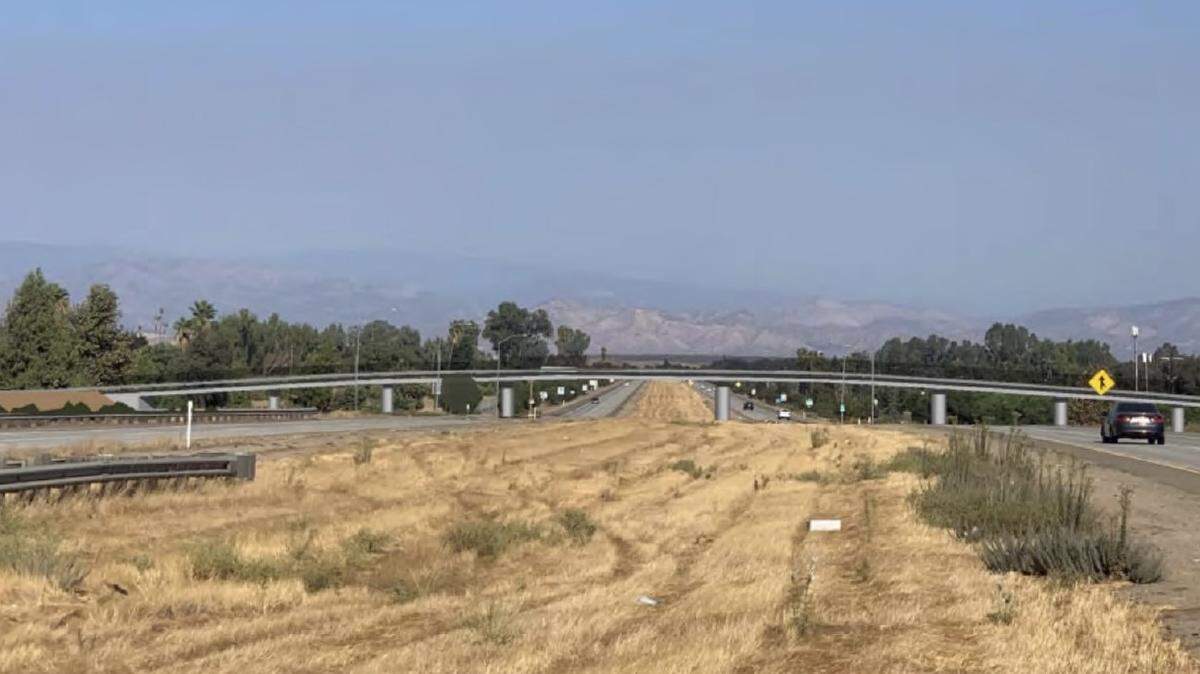
A decade has passed since Clovis conducted a feasibility study for a new bridge spanning Highway 168 near Temperance Avenue, which would provide a safe route for pedestrians and cyclists across the freeway and several busy intersections between Herndon Avenue and the Alluvial Avenue roundabout.
Despite lacking money to construct the bridge (initial estimates were $7 million), the city plowed ahead and in 2017 secured a $1.2 million federal highway administration grant for the preliminary work. In 2019, the city’s former planning director advocated for “a signature design” in the form of a suspension bridge that would serve as a point of community pride and make a bold statement to drivers.
“We think that somebody driving through the city and going under a beautiful bridge would begin to understand what the City of Clovis and metropolitan area is about,” he said during a council meeting.
In 2022, former state Senator Andreas Borgeas announced he had secured $2 million for the project, which still left Clovis well shy of meeting its ever-increasing price tag (now between $13 million and $22 million). Undaunted, the city held two well-attended community workshops in January and July of 2023 that continued to raise hopes and expectations.
I regret to inform you all of that was a giant waste of time and government expense. There will be no pedestrian and cycling bridge across 168 via the Enterprise Canal Trail — not in a few years and probably not ever.
By a 3-2 vote at the end of their lengthy March 4 meeting, Clovis council members terminated the next phase of the city’s agreement with design consultant Biggs Cardoza Associates, effectively mothballing the bridge.
Of the city’s five elected officials, only Mayor Vong Mouanoutoua and long-tenured Councilmember Lynne Ashbeck displayed any gumption or foresight. The other three — Councilmembers Matt Basgall, Drew Bessinger and Diane Pearce — couldn’t be bothered to look beyond the price tag. (Credit Pearce for at least asking questions about the safety of pedestrians and cyclists.)
“If we give this up now, we’re never going to have a pedestrian crossing of the 168 ever in our lifetime,” Ashbeck warned her colleagues prior to the vote. “So I’m not ready to give up yet. Clovis has bold visions and doesn’t let them go.”
At least not up until this dispiriting decision.
Bridge costs skyrocket
Bridges don’t come cheap. But the longer you put off building them, the more expensive they get. Since 2015, the estimated price tag for the 18-foot wide, 460-foot long bridge over 168 shot up from $7 million to $20.7 million — and that’s for a plain-looking span designed to Caltrans’ standard specs.
The council was also presented with two fancier options: a tiered-arch bridge projected to cost $36.6 million and a suspension bridge at $38.8 million.
Twenty million dollars is a lot of money, but it’s not as if there aren’t federal and state grants available for such projects. There’s also an opportunity for outside-the-box philanthropy. Mouanoutoua, who favored the suspension bridge, joked about “a certain golfer” with plans to invest in his hometown.
City staff told the council that $1.3 million was required to complete the design package, which would advance the project to the point where it could be opened for construction bids. But they didn’t have $1.3 million — and the only potential source was Measure C funds that have already been allocated.
Every city makes choices that reflect its values. Rather than set aside a little seed money for the bridge and using it to leverage matching funds from the feds and state, Clovis plowed its Measure C regional transportation dollars into widening roads to service its unquenching suburban sprawl. Yet-to-be initiated projects include widening and improving Herndon from Temperance to DeWolf Avenue ($12.4 million) and Shaw Avenue between DeWolf and McCall Avenue ($10.3 million).
Sprawl is a major reason why residents were practically coerced into approving a 1% sales tax hike that goes into effect April 1. But even the extra $28 million pouring into the coffers every year wasn’t enough for the council majority (or city staff) to prioritize a long-promised and much-needed investment in the city’s active transportation system.
That’s Clovis these days, land of small-thinkers.