Trump’s cutbacks to Sierra National Forest leave wilderness areas vulnerable to damage | Opinion
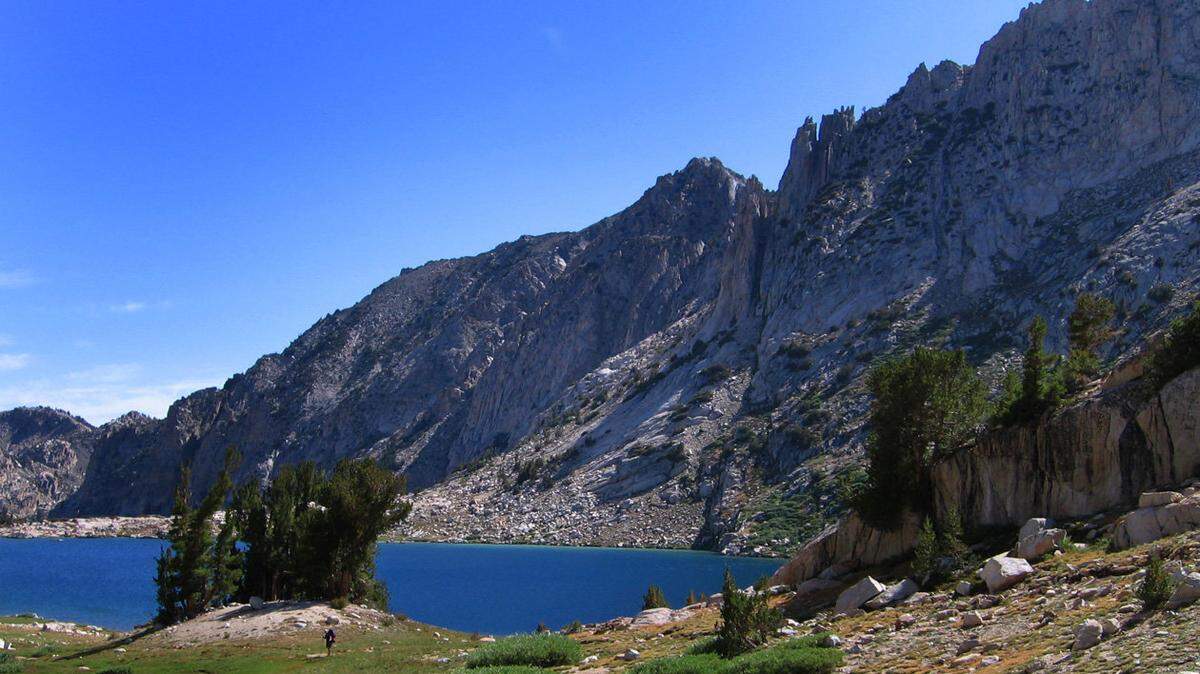
U.S. Forest Service wilderness rangers serve as guardians and ambassadors to places that are largely untouched by modern man, helping ensure they remain preserved for future generations.
These rangers are rarely in the office and aren’t stationed in a cabin for the summer. During eight-day solo patrols of the backcountry, they are supported only by what they can carry.
“We move every day — we’re backpacking,” said Jackson Fitzsimmons, a Sierra National Forest wilderness ranger who lost his job in last month’s Trump administration purge of federal government employees. “We wake up and whatever we see that day that needs to be addressed, we address it.
“Any trail work that needs to be done, we do. Anybody we see, we talk to. And when we come to a lake we’ll patrol around it looking for trash, looking for campsites, looking for people to talk to.”
Wilderness rangers frequently act as trail crews. Due to regulations prohibiting the use of mechanized equipment, trees that fall across trails must be cleared using hand saws. Water bars and drainage ditches are dug with shovels.
Besides this arduous work, wilderness rangers collect and pack out all the trash they find. They break apart campfire rings and other structures people build and return the area to as close to its natural state as possible. They document sightings of threatened and rare species, such as the Yosemite toad and Pacific fisher, and report those findings to biologists.
Human interactions are another important facet of the job. Wilderness rangers contact everyone they come across, checking for permits and proper food storage (i.e. bear canisters) if that person is equipped for an overnight stay. Some have the authority to issue citations for specific violations, including the destruction of natural resources.
“We play a role in enforcing wilderness regulations, but we’re also there just to talk to people,” Fitzsimmons said. “We talk to people about history, about nature and just be a positive face for the Forest Service in the backcountry.”
Those faces will be fewer and much further between following the Trump-ordered terminations of 3,400 U.S. Forest Service employees hired within the last 12 months, roughly 10% of the entire agency.
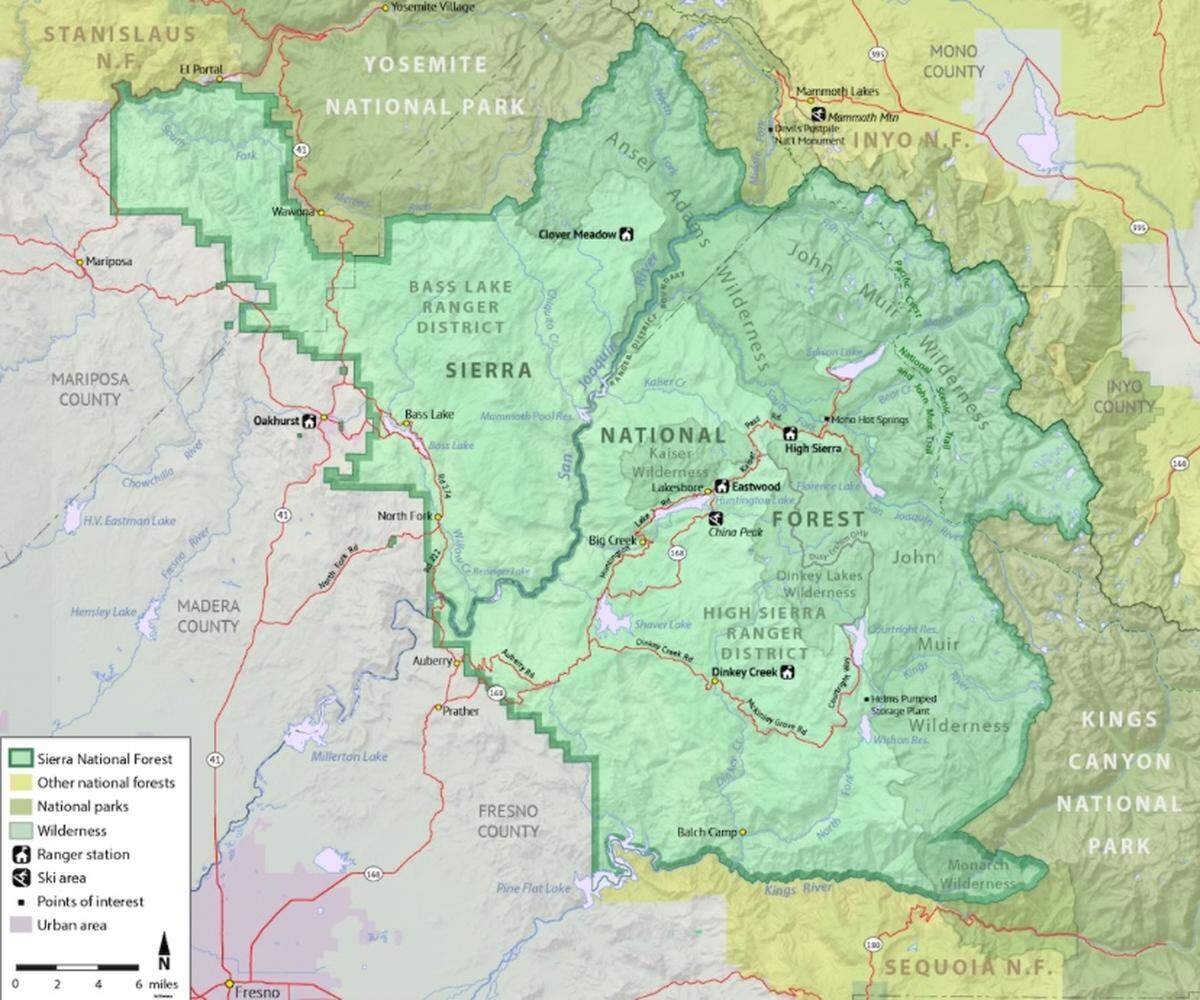
The Sierra National Forest, which spans the western slope of the Sierra Nevada mountains between Yosemite and Kings Canyon national parks, was hit by the layoffs of 25 permanent staff, according to Fitzsimmons and others with direct knowledge. (The Sequoia National Forest had 13 layoffs, including four in the Hume Lake Ranger District east of Fresno, sources said.)
In the Sierra National Forest, there were personnel cuts to visitor services, recreation management and to departments responsible for terrestrial wildlife (i.e. bears, deer and birds), aquatic wildlife (fish and amphibians), botany and timber production.
“Hiking and OHV trails will be harder to maintain and at risk of falling into disrepair,” Fitzsimmons said. “Scientific projects, long-term monitoring and study of endangered species will be hampered, if not halted completely.
“The hours will be reduced and offices and visitors centers may be closed on days they weren’t closed due to lack of staffing. There will be less of a presence of us at developed recreation sites and in the backcountry. I’m expecting trash to build up. I’m expecting bathrooms to go unmaintained. It won’t be pretty.”
Sierra National Forest Supervisor Dean Gould could not be reached for comment. Last month, Gould signed an order that extended the closures of 21 campgrounds, 13 roads and four trails until May 19 to “provide for public safety.” Some of these sites used to be open during the winter and early spring, but have been impacted by wildfires and debris slides.
Wilderness areas left almost unprotected
In danger of being left nearly unprotected are more than 550,000 acres of federally designated wilderness areas contained within the 1.3 million-acre Sierra National Forest. This includes roughly 65% of the John Muir Wilderness, slightly more than half of the Ansel Adams Wilderness and the Dinkey Lakes Wilderness and the Kaiser Wilderness in their entirety. (The Monarch Wilderness is largely managed by the Sequoia National Forest.)
According to Fitzsimmons, all four of the Sierra National Forest’s full-time seasonal rangers who work between early May and early November were laid off. Leaving two full-time permanent rangers to bear the responsibility of patrolling 860 square miles of mountains, forests, meadows and alpine lakes.
“Those guys are super competent and I have the highest respect for them, but that’s impossible,” Fitzsimmons said.
He and the 3,400 other recently terminated U.S. Forest Service employees got a reprieve of sorts Tuesday when the US Department of Agriculture (which oversees the Forest Service) announced their jobs had been reinstated, with back pay, following a March 5 ruling by the Merit Systems Protection Board that the agency “engaged in prohibited personnel practices and violated federal laws and regulations” governing probationary firings.
Fitzsimmons is happy with the latest development, but considers it a temporary win, believing the Forest Service’s downsizing will be accomplished by other means.
“This is just the beginning of the firings,” he warned. “There will be more.”
The most infuriating part of this is that wilderness rangers like Fitzsimmons earn $25,000 for six months’ work before going on unemployment. That’s meager pay for those who protect places that are priceless and irreplaceable.
“They didn’t fire a bunch of people making $120,000 a year for sitting in an office,” the 27-year-old said. “They fired the youngest and hardest working for the most part.”
Government efficiency cannot be used to rationalize the reckless treatment of our public lands.
This story was originally published March 12, 2025 at 10:35 AM.