Fresno author delivers sobering message on water, farming: ‘A crazy place of denial’
“Do you believe capitalism is compatible with sustainability, or do you feel like those things can’t co-exist?”
The question, posed by a college student, produced a thoughtful expression on Mark Arax’s face. The noted Fresno author and journalist touched upon that question earlier during his hour-long talk. Now he was being asked directly.
“I don’t believe capitalism is compatible with fighting climate change,” replied Arax, an answer that drew loud applause from a packed auditorium. “I think that’s really tough to do.”
Arax wasn’t billed to speak about capitalism or climate change. But when the topic is water in California’s Central Valley — where it comes from, where it goes, who benefits from its delivery and what the future holds — those subjects tend to intermingle.
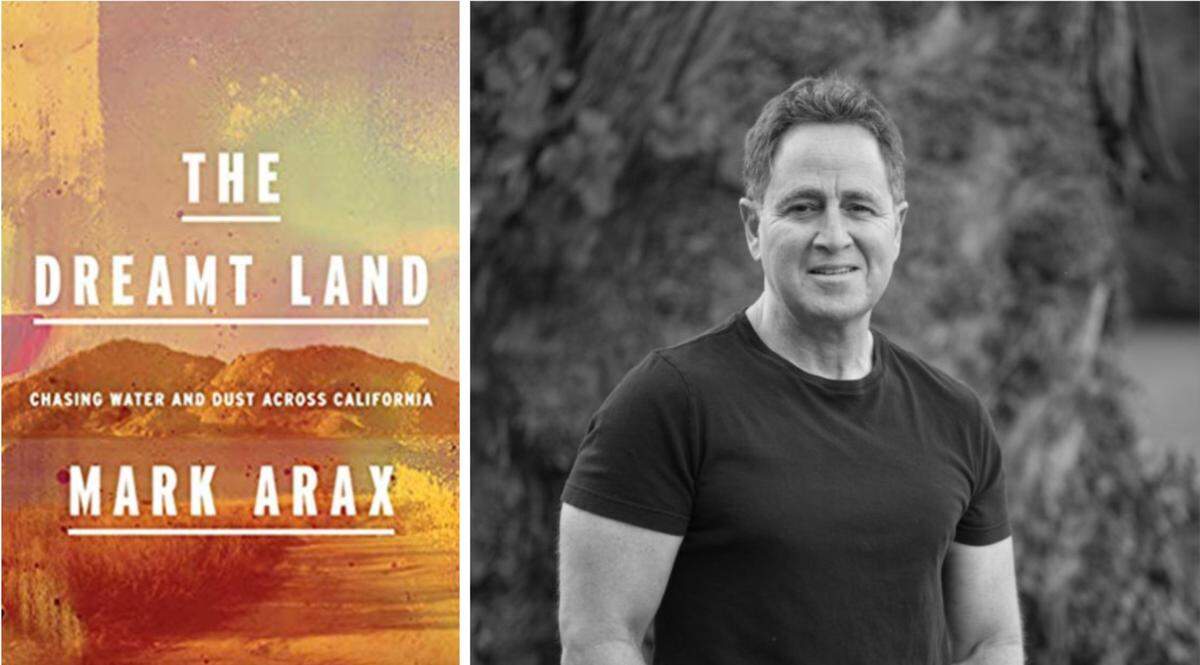
Few are better equipped to speak on the subject than Arax, a former Los Angeles Times reporter and author of several books, including 2019’s “The Dreamt Land.” Which is a deeply reported, beautifully written account of how Californians erected dams, redirected rivers and dug ever-deeper wells in order to satisfy the agriculture industry’s ceaseless thirst for water.
Wednesday’s speaking engagement at Fresno City College piqued my curiosity. What message about Central Valley water would Arax impart to college students? What questions would they have for him? How many would even show up? So off I went.
Turns out there was plenty of interest. Nearly every seat in the small auditorium was filled and several more stood in the aisles.
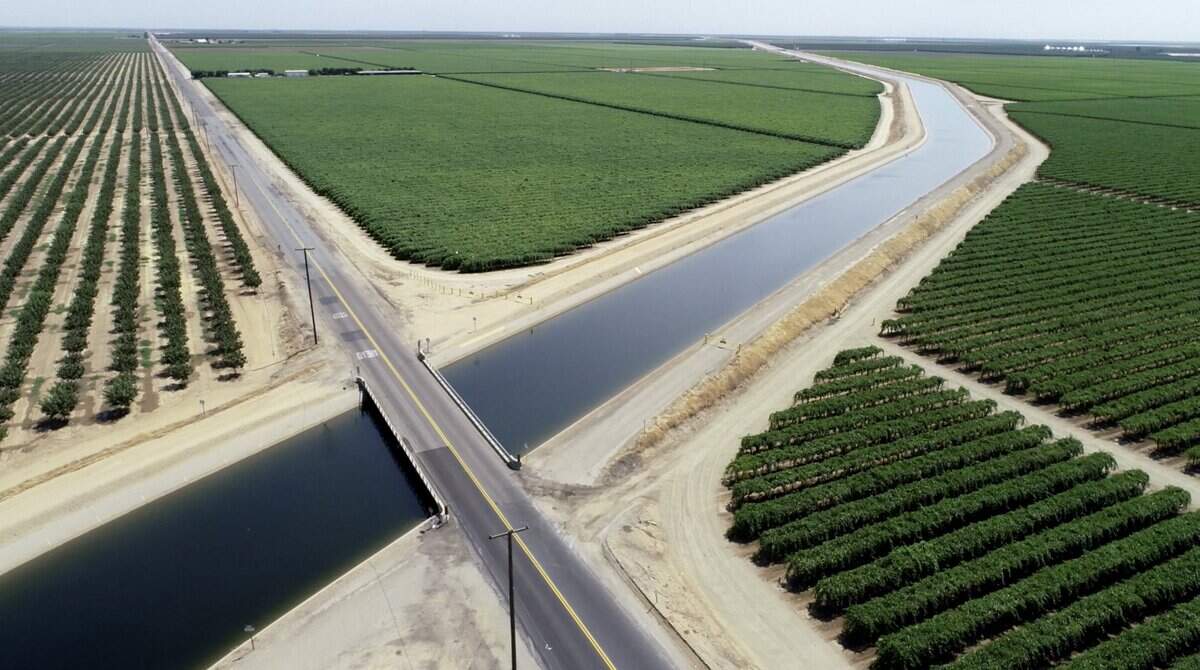
After beginning with a few anecdotes, Arax began by reading from “The Dreamt Land” and specifically its prologue. The passage loosely describes the author’s drive on Highway 99 from Fresno to “a little farmworker town in a far corner of Kern County called Lost Hills” where America’s biggest farmer (i.e. Stewart Resnick) has built an empire that’s seemingly impervious to drought.
Arax uses the journey to introduce one of the book’s main themes: How the reckoning is now coming due for Central Valley farmers whose ever-increasing water demands permanently altered the landscape.
He also rebukes the younger version of himself for being oblivious.
“I grew up in the suburbs where our playgrounds were named after the pioneers of fruit and irrigation canals shot through our neighborhoods to farms we did not know,” Arax read aloud. “For half my life, I never stopped to wonder: How much was magic? How much was plunder?”
Arax gave a brief history of agriculture’s roots in the Central Valley, which can be traced to the Gold Rush and the years that followed. Many of the area’s earliest farmers, he said, were former Confederate soldiers who purchased land and brought their Southern biases with them.
At first, agriculture was limited to the fertile soil of river valleys. Soon, though, farming operations expanded to more marginal areas and demand for irrigation water grew beyond what could be taken from watersheds. A prolonged drought in the 1920s resulted in the Central Valley Project, an aqueduct that transports Sacramento River water to the San Joaquin Valley and points south, as well as groundwater pumping.
‘A place of crazy denial’ over water
Our current drought, which may actually be the new normal, combined with the soon-to-take-effect Sustainable Groundwater Management Act, will eventually force the agriculture industry to become more sustainable, Arax told the group. Which is good thing in the long run, even if it results in less production.
“But right now, we’re in this weird place,” he said, bringing up current efforts underway in Madera County to build a new city atop a critically overdrafted water basin. “It’s a place of crazy denial.”
At other points during his hour-long talk, Arax touched upon:
▪ Spending time as a youth with William Saroyan. The famed Fresno novelist and playwright was a friend of Arax’s grandfather.
Saroyan’s house stood apart from others on his block, Arax said, because the lawn was always thigh-high and contained dandelions and wild mint he used to brew tea. Since Saroyan didn’t drive a car, a teenaged Mark frequently took him on errands.
“I wish I knew what I know about now, then,” he said, wistfully. “I’d ask him a whole bunch of things.”
▪ Fresno’s general disinterest in its own history, as evidenced by the city’s historic buildings getting torn down and historic districts left to wither.
Arax recalled going to city hall and asking the city clerk for recordings of council meetings during the Operation Rezone era. She told him his request was impossible because the tapes had been destroyed.
“This place doesn’t want to know about its own history — never has,” Arax said. “Because it’s a history of extraction by a few families which have accumulated all the wealth.”
During the Q&A portion, Arax encouraged students to get involved with local issues by giving a shout-out to No on Measure C opposition groups. He also praised the recent investigation into Community Regional Medical Center by The Bee’s Yesenia Amaro.
As far as his own writing, Arax hinted his next book would be a work of fiction. With a protagonist based on an exaggerated version of himself.
“I won’t ever stop writing about the Valley,” he said. “It’s an incredible canvas that offers so many stories.”
Thank goodness for that.
This story was originally published October 7, 2022 at 5:30 AM.