Parks tax is a new cash cow for Fresno’s elected officials. They milk it how they please
Elected officials in California’s fifth-largest city have a new cash cow.
The cow’s name: Measure P.
Fresno’s 3/8th-cent sales tax for parks, arts and trails was projected to produce roughly $37.5 million per year. At least that’s what city voters were told in November 2018 when 52.2% of them filled in the “yes” bubble.
Following a series of legal rulings, the new tax took effect last July. When it finally did, the city’s actual sales tax revenues came in significantly higher than expected. So much higher that Mayor Jerry Dyer’s proposed budget for the 2023 fiscal year pegs Measure P to generate $58.3 million.
If that $20 million surplus weren’t enough, Dyer’s budget includes $16.5 million in Measure P “carryover” from 2022. Add those up, and you get $74.8 million in “appropriated revenues” in one budget cycle from the city’s newest cash cow.
Considering Fresno, on a per resident basis, spends a fraction of its general fund on parks compared with California cities of similar size, these are heady days indeed.
Fresno’s Parks, After School, Recreation and Community Services Department spent $20.2 million in fiscal year 2020 and $26.9 million in 2021, according to the line items in Dyer’s budget. Thanks to the Measure P boost, PARCS Department spending jumped to $76.3 million in 2022 and is projected to climb to nearly $104 million in 2023.
But fret not, taxpayers. City Hall has a plan to spend your money. In fact, officials are giving a workshop Tuesday evening on the PARCS Department’s $103.7 million budget (nearly 72% provided by the new parks tax) to the city’s Parks Recreation and Arts Commission.
Created by Measure P, the Parks Recreation and Arts Commission’s nine citizen members are appointed “to oversee and provide recommendations to the Mayor and City Council” on how those tax revenues are spent. (As written by the ballot measure’s authors.)
However, it hasn’t taken long for commission members to discover how little oversight and input they actually have. Most glaringly, $62.2 million of the $74.8 million in Measure P revenues included in Dyer’s proposed 2023 budget is already allocated for. The Fresno City Council will have a final say in that, of course, but the parks commission won’t.
Nor did the parks commission have any say when the city council voted 4-3 to purchase the Tower Theatre and adjacent properties using mostly Measure P money ($3.9 million out of $6.5 million sale).
Out of the loop on Tower purchase
When commission members quizzed city staff at their May 16 meeting about being kept out of the loop on the theater purchase, they were essentially told — including by Assistant City Attorney Raj Singh Badhesha, who read aloud from the ordinance — that the mayor and city council aren’t required to consult with them. Not on any Measure P spending that falls outside the budget process.
Which caused several of them, including commission chair Kimberly McCoy, to express their dismay.
“So Raj, what you’re saying is that the city didn’t have to bring that to this commission?” McCoy asked. “That they had the authority to go ahead and use Measure P funds to purchase the Tower Theatre and we didn’t have to know about it? And it didn’t have to be a presentation?”
“Nope, I didn’t say any of that,” Singh Badhesha replied.
Not in so many words, at least.
In an attempt to make nice, Assistant City Manager TJ Miller agreed to have conversations in the future when decisions like the Tower purchase are made. Then she passed the buck on the last one.
“Decisions were made by our (city) council, and they do approve our budgets and the monies that we expend and make recommendations and so forth,” Miller said. “I can’t say that we can always get ahead of it and give you a presentation because sometimes those things are happening in real time on the dais.”
Ah, the ol’ real-time-on-the-dais excuse.
In actuality, Fresno City Councilmembers Esmeralda Soria and Miguel Arias sent out a press release regarding the Tower Theatre sale on April 18, three days prior to the council’s vote.
Public sees city’s nontransparent face
That same April 18 evening, the Parks Recreation and Arts Commission held one of its bi-monthly meetings (after the three previous ones had been canceled). So commission members could have been informed of the details, had Soria and Arias cared to do so.
I realize the Dyer administration and council members don’t work in concert, but what the public sees is the same nontransparent face.
“How much is the community really involved? And how do we have a real voice?” Kiel Lopez-Schmidt asked. “It sure seems like we don’t.”
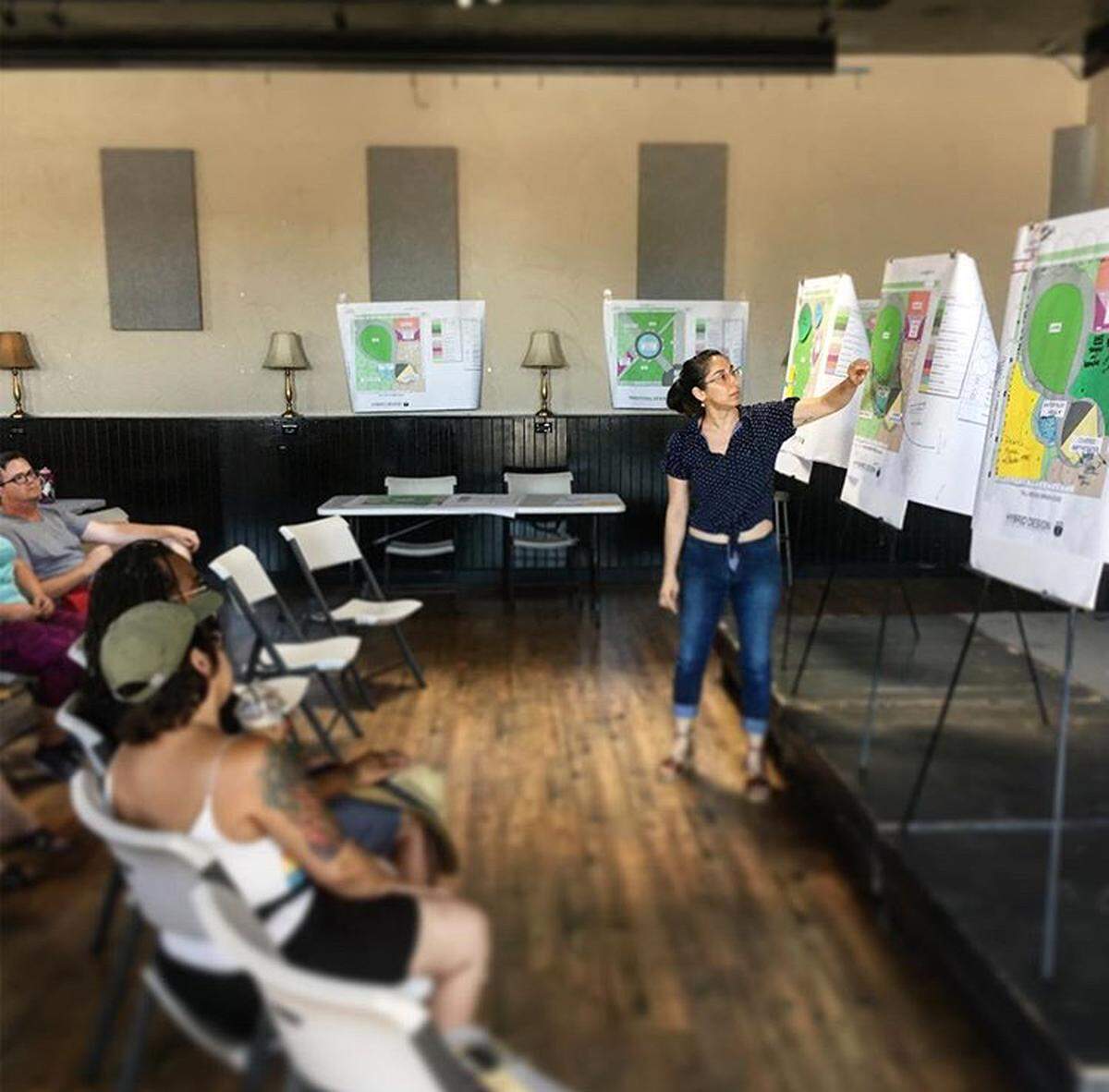
The Tower District resident knows better than most. In 2019, Lopez-Schmidt led a community effort to transform a vacant lot at Broadway and Elizabeth streets into a neighborhood park. More than 100 residents attended in-person meetings about how the park should be designed; 400 responded to online surveys. A landscape architect who lives nearby drew up the final design pro bono.
Without funding, Broadway Parque (as it was called then) didn’t get built. But when Measure P kicked in, the park resurfaced with a new name (South Tower Park) and as a $2 million line item in the 2022 budget — $1.75 million coming from the new tax.
As soon as the city took over, public input was kept to a bare minimum. So much so that Lopez-Schmidt had to file a public records request just to see the new design. When he did, he discovered one of the main amenities the community asked for (a small performance stage) had been left off.
The message being sent to Fresno residents by its elected officials is clear enough: Measure P is our cash cow, and we’ll milk it how we please.