Now hear this: Fresno man blames his insomnia on ‘hum’ from Verizon 5G cell antennas
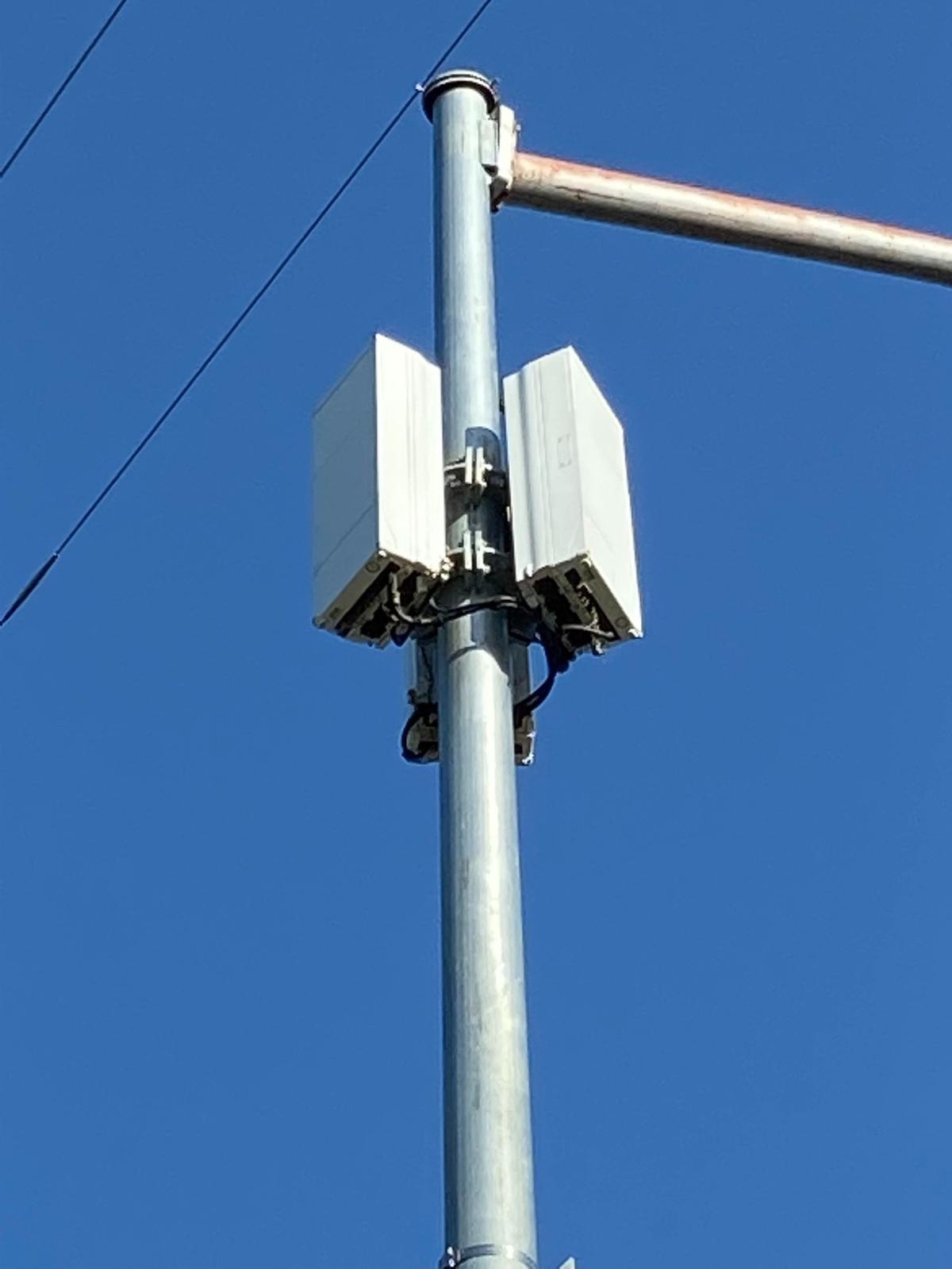
Metal streetlight poles with 5G cell antennas strapped around them have become an increasingly common sight around Fresno.
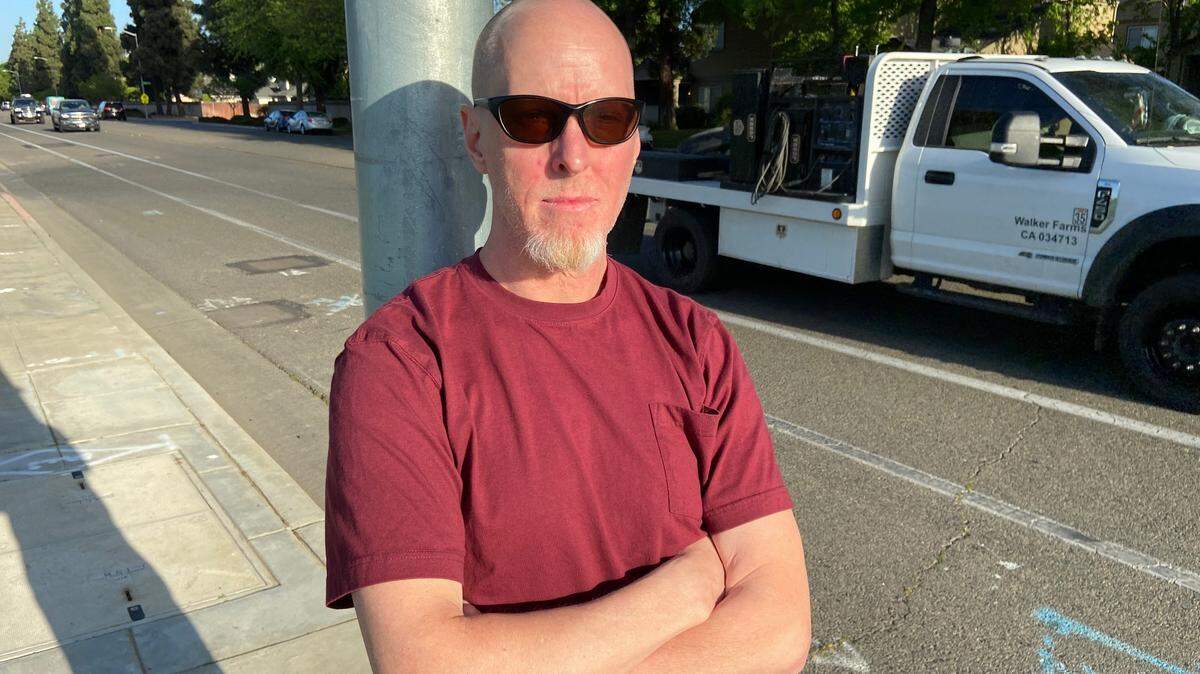
Justin Palm can tell you exactly — Dec. 29, 2020 — when three Verizon 5G cell antennas within a quarter-mile of his home near Clovis West High School went into service.
Palm knows the date by heart because it’s the last time he enjoyed blissful uninterrupted sleep. Free from what the 49-year-old software engineer describes as “a low-frequency background hum” that reverberates through the walls of his house and keeps him awake.
“These things are basically giant tubular bells, and they’re being rung by Verizon 24 hours a day,” Palm says in a video he posted on YouTube, pointing his cell phone camera at a 5G-equipped streetlight pole.
“It’s annoying all day long, but it’s torture at night when I’m trying to sleep. All I hear is Verizon’s noise pollution.”
At first, Palm wasn’t sure where the hum was coming from. It took a few middle-of-the-night strolls and car rides around the neighborhood until he traced the noise to streetlight poles with 5G cell antennas affixed to them. He is certain they are the source, for reasons I’ll get into later.
By February and March 2021, Palm’s insomnia became so severe that he started emailing Verizon and city of Fresno staff (using the alias “Justin Jones” for fear of repercussions) urging they shut off three 5G antennas closest to his house until the low buzzing sound could be mitigated.
Palm’s pleas were not ignored. Bryon Horn, the city’s chief information officer, responded by saying he and a colleague walked the neighborhood with a sound meter and did not see or hear anything out of the ordinary.
Verizon, meanwhile, hired a consulting firm to test the noise levels coming from four 5G small-cell antennas near Palm’s house and found they complied with the city’s allowable decibel limits. The company also provided him with a copy of the report.
Neither response satisfied Palm, who found he could drown out the hum by sleeping with a high-velocity fan two feet from his head. But while he’s getting more rest, he and girlfriend Yolanda Doub no longer sleep in the same room because she can’t sleep with the fan blowing on her.
“This whole thing has been a total bummer,” said Palm, who sleeps in the guest room on the carpet with pillows and blankets. “It’s the worst experience I’ve ever been through.”
Last week, Palm filed another noise complaint, asking city officials for an independent sound test of the 5G poles in his neighborhood. City Manager Georgeanne White, in response to my queries, said she would submit the request.
Verizon ‘reserves’ 608 Fresno streetlights
Since August 2020, when a federal appeals court upheld a 2018 Federal Communications Commission ruling that limited what cities could charge wireless carriers intent on expanding their 5G networks, the number of short cell antennas has skyrocketed.
Unlike typical cell towers, short or small cell antennas consist of radio equipment and antennas that can be placed on structures such as streetlights, the sides of buildings, or poles.
Verizon claims to have installed “more than 14,000” new 5G cell sites nationwide during 2021 alone and is by far the biggest player in Fresno. The company has 608 city-owned streetlight poles “reserved” for 5G small-cell antennas (205 were active as of March 30), followed by 134 for AT&T and seven for T-Mobile, according to White.
While 5G ostensibly grants wireless users access to the information superhighway in the fastest available lane, there is also some belief localized cell antennas such as those placed around Fresno subject people to hazardous levels of electromagnetic radiation.
Palm’s concern is strictly about noise — a low-frequency hum that not everyone can hear or has the same sensitivity to.
For example, Doub can hear the buzz, just not loudly enough to keep her awake at night. (I tried listening for it, both inside their house and by pressing my ear to the streetlight pole that Palm called the “loudest” in his neighborhood, and could only detect a soft warble.)
“This is not an anti-5G thing,” Doub said. “We’re not anti-tech at all. But why don’t they require noise dampeners on those things?”
Palm gets that his plight isn’t easily understood. Search “low frequency hum” on Google and you’ll get a bevy of results including a mysterious phenomenon known as “The Hum” that is said to affect 4% of the world’s population.
Palm insists the noise he hears isn’t that. When he and Doub go out of town, the hum goes away. It also was greatly reduced last year when a few 5G antennas near his house were switched off.
Based on informal surveys with neighbors, Palm says about half tell him they also hear the low-frequency vibration. They just aren’t as sensitive to it. To find others who share his flight, he set up a “Stop the Fresno Hum” YouTube channel and Facebook page.
“How many people in Fresno are suffering like I am?” Palm asked.
Guess we’re about to find out.