As California drought deepens, lax watering schedules keep lawns green in Fresno, Clovis
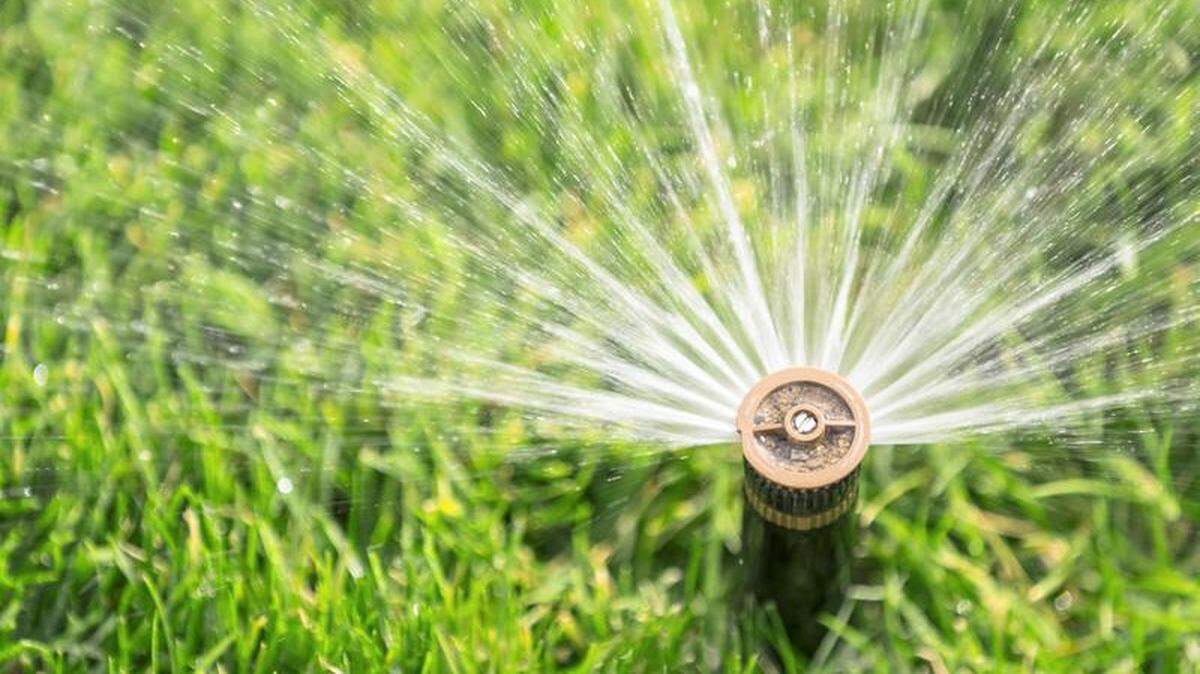
California may be mired in drought, but front lawns throughout Fresno and Clovis have express permission to pretend otherwise.
Starting Friday, April 1, the central San Joaquin Valley’s two largest cities return to a three-day residential watering schedule that will be in effect until Oct 31.
No, that isn’t an oversight. Fresno and Clovis residents can water their lawns and outdoor foliage three times a week during a historic drought, and no one in a city utility truck will be the slightest bit bothered.
Not sure if we should consider ourselves lucky, or misguided.
Our green lawns aside, nearly 94% percent of California is experiencing what federal agencies consider “severe” or “extreme” drought. (Fresno County falls in the latter category.) The Sierra snowpack that supplies fresh water to our faucets, farms and wildlife has melted to 39% of normal for this time of year. Our reservoirs are depleted.
All of which played into Gov. Gavin Newsom’s executive order mandating the state’s urban water suppliers step up their drought response efforts.
Against that parched backdrop, Fresno and Clovis essentially giving residents the civic thumb’s up to triple their outdoor water use between April Fool’s Day and Halloween — after being restricted to once per week from Nov. 1 to March 30 — almost sounds like a joke or trick.
Afraid not.
For all their differences, Fresno and Clovis employ the same three-day-a-week watering schedules. Homes with odd-numbered addresses can water Tuesday, Thursday and Saturday, while those with even-numbered addresses can water Wednesday, Friday and Sunday. No watering is allowed Monday in either city, and Fresno restricts watering on any day between 10 a.m. and 6 p.m.
What’s the logic behind loosening the spigot? Is satisfying some people’s desire for a green lawn more important than taking every measure possible to conserve water?
That question (the first one) was posed to officials from both cities, and the responses were more or less as I expected. The short answer is that restrictions can be eased while still conserving, at least to the extent currently necessary.
Compared to many California cities, Fresno and Clovis are well positioned to withstand a prolonged drought. This is true not only because of simple geography (i.e. their proximity to two major rivers and the resulting water rights) but also due to wise investments made by city leaders in treatment facilities, water banking and recycling for nonpotable uses.
From groundwater to surface water
Until 2005, Fresno was almost completely reliant on groundwater, and that dropped the underground aquifer by 100 feet. In 2022, the demand is balanced by surface water obtained from the San Joaquin and Kings rivers — part of the sustainable water effort officials tabbed “Recharge Fresno.”
Even though Fresno is returning to the three-day watering schedule, residents are urged to continue practicing conservation efforts, including using automatic shutoff nozzles and ensuring sprinklers don’t water driveways, sidewalks and streets. They’re also asking customers to consider watering one or two days while the weather remains mild.
Urged? Asked? How bad must things get until stronger action is taken?
According to Fresno City Manager Georgeanne White, no adjustments to the watering schedule will be made until staff conducts a state-mandated water supply and demand assessment. And that awaits a determination from the federal Bureau of Reclamation over San Joaquin River allocations for the Central Valley Project.
“Because of our investments in surface water treatment facilities, the city’s response (to the drought) does not have to be as drastic as most California communities,” White wrote in an email.
“Our response will be tailored to our community’s unique infrastructure and will optimize their use to actual water supply conditions. The payback for making strategic investments is being better able to respond to these exact types of water supply challenges.”
Residents, at least those who pay water bills, can track their own daily usage and irrigation patterns on the EyeOnWater app.
Water shortage plan in effect
Much like Fresno, Clovis has also made significant investments to reduce its dependence on groundwater. In 2021, the city tapped surface water (mainly from the Kings River) to supply the taps in more than half of its homes and businesses.
According to Clovis spokesman Chad McCollum, the city is currently operating at Level 2 of its water shortage contingency plan, which corresponds to shortages of between 10% and 20%.
The executive order signed by Newsom on Tuesday and expected to take effect in June requires local water agencies to act as if supplies have dipped by the same 10% to 20%.
Through that prism, it’s easy to argue Fresno and Clovis are already complying with the state’s conservation edict. So why do more?
Well, because every acre-foot of water used to keep our lawns green during a drought could instead be used by our farms to grow food and sustain our fisheries and wildlife.
Probably time we ask ourselves as a community which is more important.