
A family’s yearly wait for Fresno’s Little Dry Creek to come to life | Opinion
“Still dry, Daddy.”
My daughter’s nose is pressed against the car window as we pass Little Dry Creek on Avenue 15. It’s mid-October, and the creekbed cutting through the field is still parched, pale dirt cracking in the sun, only a few tufts of dried grass clinging to its banks.
“I know, love.”
Three weeks later, after the first rain that really saturated the soil: “I see little puddles.”
By Thanksgiving, we’ve gotten a few atmospheric rivers. “It’s actually moving now,” my daughter says. “Just a trickle!”
We make this drive from Bonadelle Ranchos in Madera County to Fresno several times a week to school, activities or visiting family. Watching Little Dry Creek come to life is just part of our routine this time of year.
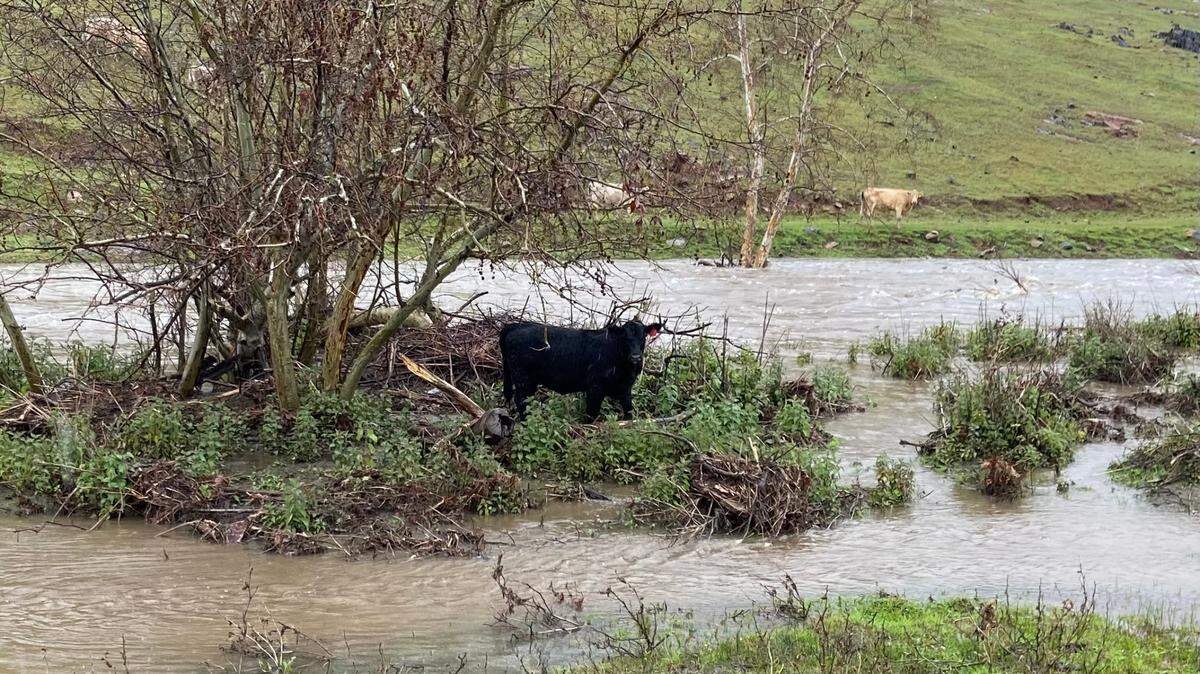
We know what’s coming. Last year, after a particularly rainy week in mid-December, an excited voice piped up from the back seat: “Wow, it’s a raging river!” I was driving then, so I could only glance over. On the way back, I asked my wife to take the wheel so that I could really look. If not quite a raging river, the creek was flowing — the ripples of moving water clearly visible. It was a continuous stream weaving from one side of the road to the other, before turning south for good.
But some years, it never gets that far. I’ve seen the puddles form, shrink and then disappear completely. The trickle fades before it ever becomes a flow. We watch and wait, but the rains don’t come in time, and Little Dry Creek stays dormant straight through to spring.
Growing up on the East Coast and the Midwest, water was just there. It was in the humid air, the year-round rainstorms, hoses left running in the yard. We would get scolded for wasting water, but no one ever mentioned a drought.
But when I met my wife, who is from Fresno, I learned that water is not a given. For her family, fourth-generation farmers in this valley, water was top of mind. Snowmelt, water allocations and wells were the core of their livelihood, but topics with which I was entirely unfamiliar.
A few summers ago, we went back East to visit family. As we drove through the Finger Lakes region in upstate New York, I kept asking to pull over. A waterfall tumbling right through the center of a small town. A creek — wide and large enough that my kids called it a river — flowing under a stone bridge. I’d get out and just look at water that had never stopped flowing, that had never had to be resurrected by the seasons.
My wife was patient about it, but I could tell she didn’t understand why I needed to stop every time. I didn’t quite understand either, apart from a primal desire to drink in the sight of water, to relish in the abundance and bounty. I wanted to stop the residents of the town and tell them how lucky they were.
But we are lucky as well. We get to watch the transformation every year: From the waiting for the first rains, to the small pools darkening the creek bed, to the moment the trickle becomes a current.
This year, we don’t know yet whether the creek will refill and flow. The puddles are there, the trickle has started. Maybe the rains will come and the kids will call out, “It’s a raging river!” from the back seat. Maybe they won’t. But we’ll be watching either way — hoping for the transformation, knowing it’s not guaranteed, grateful when it comes.
Oskar Chomicki is a first-generation Polish-American living in the Bonadelle Ranchos with his wife, a Fresno native, and kids. He writes about food, place and identity.