
Supreme Court’s conservative majority does Trump’s bidding in recent decisions | Opinion
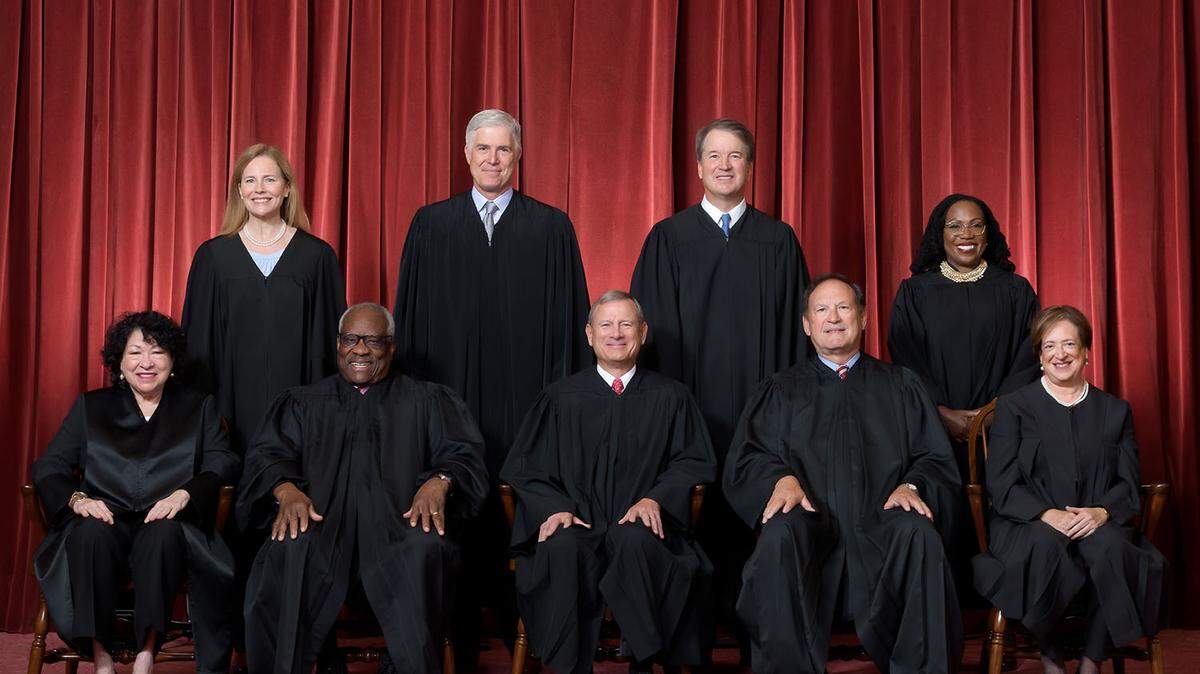
At a time when the United States is more ideologically divided than at any time since Reconstruction, what will it mean to have a Supreme Court that has so consistently and solidly come down on one side of that divide?
The court’s October Term 2024, which had its last decisions released on Friday, June 27, presented a number of cases to the justices that posed politically controversial issues concerning the actions of President Donald Trump and our current culture wars. Time and again, the court came down on the conservative side, in 6-3 decisions.
Perhaps the most important case of the term was a stunning restriction on the power of the federal courts to restrain unconstitutional actions by the president and the federal government. In Trump v. CASA, the Supreme Court held that no longer can federal courts issue nationwide injunctions to stop unconstitutional presidential actions and federal laws.
This is a radical change in the law that greatly lessens the power of the federal judiciary. It means that there will have to be separate constitutional challenges in all 94 federal districts. It means that even after several federal courts deem a presidential action unconstitutional, he can continue it elsewhere. It means that there will be great inconsistencies across the country, with presidential policies and federal laws restrained in some places but not others.
The court left open the possibility of class action suits, but those are often difficult if not impossible. Simply put, the Supreme Court’s conservative majority greatly weakened a crucial guardrail of democracy: the ability of the federal judiciary to halt unconstitutional presidential actions.
Repeatedly, though not in every instance, the court upheld unprecedented actions of the Trump administration that are inconsistent with basic constitutional principles. These matters came to the Supreme Court on its emergency docket (often called the “shadow docket”). The cases are decided without the benefit of briefing and oral argument, often with no opinions or only very short explanations.
An example of great judicial deference to Trump occurred on June 23 in Department of Homeland Security v. D.V.D. A federal district court had issued a preliminary injunction to keep the Trump administration from deporting individuals to South Sudan. Federal law is specific as to where people can be deported to: only if no alternative exists does the government have the power to pick its own place. It was clear that the Trump administration was violating this law, but the court — once more in a 6-3 decision — reversed the lower court and ruled for the government. It was stunning that there was no explanation whatsoever from the court, while Justice Sonia Sotomayor wrote a blistering dissent.
This was also a term when the culture wars came to the court and the court repeatedly came down on the conservative side. On Friday, for example, the court decided Mahmoud v. Taylor, which involved a challenge to Montgomery County, Maryland’s curriculum about sexuality and gender identity. A group of parents objected on religious grounds, saying that it infringed their free exercise of religion for them to not have notice of the curriculum and the opportunity to opt their children out of the instruction. The court, 6-3, agreed with the parents.
This decision is an enormous expansion of the protections of free exercise of religion. Never before had the Supreme Court held that mere exposure to materials that parents find objectionable is enough to violate the Constitution. This will also be deeply problematic in practice: Does it mean that schools must give parents notice and the chance to opt out every time evolution is taught or when an English class reads a book with witches or anything else some parents might find objectionable on religious grounds?
Also, on Friday, in Free Speech Coalition v. Paxton, the court upheld a Texas law that requires age verification for access to websites with more than one-third sexually explicit content. Previously, in cases such as Ashcroft v. ACLU (2004), the court struck down such age verification requirements on the ground that the government cannot restrict access to speech for adults so as to protect children. Now, however, the court has empowered states to do just that.
Yet another case directly from the culture wars was United States v. Skrmetti, where the court upheld, again in a 6-3 ruling, a Tennessee law prohibiting gender affirming care for transgender youth. Twenty-six states, all with Republican-controlled state legislatures, have adopted such a law. Chief Justice John Roberts, writing for the majority, stressed that the court should defer to the legislatures on this matter. The court abandoned its long tradition of protecting minorities from the political process.
At a time when our country is so divided, I still optimistically hope that the court might play a moderating — and even unifying — role. That so clearly didn’t happen this year, as the conservative majority repeatedly chose sides. The court’s legitimacy — and ultimately the country — is sure to suffer.
This story was originally published July 2, 2025 at 6:00 AM with the headline "Supreme Court’s conservative majority does Trump’s bidding in recent decisions | Opinion."