
California’s freight fantasies don’t belong on America’s roads | Opinion
For too long, California has seen itself as the Washington of the West — a place where aspirational policies from Sacramento bureaucrats should be exported to the rest of the nation.
But there is a difference between leadership and overreach. When it comes to heavy-duty electric vehicles and emissions mandates, California crossed it.
Two aggressive state regulations were never just about California, they were a calculated attempt by Sacramento bureaucrats to steer national policy through the back door, using special Environmental Protection Agency waivers and a coalition of like-minded states to transform California’s idealism into de facto federal regulation.
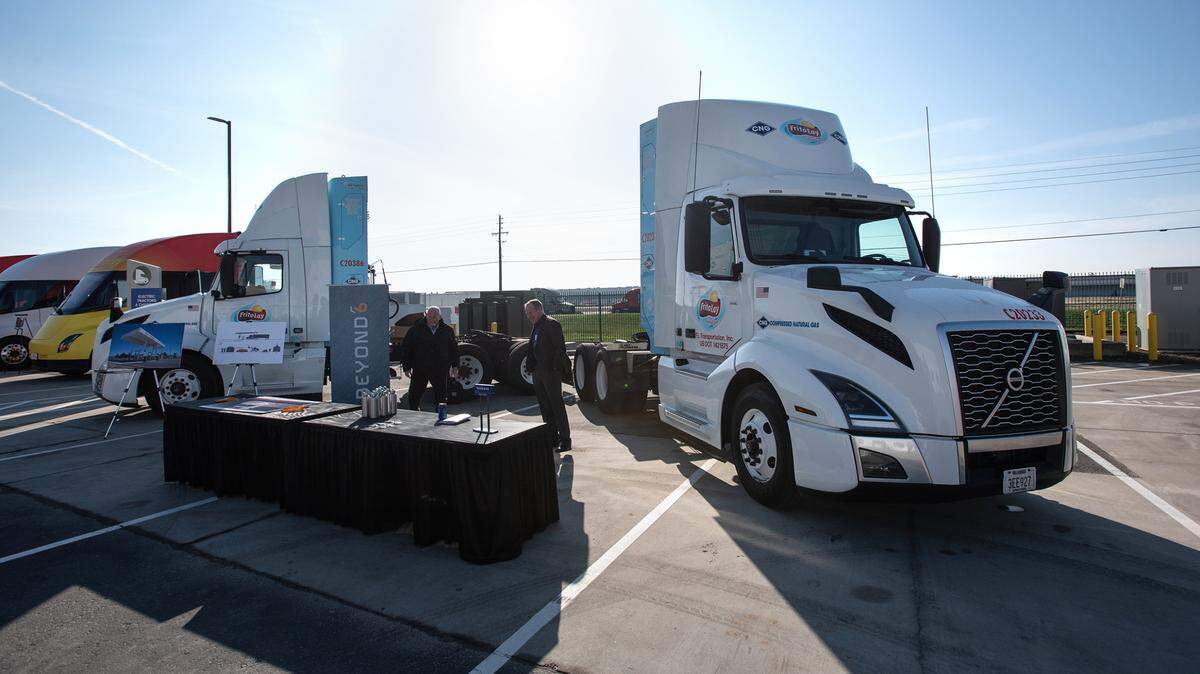
The so-called Advanced Clean Truck rule that was adopted by the California Air Resources Board, which forces truck manufacturers to sell increasing percentages of zero-emission trucks through 2035, was never realistic. Neither was the Low NOx rule, which imposes costly emissions standards far beyond what current technology can realistically support.
These rules weren’t about gradual, achievable progress. They were about California imposing its will on an entire industry without regard for how freight actually moves in the real world.
Fortunately, President Donald Trump — with a dozen of our trucking industry leaders and drivers by his side at the White House — thwarted that pipe dream this month with the stroke of his pen, reversing President Joe Biden’s approval of California’s Advanced Clean Trucks rule.
In California, regulators operate in a fantasy bubble: They envision an electrified future without accounting for the current, glaring limitations, such as inadequate charging infrastructure, lack of grid capacity and the logistical nightmare of electric trucks that max out at 250 miles and require hours to recharge. Try running a delivery from the Port of Oakland to Chicago on battery power alone. You won’t get past Reno — if you’re lucky.
We’re all for a cleaner future. Trucks today produce 99% less nitrogen oxide and particulate matter emissions than those on the road decades ago. And new trucks cut carbon emissions by more than 40% compared with a truck built in 2010. All told, 60 of today’s trucks emit what just one truck did in 1988.
The Golden State’s regulatory zeal has ripple effects far beyond its borders. Because California is such a large market — and because states like New York, New Jersey and Oregon adopted these truck rules — manufacturers, suppliers and trucking fleets across the country would have been forced to adapt, absorb higher costs and pass the costs along to consumers everywhere. Higher freight costs mean higher prices on everything from milk to medicine, and all for rules that don’t reflect economic or technological reality.
Let’s not forget who’s hurt most: small fleets and independent owner-operators already operating on thin margins. California’s mandates would have forced them off the road entirely. The vastly heavier weights of electric trucks would have limited the amount of freight that could be transported on a single truck. This would have meant more trucks, with more drivers who don’t exist to deliver the same amount of freight. The math simply doesn’t work.
The people making these decisions in Sacramento don’t drive trucks. They don’t unload trailers in Bakersfield or run rural deliveries in Modesto. They sit in cubicles, creating mandates that sound good on paper but collapse under the weight of real-world application.
The repealing of California’s truck regulations is more than a political win. It’s a necessary course correction. It returns authority to the EPA and creates space for practical national standards — ones that reflect current capabilities and economic realities.
California doesn’t have the right to draft policy for the rest of the country. And it certainly shouldn’t gamble with the stability of the national supply chain in the process.
This story was originally published July 1, 2025 at 6:00 AM with the headline "California’s freight fantasies don’t belong on America’s roads | Opinion."