
Black students are a minority within a minority in the CSU system | Opinion
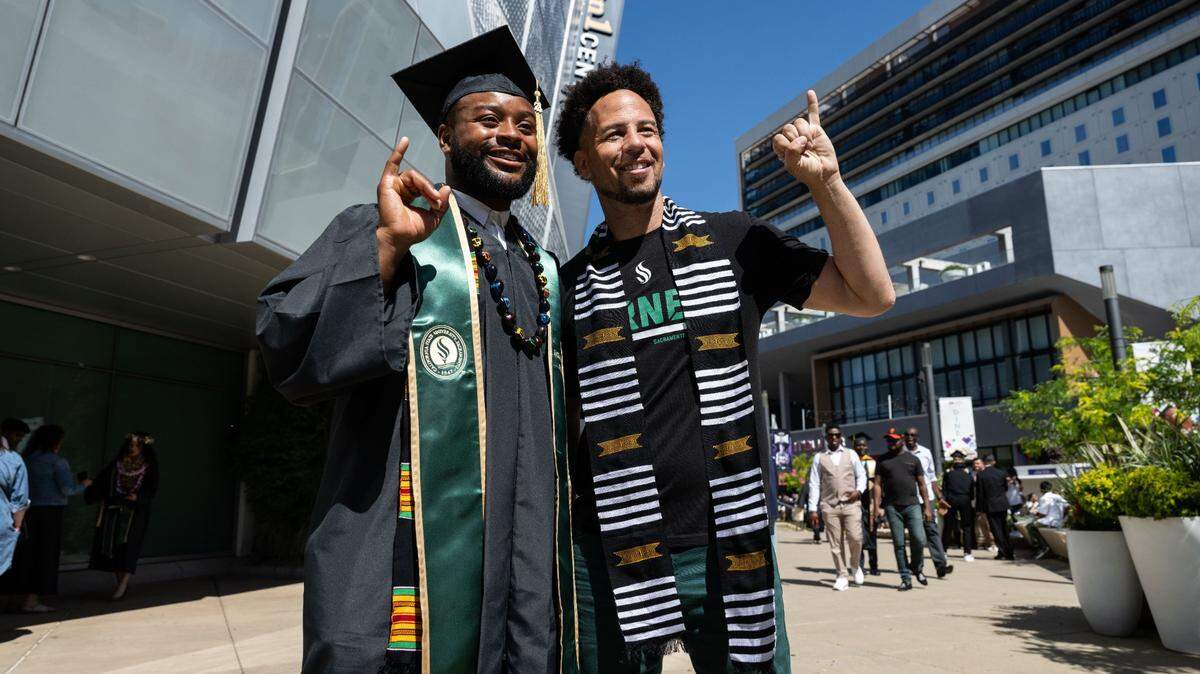
As California State University campuses reaffirm their commitments to equity and inclusion, we must confront an uncomfortable truth: Black students remain vastly underrepresented and underserved across the CSU system.
Even within the system’s Minority Serving Institutions, (21 of 23 campuses are Hispanic-Serving Institutions and 13 out of 23 are Asian American and Native American Pacific Islander-Serving Institutions) Black students are often a “minority within the minority” — a phrase that reflects both their small numbers and the outsized barriers they face.
In the current political climate, where equity initiatives are under increasing attack and the rights of marginalized communities are threatened, the CSU system must double down on efforts to support Black students, not retreat from them. We must recognize that improving the experiences of Black students uplifts not only Black communities, it intersects with the broader fight for justice and educational access for all minority groups.
California is home to one of the largest and most diverse public university systems in the country, and yet Black students account for only around 4.1% of CSU enrollment (below their 6% representation in California’s overall population). And their experiences on campus often reflect that isolation: Black students report higher levels of racial microaggressions, they feel less supported in academic and social environments and they face persistent gaps in retention and graduation rates.
It doesn’t have to be this way.
At campuses like CSU Dominguez Hills (which enrolls 12.2% of Black students), CSU East Bay (9.3%) and Sacramento State (6.4%), promising initiatives have emerged. Sacramento State’s Martin Luther King Jr. Center supports Black student success through culturally responsive mentorship, community-building and academic advising. Dominguez Hills hosts the Black Resource Center and Black Student Success Initiatives, providing safe spaces and targeted retention efforts.
These programs are not only necessary — they work. When Black students feel seen, supported and valued, they thrive.
It is imperative that CSU campuses do more to boost Black student enrollment numbers and work to ensure greater Black student retention, success and graduation. This is particularly true at institutions where Black students make up less than 1% of the student body (as is the case at California Polytechnic State University-San Luis Obispo). Some argue that low numbers don’t justify large-scale initiatives. But that logic misses the point. The fact that Black students are so few in number is precisely why they need focused support. Their isolation can compound experiences of anti-Blackness and exclusion in both the classroom and social spaces.
Moreover, efforts to support Black students don’t exist in a vacuum. The conditions that undermine Black student success — such as underrepresentation, racial discrimination and structural barriers — are often shared by other students of color, first-generation students and low-income students. Building robust systems of support for Black students creates a ripple effect that benefits the entire student population, especially those from similarly marginalized backgrounds.
We are at a critical moment: Equity, diversity and inclusion initiatives are being challenged in courts and legislatures. Meanwhile, California’s CSU system recently implemented a systemwide ethnic studies requirement, which mandates that all undergraduates complete a three-unit ethnic studies course to graduate — a policy now facing push back despite being a step toward culturally responsive education.
CSU leadership has a moral obligation to stand firm — not just with words, but with action. That means hiring and effectively supporting Black faculty and staff, investing in Black student centers, expanding culturally competent mental health services and funding outreach programs that encourage Black youth to see themselves in higher education.
California prides itself on being a progressive state, and the CSU system is a pillar of opportunity for millions. But opportunity must be equitable. Supporting Black students is not a niche concern — it is a litmus test for whether we truly believe in education as a tool for racial justice.
This story was originally published May 7, 2025 at 5:00 AM with the headline "Black students are a minority within a minority in the CSU system | Opinion."