
LeVar Burton: Important legislation would transform how we teach reading in California | Opinion
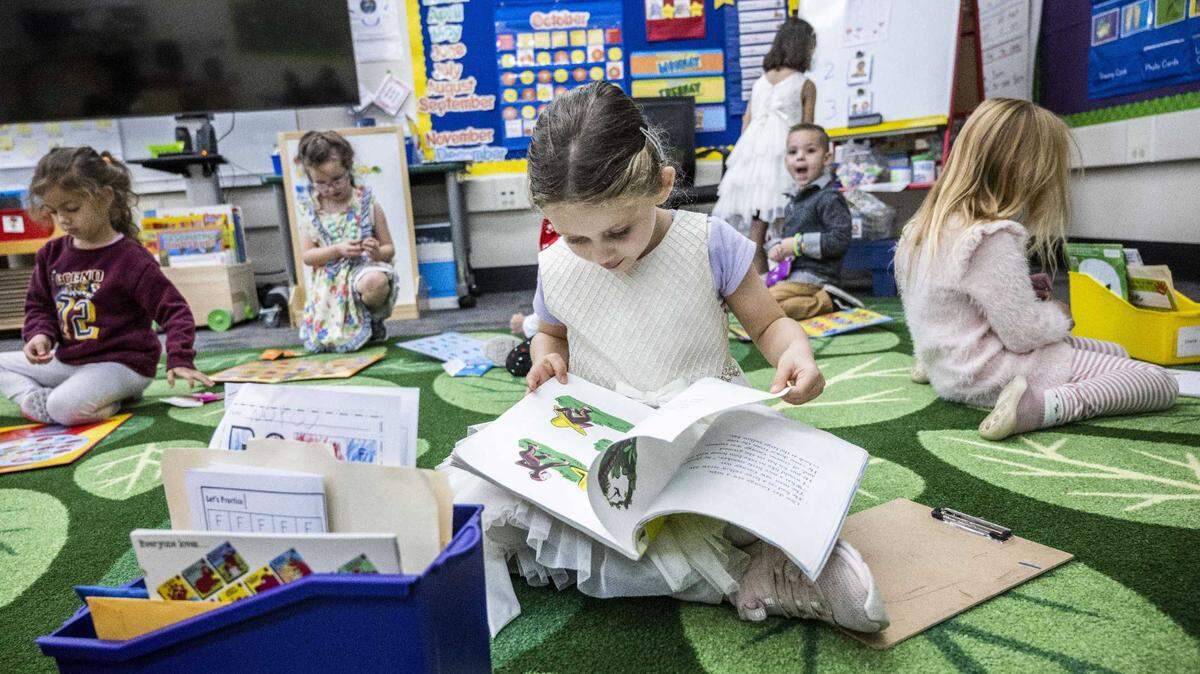
Instilling a life-long love of reading in children, particularly through my work on “Reading Rainbow,” remains one of the greatest honors and joys of my career. And yet, after years as a literacy advocate, I’ve come to understand that a love of reading is not enough. To unlock a child’s imagination and set them up for future success, we must also teach them how to read — and do so effectively.
For decades, we’ve known a great deal about how children learn to read. Research from fields like cognitive psychology and neuroscience show that reading is not an innate process, it must be explicitly taught. This is where the “science of reading” comes in: A body of research that explains how children develop literacy through instruction in phonemic awareness, phonics, vocabulary, fluency, comprehension and writing, supported by strong oral language development.
But you don’t have to take my word for it, the science is indisputable. Children need oral language skills in combination with evidence-based literacy instruction to become strong readers. We must ground our teaching techniques in what reading research has shown works: moving our children away from guessing, and, instead, teaching them how to read in a structured way.
When I signed on as executive producer of the documentary film “The Right to Read,” I knew our nation was facing a literacy crisis. But the full extent of the problem has become especially clear in my home state of California.
Whereas over one-third of other states have passed and implemented comprehensive evidence-based literacy instruction policies, many schools in California continue relying on “balanced literacy” approaches that emphasize memorization, guessing words from pictures and using context clues rather than teaching children to decode words explicitly and systematically.
With only four in 10 students reading on grade level by third grade, we can no longer accept the status quo. We are failing our children — particularly those from marginalized communities.
Yet, I remain hopeful. This is a problem with a clear solution. We have the research and resources so that no child needs to grow up without learning to read. Now, we need a more equitable way of ensuring that the research and resources reach all classrooms, instead of our current approach in which a child’s ZIP code determines the literacy instruction they receive.
That’s why I’m supporting Assembly Bill 1121, a new bill introduced by Assemblywoman Blanca Rubio, D-West Covina, which would bring evidence-based instructional methods for teaching reading to our children, setting them up for success in the future. This legislation would transform how we teach reading in California in a few crucial ways.
First, AB 1121 would ensure that all elementary school teachers, administrators and specialists receive high-quality professional development in evidence-based methods of teaching reading by 2029.
Second, the bill would update the instructional materials students are using to learn to read. It would require the state to update its list of approved English language arts and English language development materials for grades TK-8 to reflect what research proves is the most effective way to teach reading. By moving from state recommendations to requirements, we put all children on a path to futures filled with opportunity.
We’ve seen this approach have a significantly positive impact on reading scores in states outside of California, including English learners and minority students. Mississippi rose from 49th to 9th in overall in fourth-grade reading proficiency, and Louisiana jumped from 50th to 16th in just two years. Meanwhile, California currently ranks 33rd overall, and 38th (out of 42 states) in fourth-grade reading proficiency of Black students.
Why would California choose not to pass legislation that has the power to unlock a child’s potential?
Literacy is the greatest civil rights issue of our time. We simply cannot function as a healthy society without a literate population. If that isn’t enough to produce the political will for change, I’m not sure what is. I implore California’s leaders to follow the science and support AB 1121.
This story was originally published April 21, 2025 at 9:43 AM with the headline "LeVar Burton: Important legislation would transform how we teach reading in California | Opinion."