
The Supreme Court finally has an ethics code. But it’s “remarkably tone deaf” | Opinion
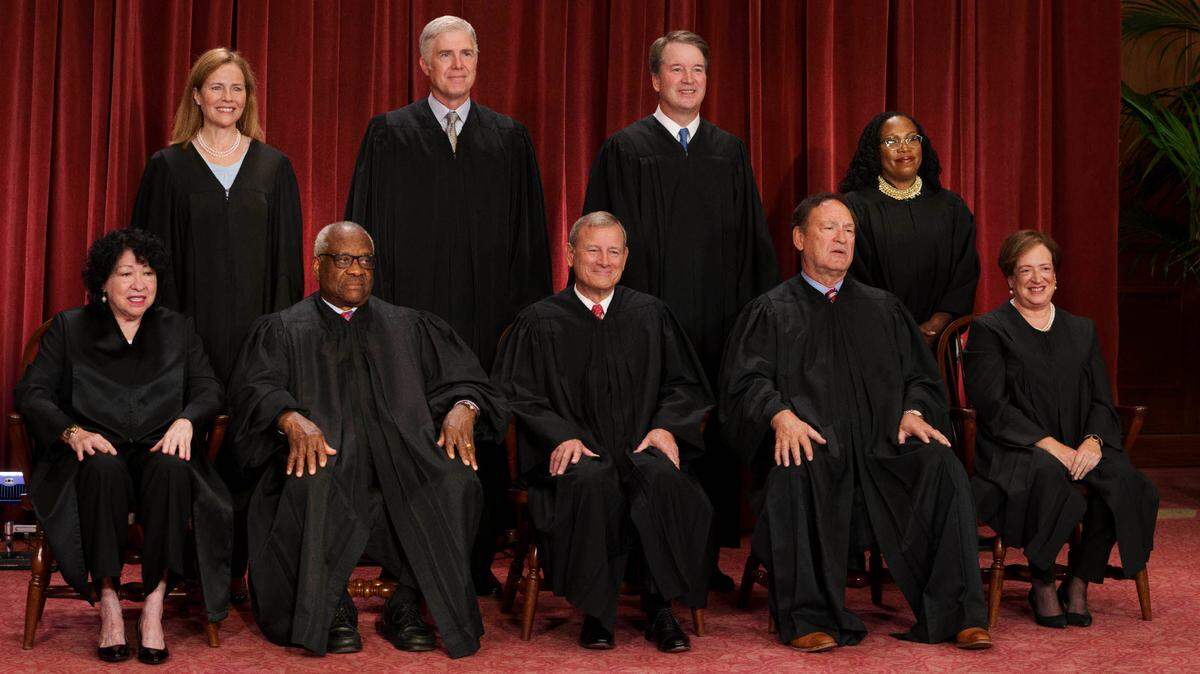
The Supreme Court finally issued an ethics code for justices but it is seriously inadequate. It has no enforcement mechanism and is remarkably tone-deaf to the scandals that made clear that an ethics code for the justices is imperative.
The ethics code, issued on November 13, was accompanied by a prefatory statement: “The absence of a code .... has led in recent years to the misunderstanding that the justices of this court, unlike all other jurists in this country, regard themselves as unrestricted by any ethics rules. To dispel this misunderstanding, we are issuing this code, which largely represents a codification of principles that we have long regarded as governing our conduct.”
It is striking that the justices twice used the word “misunderstanding.” Quite the contrary, the American people understood that every judge in the country — state and federal — was obligated to follow an ethics code. Every judge, that is, except for the most important judges: Supreme Court justices. Revelations of improprieties by several justices have contributed to the court having its lowest approval rating in history.
These are not minor ethical issues. ProPublica revealed that Justice Clarence Thomas accepted gifts and luxury travel from American real estate developer Harlan Crow for years without disclosing it as federal law requires. Crow also apparently purchased Georgia real estate from Thomas in 2014, including the home where the justice’s mother still lives, and he paid for Thomas’ grand-nephew’s private school tuition. Also, Thomas apparently never repaid a “substantial portion” of a $267,230 loan from wealthy friend Anthony Welters that he used to purchase a luxury RV.
ProPublica reported that Justice Samuel Alito took a luxury fishing trip with billionaire Paul Singer, whose hedge fund has repeatedly had business before the court, without disclosing it; Politico reported that Justice Neil Gorsuch sold real estate to the head of a law firm with business before the court and did not disclose the purchaser’s identity in a 2017 transaction that took place days after he was sworn in as a justice; and the Associated Press reported that Justice Sonia Sotomayor’s staff “prodded” schools and libraries to purchase her books when she visited as a guest speaker.
There is no doubt that this public criticism led the justices to adopt an ethics code. The court calling it all a “misunderstanding,” however, is remarkably tone deaf to the situation. And this is also reflected in the central flaw in the ethics code: there is absolutely no enforcement mechanism. It remains entirely left to each justice to decide whether to be disqualified in a particular case. In fact, in a commentary following the ethics code, it says “individual justices, rather than the court, decide recusal issues.”
This cannot be right. When there are the most serious ethical concerns, no person should be allowed to judge their own biases.
When a justice is recused, there are only eight participating judges, meaning there can be a tie. But this assumes that having nine justices participate is more important than ensuring compliance with ethical standards. Plus, the court often functions with eight justices when one is absent due to illness or when there is a vacancy. Republicans allowed the court to operate with only eight justices after Antonin Scalia died in February 2016 and Neil Gorsuch was confirmed in April 2017.
There are other, better ways to handle recusal issues. Former federal court judge and Director of the Berkeley Judicial Institute Jeremy Fogel proposed to the Senate Judiciary Committee in May that the Chief Justice appoint three retired former federal court of appeals judges to decide recusal issues. This is an elegant way of having recusals decided without involving justices.
It’s certainly better to have a code of ethics than to none at all. But as with any law, a code of ethics is only meaningful if it is enforced. The court’s grudging adoption of a code of ethics with no enforcement mechanism reflects a serious problem.
In the best case, the code of ethics announced on November 13 is the first step toward meaningful reform. If not, it’s time for Congress to create an enforcement mechanism.
This story was originally published December 1, 2023 at 5:00 AM with the headline "The Supreme Court finally has an ethics code. But it’s “remarkably tone deaf” | Opinion."