
How the Middle East crisis has become a dangerous issue on our college campuses | Opinion
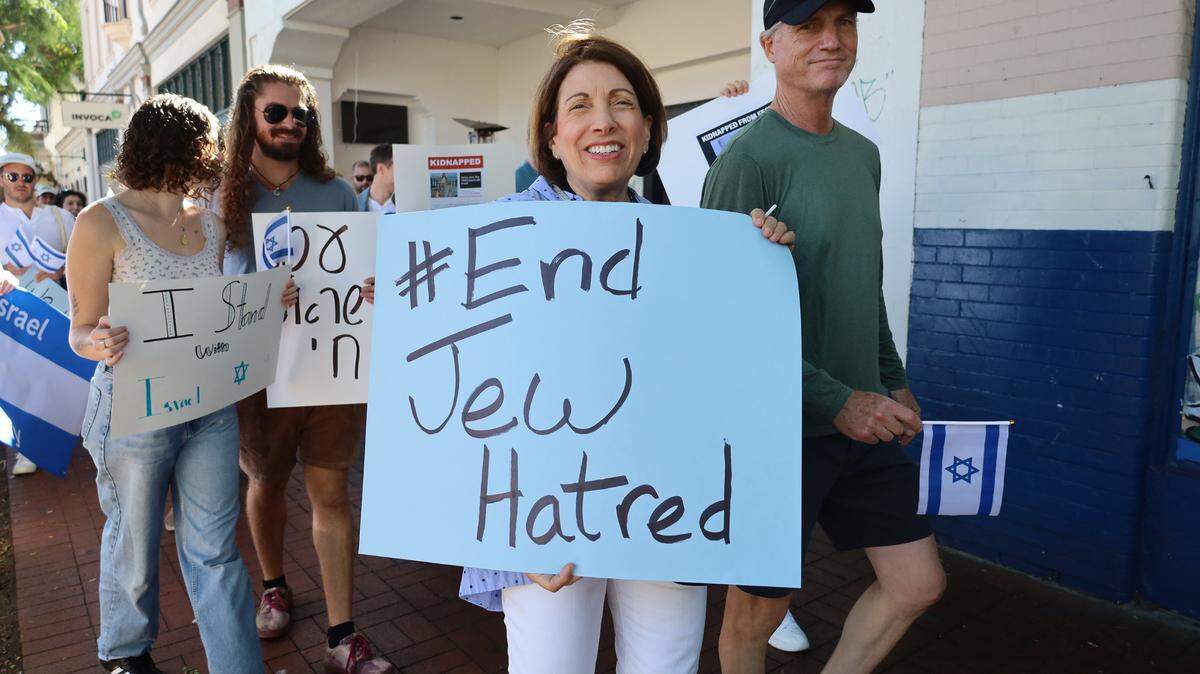
When should campus administrators speak out? This is a question that every university president, chancellor and dean has faced in the last three weeks in light of the horrific events in Israel and Gaza.
There is no easy answer, and every path taken has been sharply criticized. Some college presidents have said that they would express no views about what is happening in the Middle East, adhering to an approach urged by the Kalven Report at the University of Chicago over a half century ago that recommended university administrators not to take positions on political issues. But campus administrators who have done this have been condemned for their silence.
Some administrators have issued carefully crafted messages that try hard to be neutral as to what is happening in Israel and Gaza. They express compassion for all who have lost loved ones and for those in danger. This approach, too, has been attacked for its effort to be morally neutral. Critics of this approach have been criticized from both sides, with some lamenting a failure to condemn the terrorism by Hamas while others criticize a statement’s failure to denounce Israel’s assault on Gaza.
Administrators who have expressed strong condemnation for one side or the other have been attacked, too. Those who have called what Hamas did terrorism and denounced those who have defended it have been called racist and Islamophobic.
There is no approach that will please everyone. There is none that will find consensus on campuses. There is simply no middle ground between those who believe that what Hamas did was terrorism and those who believe that it was part of a resistance to oppression. Dialogue is impossible between those who oppose the very existence of Israel and those who strongly believe in its necessity.
This is a deeply personal issue to many on our campuses. Many have loved ones and friends who have lost their lives or are in danger. The existence of Israel and the Palestinian cause are a crucial part of the identity of many of our students and faculty. Each side sees the speech of the other as motivated by anti-Semitism or Islamophobia.
I do not purport to have the answer to how college administrators should respond, I can only share my approach.
I reject the view embraced by the Kalven Report that university leaders should be silent. Silence is a message, too. Failing to condemn the terrorist attack on Israel will be heard as a message. So would failing to express deep sympathy for the carnage in Gaza.
Admittedly, it is difficult to know when to speak as a university administrator. But there are times when it is clear that there is an obligation to speak out, such as most did after the death of George Floyd or after the January 6 insurrection. Those on campus want their leaders to voice their pain, express compassion and, hopefully, offer some moral clarity.
The reality is that any message in a difficult time will offend some, but that is not a reason for silence.
Ultimately, my conclusion is that we remember that our most important role as university administrators is not to please everyone or even the greatest number of people on campus. There are times when it is essential that we stand up for what is right, even if it means that some in our communities will be very angry with us.
I speak out when my silence would be the wrong message. I speak out to remind my community of its underlying values, including its commitment to freedom of speech, meaning all ideas and views can be expressed on a college campus. I speak out because I realize that to pretend to be neutral in the face of injustice is wrong and the wrong message for my community.
This story was originally published November 18, 2023 at 5:00 AM with the headline "How the Middle East crisis has become a dangerous issue on our college campuses | Opinion."