
Mega, controversial — and now revised — Fresno growth plan back for city planning
Fresno Mayor Jerry Dyer’s administration is gearing up to bring a controversial plan to expand the city’s southeast side back into circulation after months of revision.
The Fresno City Planning Commission will hold a public hearing to consider recommending approval of the revised Southeast Development Area Specific Plan and its environmental impact report on Aug. 19 at 6 p.m. at City Hall. The revisions are not yet available to the public.
If a majority of commissioners vote to recommend the plan, it could receive final approval as soon as the next scheduled City Council meeting, on Aug. 27.
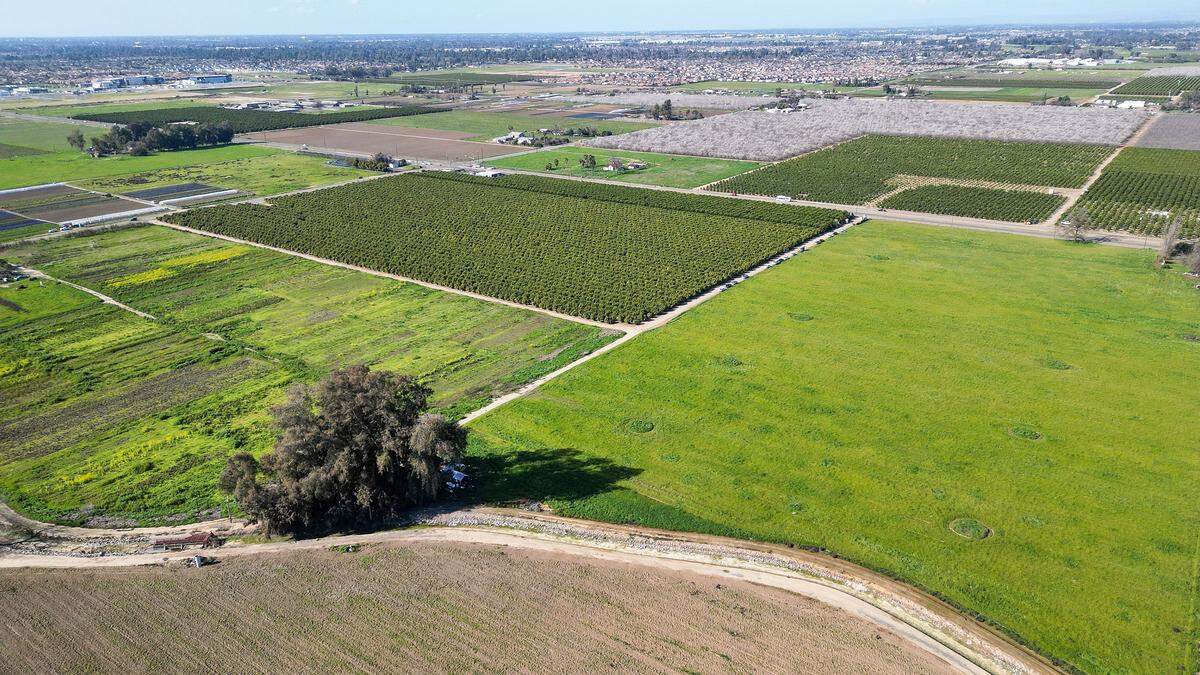
The proposal championed by Dyer, known as SEDA, has been decades in the making. If approved, it would expand the city’s borders by rezoning 9,000 acres of mostly farmland to the east and south to make room for up to 45,000 homes.
Dyer has said SEDA would eventually yield millions of dollars in additional local property tax revenue, facilitate economic growth in the region and keep Fresno competitive in the housing market.
The plan has drawn intense scrutiny from a coalition of around 20 organizations, politicians, residents and neighborhood groups. Opponents say the mega-development would drain resources from existing neighborhoods, force school closures in Fresno Unified, destroy prime farmland and continue the harmful environmental impacts of Fresno’s history of urban sprawl.
The Fresno Unified and Central Unified school boards each voted to formally oppose SEDA, reasoning that the project could pull away students and funding from the districts. Neighboring Clovis Unified and Sanger Unified would also feel the impacts of SEDA, though neither have taken official stances.
South SEDA would be the first phase
The Fresno City Council was originally scheduled to approve the development in December. Instead, Dyer pivoted and asked for direction from the council for a section of the plan he calls South SEDA. It consists of about 1,963 acres, 469 of which would be used to build 4,800 residential units, with the rest for flexible research, located at the southern portion of the SEDA area.
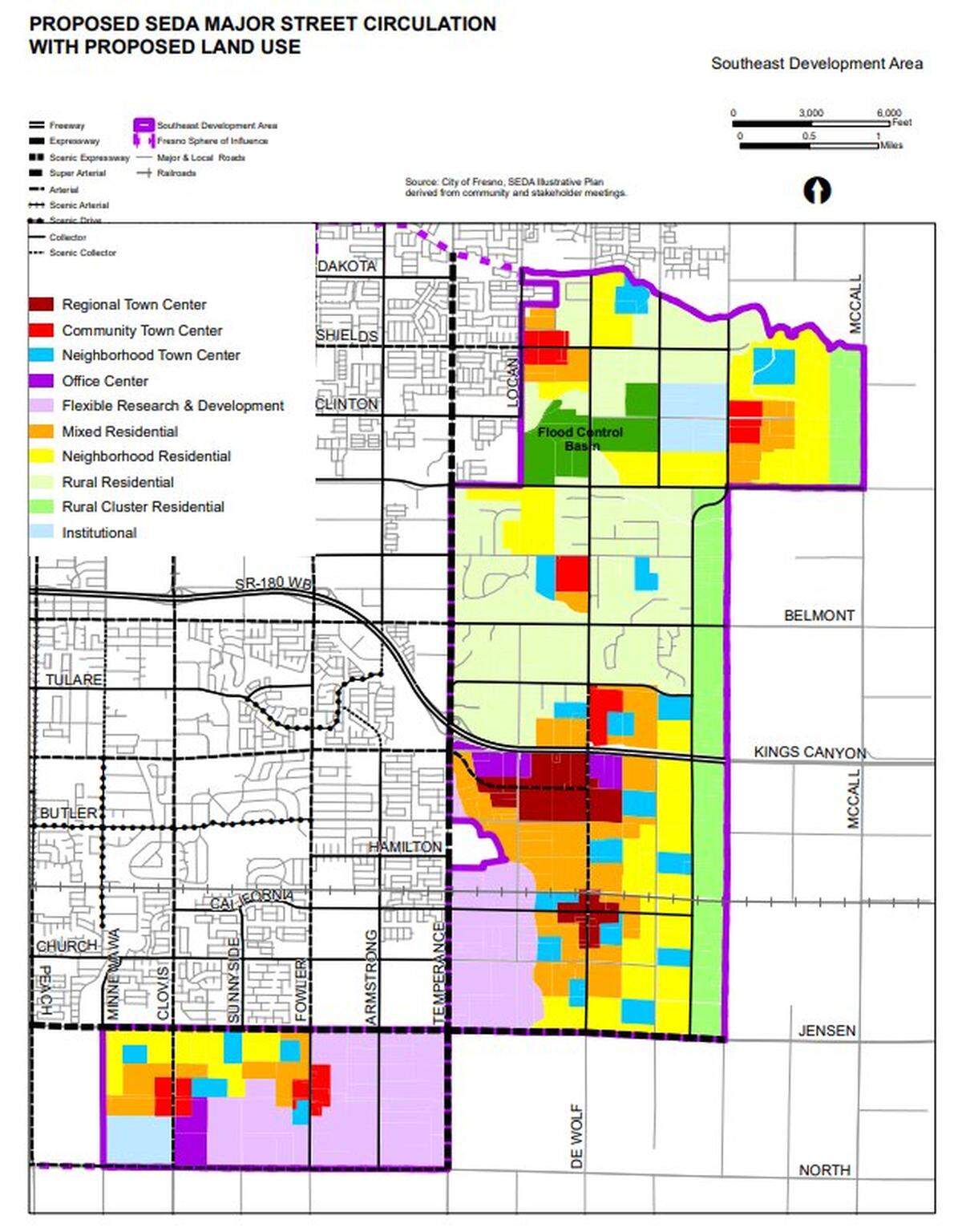
At that meeting, Dyer proposed requiring at least 70% of the residential land in South SEDA be built out before allowing development to expand into additional areas within the sphere to address concerns about sprawl. He also floated the possibility of a voter referendum and additional environmental studies before moving outside of South SEDA.
In a 5-2 vote, the council sent the plan back to the Dyer administration with a long list of revisions, including new studies on SEDA’s financial viability and environmental impact.
Planning Commission first gave SEDA recommendation in November
The revised plan will be presented at the Aug. 19 planning commission meeting, then voted on by members to recommend or not recommend approval to the city council.
The commission voted 4-3 in November to recommend SEDA to the council before it was sent back to the Dyer administration.
The final draft is not yet available to the public but will be published sometime ahead of the hearing, according to the city’s communications coordinator, Carmen Flores.