Mayor Dyer on SEDA: If Fresno doesn’t move forward, Clovis or Sanger will
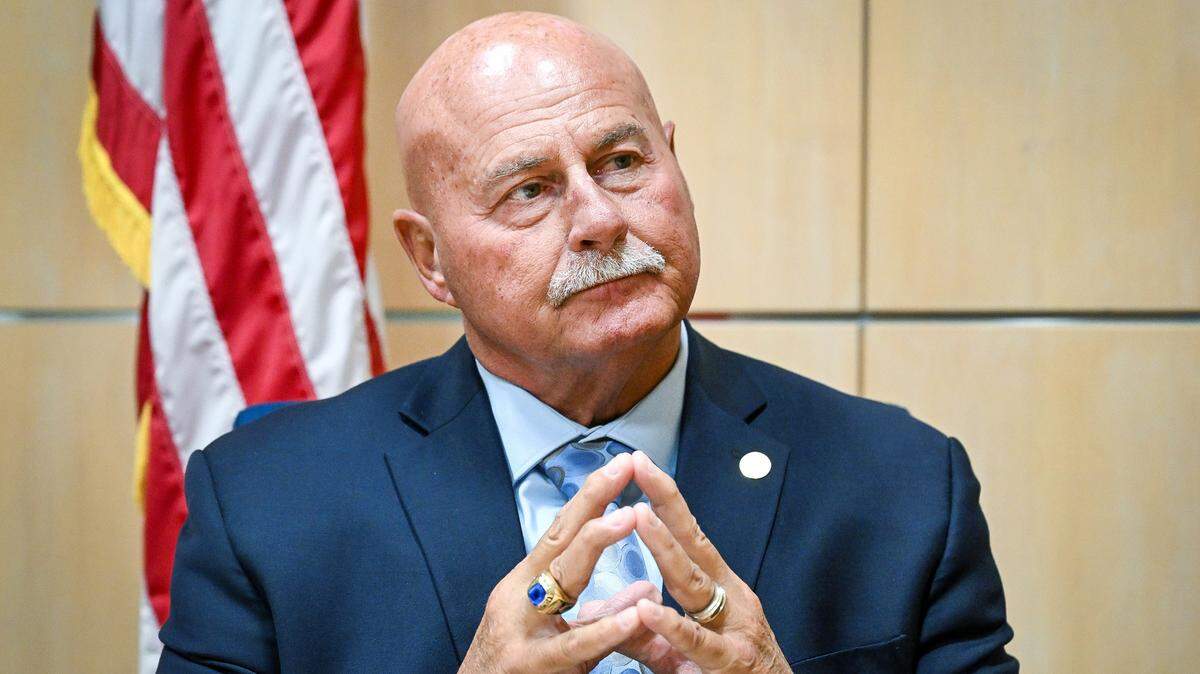
Fresno Mayor Jerry Dyer has his game plan to pass an ambitious proposal that could significantly increase the city’s size. He wants to get it done this summer.
The Southeast Development Area, known as SEDA, has been decades in the making, with planning and preliminary reports. The plan could expand the city’s borders by rezoning 9,000 acres of mostly farmland to the east and south. Dyer said it would add 45,000 homes if fully developed.
The plan has met with skepticism and outright opposition from residents in the area, current councilmembers and those running for office.
That hasn’t deterred Dyer. He presented the proposal to the Fresno City Council last December, then paused to conduct more studies to answer questions. He says he will introduce the plan for a Fresno City Council vote — at least on the first phase — this August.
Dyer warns that if city leaders do not approve SEDA, an adjacent city will. The land is currently unincorporated within Fresno County. Another government agency controlling regional land planning, the Fresno Local Agency Formation Commission, could allow another jurisdiction to develop the area if Fresno says no.
“Once you give up your growth area, you limit the future of your city, and I would be hesitant ... which is what worries me, that if we don’t approve an environmental impact report, that LAFCO may take this away from us as a growth area,” Dyer said. “And when that happens, who’s going to get it? Clovis or Sanger. And so we’re going to see Sanger and Clovis grow, but we’re not going to be able to control that growth. I want to at least control the growth.”
The growth plan for the area is decades old, dating to 1959. Even the most recent elements — preparing the environmental impact report started in 2019 — predate Dyer’s administration by two years.
Dyer spoke at length with The Fresno Bee on May 26.
SEDA’s phases
Dyer plans to break SEDA into multiple phases, starting with the southern 1,547 acres billed as “South SEDA,” bordered by Jensen, Minnewawa, North and Temperance avenues. He said it would take three to four years before anything gets developed. The first phase would be for research and development, with a small amount of residential development — 467 acres, or about 4,800 units — to be built later.
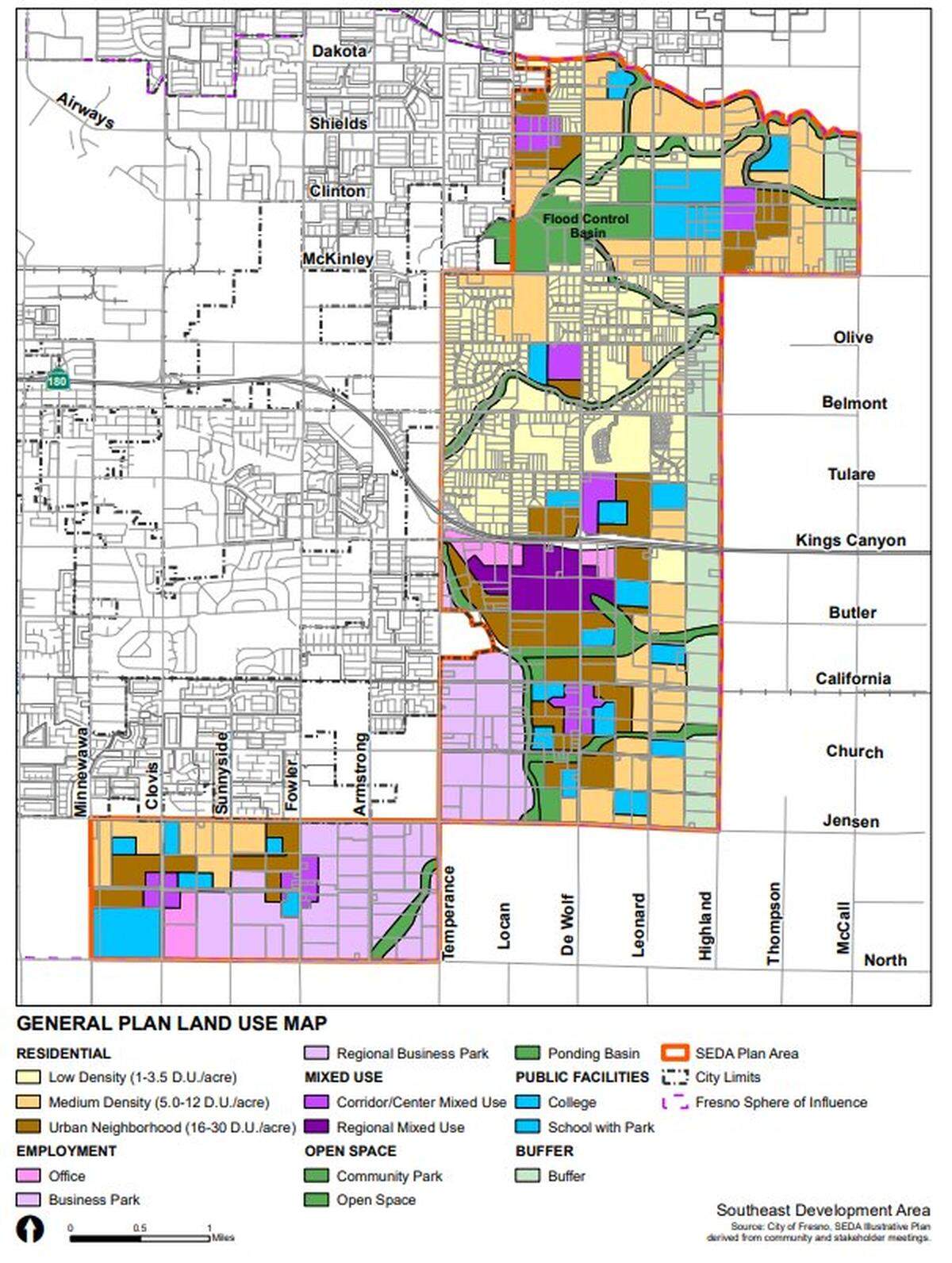
The total cost of the first phase is $90 million for sewer and street infrastructure, Dyer said.
Without SEDA — and the land for housing options it creates, “people move elsewhere, developers build elsewhere. They go to Clovis, they go to Madera,” Dyer said.
Criticisms from the city councilmembers, hopefuls and the community include the possibility of sprawl. Dyer said the goal is to make SEDA self-contained — with jobs and shopping close by, minimizing travel.
“I want to make sure that we are able to control the growth and to make sure we know where the growth is happening and what’s going to be contained within that growth area, and to make sure that we are doing smart growth, that we’re not doing leapfrog development, that we’re not repeating some of the sins of our past, where we perhaps allowed some sprawl to occur that really took away from the inner city,” Dyer said.
Opposing residents are worried they would be forced into city limits or worse — that the city would take their land. Dyer reiterated that the city is not seeking to annex land or take it by eminent domain.
Annexation into the city would be at the request of private developers, Dyer said.
Getting Fresno City Council buy-in
Dyer presented SEDA to the Fresno City Council last December. Before any approval, the council requested more data from staff, voting 5-2 to wait. The requests include financial data, such as property tax revenue, sales tax revenue and job creation.
Miguel Arias and Brandon Vang voted no on the delay. They also voted no that same day to remove SEDA consideration from the agenda.
Dyer does not anticipate he would need to engage in political trading to sway a councilmember his way.
“I would do everything I could to satisfy whatever concerns they have,” Dyer said.
One concern from District 5 Councilmember Brandon Vang was creating a buffer zone around a school in the proposed South SEDA area.
“I’m willing to entertain some of those things, but I think that’s where my limit is going to be as a mayor,” Dyer said.
Several candidates for city council said they oppose SEDA. Dyer is cognizant of the election math. The school boards for Central Unified and Fresno Unified formally opposed SEDA. Two of the board members, Central Unified’s Naindeep Singh and Fresno Unified’s Keshia Thomas, are running for Fresno City Council. Both are in position to advance to the Nov. 3 general election — Singh in District 1 and Thomas in District 3.
Dyer said the candidates have received wrong or outdated information from the media.
“For example, the reporting has been that we’re opening up 9,000 acres for development. It’s not true. The reporting has been it’s going to cost $4.5 billion to develop this property at city expense. Not true,” Dyer said.
Even if the city developed the entire SEDA plan, Dyer estimates the cost at $267 million for water mains and sewer.
“We’re not doing that. We’re going to focus on South SEDA,” Dyer said. He said some parts of SEDA “may never be developed. Other parts may be developed in 20, maybe 40 years.”
SEDA “will more than pay for itself,” Dyer said, because of community facilities districts — additional assessments on top of property taxes — and a more favorable tax-sharing agreement with Fresno County for land annexed into the city.
Dyer expects that if the Fresno City Council approves the environmental impact report, litigation will follow.
“Anything that (deals) with an environmental impact report ... is going to be scrutinized and perhaps challenged. Which is why it’s so important to get it right, get it done right the first time, and I believe we did,” Dyer said.
When SEDA returns, the Fresno City Council would vote on whether to certify the final environmental impact report, adopt the SEDA specific plan, update the land use map, and update city land use policies.
Is SEDA Dyer’s legacy?
Dyer downplays that SEDA will be his legacy in his two terms as mayor (his second term expires in 2029).
“It’s more important to the future health of our city than it is my legacy, but it is something that I’m very passionate about, and I want to see it passed,” Dyer said.
To help SEDA grow, Dyer also advocated for the passage of a transportation tax, a successor to Measure C, which expires next year. Dyer supports the “Better Roads, Safe Streets” plan. The group hit a snag during the counting of signatures to place the item on the ballot. It is not guaranteed voters will see it on the November ballot.
Without the passage of a new transportation tax, Dyer said roads will continue to deteriorate. He also noted the city hasn’t passed an increase for water and sewer in the past 12 to 15 years.
“I would feel negligent as a mayor to not do the things they’re going to plan for the future and help the next mayor and the mayor after,” Dyer said.