CA High-Speed Rail reveals private group that could help build past Central Valley
AI-generated summary reviewed by our newsroom.
- Rail authority intends to award a co-development agreement to Momentum Alliance Partners.
- The investment group includes international infrastructure and rail companies.
- Change to state law necessary for investors to build outside Central Valley.
The head of the California High-Speed Rail Authority has revealed the group of private partners that could advance money and build train routes outside the Central Valley — though he’s still waiting on changes to state law that would allow it.
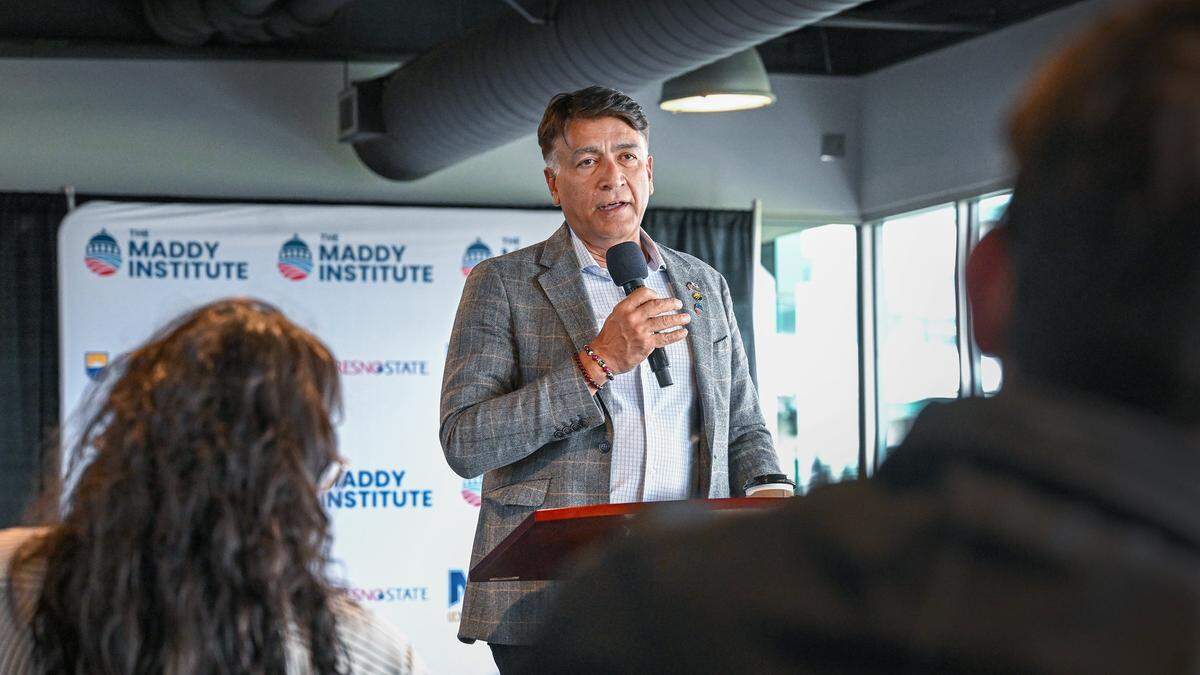
During Monday’s rail authority board meeting, CEO Ian Choudri said the agency intends to award a co-development agreement to Momentum Alliance Partners by the end of the month. The group includes companies from various countries involved in infrastructure investment and development and rail operation, among other specialties.
“There was skepticism when I came on board that there would be interest from the private sector,” Choudri said. “We do have it, and they are on board now.”
Choudri previously told The Fresno Bee a group of private investors could use its own money to design and build a train route faster. The group would then operate and maintain the segment while the state repays investors with public dollars and, eventually, with revenue generated by ridership and the commercialization of the system’s properties.
“To the earlier discussion (of) how the Japanese and the Italians and the Spanish and the French are doing it — this is how they are doing it,” Choudri said Monday.
The deal would be the first of its kind for the project and an apparent victory for Choudri, who took lead of the rail authority in 2024 and has sought out rail financing methods used in countries with successful systems.
California’s project was approved in 2008 when the state’s voters approved $9.95 billion for a Los Angeles-to-San Francisco system that at the time carried a $45 billion price tag.
Today, after years of costly delays, state law requires the rail authority to first complete a 171-mile Merced-to-Bakersfield route. The originally envisioned system could cost $126 billion on the low end.
Choudri has said attracting private investors hinged on securing a long-term financial commitment from the state. Last year, legislators approved $1 billion annually for high-speed rail through 2045. That raised the rail authority’s available public dollars up to $39.3 billion.
Potential CA high-speed rail investment group includes international firms
Choudri’s presentation to the board showed the investment group is made up of eight companies:
- Plenary, an Australian-based public infrastructure investment and development company.
- CDPQ Infra, an infrastructure and development company owned by La Caisse, one of Canada’s largest public pension funds.
- SNCF Voyageurs, a European rail operator and subsidiary of SNCF Group, which is owned by the French state.
- Jacobs, an engineering and development company based in Dallas, Texas.
- Keolis, a transportation systems operator owned in part by the French state’s SNCF and the Canadian La Caisse.
- Steer, a “global consultancy specializing in critical services and infrastructure,” according to its website.
- Sener, an engineering and technology group based in Spain.
- Systra, which has “contributed to the design of over 30 high-speed rail lines worldwide,” according to its website.
Some of the companies have worked on components of California’s high-speed rail project. Systra, for example, has been involved in design work for the Central Valley segment.
Choudri said the rail authority’s co-development agreement with the companies will last 30 months and be split into three phases. He said the rail authority is investing between $9 million and $10 million in the initial phase.
“The next 30 months will be about identifying investment plans and looking at which areas we can commercialize the assets sooner,” Choudri said.
CA law change still needed for investors to build rail outside Central Valley
The CEO has also said the investors are likely to want to invest in train routes that are expected to have profitable ridership levels. In the Merced-to-Bakersfield segment, train service is expected to operate in the red.
Choudri has floated the idea that investors will want to build from Madera to Gilroy. From there, high-speed trains could use electrified Caltrain tracks to take passengers to the Bay Area.
The problem is SB 198, the state law that mandates the rail authority build in the Central Valley first, prevents the agency from spending more than $500 million outside the Merced-to-Bakersfield segment. A state lawmaker from the Los Angeles area has introduced legislation that would remove that spending cap.
Choudri said during Monday’s board meeting that SB 198 contradicts Prop 1A, the original high-speed rail state bond measure from 2008.
“One says build L.A.-to-San Francisco and the other says don’t build outside Merced-Bakersfield,” Choudri said. “We need to fix that in some way working with the Legislature.”